

Executive Overview
To millions of tourists, snowbirds, and residents worldwide, "The Sunshine State" is inextricably linked to the flat, peninsular geography of Florida. It is stamped on license plates, emblazoned across tourism brochures, and woven into the very cultural identity of America’s southeasternmost frontier. Yet, an investigation into meteorological data, state histories, and climatic reality reveals a surprising truth: Florida is not, by most metrics, the sunniest state in the United States.
While the moniker feels as though it has existed since the dawn of American statehood, it was only officially codified by the Florida legislature in 1970. Before that, Florida was known officially as "The Ever-Glades State." More importantly, objective climate data paints a picture of a region plagued by afternoon cloud cover, volatile summer tropical storms, and convective downpours that make it statistically inferior in sunshine duration compared to several of its western and southwestern counterparts.
If truth in advertising applied to state monikers, Florida’s famous title would rightfully belong to a different state altogether—leaving the peninsula with a moniker that speaks more accurately to its watery abundance than its solar output. This report investigates the meteorological data, historical context, urban rankings, and alternative identities that challenge Florida’s claim to its most famous brand.
Detailed Chronology: How Florida Claimed the Sun
To understand how a state ranking outside the top tier of national sunshine metrics secured the most coveted weather-related nickname in the world, one must examine the intersection of tourism marketing, legislative maneuvering, and mid-century promotional culture.
The Pre-Sunshine Era (Pre-1970)
For the first half of the 20th century, Florida was defined primarily by its agricultural output—citrus and cattle—and its wild, untamed interior. Early state boosters and tourism pioneers recognized the economic value of marketing the state’s mild winters, but "The Sunshine State" was not yet a legal entity. Instead, the state’s official nickname, adopted by common usage and early promotional literature, was "The Ever-Glades State."
As America emerged from World War II and the interstate highway system began to take shape, tourism shifted from a luxury for the wealthy elite to an accessible pastime for the burgeoning middle class. Real estate developers, hotel magnates, and early chambers of commerce realized that selling warmth and clear skies was far more lucrative than selling swampland.
The Legislative Codification of 1970
Despite decades of informal use on postcards, travel brochures, and promotional materials, it wasn’t until 1970 that the Florida Legislature officially voted to designate "The Sunshine State" as the official state nickname.
The move was less a reflection of hard meteorological data and more a triumphant capitalization on the booming post-war tourism economy. By the 1960s, Florida had firmly established itself as the ultimate winter playground for Americans escaping the frigid northern rust belt. Codifying the nickname was a masterstroke of state-sponsored branding, cementing an identity that resonated with vacationers, even if the atmospheric science underneath it was shaky at best.
Supporting Context & Metrics: The Science of Skies
When meteorologists and climatologists analyze the true amount of sunshine a region receives, they look beyond simple perceptions of warmth. They measure total annual sunshine duration—the actual number of hours the sun shines unobstructed by clouds or heavy haze—as a percentage of daylight hours.
Where Florida Ranks Nationally
Based on comprehensive data compiled by agencies like the Centers for Disease Control and Prevention (CDC) and historical National Oceanic and Atmospheric Administration (NOAA) archives, Florida often lands surprisingly low on the list of sunniest states.
When analyzing average annual sunshine statistics, Florida routinely hovers around the 10th place position nationally. While the National Weather Service occasionally places Florida closer to No. 6 depending on the specific multi-year baseline being evaluated, it is routinely bested by arid western states.
Which states routinely outperform Florida in solar exposure?
- Arizona (home to Phoenix and Tucson, where cloud cover is a rare historical anomaly)
- New Mexico
- Nevada
- Texas (specifically the western desert regions)
- California (particularly the southern interior and desert valleys)
- Colorado (renowned for its high-altitude, clear blue mountain skies)
- Utah
- Kansas
- Oklahoma
These states benefit from arid or semi-arid climates where atmospheric moisture is low, preventing the daily convective cloud formation that plagues the humid southeast.
The Meteorologist’s Critique: "The Partly Cloudy State"
The primary architectural flaw in Florida’s solar dominance is its unique geography. Flanked by the warm waters of the Gulf of Mexico to the west and the Atlantic Ocean to the east, the Florida peninsula acts as a giant heat engine during the summer months.
As land temperatures soar, sea breezes blow inward from both coasts, colliding violently in the middle of the state. This collision forces warm, moisture-laden air rapidly upward, creating towering cumulonimbus clouds and generating intense afternoon thunderstorms almost daily throughout the wet season.
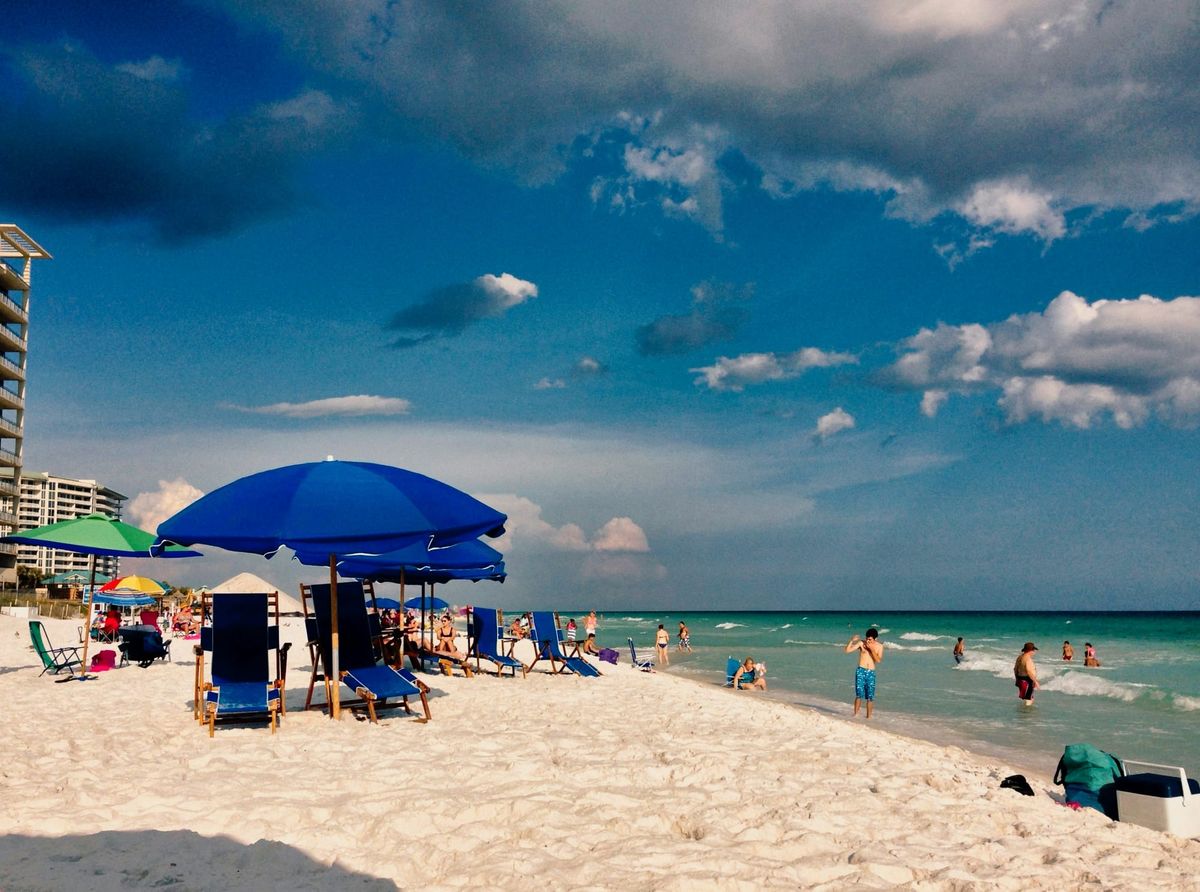
Because of this predictable meteorological phenomenon, a Chicago-based meteorologist once quipped that a far more scientifically accurate moniker for the peninsula would be "The Partly Cloudy State." Mornings may break in a blaze of brilliant tropical light, but by 3:00 PM, millions of residents and tourists find themselves huddled under umbrellas, watching torrential downpours wash out their afternoon plans.
Urban Rankings: Do Florida Cities Shine Brighter?
If the state as a whole falls short of the top ten, surely its individual municipalities make up for it? A deep dive into urban weather analytics suggests otherwise.
The Absence of Florida Cities in National Top Tens
When climatologists evaluate the sunniest cities in the United States based on the percentage of possible sunshine, cities in the American Southwest dominate the conversation. Iconic desert metropolises like Yuma, Arizona; Las Vegas, Nevada; and Phoenix, Arizona routinely claim the top spots, enjoying clear skies for upwards of 85% to 90% of daylight hours.
Remarkably, depending on the specific decade-long climate study consulted, it is entirely possible for zero Florida cities to crack the national Top 10 list of sunniest cities. High humidity, localized marine layers, and summer afternoon storm systems drag down the state’s urban solar averages.
Southwest Florida: The State’s Solar Champions
Within the borders of Florida itself, however, regional variances exist. According to regional weatherroundups, such as those analyzed by lifestyle and weather platforms like Only In Your State, the communities boasting the most reliable weather patterns are concentrated heavily in one specific pocket: Southwest Florida.
Cities and regions frequently cited for having the most favorable, sun-drenched weather profiles in the state include:
- Naples: Renowned for its pristine Gulf breezes and lower relative humidity during transition months.
- Fort Myers: Combines high annual temperature averages with a slightly drier inland microclimate compared to the eastern coast.
- Punta Gorda / Port Charlotte: Enjoys protected coastal conditions that minimize extreme storm convergence zones.
- Sarasota: Balances coastal breeze cooling with high total sunshine hours relative to the rest of the peninsula.
It is no coincidence that these regions form the heart of Florida’s luxury retirement and snowbird migration patterns. Yet, even these cities experience the summer humidity and afternoon deluges that characterize the broader regional climate.
Official Statements & Cultural Reactions
The dissonance between Florida’s official nickname and its actual meteorological standing has not gone unnoticed by cultural commentators, environmentalists, and regional tourism advocates.
The Shift Toward Aquatic Identity
As public awareness of climate data grows, local organizations have begun championing alternative identities that better reflect the geographical reality of the region. Groups like Play Hard Florida have openly questioned the continued viability of the "Sunshine State" brand, pointing out that water, not raw solar exposure, is the defining characteristic of the peninsula.
Environmental historians note that Florida’s true superpower has never been its dry, cloudless skies; it is its astonishing hydrological wealth. From a purely administrative and branding perspective, critics argue that clinging to a weather-dependent nickname that belongs more accurately to Arizona or New Mexico does a disservice to Florida’s actual ecological uniqueness.
Future Outlook: A Moniker Worth Keeping?
As we look toward the future of travel, tourism, and state branding, will Florida ever relinquish its iconic title? Highly unlikely.
"The Sunshine State" has transcended mere meteorological accuracy to become a deeply entrenched cultural touchstone. It evokes a feeling—a promise of warmth, escape, and leisure—that transcends cold, hard scientific data. To generations of travelers, the afternoon thunderstorm is not a detraction from the sunshine, but a brief, dramatic interlude in an otherwise tropical paradise.
However, if Florida were to honestly update its branding to reflect its true geographical dominance, tourism boards might consider the leading alternative proposed by regional experts: The Water State.
Consider the sheer scale of Florida’s liquid landscape:
- 1,350 miles of general coastline—the most of any state in the contiguous United States.
- Over 30,000 named lakes, ranging from massive inland seas like Lake Okeechobee to thousands of crystal-clear spring-fed sinkholes.
- 26,000 miles of rivers and streams, weaving a complex hydrological web across the flat terrain.
- 663 miles of sandy beaches facing both the Atlantic Ocean and the Gulf of Mexico.
- The Everglades, a globally unique, slow-moving river of grass spanning millions of acres.
Ultimately, while the sun may hide behind towering cumulonimbus clouds every summer afternoon, and while states like Arizona and New Mexico may mathematically outshine it, Florida remains unmatched in its aqueous splendor. Whether it officially calls itself "The Sunshine State" or "The Water State," the peninsula will continue to draw millions seeking warmth, even if those rays come with a heavy side of humidity and a sudden downpour.

0 Comments