

Executive Overview
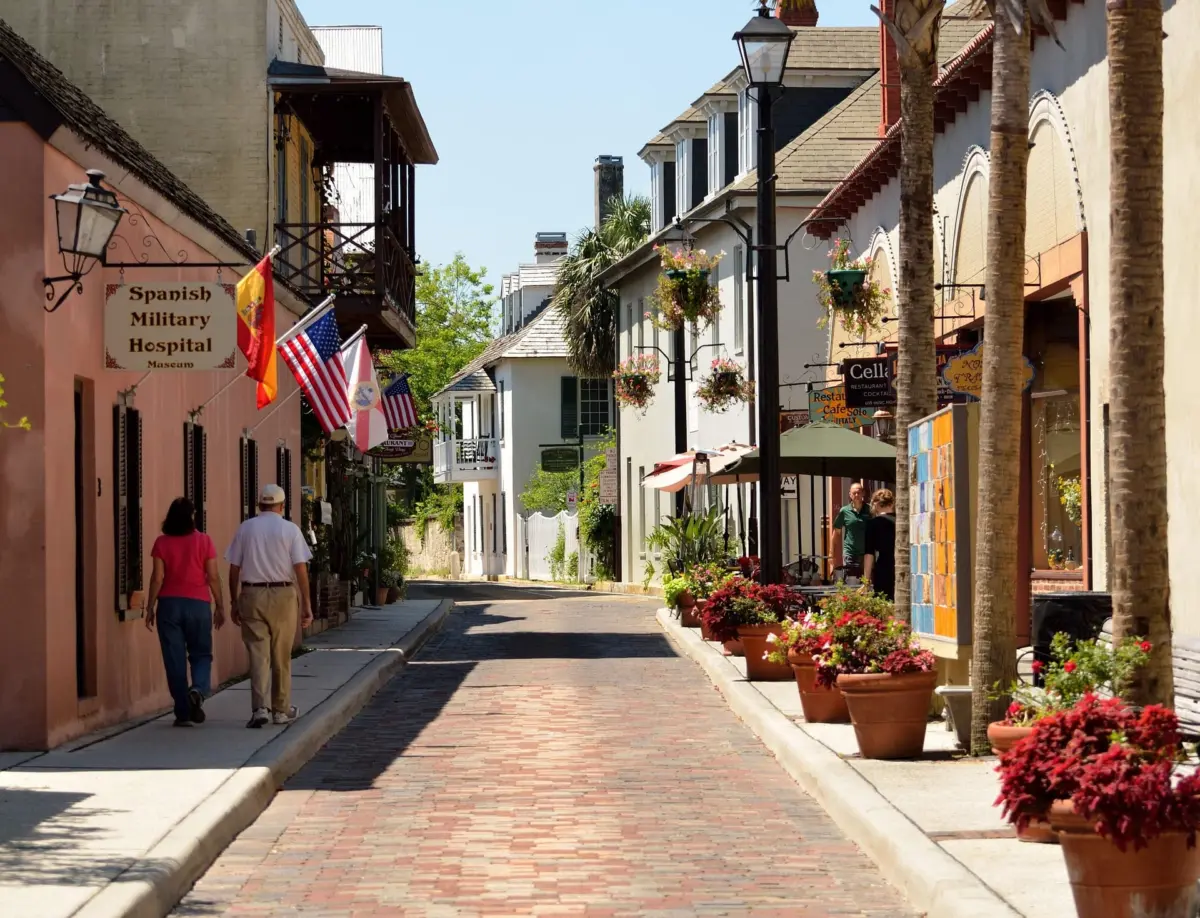
When Americans are taught the foundational history of their nation, the narrative traditionally begins in the chilly Northeast: the arrival of the Pilgrims at Plymouth Rock in 1620, or the resilient, if struggling, enterprise of the Virginia Company at Jamestown in 1607. Yet, nestled along the Atlantic coastline of northeastern Florida lies a historic treasure that completely disrupts this Anglo-centric timeline. St. Augustine, a charming coastal jewel characterized by coquina walls, narrow brick-paved lanes, and centuries-old Spanish colonial architecture, holds an indisputable it is the oldest continuously occupied European-established settlement in the United States.
Founded on September 8, 1565—nearly 42 years before English colonists set foot in Virginia and 55 years before the Mayflower dropped anchor off the Massachusetts coast—St. Augustine represents the true genesis of European urbanization, geopolitical struggle, and cultural integration within the modern borders of the United States.
Today, this vibrant city attracts approximately two million visitors annually. They come not merely to bask in the subtropical Florida sun, but to walk the very stones where empires clashed, where indigenous populations navigated an encroaching European presence, and where the architectural footprints of the Spanish Empire remain remarkably well-preserved. This comprehensive report examines the rich tapestry of St. Augustine’s origins, tracing its evolution from a vulnerable sixteenth-century military outpost into a modern cultural and historical sanctuary. Through detailed historical chronology, geopolitical analysis, architectural legacy, and contemporary tourism insights, we explore why this Florida municipality remains a cornerstone of North American history.
Detailed Chronology: From First Sighting to Permanent Settlement
To understand St. Augustine, one must cast the historical net far beyond 1565, diving into an era of intense imperial rivalry, maritime exploration, and high-stakes geopolitics between the Spanish Crown and rival European powers.
The Age of Reconnaissance: Ponce de León and the Discovery of La Florida
The prologue to St. Augustine’s founding began more than half a century before the first Spanish soldier marched ashore. In 1513, Spanish explorer Juan Ponce de León sailed from Puerto Rico in search of new lands and mythical waters. Catching sight of the lush, subtropical peninsula during the season of Pascua Florida (Flowering Easter), he claimed the territory for the Spanish Crown, naming it La Florida.
While popular mythology often reduces Ponce de León’s journey to an obsessive, quixotic quest for the Fountain of Youth, historians emphasize a far more pragmatic motive: geopolitical dominance. Spain was locked in a fierce global chess match with Portugal, France, and England for control of Atlantic shipping lanes, maritime wealth, and territorial expansion. La Florida served as a vital strategic shield protecting the lucrative Spanish treasure fleets as they sailed northward through the Bahama Channel, laden with gold and silver from Central and South America.
Decades of Failed Trials and Hardship
Claiming a territory on paper proved vastly different from subduing it on the ground. For the next fifty years, Spain attempted repeatedly—and failed consistently—to establish a permanent foothold on the Florida peninsula. Half a dozen expeditions, including ill-fated ventures led by Lucas Vázquez de Ayllón, Pánfilo de Narváez, and Hernando de Soto, were thwarted by a combination of fierce indigenous resistance, disease, starvation, treacherous marshlands, and fierce tropical weather.
By the mid-sixteenth century, the Spanish Crown began to view La Florida as a financial and logistical drain—a dangerous, untamable wilderness. The calculus changed dramatically, however, when France made a aggressive territorial play in Spain’s claimed backyard.
The Catalyst: The French Threat and Menéndez de Avilés
In 1564, French Huguenots under the leadership of Jean Ribault established Fort Caroline along the banks of the St. Johns River (near modern-day Jacksonville). For Catholic Spain, a Protestant French colony sitting squarely on the doorstep of the Caribbean shipping lanes was an existential threat that could not be tolerated.
Enter Don Pedro Menéndez de Avilés, a fierce, highly capable Spanish admiral and nobleman. Commissioned by King Philip II, Menéndez was tasked with a dual mandate: purge the French interlopers from La Florida and establish a permanent Spanish garrison to secure the territory once and for all.
Menéndez arrived off the coast of Florida in late August 1565. On September 8, feast day of St. Augustine, he officially landed his forces, driving wooden stakes into the marshy earth and naming the fledgling settlement San Agustín in honor of the saint on whose feast day land was sighted.
Almost immediately, the fledgling colony engaged in a brutal campaign against the French. Menéndez launched a surprise overland assault on Fort Caroline during a torrential hurricane, decimating the French garrison. Shortly thereafter, he intercepted surviving French shipwrecked sailors—including Ribault—at an inlet south of the settlement, executing the vast majority for heresy and treason. This geographic feature was grimly christened Matanzas (meaning "slaughters"). With the French threat neutralized, Menéndez turned his attention to the grueling, painstaking task of building a permanent, self-sustaining European city in the New World.
Supporting Context & Metrics: The Architectural and Cultural Legacy
St. Augustine’s historical significance extends far beyond its age. It is a living laboratory of early American multiculturalism, military engineering, and urban development.
The Evolution of Defense: The Castillo de San Marcos
Because St. Augustine was a prime target for rival European powers—sacked and burned by English privateer Sir Francis Drake in 1586, and later raided by pirate Robert Searles in 1668—the Spanish realized that wooden palisades were wholly inadequate for long-term survival.
Following a devastating attack by English buccaneer Robert Searle in 1668, Queen Mariana of Spain authorized the construction of a massive stone fortress. Construction of the Castillo de San Marcos began in 1672 and was completed in 1695.
Engineered out of coquina—a unique, highly durable sedimentary rock composed of millions of microscopic fossilized shells bound together by natural limestone—the fortress possessed a remarkable physical property. Rather than shattering or fracturing under cannon fire like traditional brick or cut stone, coquina absorbed the impact of enemy cannonballs, compressing harmlessly around the projectile. This architectural marvel enabled the Castillo de San Marcos to withstand multiple sieges, including a 50-day blockade by English forces under South Carolina Governor James Moore in 1702, remaining undefeated in battle throughout its entire history.
Urban Planning and Daily Life
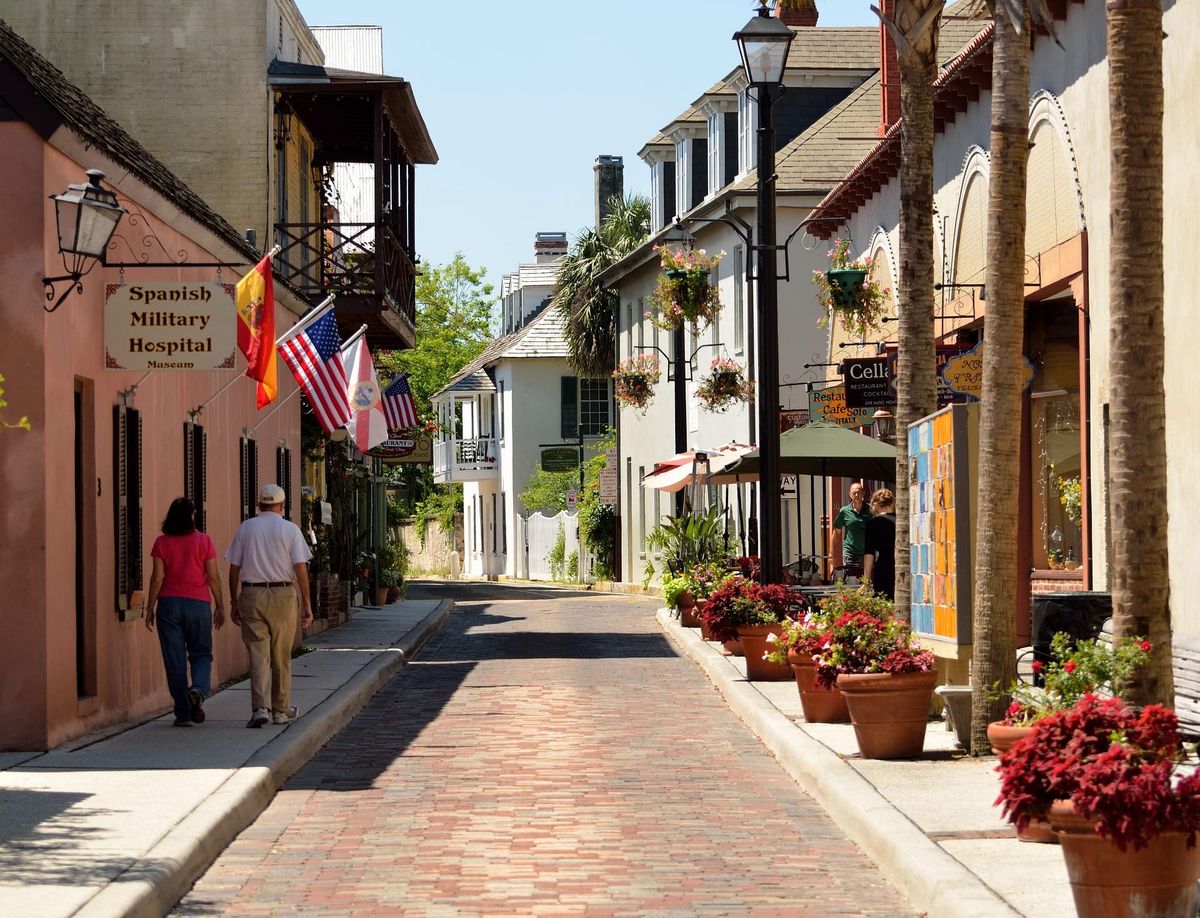
Beyond the Castillo, St. Augustine’s urban layout offers a pristine window into Spanish colonial town planning, codified by the Leyes de Indias (Laws of the Indies) issued by the Spanish Crown in the sixteenth century. The city’s grid system radiated outward from a central public plaza (Plaza de la Constitución), ensuring that civic, religious, and military power centers were interconnected and easily defensible.
Avilés Street, frequently cited as the oldest public street in the United States, retains its narrow, stone-paved character, flanked by overhanging balconies and historic structures that blend Spanish, British, Minorcan, and early American architectural traditions. The city’s demographic history is similarly complex; it was not merely a military garrison, but a melting pot where Spanish soldiers, enslaved and free Africans, Timucua indigenous peoples, and later Minorcan indentured servants forged a distinct, resilient coastal culture.
Comparative Timeline of Early American Settlements
To fully appreciate St. Augustine’s chronological preeminence, historians often contrast its founding dates with other foundational milestones in North American colonial history:
| Settlement / Landmark | Founding / Arrival Year | European Power / Group | Geographic Location |
|---|---|---|---|
| St. Augustine | 1565 | Spain | Northeastern Florida |
| Santa Fe | 1610 | Spain | New Mexico |
| Jamestown | 1607 | England | Virginia |
| Samuel de Champlain’s Quebec | 1608 | France | Quebec, Canada |
| Plymouth Rock (Mayflower) | 1620 | English Separatists (Pilgrims) | Massachusetts |
| New Amsterdam (New York) | 1624 | Netherlands | New York |
This matrix illustrates the profound head start Iberian powers held in the colonization of the continental United States, a narrative that frequently challenges the traditional Anglo-centric focus of early American textbooks.
Official Perspectives and Expert Analysis
Preserving and interpreting a city with nearly 460 years of continuous history requires a delicate balance between rigorous archaeological research, historic preservation, and modern municipal management.
Preservation and Historical Integrity
Local historians and National Park Service curators emphasize that St. Augustine’s identity is anchored in its physical authenticity. Unlike many historical theme parks or reconstructed heritage sites, St. Augustine’s historic district contains dozens of original buildings dating back to the Spanish Second Intermediate Period (such as the Gonzalez-Alvarez House, commonly known as "The Oldest House") and archaeological strata that stretch uninterrupted into the sixteenth century.
Dr. Elena Vance, a colonial historian specializing in Spanish borderlands, notes:
"St. Augustine forces us to expand our definition of American history. For generations, the national consciousness was funneled exclusively through a New England prism. But the true story of America is pluralistic, multilinguistic, and rooted deeply in the southern borderlands where Spanish, African, and Indigenous histories collided long before the English ever established a foothold."
Economic and Cultural Impact
Municipal authorities view the city’s heritage not just as a cultural touchstone, but as a primary economic engine. Welcoming approximately two million tourists annually, St. Augustine balances the preservation of fragile coquina monuments with the demands of a thriving culinary, arts, and hospitality sector.
City officials note that historic preservation guidelines within the Historic Architectural Review Commission (HARC) zone are among the strictest in the state. Every storefront, paint color, and signage update undergoes rigorous scrutiny to maintain the visual integrity of a sixteenth-century colonial port.
Future Outlook: Safeguarding the Past for Tomorrow
As St. Augustine looks toward its future, it faces formidable contemporary challenges that threaten its ancient foundations. Chief among these is climate change and sea-level rise.
Confronting Environmental Vulnerabilities
As a low-lying coastal city bounded by the Matanzas River and the Atlantic Ocean, St. Augustine is increasingly vulnerable to tidal flooding, severe storm surges, and accelerated coastal erosion. High-tide flooding (frequently referred to locally as "sunny day flooding") routinely inundates low-lying areas near the waterfront, creeping toward the historic downtown plaza and threatening the structural integrity of historical foundations.
In response, federal, state, and local agencies have initiated extensive resiliency projects. The National Park Service, in partnership with the City of St. Augustine and the U.S. Army Corps of Engineers, has invested heavily in shoreline stabilization, sea-wall reinforcement, and sophisticated drainage infrastructure designed to protect the Castillo de San Marcos and surrounding historic structures from extreme weather events.
Educational Outreach and Global Significance
Beyond physical preservation, civic leaders are expanding educational initiatives to highlight the complex, multifaceted history of the region. Efforts are underway to more fully integrate the stories of the Timucua people—the original inhabitants of the area whose population was decimated by European disease and conflict—alongside the narratives of free Black militias, such as Fort Mose, which was established just north of St. Augustine in 1738 as the first legally sanctioned free African settlement in what is now the United States.
By embracing the full spectrum of its diverse heritage, St. Augustine ensures that its status as the nation’s oldest city is defined not merely by the passage of time, but by the depth, resilience, and inclusivity of its historical memory. As it moves through the twenty-first century, the Ancient City stands as an enduring testament to the complex, interwoven roots that continue to shape the American identity.

0 Comments