

Executive Overview
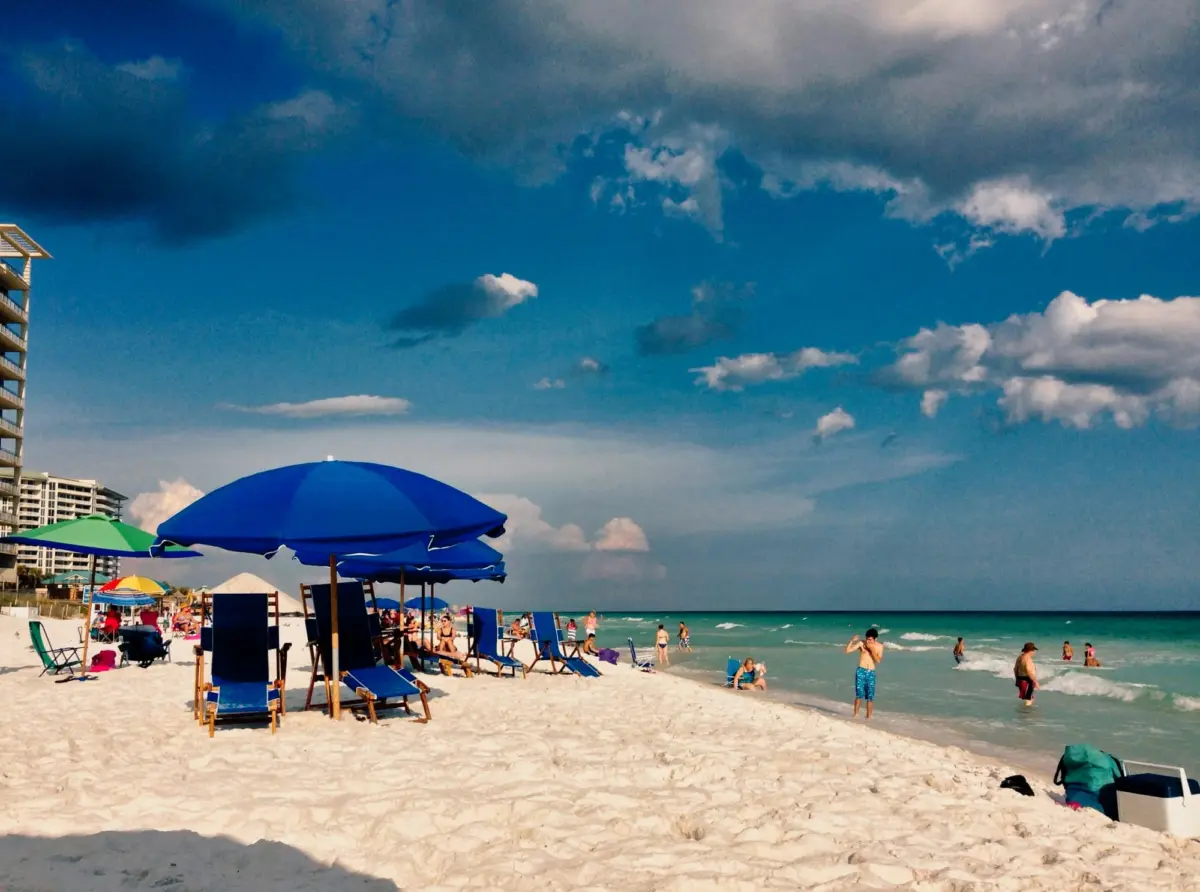
For generations, the phrase "The Sunshine State" has served as the cultural shorthand, marketing engine, and official identity of Florida. Evoking endless rays, pristine golden sands, and cloudless skies, the moniker is stamped on millions of license plates, tourism brochures, and postcards shipped worldwide. Yet, beneath the glossy veneer of the state’s multi-billion-dollar tourism industry lies a geographical and meteorological paradox: Florida may live and breathe sunshine in the public imagination, but data-driven reality tells a remarkably different story.
Officially adopted by the Florida Legislature in 1970—replacing the older, less marketable "Evergreen State"—the moniker was designed to project an inviting, perpetual warmth to northern travelers. However, contemporary meteorological data, climatological studies, and rankings compiled by public health agencies and weather bureaus reveal that Florida is far from the sunniest place in the nation. In fact, depending on the metrics evaluated, the peninsula routinely ranks outside the top tier of sun-drenched states, often surpassed by arid western territories that rarely market themselves around celestial branding.
Compounding this climatological reality is Florida’s famous weather pattern: the torrential, clockwork afternoon thunderstorms that drench the landscape nearly every summer day, prompting some meteorologists to jokingly suggest titles like "The Partly Cloudy State."
This investigative feature examines the historical origins of Florida’s famous identity, scrutinizes hard weather data to see how the state truly stacks up against its American peers, explores the unique hydrological features that actually define the peninsula, and evaluates whether a more accurate moniker—such as "The Water State"—is long overdue.
Detailed Chronology: How Florida Claimed the Sun
To understand how Florida became inextricably linked to the sun, one must journey back through the evolution of American place-branding, legislative maneuvering, and the post-World War II tourism boom.
Pre-Legislative Identity (Late 19th Century to 1969)
Long before the state government codified its atmospheric identity, Florida went through several branding iterations. In the late 19th and early 20th centuries, as railroad barons like Henry Flagler carved luxury tracks down the East Coast and into the Keys, Florida was frequently marketed as a health sanctuary. It was hailed as a winter haven for sufferers of respiratory ailments, rheumatism, and general fatigue.
For a period, "The Everglade State" or "The Peninsula State" served as common descriptors. However, as automobile travel exploded in the mid-20th century and air conditioning made year-round habitation feasible, the state needed a unifying, high-impact marketing hook. The term "Sunshine State" began popping up organically in song lyrics, travel writing, and promotional literature during the 1940s and 1950s, popularized by chambers of commerce eager to draw tourists away from California and the Caribbean.
The 1970 Legislative Enactment
The informal nickname crossed the threshold into official state law in 1970. During the legislative session that year, state lawmakers formally voted to designate "The Sunshine State" as the official state nickname, officially retiring the previous statutory nickname, "The Peninsula State" (though "The Sunshine State" had occasionally vied with "The Everglades State" in older documents).
The move was intended to solidify a singular, universally recognized identity that capitalized on the state’s burgeoning tourism economy. At the time, little empirical weight was given to how Florida’s actual hours of sunshine compared to, say, the Mojave Desert or the high plains of New Mexico. It was a branding exercise—one that proved wildly successful, cementing a psychological association in the global consciousness that persists to this day.
Supporting Context & Metrics: The Climatological Reality
When statisticians and meteorologists analyze weather patterns across the United States, they do not rely on marketing brochures. Instead, they measure metrics such as average annual percentage of possible sunshine, total clear days, and cloud cover duration. When these data sets are compiled, Florida’s standing as "The Sunshine State" begins to fracture.
Where Does Florida Rank?
According to comprehensive data compiled by the Centers for Disease Control and Prevention (CDC)—which tracks ultraviolet radiation and ambient sun exposure—and supported by climatological archives, Florida ranks as the 10th sunniest state in the United States.
While the top 10 is certainly nothing to scoff at, a 10th-place finish sits awkwardly alongside a moniker that implies absolute supremacy. States such as Arizona, New Mexico, Nevada, Texas, and California routinely eclipse Florida in terms of uninterrupted, year-round clear skies and low relative humidity.
Furthermore, when the National Weather Service evaluates average annual clear days versus cloudy or partly cloudy days, Florida generally hovers around the 6th position nationally, depending on the specific multi-year baseline used.
The Meteorological Phenomenon: "The Partly Cloudy State"
Why does a state surrounded by warm tropical waters and renowned for its blinding midday glare fall short of the top spot? The answer lies in thermodynamics and geography.
Florida is a peninsula flanked by the warm waters of the Atlantic Ocean and the Gulf of Mexico. This unique positioning creates an atmospheric engine driven by sea breezes. During the late spring, summer, and early autumn months, these opposing sea breezes collide over the center of the peninsula, forcing warm, moisture-laden air rapidly upward.
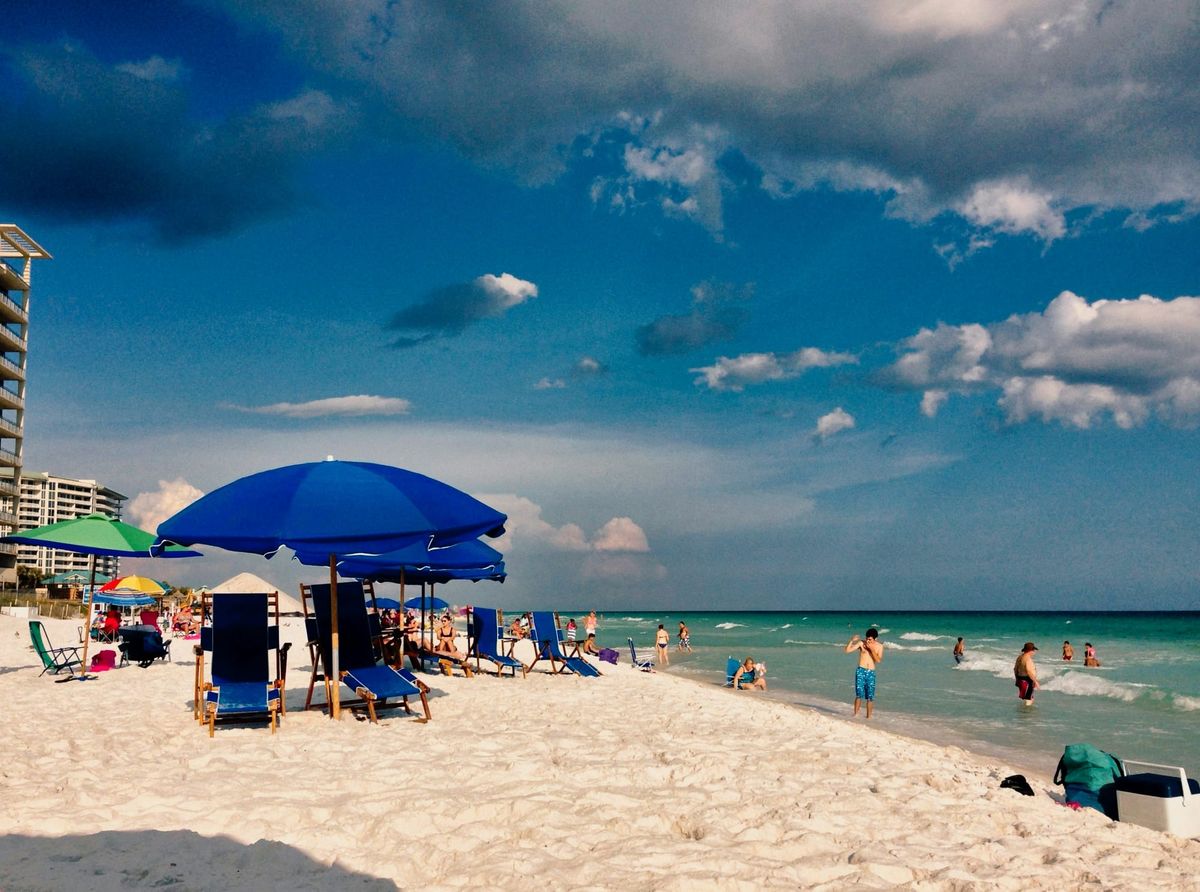
The result is the formation of towering cumulonimbus clouds, culminating in torrential afternoon thunderstorms. These storms are so reliable and punctual that residents can literally set their watches by them. However, this daily meteorological routine means that even on days that begin with brilliant, piercing sunshine, the afternoon sky frequently morphs into an anvil of gray clouds, heavy rain, and lightning.
A Chicago-based meteorologist assessing this phenomenon once noted that "The Partly Cloudy State" or "The Thunderstorm State" would be a far more scientifically accurate description of Florida’s weather profile, given that vast portions of the afternoon are routinely shaded by localized convective precipitation.
The City-Level Breakdown
If the state as a whole ranks 10th, how do Florida’s urban centers fare on national sun-city leaderboards?
When looking at national rankings of the sunniest cities in America—factoring in percent of possible sunshine and average annual clear days—it is entirely possible for zero Florida cities to crack the national Top 10. Cities in the desert Southwest, such as Yuma, Arizona; Las Vegas, Nevada; and El Paso, Texas, routinely dominate these lists, enjoying months on end without a drop of rain or a heavy cloud bank.
So, within the borders of Florida itself, which cities take the crown for the best weather and most sunshine?
Data-driven lifestyle and travel sites, such as Only In Your State, have evaluated regional weather patterns to determine Florida’s internal front-runners. Interestingly, the data reveals a distinct geographic trend: all of the state’s top-weather cities are clustered squarely in Southwest Florida.
Regions encompassing Naples, Fort Myers, and Punta Gorda tend to experience slightly lower annual rainfall totals, lower relative humidity during transition months, and higher percentages of clear skies compared to their counterparts in Northeast Florida or the marshy interior. Yet, even these regional champions are subject to the broader peninsular climate system.
Official Statements and Industry Perspectives
The dissonance between Florida’s official nickname and its actual meteorological standing has not gone unnoticed by travel experts, climatologists, and regional outdoor advocates.
A spokesman for Play Hard Florida, an organization dedicated to promoting outdoor recreation across the peninsula, addressed the branding dilemma directly, arguing that the state’s identity relies far too heavily on an inaccurate sky-focused cliché while ignoring its defining earthly feature: water.
"When people think of sunshine, they think of arid deserts, dry heat, and unbroken horizons," notes a climatology report from regional weather analysts. "Florida is fundamentally a humid, subtropical wetland system wrapped in thousands of miles of ocean interface. Calling it ‘The Sunshine State’ is like calling the Pacific Northwest ‘The Arid Region’—it misses the fundamental essence of the geography."
Despite these critiques, state tourism entities and economic development boards show zero appetite for an official rebrand. Visit Florida and local chambers of commerce recognize that "The Sunshine State" is linguistic gold. It commands emotional equity with consumers that no amount of data can dismantle. For millions of snowbirds escaping freezing winters in New York, Chicago, or Toronto, the psychological promise of sunshine remains infinitely more potent than a nuanced meteorological debate over cloud cover percentages.
Future Outlook: Embracing a More Accurate Identity?
Will Florida ever shed or supplement its famous nickname? Realistically, no legislation will ever pass to strip away "The Sunshine State." It is woven too deeply into the cultural fabric, legal documents, and corporate identities of the peninsula.
However, as climate patterns shift, population growth surges, and environmental consciousness evolves, residents and travelers alike are developing a deeper appreciation for what truly makes Florida unique. The state is defined less by the purity of its upper atmosphere and vastly more by its extraordinary, defining relationship with water.
As advocates point out, if one were to rename Florida based on raw physical dominance, the contenders are staggering:
- The Water State: Florida boasts an astonishing 1,350 miles of general coastline—the most of any state in the contiguous United States.
- Inland Hydrology: The landscape is dotted with approximately 30,000 named lakes, anchored by Lake Okeechobee, the massive liquid heart of the state.
- Flowing Ecosystems: The state contains roughly 26,000 miles of rivers, ranging from the blackwater currents of the Suwannee to the spring-fed runs of central Florida.
- Marine Margins: It features over 660 miles of sandy beaches that draw millions of visitors annually.
- Unique Wetlands: It houses the peerless, slow-moving river of grass known as the Everglades—a UNESCO World Heritage site and International Biosphere Reserve.
Ultimately, while the sun will always shine down on Florida’s beachgoers, surfers, and citrus groves, the state’s true soul lies in its liquid boundaries. Whether or not lawmakers ever decide to update the welcome signs, anyone who has ever waded through a cypress swamp, watched a manatee glide through a crystal-clear spring, or stood on a barrier island watching the surf crash knows the truth: Florida may market itself on sunbeams, but it thrives, breathes, and lives entirely by water.

0 Comments