

Executive Overview
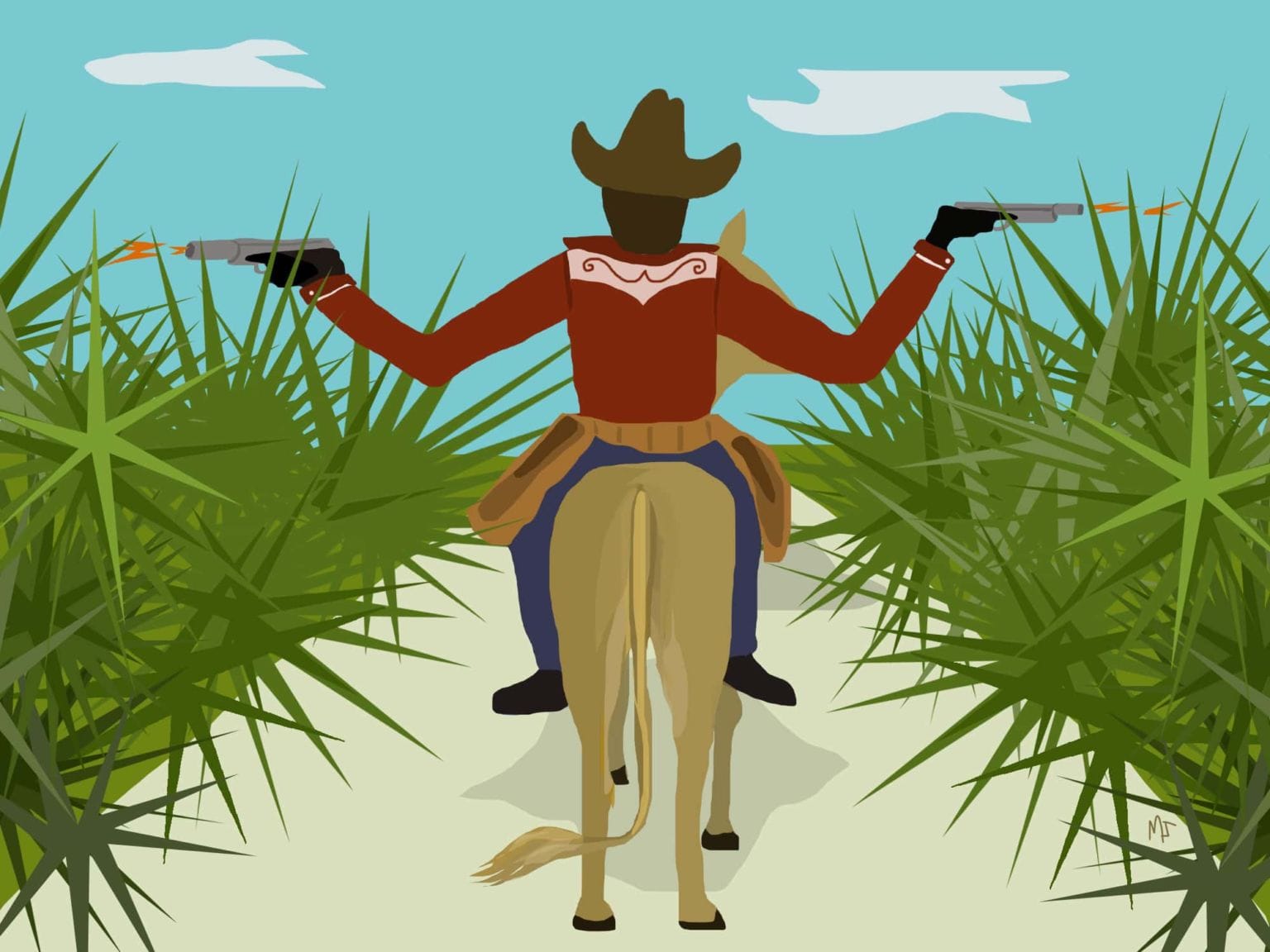
Between its apex predators lurking in backyard swimming pools, headline-grabbing citizens perpetually fueling social media folklore, and its modern reputation as a political sanctuary, Florida has firmly secured its title as America’s "weird uncle." Much like that eccentric relative who strips down for a Christmas morning cannonball, the Sunshine State has long embraced a theatrical, unpredictable brand of southern and tropical eccentricity.
However, this penchant for the bizarre is far from a contemporary phenomenon. Long before the era of viral internet memes and reality-television politics, Florida’s early pioneers, homesteaders, and real estate speculators left a permanent stamp on the map through their choice of local nomenclature. From towns christened after breakfast condiments to municipalities bearing the names of foreign capitals minus a letter, Florida’s geography tells a story of unmatched whimsy, pragmatic marketing, and historical happenstance.
This journalistic inquiry explores the origins, histories, and unexpected cultural footprints of ten of the strangest town names in Florida, examining how these curiosities evolved from rudimentary settlements into enduring American folklore.
Detailed Chronology
The evolution of Florida’s eccentric geographic identifiers spans nearly two centuries, reflecting shifting eras of war, industrial boom, agricultural enterprise, and modern commercial marketing.
- 1837 (Christmas): Amid the escalating tensions of the Second Seminole War, a massive contingent of U.S. Army soldiers and volunteers establishes Fort Christmas on December 25, setting the foundation for a community that would later become synonymous with year-round holiday mailings.
- 1860s–1890s (Two Egg & Lulu): During the turbulent era of the Civil War and the subsequent Gilded Age, rural settlements begin adopting colloquial identities. Allison (later Two Egg) forms around a sawmill, while Lulu is officially mapped in the 1890s by a lovestruck postmaster.
- 1920s (Howey-in-the-Hills & Briny Breezes): The Florida land boom triggers unprecedented development. William John Howey founds his citrus empire, later coining the "Florida Alps," while a Michigan lumberman rents strawberry-farm parcels for $3 a week, planting the seeds for what would become Briny Breezes.
- 1930s (Frostproof & Lorida): The pressures of the Great Depression and agricultural protectionism shape local monikers. Frostproof adopts its optimistic handle to attract cold-sensitive citrus growers, while Lorida drops the "F" from Florida in 1937 to resolve mail and railway confusion tied to its former name, Istokpoga.
- Late 1960s (Yeehaw Junction): Behind the quiet rural exterior of an Osceola County crossroad, classified military trials involving the testing of biological agents take place, remaining hidden from the public for over three decades.
- 2018 (Mayo): The traditional North Florida town of Mayo temporarily trades its heritage for a $250,000 corporate rebrand, briefly transforming into "Miracle Whip, Florida," in a nationally publicized marketing campaign.
Supporting Context & Metrics: The 10 Curiosities Examined
1. Frostproof
- Location: Southern Polk County (Central Florida, halfway between Tampa and Orlando).
- Estimated Population (2024): 3,032
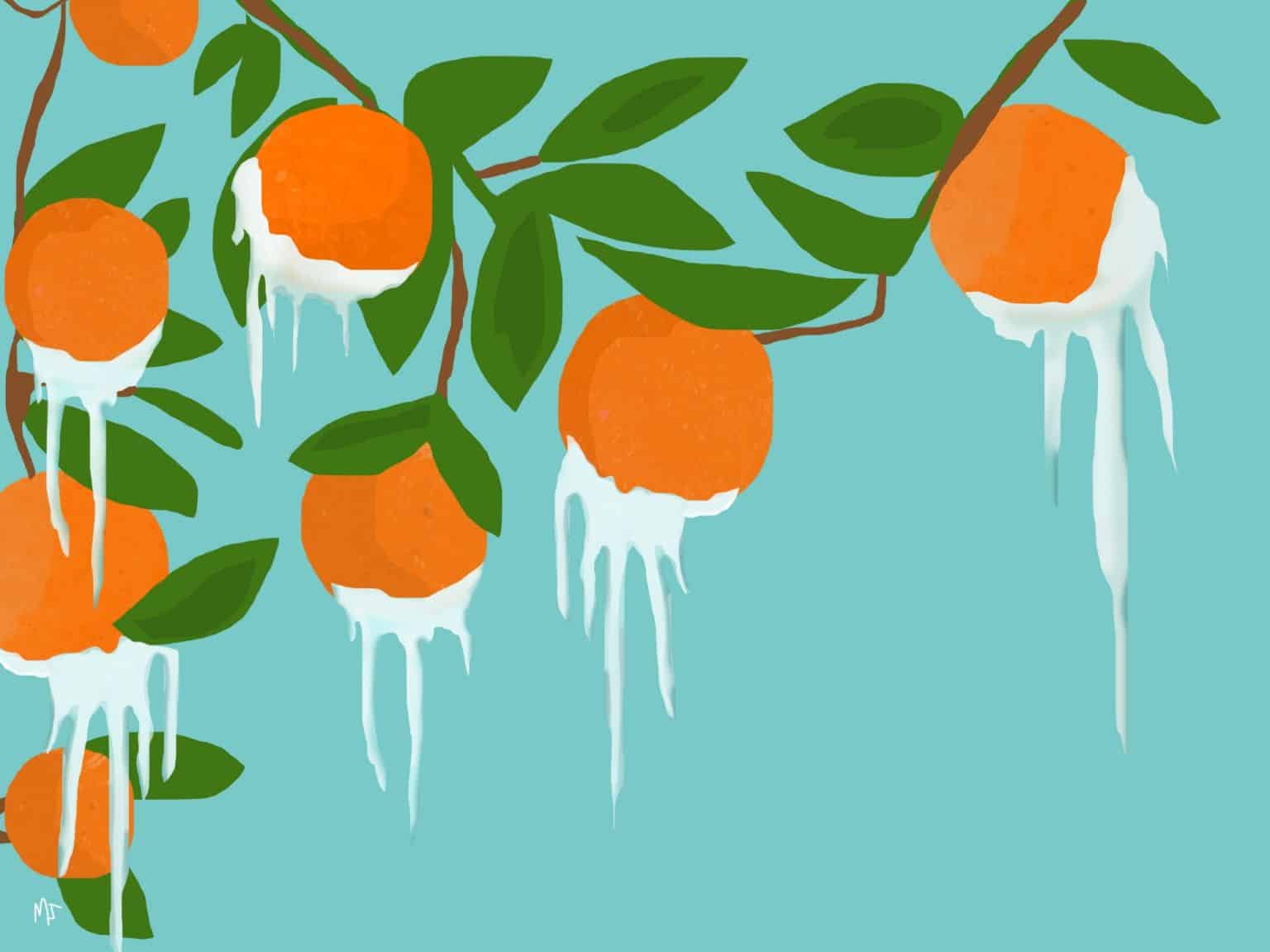
- The Narrative: No municipality in Florida is entirely immune to sub-freezing weather, but "Frostproof" was chosen as a strategic marketing ploy. By branding the settlement with an invulnerable title, early developers aimed to lure citrus growers—whose multi-million-dollar crops were acutely vulnerable to cold snaps—into settling the region. The gambit worked, anchoring legends of the trade like citrus baron Ben Hill Griffin Jr.
2. Howey-in-the-Hills
- Location: Lake County, northwest of Orlando.
- Population (2018): 1,175
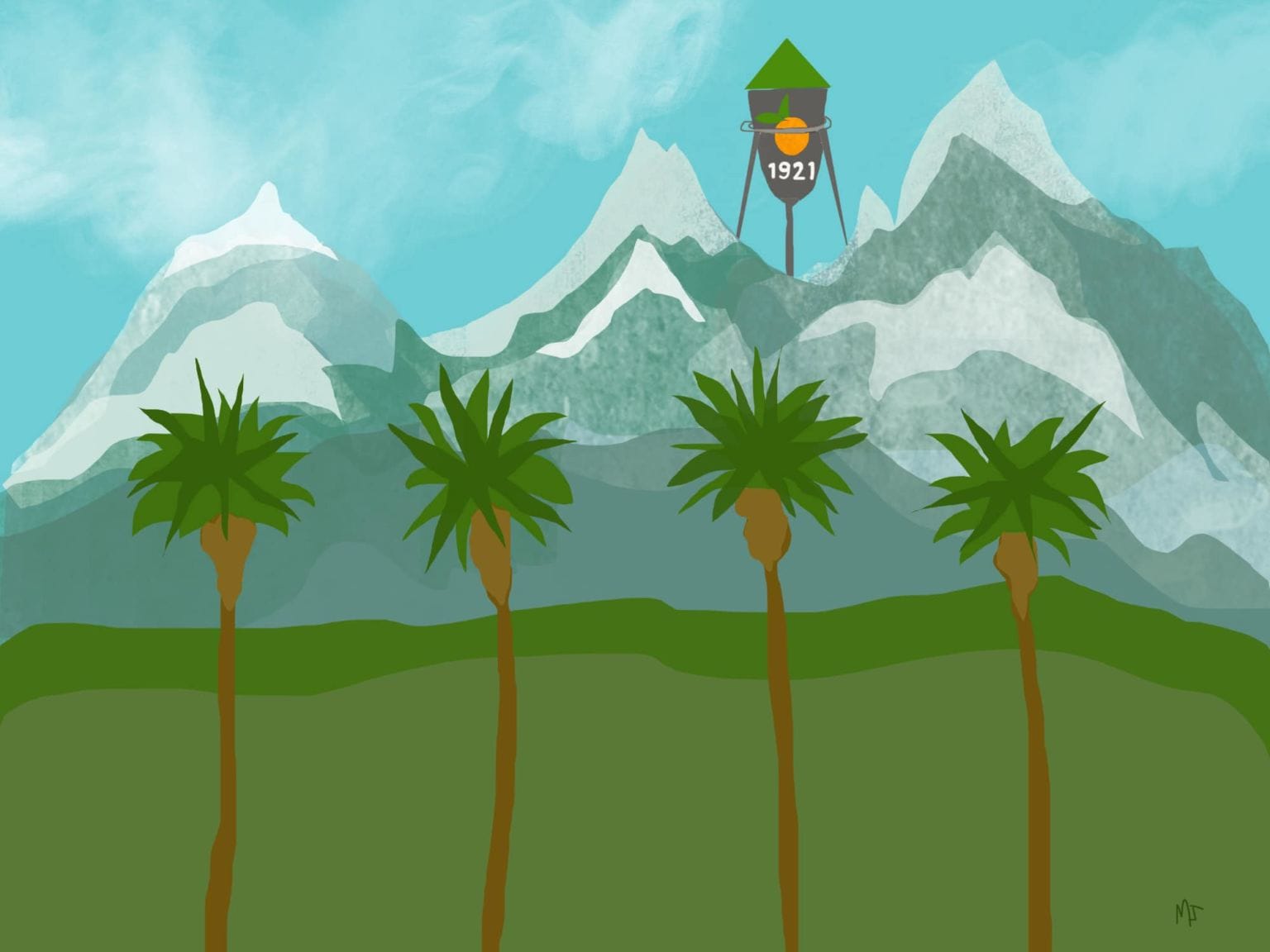
- The Narrative: Established in 1925 as "Howey" by agricultural tycoon William John Howey, the town earned its expanded suffix two years later. Impressed by the undulating, rolling topography of the region—a stark contrast to Florida’s typical flat terrain—Howey famously dubbed the area "the Florida Alps." It also holds the distinction of housing the state’s very first commercial citrus juice plant, erected in 1921.
3. Yeehaw Junction
- Location: Osceola County, at the intersection of Florida’s Turnpike and State Road 60.
- Population (2010): 240
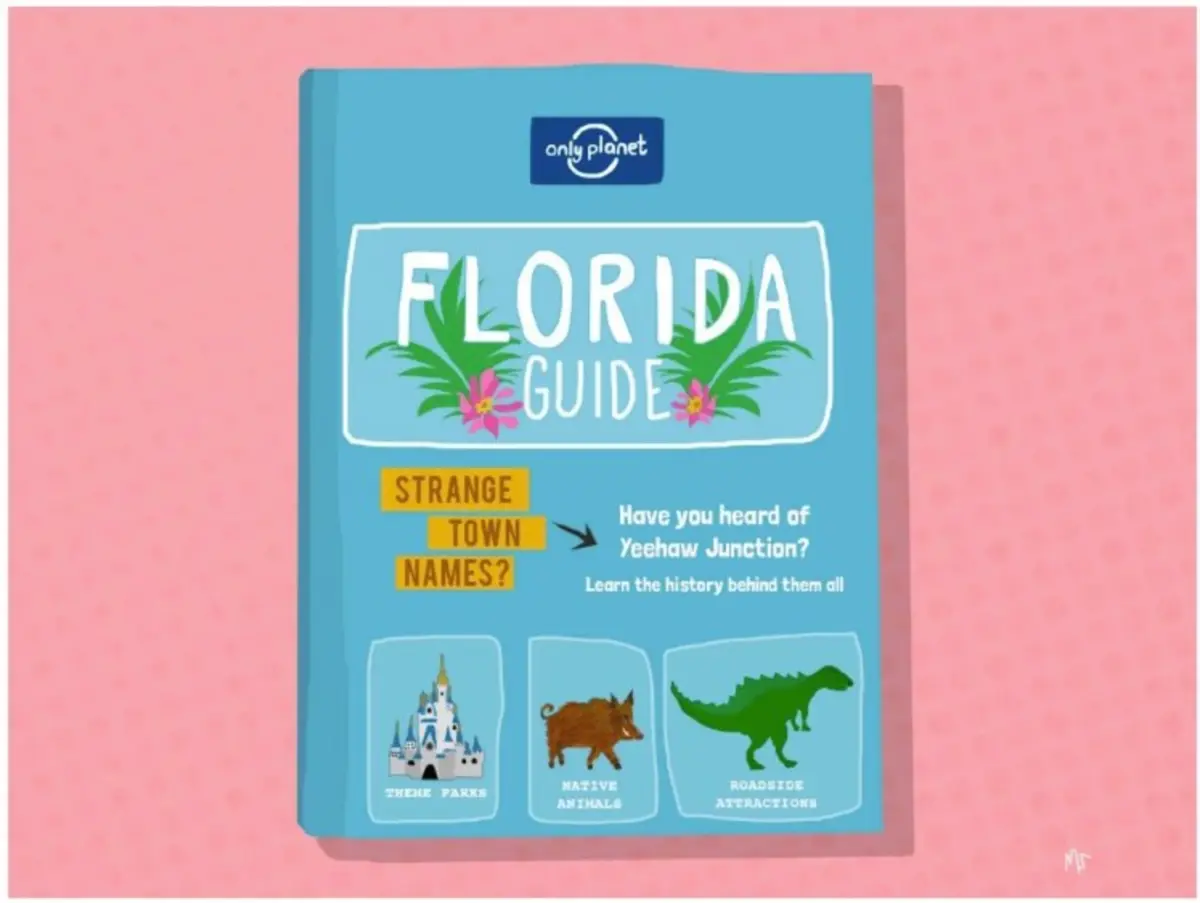
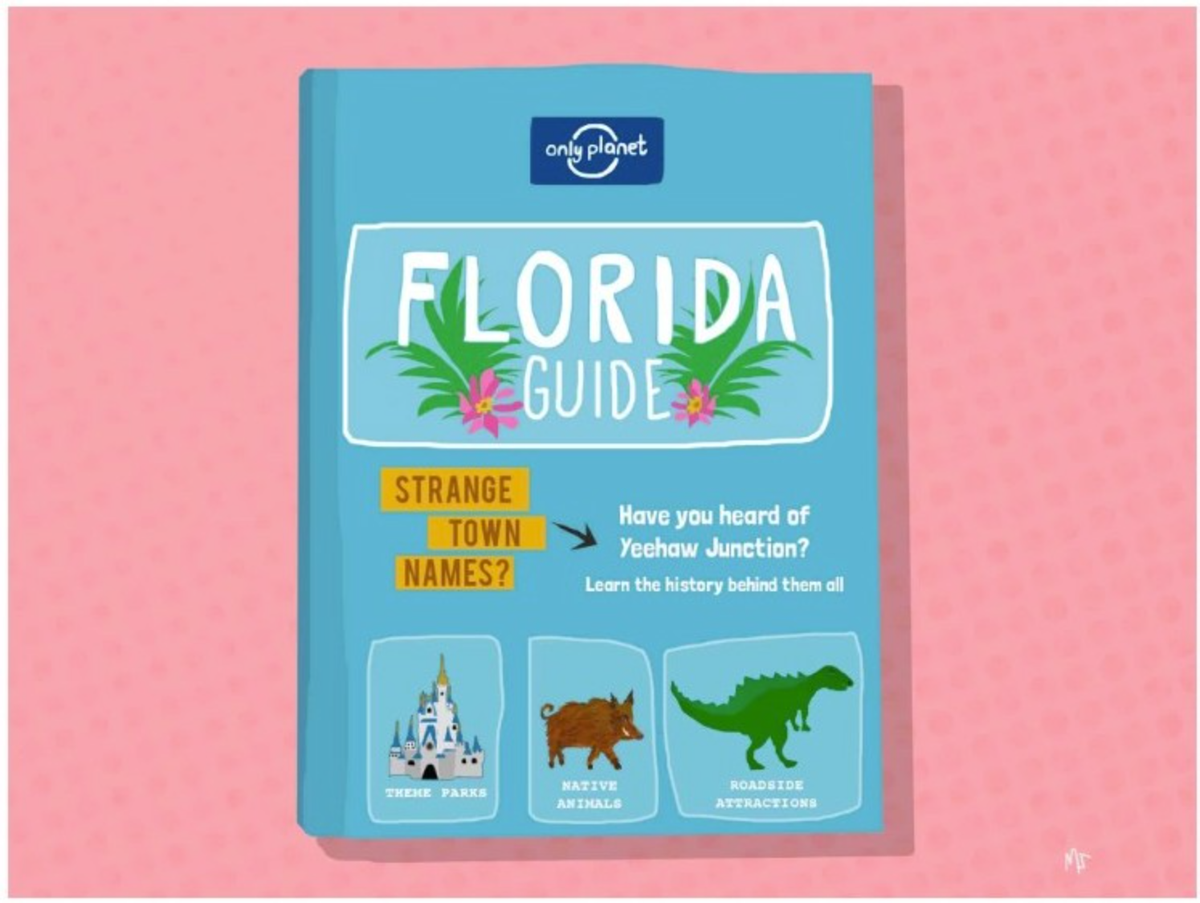
- The Narrative: More a geographic coordinate than a bustling metropolis, Yeehaw Junction’s name is subject to heavy historical debate. Theories range from a phonetic corruption of a Creek Indian word for "wolf" (referencing the extinct Florida Black Wolf) to the local use of "Jackass Junction" due to ranchers utilizing donkeys. Beyond its quirky name, the hamlet harbors a dark secret: in the late 1960s, it served as the site for the secret testing of "Agent TX," a biological warfare agent designed to devastate rival nations’ wheat crops.
4. Christmas
- Location: Orange County, east of Orlando.
- Population (2018): 1,146
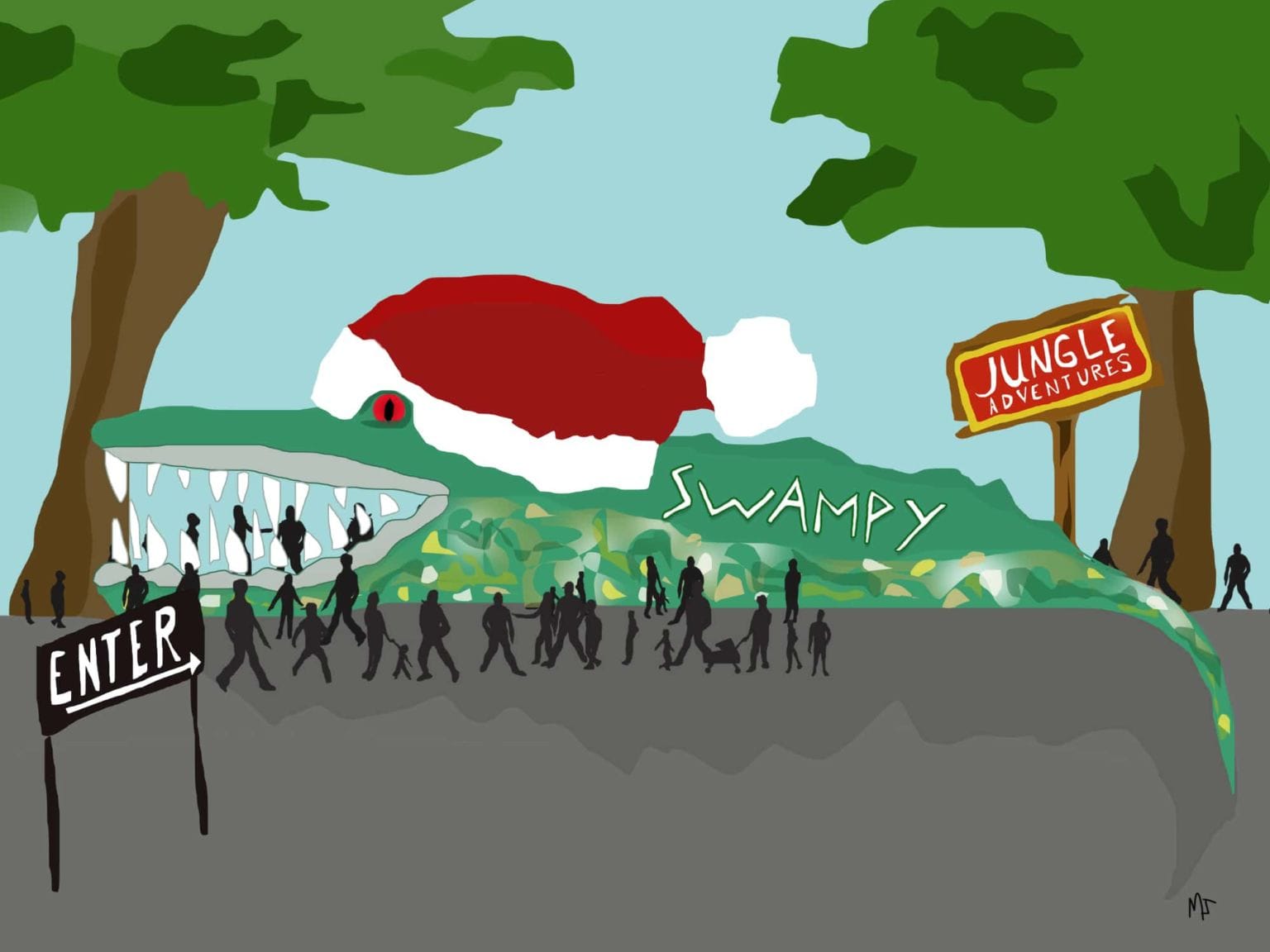
- The Narrative: Founded on Christmas Day in 1837 by 2,000 troops constructing Fort Christmas during the Second Seminole War, this community has leveraged its calendar-linked name into a permanent cultural institution. Each winter, thousands of holiday enthusiasts flood the local post office just to secure a coveted "Christmas, FL" postmark. The area is also home to the world’s largest alligator-shaped building, a fitting tribute to regional wildlife.
5. Two Egg
- Location: Jackson County, near the Northwest Florida-Georgia border.
- Population: Unofficial / Undisclosed
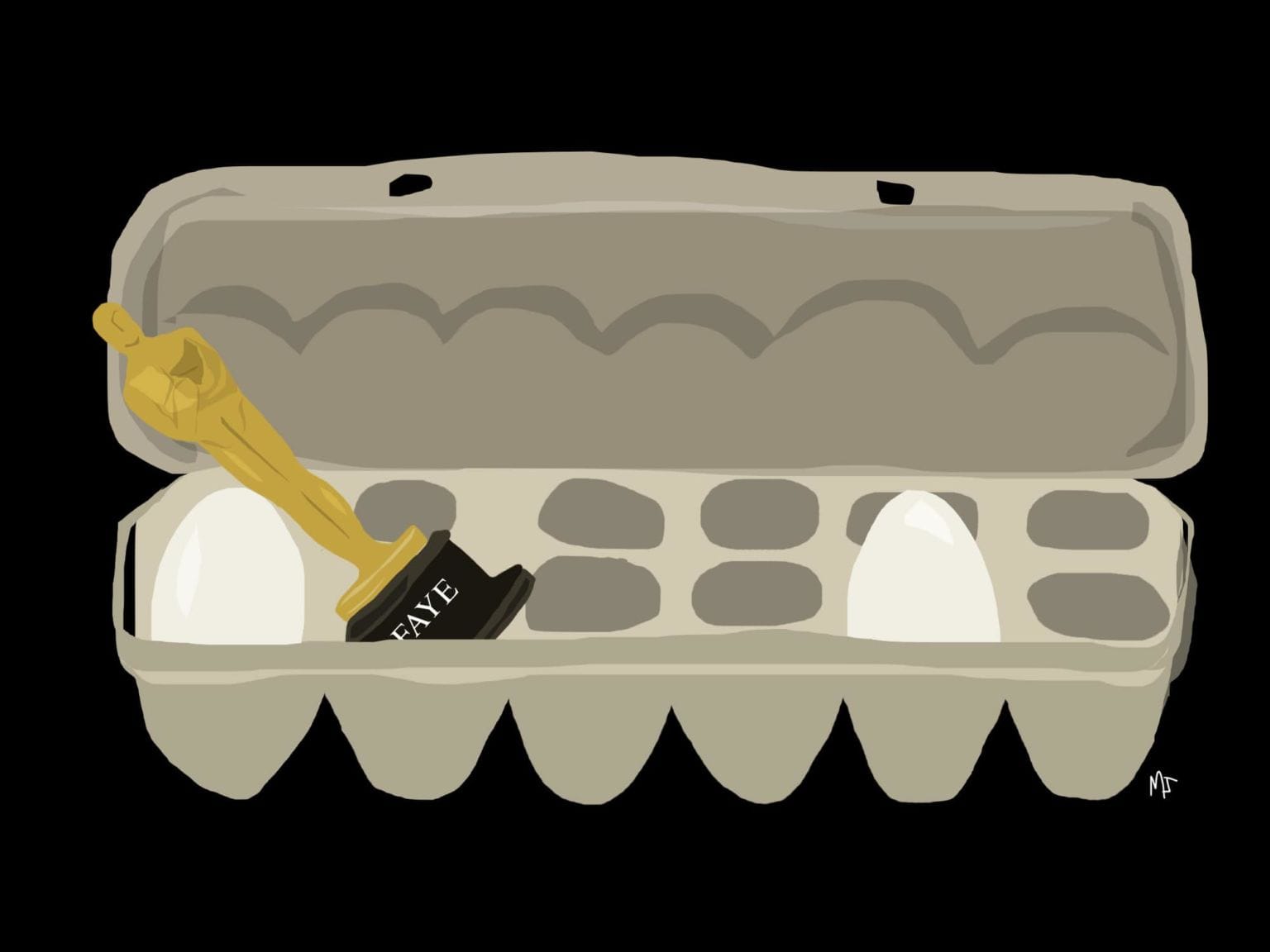
- The Narrative: Originally dubbed Allison after a local sawmill operation during the Civil War era, the community earned its enduring moniker during the bleak years of the Great Depression. As local lore dictates, local youths frequented a general store to barter two fresh eggs for essential cooking sugar. The transactional habit stuck, transforming the settlement into Two Egg—reportedly the childhood home of Academy Award-winning actress Faye Dunaway.
6. Bagdad
- Location: Santa Rosa County, Florida Panhandle.
- Population (2000): 1,490
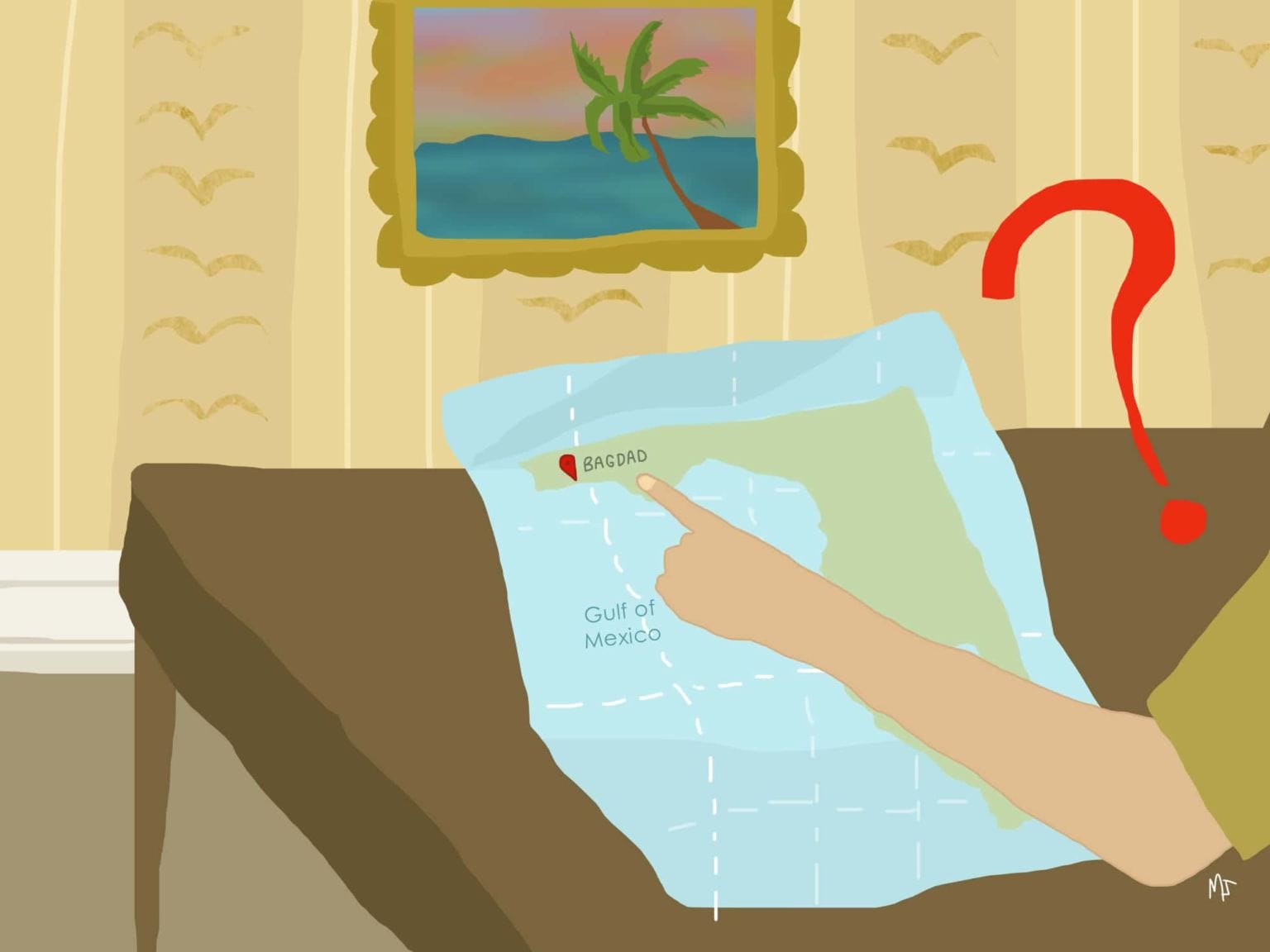
- The Narrative: Founded in 1840 as a lumber milling hub, Bagdad shares its spelling (minus one letter) with the capital of Iraq. While concrete historical records are sparse regarding the exact inspiration, local historians point to a geographic similarity: just as Baghdad sits near the confluence of the Tigris and Euphrates rivers, Florida’s Bagdad sits precisely where Pond Creek merges into the Blackwater River.
7. Briny Breezes
- Location: Palm Beach County, South Florida coast.
- Population (2000): 411
- The Narrative: Spanning a mere 0.1 square miles, Briny Breezes began as a 1920s strawberry farm where a Michigan lumberman rented out trailer and tourist plots for $3 a week. When he retired, tenants were given the opportunity to purchase their parcels for $2,000 each, eventually incorporating the coastal enclave. In 2005, the tiny town made national financial headlines when developers offered residents a staggering $500 million to buy out the property. Though the deal ultimately collapsed amid zoning litigation, Briny Breezes remains a tight-knit community predominantly inhabited by retirees living in mobile homes.
8. Lulu
- Location: Columbia County, North Central Florida.
- Population: Unofficial / Undisclosed
- The Narrative: Dating back to the 1890s, Lulu’s origin is tied to a classic romantic gesture. The community’s first postmaster named the fledgling settlement after his sweetheart, Lulu. While the romance itself ultimately withered away, the geographic designation proved immortal, continuing to draw former and current residents for historical celebrations.
9. Lorida
- Location: Highlands County, between Sebring and Lake Okeechobee.
- Population: Unofficial / Undisclosed
- The Narrative: Formerly known by various titles including Cow House, Sunnyland, and Istokpoga, this community faced persistent confusion with railway shipping manifests utilizing the "Istokpoga" name. In 1937, local leadership resolved the administrative chaos by simply stripping the letter "F" off the front of the state’s name, creating Lorida. Today, it remains a quiet retreat known for rustic fish camps and family-owned storefronts.
10. Mayo
- Location: Lafayette County, North Florida.
- Population (2010): 1,237
- The Narrative: Unlike many of its abstract neighbors, Mayo is named after an actual historical figure: Confederate Colonel James Micajah Mayo. However, the town achieved modern infamy in 2018 when it entered a commercial partnership with Kraft Heinz, temporarily rebranding itself as "Miracle Whip, Florida," in exchange for a $250,000 municipal donation. The town is also celebrated in sports history as the birthplace of University of Florida legendary quarterback Kerwin "Throwin’ Mayoan" Bell.
Official Statements and Archival Records
Historians and municipal archivists have long debated the intersection of commercial opportunism and genuine folklore in the naming of Florida’s unconventional towns.
In public archives regarding the establishment of Frostproof, agricultural historians note that boosters intentionally utilized psychological reassurance to combat environmental risk. "When you are asking families to stake their entire financial future on frost-sensitive citrus groves in an untamed wilderness, perception is everything," notes historical preservation literature from Polk County. "Naming a town ‘Frostproof’ was less about meteorological fact and more about establishing an unyielding corporate and agricultural manifest destiny."
Similarly, federal declassification documents released in 2002 shed light on the clandestine operations at Yeehaw Junction, verifying that the U.S. government utilized isolated rural infrastructure during the Cold War era for classified agricultural testing, operating entirely outside the knowledge of the local civilian populace.
Future Outlook
As Florida continues to experience explosive population growth, rapid suburban expansion, and modernization, these small, peculiarly named communities face a delicate balancing act. While metropolitan sprawl encroaches upon rural enclaves like Howey-in-the-Hills and Briny Breezes, the historic integrity of these unique geographic markers remains heavily guarded by local preservationists.
Whether driven by nostalgic celebrations in Lulu, seasonal postmarking frenzies in Christmas, or corporate marketing stunts in Mayo, Florida’s unusual town names serve as permanent testaments to a state that has always marched to the beat of its own eccentric drum. Far from fading into historical obscurity, these strange monikers ensure that the spirit of America’s "weird uncle" will remain permanently etched onto every map of the Sunshine State.

0 Comments