
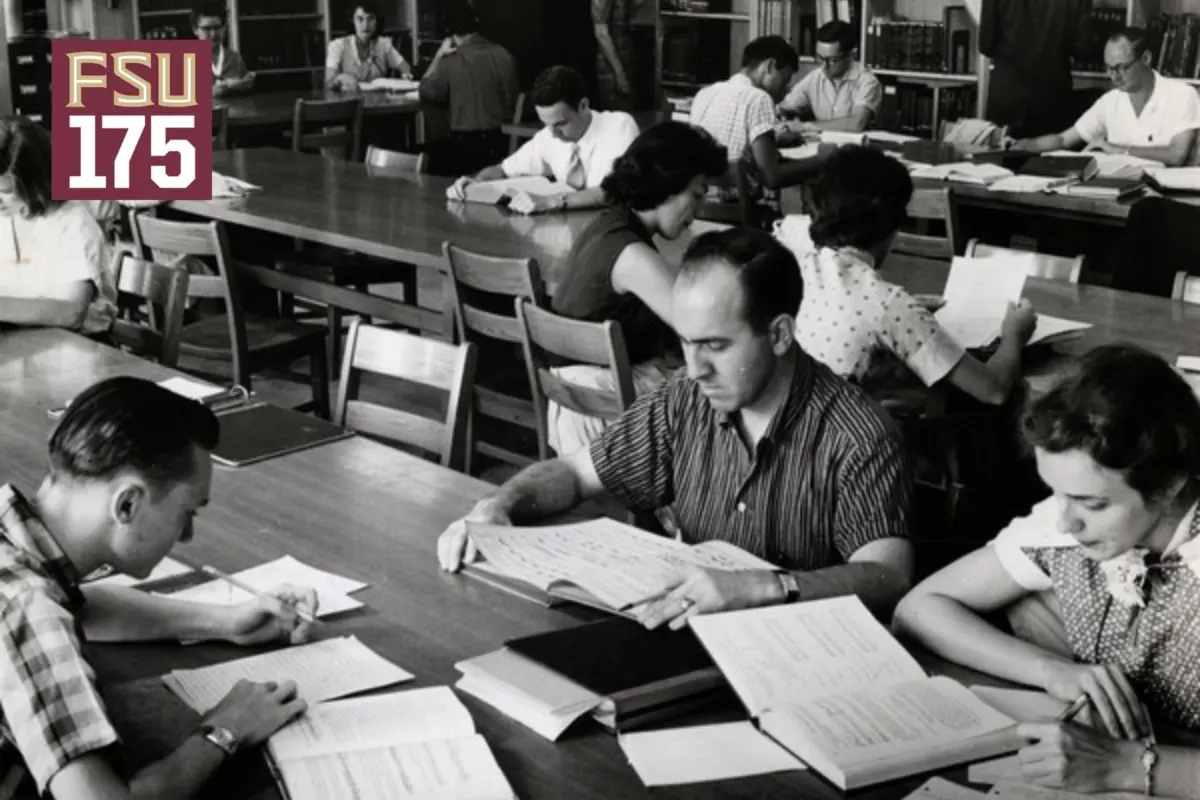

TALLAHASSEE, Fla. — For 175 years, generations of ambitious students have walked the pathways of Florida State University and its institutional predecessors, seeking not merely a credential, but a transformative educational experience. From the pioneers of public higher education in 19th-century Florida to the pioneering women of the Florida State College for Women, returning World War II veterans, and contemporary first-generation scholars charting unprecedented paths, FSU has remained a bedrock of opportunity.
Today, Florida State stands firmly among the nation’s premier public research institutions. It attracts record-shattering numbers of exceptionally accomplished scholars while fiercely preserving its historic mission: expanding access and elevating student achievement. As FSU welcomes an elite incoming first-year class for the fall term, the university is not only celebrating a milestone anniversary but also cementing its reputation as a national model for student success, retention, and graduation outcomes.
Executive Overview: A Landmark Class Meets a Historic Milestone
The numbers defining FSU’s current academic standing illustrate an institution operating at the absolute peak of its powers. For the recent fall term, the university received an unprecedented 96,000 applications—representing a dramatic 12% surge over the previous year. From this massive, highly competitive applicant pool, FSU welcomed a meticulously curated first-year class of nearly 6,000 students.
Geographically and demographically diverse, these incoming scholars hail from all 50 states, all 67 Florida counties, 55 foreign countries, and more than 2,700 high schools. Their academic metrics are nothing short of stellar:
- Average Core GPA: 4.5
- Average SAT Score: 1430
- Average ACT Score: 32
- Class Rank: 92% of the incoming class graduated in the top 10% of their high school tier.
Yet, these metrics represent more than institutional selectivity; they reflect a deliberate, 175-year evolution. "For 175 years, Florida State has expanded who has access to higher education while continually raising expectations for what students can achieve," said Provost and Executive Vice President for Academic Affairs Jim Clark. "Our success today is the result of generations of faculty and staff who believed talented students deserve every opportunity to excel."
Detailed Chronology: From Seminary to Global Research Powerhouse
The modern prestige of Florida State University rests upon a rich, complex, and evolving historical foundation that began long before the institution bore its current name.
1. The Seminary Era (1851–1905)
The institutional lineage commenced in 1851 when the Florida Legislature established the West Florida Seminary. By 1857, classes officially commenced on the Tallahassee hilltop near where the iconic Westcott Building stands today. This plot marks the oldest continuous site of higher education in the state of Florida, serving as the physical and spiritual heart of the university’s enduring legacy.
2. The Era of Women’s Higher Education (1905–1947)
As the state’s population and educational needs shifted, the institution adapted. In 1905, it transitioned into the Florida Female College, and four years later was officially renamed the Florida State College for Women (FSCW). At a historical juncture when systemic barriers severely limited women’s access to higher education, FSCW forged a formidable national reputation for rigorous academic standards, proving that rigorous intellectual inquiry knew no gender boundaries.
3. The Post-WWII Transformation and Integration
The conclusion of World War II catalyzed another demographic and structural transformation. Returning veterans, utilizing the historic GI Bill, flooded campuses across the nation seeking civilian careers and futures. Their influx into Tallahassee drove the institution’s return to coeducation and its official designation as Florida State University in 1947.
Decades later, FSU confronted and dismantled racial barriers. In 1965, Maxwell Courtney shattered the color barrier to become the university’s first Black student to earn a bachelor’s degree. Today, the Integration Statue near the Student Union stands as a permanent monument honoring Courtney and the trailblazers who integrated the campus.
Supporting Context & Metrics: Architecture of Student Success
FSU’s ascent to national prominence—highlighted by a No. 21 ranking among public universities by U.S. News & World Report and a No. 11 spot by Niche—is not an accident of geography or marketing. It is the direct result of systematic institutional engineering focused entirely on student retention, progression, and graduation.
Pioneering Support Systems
The university’s commitment to equity and access is vividly embodied in its support structures. Nearly one in four FSU undergraduates is a first-generation college student. Programs like the Center for Academic Retention and Enhancement (CARE)—whose philosophical roots trace back to the Horizons Unlimited program launched in 1968—provide vital advising, peer mentoring, and academic scaffolding. The CARE Summer Bridge Program offers incoming first-generation students an immersive head start on their undergraduate journeys.
Similarly, FSU maintains a profound commitment to military-affiliated students through its dedicated Student Veterans Center, ensuring that those who served the nation find a seamless transition into higher education.
Flexible Gateways: FSU Next and International Pathways
Recognizing that academic entry points vary, FSU provides innovative pathways for degree-seekers:
- FSU Next: More than 600 students begin their higher education journey at Tallahassee State College before transitioning seamlessly to FSU’s main campus.
- Global First-Year Programs: Approximately 300 students launch their college careers abroad through FSU’s international study centers via First Semester Abroad or First Year Abroad.
- Transfer Excellence: Transfer students account for roughly 25% of new undergraduate enrollment (2,500 to 3,000 students annually). Through specialized advising and support, FSU has generated the highest transfer student graduation rate in the history of Florida’s State University System.
Academic Rigor and National Honors
Under the administration of President Richard McCullough, FSU has aggressively scaled its elite academic opportunities. The Honors Program—founded in 1932—has doubled its cohort size from roughly 400 students per class to over 800, granting larger numbers of high-achieving scholars access to intimate seminars, faculty mentorship, and advanced research.
Concurrently, the Presidential Scholars Program, FSU’s premier undergraduate merit scholarship, has doubled its cohort to 60 students per class. These scholars receive multi-year leadership training, funding for international study, and dedicated resources for undergraduate research.
FSU’s research ecosystem spans major interdisciplinary fields. Undergraduates routinely work alongside world-class faculty in institutions such as the National High Magnetic Field Laboratory and the Florida Center for Reading Research, while pioneering initiatives in quantum information science and FSU Health expand horizons further.
Official Statements: Leadership on Vision and Belonging
The human element of FSU’s administrative philosophy was on full display during the annual Horizons Unlimited Conference, where campus leaders—including President Richard McCullough, Board of Trustees Chairman Peter Collins, and Head Football Coach Mike Norvell—shared their personal narratives as first-generation college graduates.
First Lady Jai Vartikar delivered an empowering message directly to incoming students:
"I believe in you. Florida State University believes in you. But most importantly, you have to believe in yourself."
This ethos of holistic support is championed structurally through the Office of Student Academic Success, led by Vice President Joe O’Shea. Appointed to oversee university-wide student success initiatives, O’Shea emphasizes that institutional achievement requires a collective campus-wide commitment:
"Student success happens when an entire university is committed to helping every student reach their highest potential. That commitment has defined Florida State for generations, and it continues to shape how we recruit, teach, advise and support our students every day."
Future Outlook: Evolving Curricula for the Workforce of Tomorrow
As FSU looks toward its post-semquascentennial future, the university continues to aggressively modernize its academic programming to meet the demands of a rapidly evolving global workforce.
While perennial favorites—Business, Engineering, Biology, Exploratory Studies, and Political Science—remain heavily populated, the university’s academic footprint has expanded into cutting-edge domains. Recent additions include:
- The nation’s first master’s concentration in AI Applications in Healthcare through the College of Nursing.
- A bachelor’s degree in Interdisciplinary Design housed in the newly established School of Design.
- A specialized Bachelor of Arts in Music Business.
- The versatile Integrated Studies degree, empowering students to construct custom interdisciplinary curricula tailored to specific vocational trajectories.
These academic innovations directly feed into extraordinary student outcomes. FSU currently boasts a 97% first-year retention rate (ranking among the top four nationwide), a 78% four-year graduation rate, and an 86% six-year graduation rate.
An Enduring Legacy
The physical landscape of Tallahassee has transformed dramatically since a small group of scholars gathered on a modest hilltop in 1851. Yet, the foundational DNA of Florida State University remains unaltered. By continuously adapting to the shifting ambitions of each successive generation while fiercely maintaining its commitment to access, excellence, and holistic student support, FSU has secured not only a top-tier national ranking, but a permanent place at the vanguard of American higher education.

0 Comments