
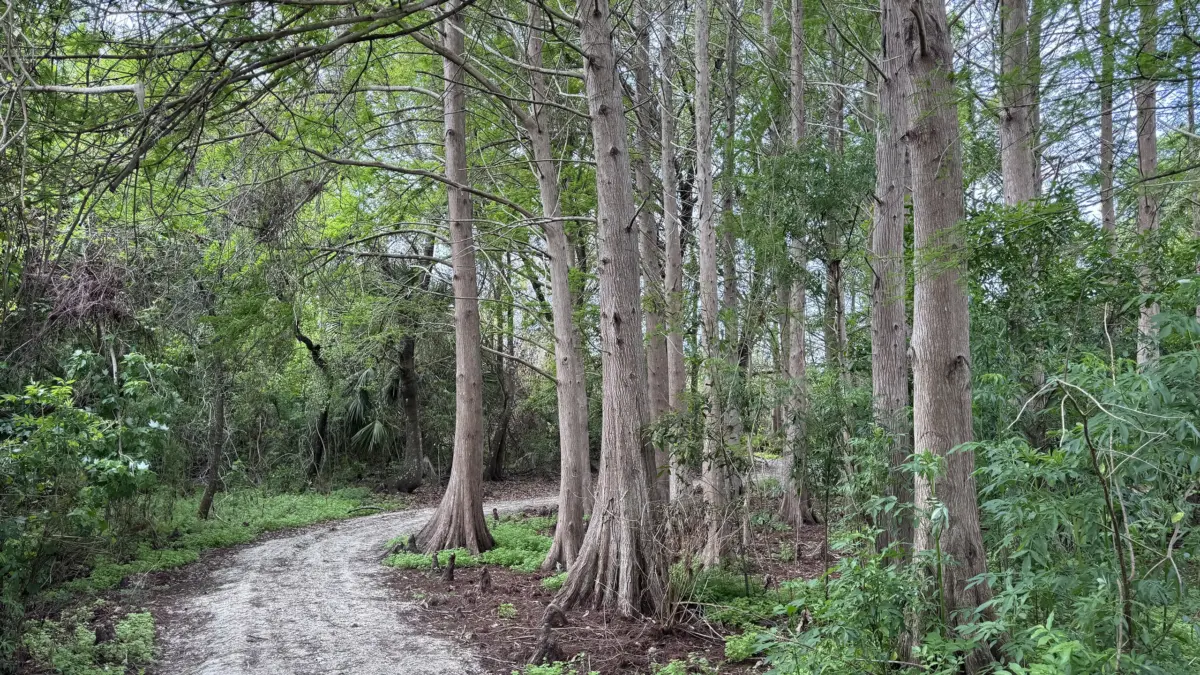

Nestled in the heart of St. Cloud, Florida, Peghorn Nature Park and Trail presents an intriguing intersection of regional history and conserved natural ecosystems. Spanning a compact yet ecologically diverse footprint, the 1.2-mile trail system offers visitors an immersive escape into a preserved 19th-century frontier outpost juxtaposed against dense Central Florida cypress swamps, hardwood hammocks, and flourishing wetlands. Named in honor of the historic "Cracker" cattle that once roamed these grounds a century ago, the park operates as both an open-air historical museum and a sanctuary for local flora and fauna.

Managed by the City of St. Cloud, Peghorn Nature Park successfully bridges the gap between environmental conservation and heritage education. Visitors stepping onto the property are immediately greeted by a meticulously curated pioneer village featuring authentic period structures, including a functional blacksmith forge, a historic cannery, and an old log schoolhouse complete with a traditional bell tower. Beyond this human footprint, however, lies a carefully maintained network of crushed-shell pathways and wooden boardwalks. These trails invite hikers, nature enthusiasts, and families to traverse delicate bayheads, cypress stands, and open ponds without disturbing the native wildlife.

Operating six days a week from Monday through Saturday, the park maintains a commitment to accessibility and public engagement. With no admission fees required, it serves as an invaluable municipal resource for outdoor recreation, ecological education, and peaceful reflection. Whether exploring the shaded canopy of loblolly bays and ancient oaks or paying respects at the park’s unique memorial, the Rainbow Bridge, Peghorn Nature Park stands out as a hidden gem within Central Florida’s ever-expanding landscape.

Detailed Chronology: Step-by-Step Through the Peghorn Experience
Arrival and the Trailhead Center
The journey through Peghorn Nature Park begins well before hikers hit the dirt trails. Situated at 2101 Peghorn Way in St. Cloud, the adventure starts at the Trailhead Center—a repurposed historic Florida home that sets the tone for the entire park. Inside, visitors are welcomed by shelves lined with historical artifacts, regional memorabilia, and educational texts that contextualize the pioneers who once settled the area.

For visitors preferring an alternative route or requiring physical accessibility, a concrete sidewalk loops around the exterior of the building, seamlessly connecting to an ADA-compliant ramp that leads directly to the back door. Stepping outside the rear of the center, the path branches off into a living snapshot of 19th-century pioneer life. To the east, guests can inspect a historic chicken coop and a traditional blacksmith forge where metalworking demonstrations bring the past to life. To the west, the sidewalk leads past a plant nursery and directly toward the crown jewel of the park’s historical exhibits: the historic log schoolhouse. Complete with an American flag and an original school bell mounted above the open doorway, this structure offers a poignant glimpse into early Florida education.

Embarking on the Loop: Into the Shaded Canopy
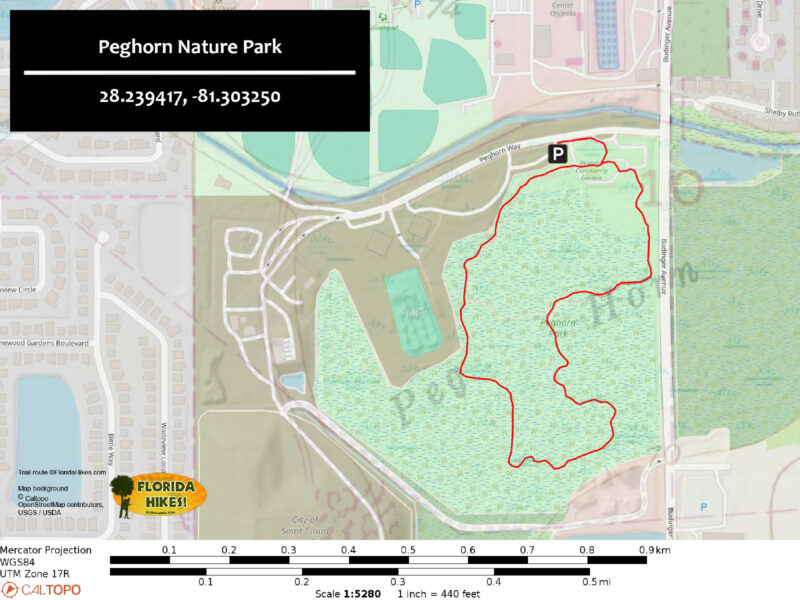
Beginning the counterclockwise trek past the schoolhouse, hikers encounter the official trailhead marker, signaling the transition from human history back into the natural world. The pathway shifts from concrete to a well-maintained corridor of crushed white shells, flanked by wooden benches that invite quiet contemplation.

The trail immediately dives beneath a dense, protective canopy of towering bald cypress and ancient live oaks. As hikers advance along the primary blue-blazed trail, they cross paths with the intersecting orange trail at roughly the quarter-mile mark. Continuing straight on the blue trail, the landscape grows increasingly lush. The forest floor teems with native vegetation, including sprawling ferns, blackberry brambles, towering loblolly bays, and native lyonia draped heavily in wild grapevines.

The Hardwood Hammock and Wetland Boardwalks
At the 0.7-mile mark, an optional side trail marked with green arrows offers an adventurous detour, briefly plunging hikers deeper into a secluded hardwood hammock. This interior microhabitat showcases the rich biodiversity of Central Florida’s upland ecosystems, where dense canopies filter the intense Florida sunlight into dappled, golden patterns across the forest floor.

Rejoining the main path, hikers soon reach the eastern junction of the orange trail. Here, a sharp right turn directs travelers onto an extensive wooden boardwalk that spans a vibrant, water-logged wetland. This section of the park highlights the critical hydrological functions of the local ecosystem. The boardwalk carries visitors safely above muck and standing water, offering unobstructed views of native wetland flora, including delicate willows, brilliant red maples, and fragrant sweetbay magnolias.

Overlooks and the Journey Home
Emerging from the shaded canopy of the bayhead, the boardwalk terminates at the edge of an expansive open pond. This aquatic zone features a dedicated observation deck, providing an ideal vantage point for birdwatching, spotting aquatic turtles, or simply enjoying the tranquil water views.

Near the pond, the trail network converges once more. While the orange trail veers off toward a small bridge at the water’s edge, the blue trail guides hikers across the poignant "Rainbow Bridge"—a vibrantly painted memorial dedicated to lost animal companions. Crossing this bridge transitions visitors out of the deep woods and back into the cultivated grounds of the park. The final stretch utilizes the concrete sidewalk, curving past a working chicken run before officially terminating back at the Trailhead Center, successfully completing the 1.2-mile immersive loop.

Supporting Context & Metrics
Understanding the operational and geographical framework of Peghorn Nature Park requires an examination of its key metrics and logistical details:

- Location: St. Cloud, Florida (Osceola County)
- Total Trail Length: 1.2 miles (comprising primary loops and connecting boardwalks)
- Trailhead Coordinates: 28.239417, -81.303250
- Physical Address: 2101 Peghorn Way, St. Cloud, FL 34769
- Admission Fees: Completely Free to the public
- Operating Hours: Monday through Saturday, 8:00 AM – 6:00 PM (Closed Sundays)
- Land Management: City of St. Cloud Parks and Recreation Department
- Contact Information: 407-957-7243
- Accessibility: Features ADA-compliant ramps at the Trailhead Center, paved exterior sidewalks, and elevated boardwalks over wetland zones. Leashed dogs are warmly welcomed throughout the property.
Navigational Directions
For travelers approaching from the center of St. Cloud, reaching the park is a straightforward commute. From the intersection of Florida Avenue and US 441, head south on Florida Avenue for approximately 0.2 miles. Make a right turn onto 17th Street and continue for 1.2 miles. Turn left onto Budinger Avenue, travel 0.2 miles, and take a final right onto Peghorn Way. The park entrance will be immediately visible, with the primary parking area and dedicated accessible spaces situated directly in front of the Trailhead Center.

Official Statements and Municipal Vision
The City of St. Cloud has long championed Peghorn Nature Park not merely as a recreational amenity, but as an essential educational and cultural anchor for the community. Municipal leadership emphasizes that the park was intentionally designed to honor the heritage of early Florida settlers while simultaneously safeguarding sensitive local watersheds.

In public statements regarding the park’s management, representatives from the St. Cloud Parks and Recreation Department have stressed the importance of balancing public access with environmental preservation. "Peghorn Nature Park serves as a living classroom," municipal officials note. "By preserving historical structures like the blacksmith forge and the log schoolhouse alongside our native cypress wetlands, we provide residents and visitors with a tangible connection to the past. At the same time, maintaining stringent environmental standards ensures that our local wildlife habitats remain undisturbed for generations to come."

Conservation advocates and local land managers frequently collaborate to ensure that trail maintenance—such as the replenishment of crushed shell pathways and the structural upkeep of timber boardwalks—respects the surrounding hydrology. This proactive municipal oversight guarantees that the park remains a safe, clean, and educational environment for thousands of annual visitors, ranging from local school groups to eco-tourists exploring Central Florida.

Future Outlook
As Osceola County continues to experience rapid residential and commercial development, urban green spaces like Peghorn Nature Park face increasing pressures to accommodate higher volumes of visitors while preserving their fragile ecosystems. Looking ahead, municipal planners and local conservationists are prioritizing sustainable land management strategies to protect the park’s unique ecological zones from surrounding suburban encroachment.
Future initiatives for Peghorn Nature Park include the potential expansion of interpretive signage along the trail network, enhancing the educational depth regarding native Florida plant species and pioneer survival techniques. Additionally, ongoing maintenance schedules for the wooden boardwalks and historical structures are being optimized using durable, eco-friendly materials to reduce long-term environmental footprints.

Furthermore, the park is poised to remain an integral part of the broader regional trail network in Central Florida. By maintaining strong partnerships with conservation groups and outdoor advocacy platforms, Peghorn Nature Park will undoubtedly continue to serve as a vital sanctuary. It offers a rare, harmonious blend of Florida’s wild natural heritage and its rich, rugged pioneer history, ensuring that future generations can step back in time while walking softly upon the land.

0 Comments