
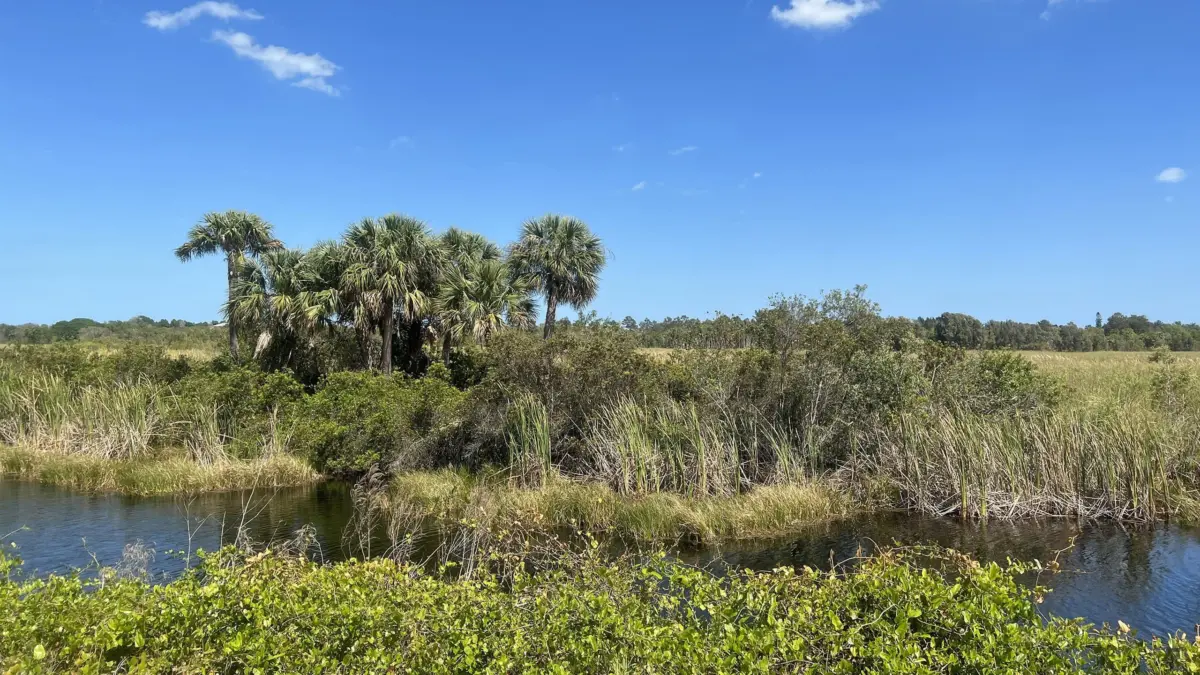

Spanning a pristine, ecologically diverse 550 acres of St. Lucie County, the Savannas Recreation Area represents the northernmost terminus of a vast freshwater marsh system stretching uninterrupted from Fort Pierce down to Jensen Beach. Managed by the St. Lucie County Parks and Recreation Department, this county park balances outdoor recreation with critical wetlands conservation. Dominated predominantly by an expansive, sun-drenched freshwater marsh, the preserve also incorporates a slender, elevated strip of pine flatwoods and scrub ecosystems. Within this high ground, visitors find a fully equipped campground, picnic areas, and watercraft launches that serve as the gateway to immersive natural exploration.

Far from being a mere suburban green space, the Savannas Recreation Area acts as an outdoor laboratory for hikers, birdwatchers, and paddlers alike. The park features two distinctly different pedestrian pathways—the North Trail and the Campground Loop—combining for a 3.4-mile trek that showcases native Florida flora and fauna. From the historic Trading Post, which functions as both park office and canoe rental hub, to the panoramic views afforded by the park’s observation tower, the recreation area offers a unique vantage point into Florida’s rare coastal freshwater systems. As local land managers grapple with balancing public access and environmental stewardship, this preserve remains an essential ecological anchor along the Atlantic Coastal Ridge.

Detailed Chronology: A Step-by-Step Hiking and Paddling Itinerary
The North Trail Journey: Canals, Trestles, and Wildlife
Beginning at the northern end of the unpaved park road, hikers embark on the North Trail—an accessible, sun-drenched trek built upon a historical berm. Navigating between stanchions, visitors immediately encounter an interface between dense stands of native pines and oaks and the sprawling, open expanses of the marsh. At approximately the 0.4-mile mark, the path diverges from a nearby residential development boundary, steering hikers onto an expansive pedestrian bridge that arcs dramatically across an open-water pond within a marshy cove.

As the trail straightens out, it parallels a drainage canal that takes on a surprisingly natural appearance over time. Spoil piles along the eastern flank of the waterway support robust stands of cabbage palms and slash pines, providing visual texture and occasional pockets of shade. Continuing past functional culverts that allow vital water flow beneath the levee, the trail enters a brief, shaded stretch canopied by Australian pines—an invasive species managed for its canopy cover while local conservation efforts monitor native flora integration.

[Parking Area]
      │
      ▼ (0.2 miles north)
[North Trailhead / Stanchions]
      │
      ├─► [0.4 mi] Pedestrian Bridge over Marsh Cove
      ├─► [1.1 mi] Australian Pine Shady Stretch & Willow Marsh
      └─► [1.4 mi] Northern Terminus (Brightline Trestle / Indian Hills)
      │
      ▼ (Retrace 1.4 miles)
[Return to Park Road Junction] ──► [Campground Loop Bridge]
At 1.1 miles, a secondary bridge opens views toward a dense willow marsh spreading westward, soon flanked by low marshland on both sides of the path. Seasonally, towering marsh mallows burst into bloom, their delicate forms fluttering rhythmically in the salty sea breezes drifting inland from the nearby Indian River Lagoon. The North Trail officially culminates at 1.4 miles near a set of stanchions where a railway trestle punctuates the horizon. Here, high-speed Brightline trains frequently roar past overhead. Just beyond this trestle lies the Indian Hills Recreation Area, sparking ongoing municipal discussions regarding potential regional trail integration. After absorbing the northern vistas, hikers retrace their steps southward. The shifting angles of sunlight cast new shadows across the water, providing optimal conditions for spotting sunning American alligators or ripples left behind by otters swimming in the canal.

The Campground Loop and Observation Tower
Upon completing the North Trail return, hikers traverse the park road to the pedestrian bridge leading directly into the Campground Loop. Crossing this bridge and turning right past a second waterway leads visitors to the southern terminus of the central marsh. Depending on recent precipitation and seasonal water tables, the surrounding grass can remain damp, heightening the sense of an authentic wetland expedition.

The path transitions into a narrow two-track trail wedged between towering cabbage palms, eventually climbing upward onto an engineered levee. Breaks in the dense vegetation offer dramatic vistas:

- To the West: Bay trees and delicate marsh ferns frame a deepening, lily-padded pond that functions as an aquatic oasis.
- To the East: Tall cattails part to reveal water-lily-dotted drainage ditches, opening up panoramic sightlines across the broader expanse of the savannas.
Because of the vast, open water bodies that characterize the preserve, prevailing breezes pushing inland from the Atlantic Ocean create a natural "swamp cooler" effect, keeping the elevated pathways refreshingly temperate even during warmer months. Approximately 0.3 miles into the Campground Loop, a palm-lined spur trail directs hikers northward toward the park’s observation tower. Ascending a single flight of stairs yields a sweeping, bird’s-eye panorama facing south across the entire wetland mosaic and its intersecting canals. Returning south along the spur and navigating the western edge of the loop past primitive group campsites—where the trail briefly dissolves into an indistinct path through oak hammocks—brings visitors back to the park road, completing the comprehensive 3.4-mile trek.

Supporting Context & Metrics: Park Overview & Specifications
For prospective visitors, researchers, and outdoor enthusiasts, understanding the logistical parameters of the Savannas Recreation Area is critical for planning a safe and rewarding excursion.

Core Site Metrics
- Location: Fort Pierce, FL (St. Lucie County)
- Total Acreage: 550 Acres
- Total Trail Length: 3.4 miles (combined North Trail and Campground Loop)
- Trailhead Coordinates: 27.39526, -80.31238
- Physical Address: 1400 E Midway Rd, Fort Pierce, FL 34982
- Admission Fees: Free to enter and park
- Operating Hours: Open daily from sunrise to sunset
- Land Manager: St. Lucie County Parks and Recreation Department
- Contact Number: 772-464-7855
Amenities & Infrastructure
- Restrooms: Conveniently located at the historic Trading Post building near the park entrance.
- Paddling: Visitors can rent canoes and kayaks directly at the Trading Post—a restored turn-of-the-last-century structure serving as the primary visitor contact station.
- Camping: A fully operational county campground with designated sites and primitive group camping areas (advance reservations required via county administration).
- Pet Policy: Leashed dogs are welcome throughout the park grounds, including proximity to the dedicated dog park area near the central trail connectors.
Ecological and Safety Considerations
- Sun Exposure: Both the North Trail and the Campground Loop are primarily unshaded, sun-drenched pathways. Comprehensive sun protection (hats, UV-blocking clothing, and high-SPF sunscreen) is strongly recommended by park authorities.
- Wildlife Interactions: The aquatic and marsh habitats support robust populations of American alligators (Alligator mississippiensis). Visitors must exercise extreme caution along canal banks and wetland bridges, maintain a respectful distance, and strictly adhere to no-feeding policies.
Official Statements & Administrative Insights
Local land management and environmental agencies emphasize the dual mandate of the Savannas Recreation Area: preserving a fragile coastal wetland ecosystem while providing accessible, low-impact public recreation.

In public administration briefings, St. Lucie County officials have repeatedly highlighted the hydrological significance of the freshwater savannas. Unlike traditional riverine systems, these freshwater wetlands rely heavily on localized rainwater filtration and subterranean seepage held behind ancient coastal sand ridges. This delicate hydrological balance requires continuous monitoring by county environmental resource managers to prevent degradation from surrounding suburban encroachment and stormwater runoff.

Furthermore, regional transportation and greenway planners have noted the strategic positioning of the park within the broader Florida greenway network. Urban planning documents and preliminary feasibility studies frequently reference the park’s northern terminus—where the Brightline rail trestle abuts the Indian Hills Recreation Area. Municipal stakeholders have expressed long-term interest in establishing a dedicated non-motorized pedestrian and cycling bridge connection across this corridor. Such an infrastructure project would effectively pull long-distance cyclists off high-volume vehicular roadways and seamlessly integrate the Savannas Recreation Area into the larger East Coast Greenway, amplifying both eco-tourism opportunities and regional connectivity.

Future Outlook: Conservation, Connectivity, and Community Engagement
As the surrounding Treasure Coast region experiences accelerated residential and commercial development, the future of the Savannas Recreation Area hinges upon aggressive habitat preservation and strategic inter-agency collaboration. The encroachment of suburban housing developments along the western boundaries of the preserve—evident along sections of the North Trail—underscores the urgency of maintaining robust buffer zones. County land managers are actively exploring native vegetation restoration projects, focusing heavily on mitigating invasive exotic species such as the Australian pine (Casuarina equisetifolia) while encouraging the expansion of native slash pine flatwoods and wet prairies.

In terms of public engagement, the St. Lucie County Parks and Recreation Department continues to invest in interpretive programming centered around the historic Trading Post. By transforming a historical structure into an active educational and outfitting hub, the park bridges historical heritage with contemporary environmental education. Plans for upcoming fiscal cycles include enhanced water quality monitoring programs, expanded primitive camping amenities, and updated digital trail mapping systems to assist the growing influx of ecotourists.

Ultimately, the Savannas Recreation Area stands as a resilient natural sanctuary. Through careful balancing of recreational access, wildlife protection, and visionary regional trail planning, this 550-acre preserve is poised to remain an invaluable ecological and recreational cornerstone for Fort Pierce and the broader Florida landscape for decades to come.

0 Comments