

Executive Overview
Amid the sprawling suburban expansion and high-density urban development of coastal South Florida, pockets of historical wilderness endure as resilient reminders of a pre-settlement era. Chief among these rare ecosystems is the Delray Oaks Natural Area, a carefully protected 25-acre sanctuary managed by Palm Beach County. Situated within the boundaries of Delray Beach, this xeric hammock and seasonal strand swamp ecosystem offers a vital ecological window into a time when native hardwood canopies and ancient dune landscapes completely dominated the South Florida coastline.

Far from being merely a recreational amenity, Delray Oaks functions as an urban wildlife refuge, a botanical classroom, and an essential hydrological buffer. The preserve protects mature, gnarled live oaks (Quercus virginiana), wild coffee, and delicate understory ferns that would otherwise have been swallowed by real estate development. Visitors traversing the preserve’s 0.8-mile trail network experience a sharp sensory contrast: just steps away from modern residential condominium complexes and bustling thoroughfares lies a deeply shaded, atmospheric canopy where the sounds of urban traffic are largely muffled by rustling Spanish moss and the calls of native birdlife.

For conservationists, urban planners, and outdoor enthusiasts alike, Delray Oaks Natural Area represents a masterclass in municipal land stewardship—proving that high-growth metropolitan regions can successfully balance urban development with the preservation of irreplaceable natural heritage.

Detailed Chronology: Navigating the Trails of Delray Oaks
The experience of exploring Delray Oaks Natural Area is characterized by a seamless transition from modern accessibility to rugged, immersive wilderness. The property features a dual-path system consisting of a fully accessible paved ribbon of sidewalk and a more robust, quarter-mile yellow-blazed dirt footpath that cuts deeper into the forest’s interior.

The Trailhead and the Accessible Canopy
The journey begins at the wooded edge of the parking area, where a large municipal kiosk provides comprehensive trail maps, safety notices, and environmental guidelines. Immediately surrounding the trailhead, visitors are greeted by stands of taller-than-average wild coffee plants, signaling the ecological richness of the understory.

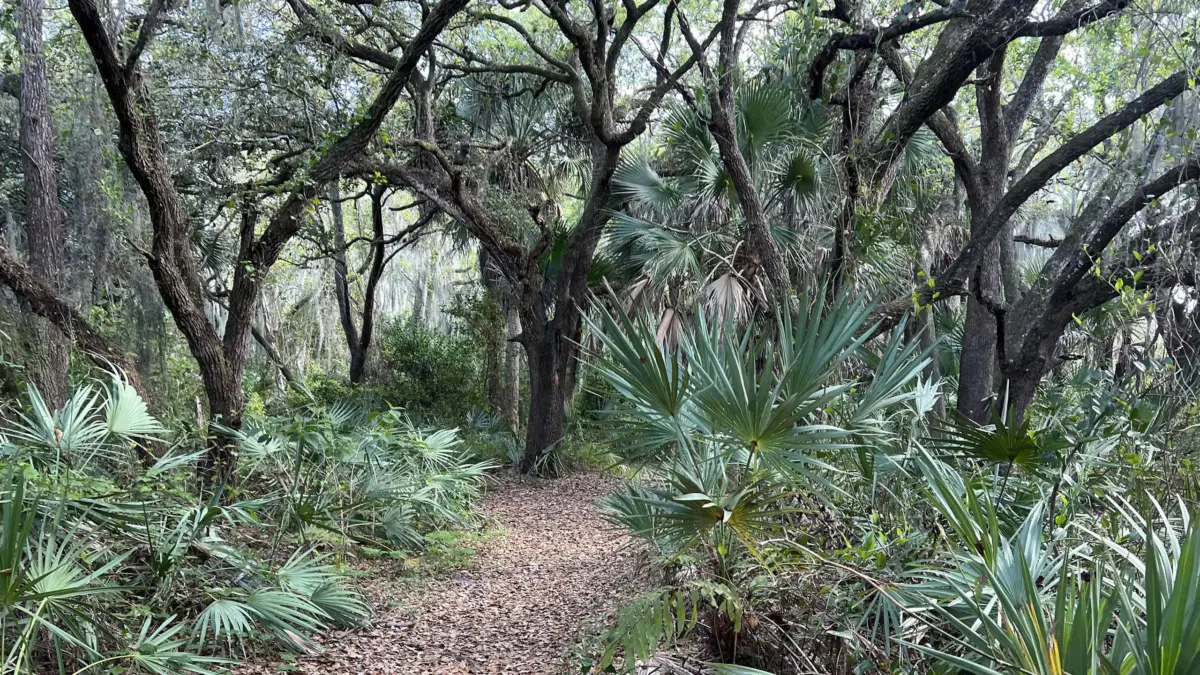
Passing through a rustic split-rail fence, hikers step onto a concrete pathway framed by massive live oaks whose sweeping limbs create natural, cathedral-like arches overhead. This accessible stretch weaves through a dense stand of native cabbage palms (Sabal palmetto), accompanied by interpretive signage detailing ongoing municipal efforts to remove invasive fern species and protect native flora. Within a short distance, the harsh South Florida sunlight is almost entirely blotted out by a tightly knit, multi-layered canopy.

The Yellow-Blazed Footpath Adventure
For those seeking a more rigorous and immersive hiking experience, a broad, leafy opening on the left side of the main path marks the beginning of the quarter-mile yellow-blazed footpath.

- The Outer Loop (0.1 miles): Following a sharp turn past a post marked with a yellow circle, hikers find themselves walking beneath live oaks heavily draped in swaying Spanish moss. The trail narrows here, edged by a dense wall of sword ferns, wild coffee, and shimmering beautyberry bushes that catch filtered patches of sunlight.
- Navigating the Understory: As the terrain shifts slightly—transitioning from damp depressions carpeted in marsh ferns to drier, leaf-littered soils populated by bracken fern and smilax—the path curves past a confirmation blaze. A shaded wooden bench sits quietly in a small clearing where larger live oaks reach desperately for open sky.
- The Urban Interface: Beyond a wide corridor flanked by saw palmetto, the trail encounters one of the most poignant reminders of the preserve’s history: a stark, immediate property boundary where a residential condo complex sits directly against a chain-link fence. This striking juxtaposition illustrates how close this woodland came to total erasure before preservation efforts stepped in. The trail hugs this boundary briefly before plunging hikers back into the safety of the oak canopy and looping back to the main walkway.
The Strand Swamp Overlook
Rejoining the primary paved pathway and heading deeper into the preserve, the landscape opens briefly to reveal silvery-blue saw palmetto before closing back into a shaded oak archway.

The final stretch of the trail curves gently along a split-rail fence that marks a noticeable elevation drop-off into a seasonal strand swamp. The hike culminates at a sturdy wooden observation deck extending out over this deep swale nestled between ancient sand dunes. Tangled vines, native palms, and rich wetland vegetation thrive below the deck, providing a dramatic finish to the 0.8-mile round-trip journey.

Supporting Context & Metrics: Ecological and Geographical Data
Understanding the value of Delray Oaks Natural Area requires a close examination of its physical dimensions, geographic coordinates, and ecological classifications. The preserve operates under strict municipal oversight to protect its sensitive habitats from human degradation.

Core Metrics & Property Specifications
- Location: Delray Beach, Palm Beach County, Florida
- Total Acreage: 25 Acres
- Total Trail Length: 0.8 miles (combining the 0.5-mile accessible path and the 0.25-mile yellow-blazed footpath loop)
- Trailhead Coordinates: 26.427132, -80.092739
- Physical Address: 2021 SW 29th Street, Delray Beach, FL 33445
- Admission Fees: Free to the public
- Operating Hours: Open daily from sunrise to sunset
- Amenities: Trailhead kiosk, interpretive signage, observation deck, and automobile parking area. (Note: There are no public restrooms on-site, and pets are strictly prohibited to protect local wildlife).
Geographical Access
The preserve is conveniently situated for regional travelers. Motorists exiting Interstate 95 at Exit 51 (Linton Boulevard) in Delray Beach can travel one traffic light west to South Congress Avenue, head south for approximately 0.9 miles to SW 22nd Avenue, and make an immediate right turn to locate the parking area on the right.

Ecological Classification: Xeric Hammock and Strand Swamp
The 25-acre parcel is ecologically significant due to its dual landscape profile:

- Xeric Hammock: Characterized by well-drained, sandy soils sitting atop ancient coastal sand dunes. This environment supports drought-tolerant hardwood trees, most notably the massive live oaks that form the dominant canopy, alongside saw palmetto and wild coffee.
- Seasonal Strand Swamp: A low-lying drainage feature that retains water during the region’s heavy summer wet season. This dynamic hydrological zone supports specialized hydrophytic vegetation, creating a vital microhabitat for amphibians, wading birds, and aquatic insects.
Official Statements & Administrative Oversight
The long-term health and public accessibility of Delray Oaks Natural Area are maintained through the dedicated efforts of Palm Beach County’s environmental resource management division.

Palm Beach County Environmental Management Statement:
Municipal officials emphasize that natural areas like Delray Oaks are irreplaceable community assets. According to county land management directives, the primary objective at Delray Oaks is "the active preservation and restoration of native South Florida plant communities while providing safe, low-impact public access for environmental education and passive recreation."

County environmental scientists routinely monitor the preserve for invasive plant species—such as non-native ferns and climbing vines—that threaten to choke out delicate understory ecosystems. Through targeted removal programs, interpretive signage, and municipal maintenance schedules, the county ensures that visitors understand the fragility of urban wildernesses. Officials frequently remind the public that strict adherence to park rules—such as the prohibition of pets and staying on designated trails—is essential to protecting nesting birds and preventing soil compaction around the root systems of ancient live oaks.

Future Outlook: Conservation Challenges in Urban Environments
As South Florida continues to experience rapid population growth and intense real estate development pressures, the future outlook for isolated green spaces like Delray Oaks Natural Area hinges on proactive urban planning and aggressive conservation funding.

The Pressures of Encroachment
The visible proximity of condominium complexes along the eastern boundary of Delray Oaks serves as a permanent physical reminder of the "island effect" facing urban nature preserves. Surrounded entirely by municipal infrastructure, residential neighborhoods, and commercial corridors, the park cannot rely on natural wildlife corridors to replenish its animal populations. Consequently, active ecological management—including controlled invasive species eradication, trash abatement, and canopy health assessments—is mandatory to prevent ecological degradation.

Climate Resilience and Hydrology
Looking ahead, municipal land managers must also factor shifting weather patterns and rising sea levels into the long-term management of coastal preserves. While Delray Oaks sits on elevated ancient sand dunes, its seasonal strand swamp relies heavily on predictable seasonal rainfall cycles to recharge its hydrological functions. Changes in regional freshwater tables and stormwater runoff from surrounding urban surfaces pose ongoing management challenges.

Education as a Preservation Tool
Ultimately, the future of Delray Oaks Natural Area relies on community engagement. By transforming casual visitors into passionate advocates through accessible educational trails, observation decks, and published guides, the preserve fosters a culture of environmental stewardship. Ensuring that future generations can step beneath the shadowy, moss-draped branches of Delray Oaks guarantees that the region’s natural history remains a living, breathing reality rather than a forgotten footnote in local development history.

0 Comments