

Executive Overview
Every seasoned saltwater angler understands the eternal compromise of modern boat ownership: the delicate balance between maximizing open deck space for an active fishing crew and providing enough comfortable seating to keep everyone happy during long, grueling runs to the offshore grounds. Historically, dedicated sportfishing vessels favored wide-open, unencumbered cockpits free of obstructions, forcing crews to stand or perch precariously on coolers and gunwales. Today, however, the modern center-console market demands versatility. Buyers expect the plush amenities of a luxury cruiser paired with the hardcore utility of a tournament-ready battlewagon.
This evolution has forced marine architects and boatbuilders to rethink traditional layouts, giving rise to an array of innovative, on-demand seating solutions. Whether you are navigating sloppy, chop-filled seas on a 50-mile run to the shelf or fighting a stubborn pelagic species in tight quarters, today’s modular, folding, and removable seating options ensure you never have to choose between a sore back and a compromised casting deck. This comprehensive review examines the leading on-demand seating solutions available to the modern boater, evaluating their distinct advantages, inherent drawbacks, and must-have engineering features.
Detailed Chronology: The Evolution of Marine Seating
To understand how we arrived at today’s era of magnetic cushions and teardrop bean bags, it helps to examine how marine deck layouts have evolved over the past several decades.
The Era of the Bare-Bones Cockpit (Pre-1990s)
For generations, dedicated fishing boats—particularly center consoles—were stripped-down, utilitarian platforms. Seating was typically restricted to the helm leaning post and perhaps a small bench seat forward of the console. Bows were left completely open to allow anglers unobstructed movement, and coaming pads were thin or nonexistent. While this maximized fishability, it alienated family members and casual guests who found long days on the water physically punishing.
The Rise of Forward Seating (1990s–2000s)
As fiberglass manufacturing advanced and consumer demographics shifted, boat builders recognized that appealing exclusively to hardcore tournament anglers limited their market share. The 1990s and 2000s saw an explosion of "forward seating" configurations molded directly into the fiberglass of the bow. While this drastically improved creature comforts and helped market boats to non-fishing spouses, it drew the ire of purists who complained that fixed backrests and raised cushions made it impossible to lean against the gunwales while battling a fish.
The Modular, On-Demand Revolution (Present Day)
Recognizing the polarizing nature of fixed seating, contemporary marine engineers have shifted toward modularity. The prevailing philosophy of modern boat design is "now you see it, now you don’t." Today’s vessels leverage magnetic attachments, flush-folding mechanisms, and easily stowable materials that allow an owner to completely transform a family cruiser into an open-deck fishing machine in a matter of minutes. This design philosophy represents the current gold standard in modern boat manufacturing.
Supporting Context & Metrics: Evaluating On-Demand Seating Options
When outfitting a vessel for both high-speed runs and serious angling, selecting the right mix of removable or folding seats requires careful evaluation of deck ergonomics, storage constraints, and hydrodynamic forces. Below is a detailed breakdown of the primary on-demand seating categories currently dominating the market.
1. Bow Seats & Modular Forward Insertions
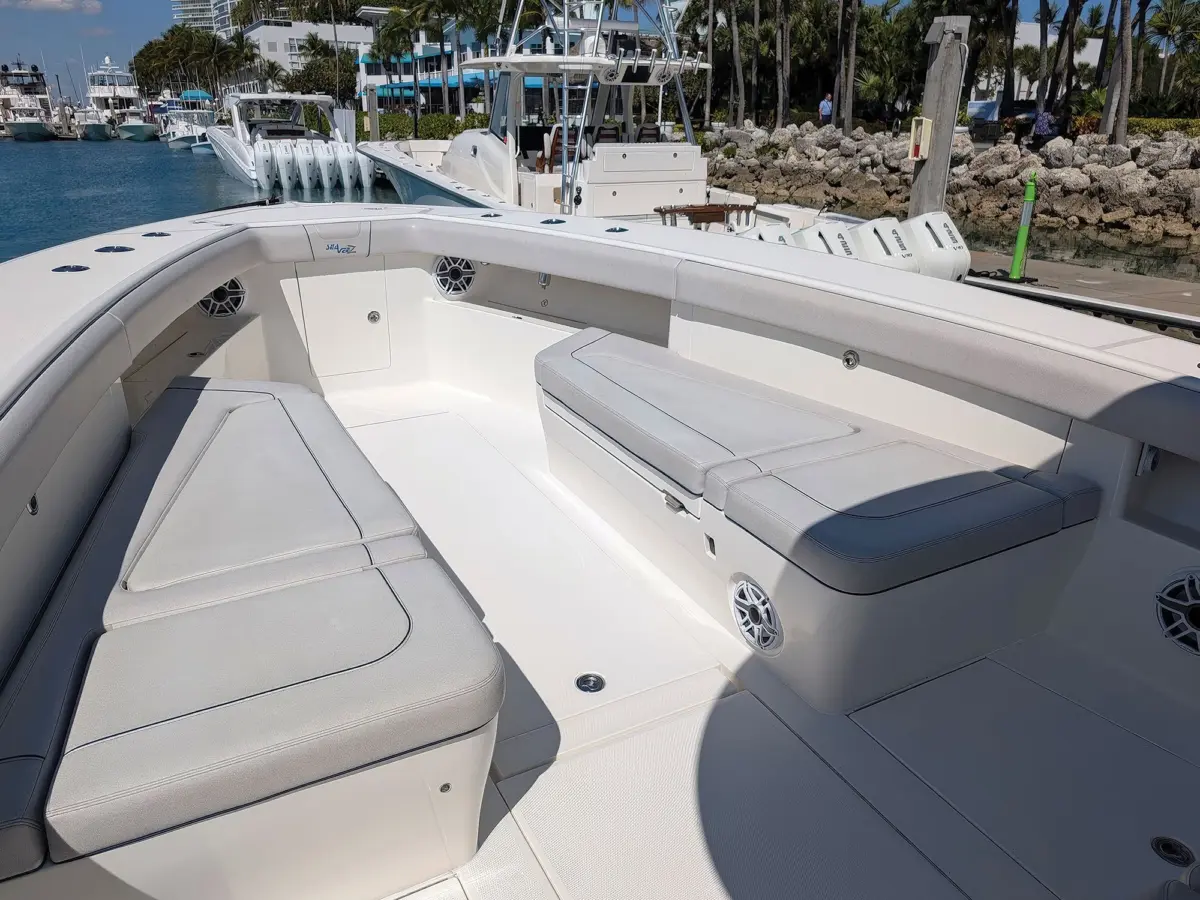
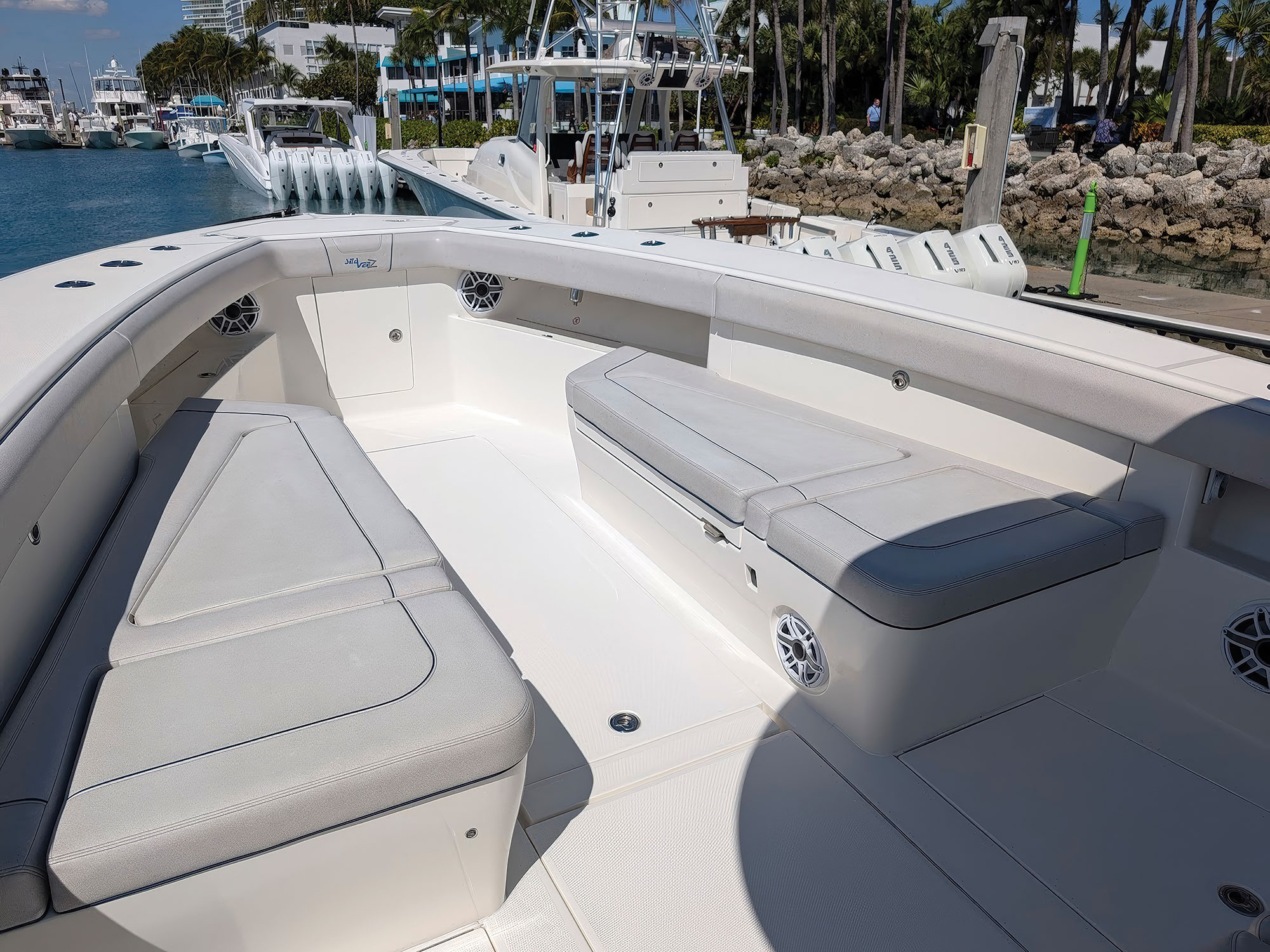
According to many hardcore anglers, a boat equipped with permanent bench seats or bowrider layouts in the bow is fundamentally a pleasure craft rather than a serious fishing platform. However, innovative builders have engineered a happy middle ground.
- Pros: Reclining or sitting comfortably during long runs to distant fishing grounds reduces fatigue and keeps the crew refreshed. Furthermore, quality bow seating is often the critical selling point that convinces a non-fishing spouse to support a major boat purchase. On smaller center consoles, the gap between forward bench seat bottoms can be seamlessly bridged with a temporary filler cushion or fiberglass board, transforming the bow into a massive, raised casting platform.
- Cons: Boats featuring fixed backrests severely impede a fisherman’s ability to lean against the gunwale—an essential technique when fighting large fish in rough seas. On larger hulls, this issue is mitigated by wider gunwale caps, but on smaller vessels, fixed backrests remain a liability.
- Must-Have Features: The single most critical element for forward bench seating is the ability to clear the bow instantly when a fish is hooked. Anglers need to brace against the gunwale while the captain maneuvers the boat. Consequently, bowrider seats must feature easily removable backrests or pivot mechanisms that lie completely flush against the coaming pads. Additionally, seat bottoms should be secured via heavy-duty marine magnets or quick-release pins for instantaneous removal.
2. Pedestal Casting Seats
Borrowed directly from the freshwater bass-fishing community, pedestal seating has carved out a vital niche among saltwater anglers who spend hours casting artificial lures to tailing fish in the shallows or working the rips offshore.
- Pros: Highly ergonomic, pedestal seats provide superior comfort during repetitive casting motions while occupying a remarkably small footprint on bow and stern casting platforms. They can be installed and removed in seconds.
- Cons: The extreme levering force exerted on pedestal bases during rough-water runs can place immense stress on the fiberglass deck. Poorly anchored bases or inadequate under-deck backing plates can lead to structural fiberglass cracks and catastrophic seat failures.
- Must-Have Features: Stout, oversized aluminum backing plates are non-negotiable to distribute structural forces evenly across the deck substrate. Furthermore, seat designs should feature a supportive rear section or low-profile backrest, and the pedestal itself must be height-adjustable to accommodate varying angler statures and sea conditions.
3. Bring-Aboard Foldable Deck Chairs
Often overlooked in favor of built-in furniture, portable deck chairs represent the pinnacle of flexible, zero-commitment seating.
- Pros: Foldable deck chairs can be placed precisely where needed, temporarily stowed in a lazarette, or left entirely at the dock when maximum deck space is required. Owners can scale the seating capacity up or down depending on the day’s manifest.
- Cons: Lightweight camping or lawn chairs are wholly unsuited for the marine environment; their high center of gravity and low mass make them dangerous projectiles in high winds or rolling seas.
- Must-Have Features: Deck chairs intended for offshore use must possess sufficient weight and a low center of gravity to remain firmly planted when unoccupied. They must feature robust, corrosion-resistant folding frames (such as anodized aluminum or 316 stainless steel) and durable, quick-drying mesh or marine-grade vinyl fabrics. Some specialized models even incorporate integrated gimbals to assist anglers during extended battles with heavy pelagic species.
4. Bean Bag Chairs
For offshore anglers making long, high-speed runs through lumpy, unpredictable seas, bean bag chairs have become an industry-standard remedy for chronic back strain and fatigue.
- Pros: The internal polystyrene beads compress organically to absorb the punishing shock of offshore waves. They are exceptionally comfortable, allowing crew members to rest or sleep during multi-hour transits. Positioned low in the cockpit, bean bags are shielded from direct wind and spray, and they can double as emergency flotation devices if necessary.
- Cons: Their generous volume demands substantial storage space once the vessel arrives at the fishing grounds and it’s time to clear the deck. Over time, internal beads compress and require replenishment, and interiors can become waterlogged if the vinyl cover is breached or zippers are left unsealed.
- Must-Have Features: Premium offshore bean bags require heavy-duty, UV-resistant marine vinyl covers with watertight, salt-protected zippers. The filling must consist of small, water-resistant virgin polystyrene beads rather than cheap shredded foam. Finally, they should feature an ergonomic teardrop shape rather than an amorphous living-room design, complemented by robust grab handles for secure transit.
5. Flip-Down Bench Seats
Widely regarded by marine architects as the gold standard for temporary cockpit seating, fold-down transom benches offer maximum utility with zero permanent footprint.
- Pros: These seats deploy in mere seconds to comfortably accommodate multiple crew members. Because the transom experiences the least vertical acceleration during high-speed runs, it is the most comfortable area of the boat for passengers prone to seasickness. Individual jump seats can also be installed along cockpit wings or adjacent to the console to utilize hardtop shade.
- Cons: The folding mechanisms can occasionally bind or corrode, making deployment frustrating. Furthermore, integrated seatbacks often rely on standard coaming pads, providing zero recline angle. Protruding hardware can also chafe crew members’ legs, and a flat transom requirement can sometimes compromise livewell volume.
- Must-Have Features: When stowed, seat bottoms must rest completely flush against the transom or coaming without intruding into the working cockpit. High-tolerance, corrosion-resistant stainless-steel hinges are essential to ensure smooth, effortless operation over years of saltwater exposure.
6. Cooler Seats
For owners of smaller center-console vessels, utilizing an insulated beverage cooler as an impromptu seating platform is an efficient, multi-functional design choice.
- Pros: Positioning a cooler directly forward of the console utilizes the dead center of the boat, ensuring weight is balanced symmetrically while preventing backward sliding. It provides an economical seating option without requiring custom fiberglass modifications.
- Cons: Cooler cushions offer minimal ergonomic support, and occupants must frequently stand up whenever someone needs access to drinks or ice.
- Must-Have Features: The seat cushion must feature secure fastening systems (such as heavy-duty snaps or hook-and-loop fasteners) to prevent it from flying off during high-speed turns, and the cooler itself must be bolted or securely strapped to the deck to prevent shifting.
Official Statements & Industry Insights
To gauge the trajectory of modern marine design, industry leaders and naval architects emphasize that versatility dictates consumer purchasing behavior.
"The modern boat buyer is no longer willing to compromise family comfort for the sake of a fishing trip, nor will they tolerate a boat that lacks fishability," notes naval architect and marine product developer Marcus Vance. "The entire paradigm of deck layout has shifted toward modularity. If a seat cannot be stowed, flipped, or removed in under sixty seconds, it is fighting against what the modern angler demands."
Furthermore, ergonomics experts within the marine manufacturing sector stress that reducing physical fatigue during offshore transit directly correlates with safety and performance.
"When running 40 miles offshore in a choppy sea, the human spine absorbs immense repetitive shock," explains marine ergonomist Dr. Sarah Lin. "Providing shock-absorbing seating like high-density foam pedestal mounts or teardrop bean bags isn’t just about luxury—it’s a critical safety measure that prevents cumulative fatigue among the boat crew."
Future Outlook
As materials science and marine engineering continue to advance, the future of on-demand boat seating points toward even greater integration of lightweight composites, smart materials, and automated deployment systems.
We are already beginning to see the early stages of hydraulic-assist folding transoms, carbon-fiber reinforced frames that slash weight while increasing structural integrity, and advanced antimicrobial, cooling-technology vinyls that prevent seats from overheating under the punishing tropical sun. Furthermore, manufacturers are experimenting with memory-foam hybrids and inflatable modular structures that pack down into remarkably compact compartments when not in use.
Ultimately, the eternal conflict between leisure and utility will continue to drive innovation in marine design. For the modern angler, the era of choosing between a sore back and a crowded deck is officially over. By investing in thoughtfully engineered, on-demand seating solutions, boat owners can effortlessly bridge the gap between tournament-ready efficiency and cruiser-level comfort, ensuring a true win-win for everyone on board.

0 Comments