

Executive Overview
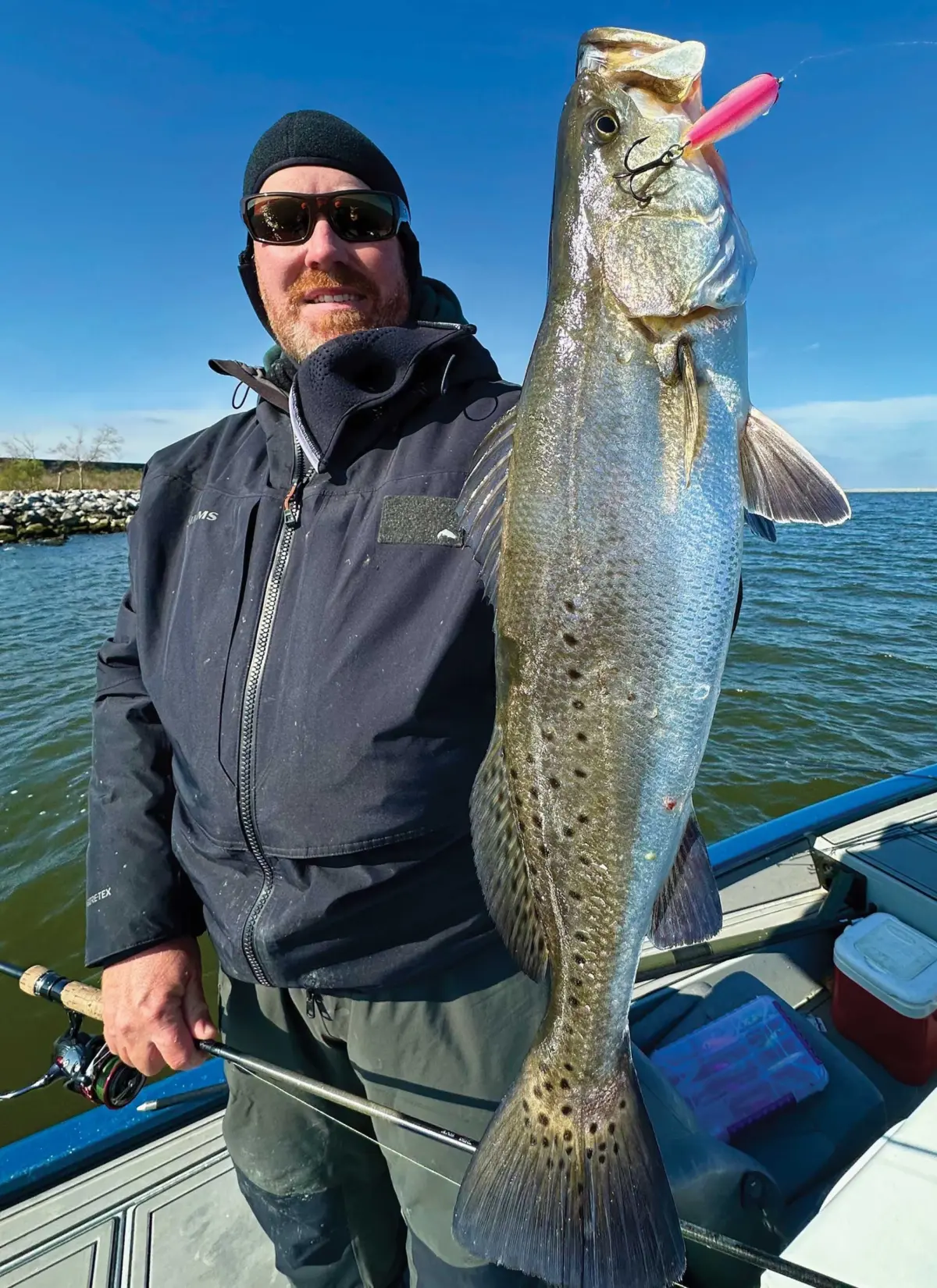
For decades, the standard narrative of Gulf Coast angling has placed the pursuit of trophy speckled trout squarely in the spring and summer months. However, seasoned guides and dedicated winter anglers along the Louisiana marshways understand a different truth: the heart of winter is when the true "mule trout"—gargantuan seatrout weighing well over five pounds—take up residence in structured, deep-water sanctuaries.
Chief among these wintertime honey-holes is the Mississippi River-Gulf Outlet, universally known as the MRGO. Originally engineered as a commercial shipping shortcut, this man-made waterway has evolved into a premier ecosystem for holding overwintering speckled trout (Cynoscion nebulosus).
This comprehensive report examines the seasonal migration patterns, advanced artificial lure techniques, specialized gear setups, and environmental factors that define wintertime trophy trout fishing in the MRGO. Drawing on insights from professional charter captains like Justin Bowles and Mike Gallo, this feature provides an authoritative guide for anglers willing to trade fast-paced, high-volume schoolie fishing for the patient, high-stakes pursuit of a Louisiana personal best.
Detailed Chronology: The Winter Migration and the Anatomy of a Trophy Strike
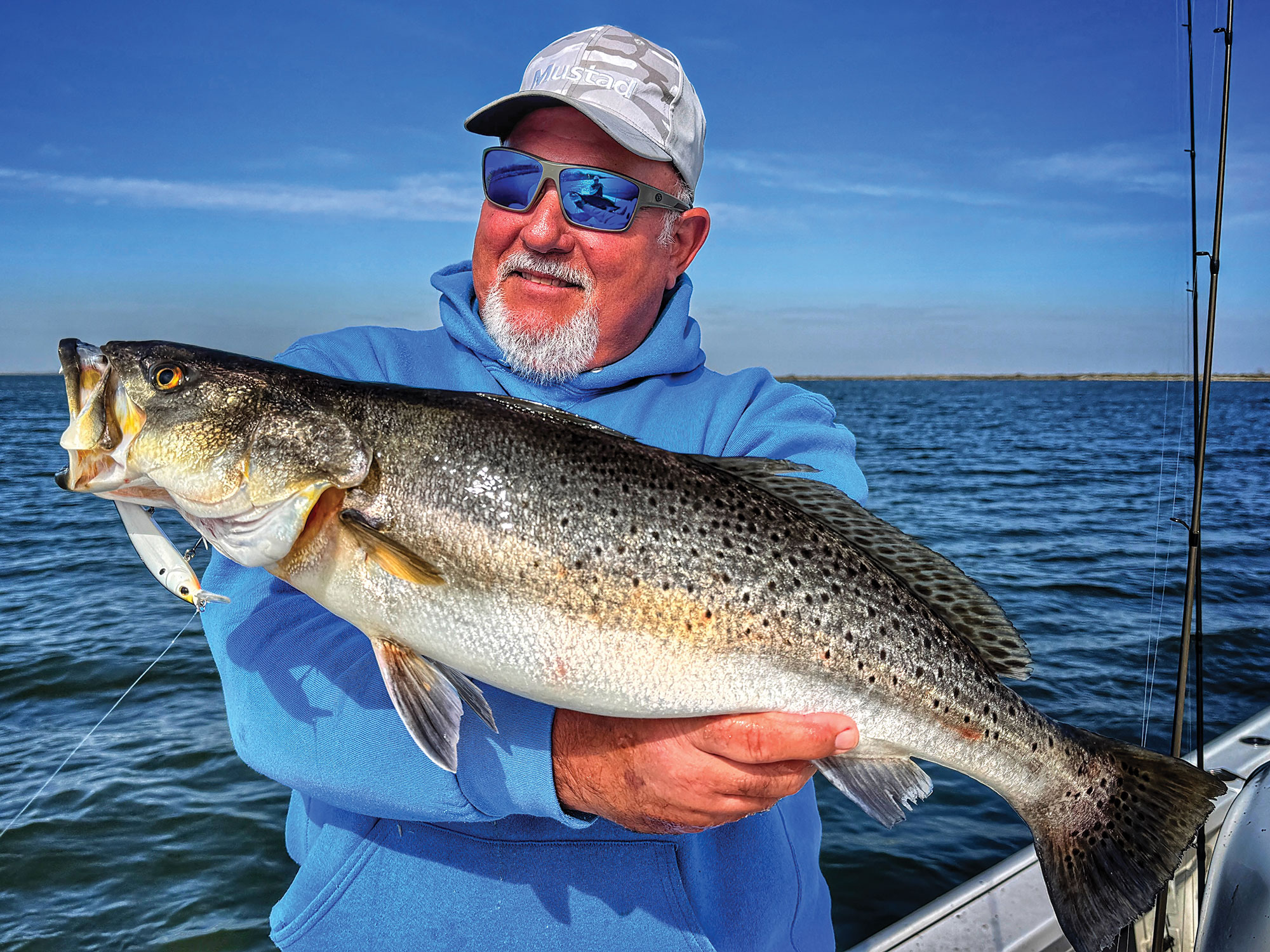
The seasonal shift toward winter changes the behavior of coastal baitfish and predators alike. As water temperatures plummet with the onset of November’s first true cold fronts, speckled trout across southeast Louisiana abandon shallow, exposed bays and marshes. Driven by an innate survival instinct, these fish seek thermal stability and abundant forage—qualities found in abundance within the deep conduits of the MRGO.
The Mechanics of the Migration
The migration into the MRGO begins in October, funneling speckled trout of all year-classes into the channel. While many local anglers are content to harvest standard legal-size "schoolies" by soaking live shrimp or bouncing soft-plastic paddletails off the bottom, a dedicated subset of trophy hunters targets the outer edges of the shipping channel using specialized hard-plastic jerkbaits.
The transition culminates in December, January, and February, when water temperatures dip into the upper 40s and low 50s. During these coldest months, the fish settle into distinct depth ranges along the rock-armored shorelines of the canal.
Anatomy of a Big-Trout Strike: A Guide’s Perspective
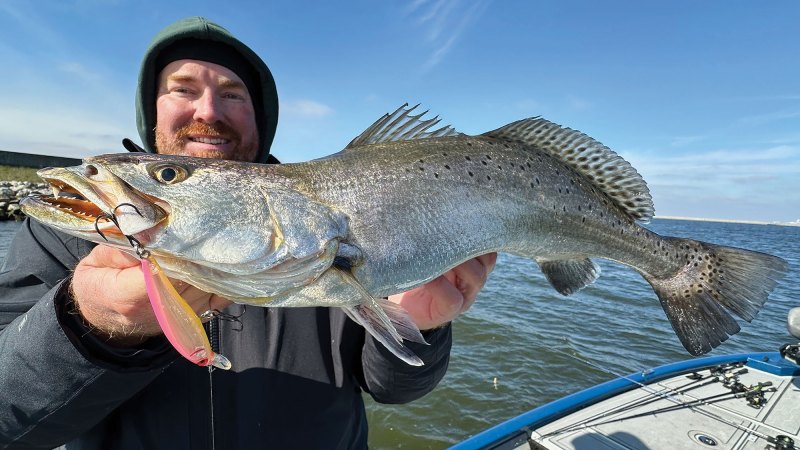
To understand the precise execution required for this fishery, one need only examine a typical winter outing with Slidell, Louisiana, fishing guide Justin Bowles. Despite a decade spent guiding novices and veterans alike, Bowles experiences the raw adrenaline of a trophy strike every time a quality fish targets his offering.
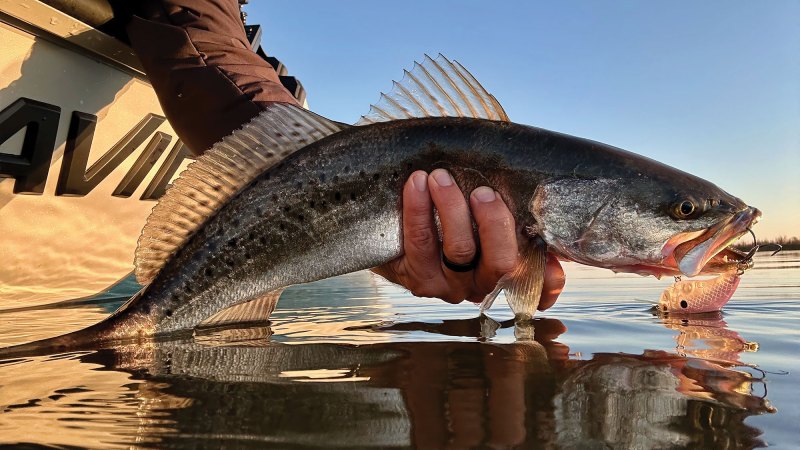
Working a suspending hard bait along the MRGO rocks last winter, Bowles experienced the unmistakable jolt of a heavy fish. Utilizing a medium-powered rod paired with 12-pound fluorocarbon leader, his muscle memory instantly engaged, driving the hook home.
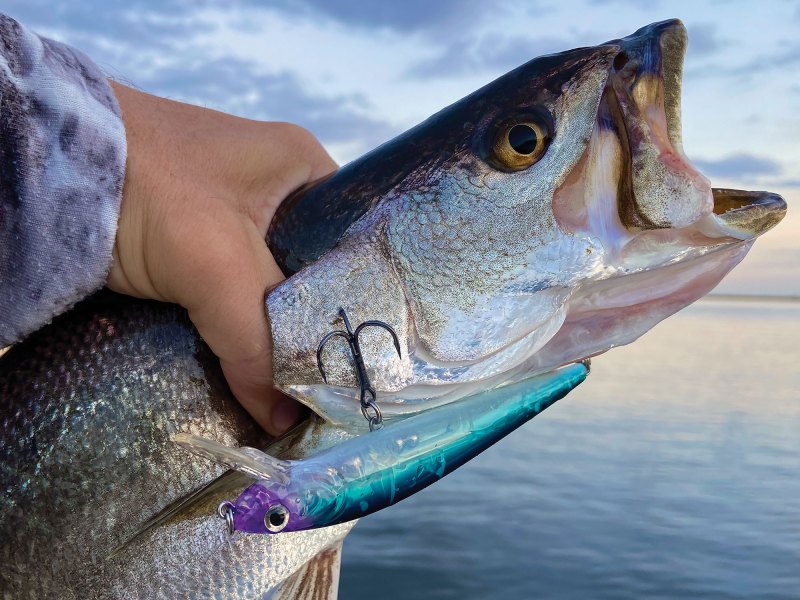
Unlike a redfish—which might immediately bolt for distant cover or strip line off the drag—large winter speckled trout often exhibit a distinct fighting signature: powerful sideways runs coupled with aggressive head shakes designed to dislodge treble hooks. When a 6-pound-plus speckled trout breaks the surface, showing its mustard-colored mouth and heavy girth, the frantic energy required to net and successfully land the fish highlights the sheer quality of the catch. In a state where 13-inch fish are prolific, a 6-pound specimen is a true trophy, frequently photographed and carefully released to preserve the fishery.
Supporting Context & Metrics: Habitat, Hydrology, and Lure Science
The Paradox of the MRGO
The Mississippi River-Gulf Outlet was completed in 1968 by the U.S. Army Corps of Engineers to provide a direct, deep-draft shipping lane connecting the Gulf of Mexico to the Port of New Orleans. Historically, however, the project is viewed as an environmental catastrophe. By allowing unchecked saltwater intrusion to march inland, the canal accelerated the erosion of towering cypress swamps into brackish and intermediate marshes. Today, running the shallow, remnant marshlands northeast of the MRGO requires extreme caution, as submerged cypress stumps wait just beneath the surface to destroy lower units.
Yet, within this ecological alteration lies a localized silver lining for anglers. The MRGO provides virtually flawless winter habitat:
- Extreme Depth Profiles: The center of the channel drops to depths of 35 to 40 feet, offering a profound thermal buffer against severe Arctic blasts.
- Stepped Shelves: The canal features abrupt shelves rising from deep water up to 25, 15, and 10 feet immediately adjacent to the rock-armored banks.
- Constant Forage Flow: Tidal currents push steady streams of baitfish through the channel, satisfying the metabolic needs of overwintering predators without requiring them to expend excessive energy searching for food.
Matching the Hatch and Water Temp
As water temperatures fluctuate throughout the winter, successful anglers must adapt their lure selection and presentation speeds accordingly.
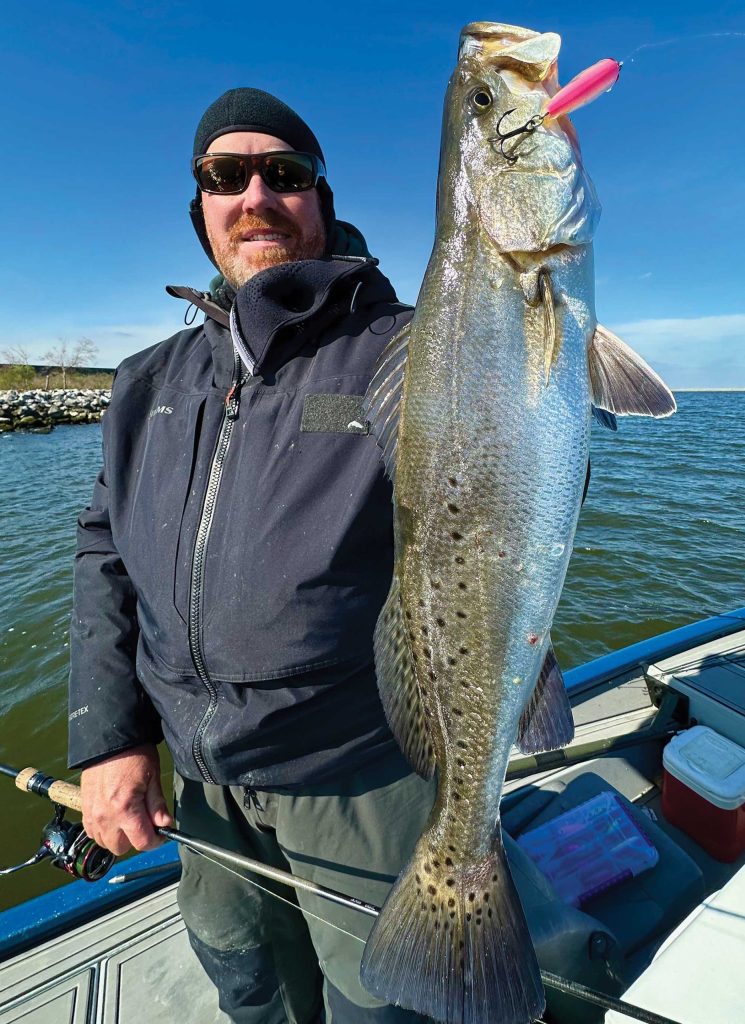
- Early Winter (Upper 50s to Low 60s): Anglers find success utilizing suspending baits and moderate-lipped jerkbaits such as the MirrOlure MirrOlip or the Bill Lewis Scope Stik. During this phase, fish may suspend slightly higher in the water column or remain active closer to the surface rocks.
- Deep Winter (Low 50s to Upper 40s): As the water reaches its coldest temperatures, Bowles transitions to deeper-diving jerkbaits, most notably the Rapala Shadow Rap Deep. Featuring an oversized lip, this bait dives quickly and maintains a deeper profile along the primary shelf where fish retreat.
The Power of the Pause
The single most critical variable in cold-water jerkbait fishing is the pause. While active summer fish chase down fast-moving presentations, winter trout operate at a reduced metabolic rate.
- Cadence: Jerk the bait sharply to impart erratic action, then let it suspend completely motionless.
- Duration: In colder water, extend the pause significantly—sometimes lasting several seconds.
- The Take: The vast majority of winter strikes occur entirely during the dead-stop pause, rather than during the active twitching phase.
Official Statements and Expert Methodology
Targeting quality over quantity requires a distinct mental paradigm. According to local captains who have mastered the MRGO’s nuances, traditional mindset frameworks focused on filling ice chests must be discarded in favor of patience and technical experimentation.
Expert Insights from Justin Bowles and Mike Gallo
"You’ve really got to come with the mindset that you’re not going to look for a limit of fish," explains Captain Justin Bowles. "You just want to catch some bigger fish. And when you do that, a lot of days, we end up limiting out doing it. But I’d never go with that intention."
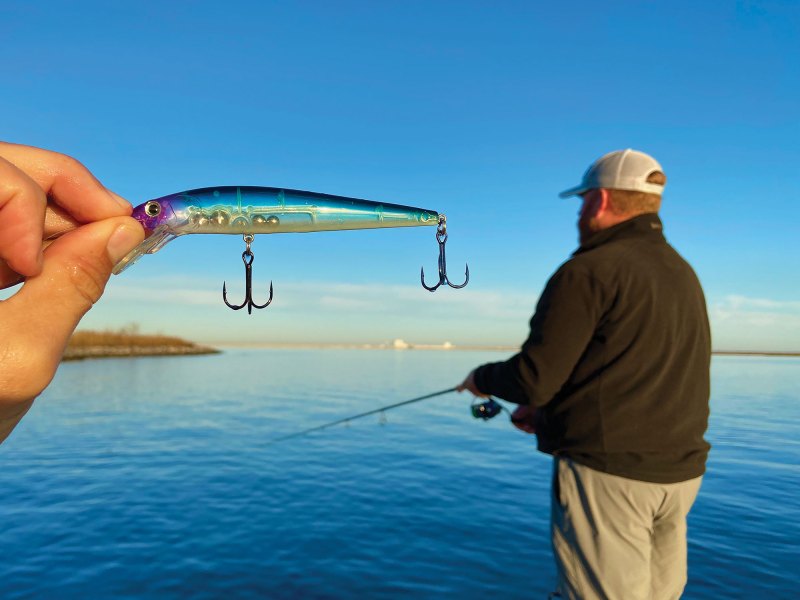
The learning curve on the MRGO can be steep for newcomers. Anglers frequently drift the rocky shorelines for an hour, fail to draw a strike, and abandon the technique prematurely. To combat this, experienced guides recommend a structured approach to boat setup and multi-rod deployment:
- The Multi-Rod Strategy: When fishing solo, rig two or three rods equipped with varying depth ranges and color profiles.
- Color Selection: While fish sometimes prefer loud, high-visibility fluorescent patterns, other days dictate natural shad-imitation finishes with green backs. Because the exact trigger mechanism changes daily, systematic rotation is essential.
- Team Diversity: When fishing with multiple clients, stagger the presentations—assigning one angler a deep-diving bait, another a standard suspending plug, and mixing bright versus natural colorways until the active pattern is identified.
The effectiveness of this persistence is proven year after year. Bowles routinely records releases of 4- and 5-pound trout, punctuated by the occasional 6-pounder. Furthermore, fellow charter captain Mike Gallo underscored the absolute potential of the fishery last winter when he successfully landed and released an exceptional 8-pound trophy speckled trout while working a Berkley Stunna 112 jerkbait along the MRGO rocks.
Future Outlook: Access, Conservation, and Best Practices
As angling pressure on specialized winter habitats increases, responsible stewardship and logistical preparedness remain paramount for anyone planning an excursion to the MRGO.
Access Points and Logistical Planning
The MRGO is primarily accessed via public boat launches located along Paris Road in New Orleans. When navigating to these launch sites and planning a run toward the channel, anglers must account for critical infrastructure checkpoints:
- Bayou Bienvenue Flood-Control Structure: Access routes from the Paris Road launches require passage through this barrier structure, which is occasionally closed during periods of high water. Anglers are strongly advised to check operational status prior to departure by contacting 504-286-3140.
Conservation of Trophy Resources
The capture of mule trout in the 4- to 8-pound range is a testament to the unique fertility of Louisiana coastal waters, but these larger fish—predominantly older females—are the cornerstone of the spawning stock. Adopting a catch-and-release ethic for trophy-class speckled trout ensures that these genetics remain within the ecosystem, safeguarding the future of the fishery for generations of anglers to come.
Ultimately, braving the freezing winds and slate-gray waters of a Louisiana winter along the MRGO tests the mettle of any angler. But for those willing to endure the quiet stretches between bites, mastering the art of the winter jerkbait presentation offers a reward matched by few other fisheries in North America: a heart-stopping strike, a singing drag, and the unforgettable sight of a true Gulf Coast giant.

0 Comments