

Executive Overview
When venturing far beyond the safety of the coastline, a boater’s margin for error shrinks to practically zero. In the high-stakes environment of offshore and saltwater angling, success relies not just on seamanship, navigation, and modern fish-finding technology, but fundamentally on the invisible engine of the vessel: its electrical system. Modern sportfishing boats, center consoles, and deep-sea cruisers are floating tech hubs. They are outfitted with high-output multi-bank outboard engines, sprawling marine electronics suites, high-pressure livewell pumps, auto-pilots, stabilization gyros, and heavy-duty audio systems.
All of these high-draw components draw life from a single, critical heartbeat—the marine battery.
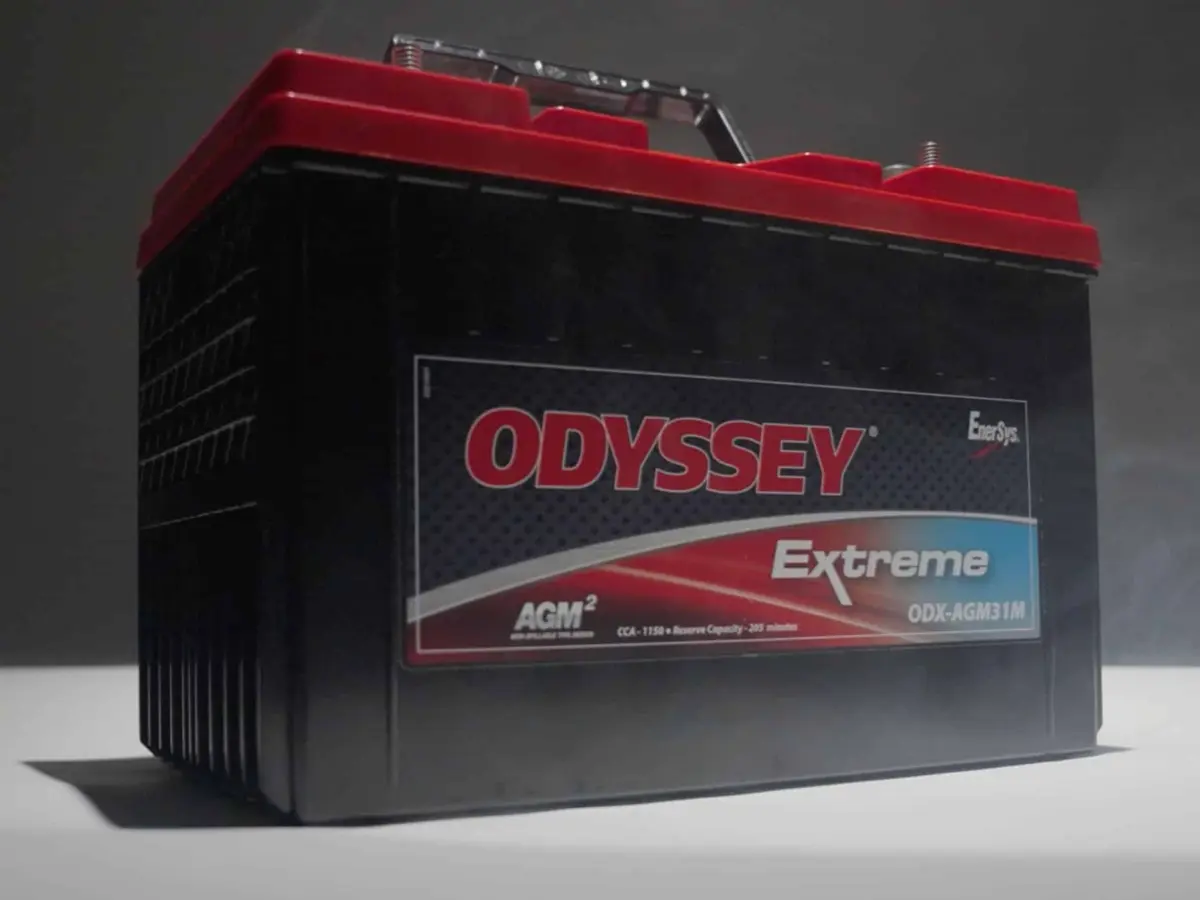
For decades, traditional flooded lead-acid batteries have served as the historical baseline for marine applications. However, the punishing realities of saltwater environments—characterized by relentless pounding from heavy seas, deep cyclic discharge demands, and accelerated corrosion—expose the severe vulnerabilities of conventional power storage. In response to these escalating demands, manufacturers like EnerSys, the powerhouse behind ODYSSEY® batteries, have leaned heavily into advanced metallurgy and chemical engineering. Utilizing Thin Plate Pure Lead (TPPL) technology combined with Absorbed Glass Mat (AGM) construction, these modern power units are designed to redefine reliability on the water.
This report provides an exhaustive look into the evolution of marine electrical systems, the engineering breakthroughs behind high-performance TPPL-AGM batteries, and how boaters can effectively calculate, select, and maintain their onboard power infrastructure for demanding saltwater expeditions.
Detailed Chronology: The Evolution of Marine Electrical Power
To understand where marine power technology stands today, it is essential to trace how marine electrical demands have transformed over the last century, evolving alongside the growth of recreational and commercial boating.
The Era of Simple Ignition (Pre-1970s)
In the early days of motorized boating, the electrical requirements of a vessel were remarkably modest. A marine battery’s primary—and often sole—responsibility was providing enough instantaneous cranking Amperage (CCA) to turn over a carbureted inboard or early outboard engine. Navigation lights consisted of basic incandescent bulbs, and electronics were virtually nonexistent save for perhaps a rudimentary VHF radio. During this era, standard automotive-style flooded lead-acid batteries were routinely repurposed for marine use, as the electrical loads rarely drained a battery below 80% capacity before the engine’s belt-driven alternator recharged it.
The Electronic Revolution and Dual-Purpose Complications (1980s–2000s)
As marine electronics advanced—marked by the introduction of commercial-grade sonar, early monochrome GPS units, and electronic fuel injection (EFI)—the demands placed on marine electrical systems grew exponentially. Boaters began adding secondary "house" batteries to isolate sensitive electronics from the voltage drops caused by engine cranking. However, this period was plagued by poor battery chemistry matching. Boaters frequently mixed starting batteries (designed for short, high-burst energy) with deep-cycle batteries (designed for slow, sustained discharge), leading to premature battery failure, sulfation, and stranded offshore incidents.
The Modern Heavy-Draw Era (2010s–Present)
Today’s offshore vessels operate floating cities’ worth of electrical equipment. Twin or triple 400-horsepower outboards draw massive amperage upon startup; dual 16-inch multi-function displays (MFDs) consume continuous high wattage; radar arrays spin constantly; and high-volume raw water washdown pumps, electric reels, and livewell pumps cycle on and off throughout the day.
Simultaneously, hull designs and offshore routing have pushed further into the open ocean, meaning a mechanical or electrical failure miles offshore carries significant safety risks. This modern reality necessitated a total overhaul of marine battery engineering. The industry shifted away from standard flooded cells toward sealed, maintenance-free, vibration-resistant architectures capable of handling both heavy engine-starting surges and deep auxiliary cycling without degrading.
Supporting Context & Metrics: The Engineering of ODYSSEY® TPPL-AGM Batteries
To evaluate how modern marine batteries survive the harsh marine environment, one must examine the metallurgical and chemical differences that separate standard batteries from high-grade TPPL-AGM units.
The Advantage of Thin Plate Pure Lead (TPPL)
Traditional lead-acid batteries use lead alloys—often containing calcium, antimony, or tin—to cast their internal plates. While cheaper to manufacture, these alloys are softer and more susceptible to grid growth and internal corrosion over time.
ODYSSEY® marine batteries utilize 99.99% pure virgin lead. Because the lead is unalloyed and exceptionally pure, the plates can be rolled much thinner than standard battery plates. Thinner plates allow manufacturers to pack significantly more plates into the exact same physical casing footprint.
- Higher Surface Area: More plates mean a vastly increased surface area for the electrochemical reaction to take place.
- Explosive Cranking Power: This increased surface area is the secret behind the massive reserve and starting power of these batteries, delivering exceptional pulse cranking currents—often double or triple that of conventional batteries of similar size.
- Dual-Purpose Capability: Unlike traditional batteries that specialize in either starting or cycling, the high structural integrity of TPPL allows these batteries to excel at both. They deliver rapid, high-amp engine starts while retaining the capacity to endure deep, repetitive cycling to power onboard electronics and pumps.
Absorbed Glass Mat (AGM) Construction and Vibration Resistance
Saltwater boating is inherently violent. Traveling at high speeds across choppy offshore swells subjects hulls—and everything bolted or wired inside them—to continuous mechanical shock and G-force impacts.
In a traditional flooded battery, liquid acid sloshes around freely. Heavy impacts can cause sediment to shake loose from the plates, leading to internal short circuits, or cause the casing to fracture. AGM technology solves this by saturating a specialized, highly porous micro-fiberglass mat with electrolyte acid. The mat absorbs all the liquid like a sponge, locking it tightly between the plates.
- Spill-Proof Design: Because there is no free-flowing liquid, ODYSSEY® batteries are entirely spill-proof and can be mounted in virtually any orientation (except inverted).
- Vibration Mitigation: The compressed glass mat acts as an internal shock absorber, insulating the pure lead plates from the destructive shockwaves and hull vibrations common in offshore center consoles and tournament sportfishers.
- Maintenance-Free Operation: Recombinant gas technology allows internal oxygen and hydrogen to recombine back into water, eliminating the need to check water levels, clean terminal corrosion, or worry about off-gassing during charging cycles.
Longevity and Temperature Resilience
Marine batteries live a harsh life of thermal extremes—baking under a fiberglass hatch in 95°F summer sun one day, and sitting in freezing winter storage the next. TPPL-AGM batteries exhibit a remarkably low internal resistance, which translates to faster recharge times from onboard alternators or smart chargers. Furthermore, their design significantly slows down the natural self-discharge rate; while a standard flooded battery can lose its charge in a matter of weeks if left disconnected, quality TPPL-AGM batteries can sit idle for extended periods without severe capacity loss.
Official Industry Guidance & Operational Best Practices
Marine electronics manufacturers, engine builders, and safety organizations uniformly emphasize that battery selection must be treated as an exact science rather than an afterthought. Below are core guidelines derived from industry standards for setting up a robust offshore electrical grid.
1. Matching Capacity to Load Requirements
Before embarking on a saltwater expedition, skippers must perform an electrical audit. This involves calculating the total Amp-hour (Ah) draw of all systems operating simultaneously:
- Engine Starting: Verify that the designated starting battery meets or exceeds the minimum Cold Cranking Amps (CCA) specified by the outboard or inboard manufacturer.
- House Loads: Sum up the continuous draw (in amps) of GPS units, sonars, VHF radios, livewell pumps, and lighting multiplied by the expected hours of operation while the engine is off.
- Safety Margin: Never design a system to operate at maximum capacity. Industry best practice dictates maintaining at least a 30% to 50% reserve capacity buffer to account for unexpected delays, night navigation, or emergency situations.
2. Proper Charging Infrastructure
Even the most advanced marine battery cannot survive chronic undercharging. Modern AGM batteries require specific charging profiles to reach their maximum lifespan.
- Smart Multi-Stage Chargers: Ensure shore power chargers are programmed with a dedicated AGM profile (typically reaching a bulk/absorption voltage around 14.4V to 14.7V, followed by a float charge around 13.5V to 13.8V).
- Alternator Output: Verify that engine alternators are paired with appropriate voltage regulators and heavy-gauge marine wiring to prevent voltage drop over long cable runs.
3. Rigorous Terminal Maintenance and Securing
Saltwater is a highly conductive and corrosive electrolyte. Even sealed AGM batteries require proper installation protocols:
- Use tinned marine-grade copper cables to resist internal wire corrosion.
- Apply terminal protectants or dielectric grease to connections.
- Ensure physical battery trays are bolted down through reinforced backing plates to withstand extreme sea states without shifting.
Future Outlook: The Next Horizon in Marine Energy Storage
As the marine industry steers toward cleaner propulsion, digital switching, and increasingly sophisticated onboard automation, the demands placed on marine electrical architectures will only intensify.
Integration with Smart Vessel Management Systems
Future offshore vessels will rely heavily on digital switching networks (such as NMEA 2000 and digital bus systems) that monitor battery health in real-time. Instead of guessing a battery’s state of charge based on simple voltage readings, future systems will utilize intelligent Battery Management Systems (BMS) that track internal resistance, temperature, and cumulative cycle history, sending predictive maintenance alerts directly to a captain’s multi-function display before a failure occurs.
Hybrid Propulsion and Auxiliary Power Units
With the rise of hybrid marine propulsion systems—combining traditional internal combustion outboards with electric trolling motors, auxiliary electric drive systems, and high-capacity lithium or advanced lead-carbon hybrid banks—the boundary between "starting" and "house" power continues to blur. While lithium-ion chemistries capture headlines for lightweight house banks, high-purity lead batteries like ODYSSEY® TPPL-AGM maintain an unmatched reputation for fail-safe engine starting reliability, extreme temperature tolerance, and rugged durability where chemical stability is non-negotiable.
Sustainability and Closed-Loop Recycling
As environmental regulations tighten globally, the marine industry is placing a heightened emphasis on sustainability. Lead-acid and TPPL-AGM batteries boast one of the most successful closed-loop recycling infrastructures in the world, with over 99% of battery components recovered and remanufactured into new units. This circular lifecycle ensures that as boaters upgrade their power systems, the environmental footprint remains strictly managed.
Conclusion
Venturing into deep offshore waters demands total confidence in your vessel’s equipment. While fish finders, radar domes, and high-horsepower engines capture the glory, the entire operation ultimately depends on the steady, reliable flow of electrical current. By replacing outdated, vulnerable power setups with engineered high-performance solutions like ODYSSEY® TPPL-AGM marine batteries, boaters can safeguard their electronics, ensure reliable engine cranking in punishing conditions, and focus entirely on what matters most: the trip on the water.
To review specific model dimensions, terminal configurations, and technical manuals for your vessel, visit the official ODYSSEY® Marine Batteries Portal.

0 Comments