

Executive Overview
Venturing offshore is the ultimate test of seamanship, navigation, and equipment endurance. Whether navigating rolling swells miles past the continental shelf or battling unpredictable tides in saltwater estuaries, modern anglers, commercial operators, and recreational boaters depend heavily on uninterrupted electrical power. Today’s vessels are floating technological hubs, packed with high-definition multi-function displays (MFDs), sonar arrays, autopilots, livewell pumps, high-output stereos, and powerful multi-bank outboard motors.
Yet, beneath the polished fiberglass and glowing instrument panels lies the single most critical component of maritime safety: the vessel’s electrical grid, anchored by the marine battery. When a battery fails miles offshore, the consequences range from inconvenient to catastrophic.
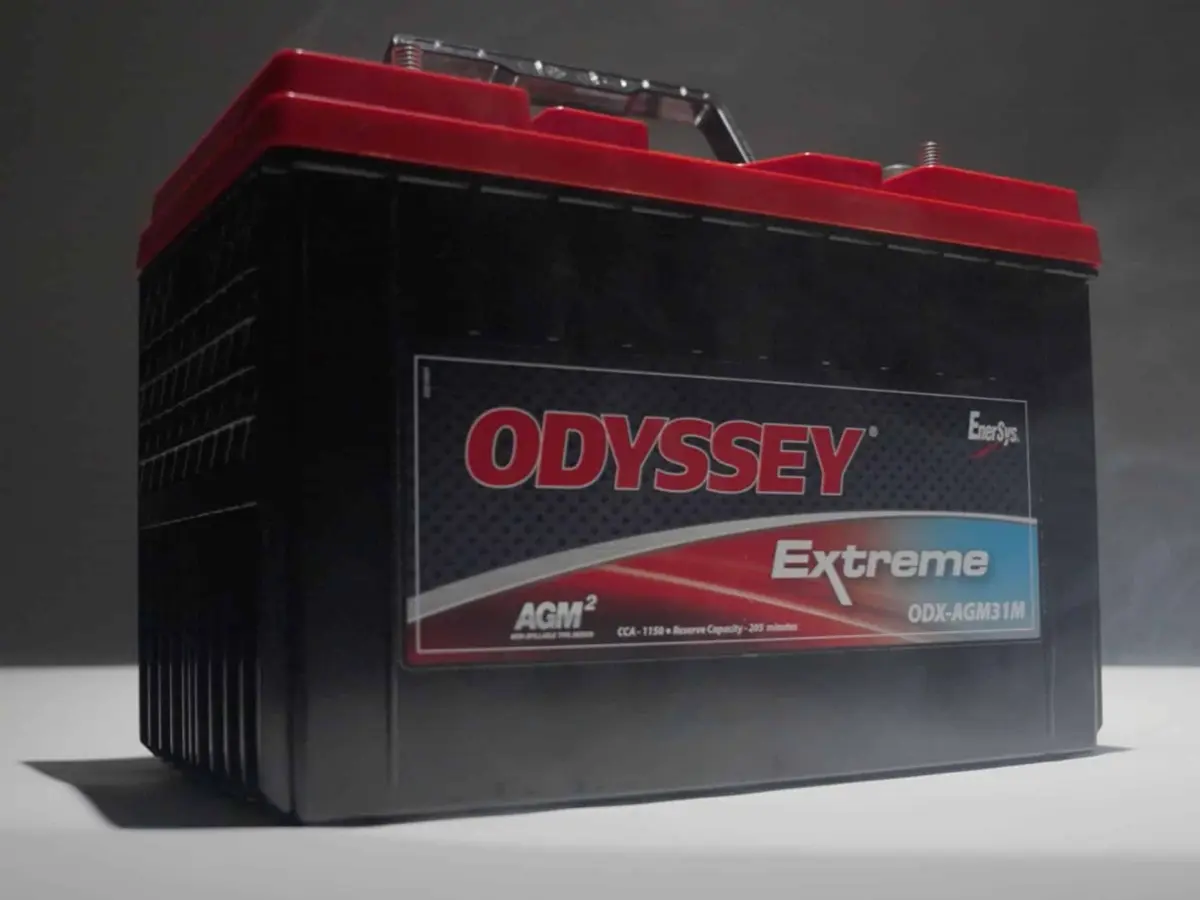
Enter the next generation of energy storage solutions, exemplified by engineering powerhouses like ODYSSEY® batteries. Utilizing advanced Thin Plate Pure Lead (TPPL) and Absorbed Glass Mat (AGM) technologies, these batteries are purpose-built to conquer the punishing marine environment. Designed to deliver massive cranking power for engine ignition while simultaneously providing deep-cycle resilience for auxiliary electronics and onboard pumps, TPPL-AGM technology represents a paradigm shift in marine power management.
This report investigates the engineering principles behind modern marine batteries, the critical vulnerabilities of offshore electrical systems, the demanding nature of saltwater environments, and how choosing the right power source ensures that every voyage ends safely back at the dock.
Detailed Chronology: The Evolution of Marine Energy Storage
To understand the technological leap represented by modern TPPL marine batteries, it is helpful to examine the historical trajectory of marine electrical systems and how engineers solved the persistent challenges of corrosion, vibration, and deep discharge.
The Era of Flooded Lead-Acid Batteries (Late 19th Century to Late 20th Century)
For decades, standard Flooded Lead-Acid (FLA) batteries were the undisputed standard for marine applications. These units relied on liquid electrolyte solutions freely sloshing around lead plates. While effective at delivering quick bursts of high cranking amps (CA), FLA batteries suffered from severe operational limitations in the marine sector:
- Spill Vulnerability: The liquid electrolyte required venting and was prone to spilling during heavy boat rolls or hull impacts, posing chemical burn and corrosion risks.
- High Self-Discharge Rates: Unused FLA batteries lost their charge rapidly when sitting idle in boat slips during the off-season.
- Maintenance Demands: Owners had to constantly check fluid levels, clean terminal corrosion, and add distilled water to prevent plate sulfation.
The Rise of Standard AGM and Gel Technologies (Late 1990s)
As marine electronics grew more sophisticated, traditional flooded batteries struggled to keep pace. The introduction of Absorbed Glass Mat (AGM) and Gel batteries marked a major turning point. By immobilizing the electrolyte within a fiberglass mat (AGM) or thickening it into a silica gel, manufacturers created spill-proof, maintenance-free batteries that could withstand harsher vibrations. However, standard AGM batteries still used alloyed lead plates, which limited their lifespan, deep-cycle recovery, and extreme temperature performance.
The TPPL Revolution: Thin Plate Pure Lead Engineering (21st Century)
The breakthrough that defines modern high-performance marine power came with the refinement of Thin Plate Pure Lead (TPPL) technology. Instead of using recycled lead alloyed with calcium, tin, or antimony—which reduces manufacturing costs but introduces impurities—TPPL batteries utilize 99.99% virgin pure lead.
Because pure lead is exceptionally soft, manufacturers can roll it into much thinner plates than traditional cast lead. Thinner plates mean significantly more surface area fits inside the same battery footprint. This geometric advantage translates directly into two major engineering triumphs:
- Massive Surface Area: Allows more chemical reactions to occur simultaneously, producing significantly higher cranking power and faster recharge rates.
- Structural Integrity: The dense packing of pure lead plates within robust AGM separators virtually eliminates plate degradation caused by hull pounding and continuous wave impacts.
Today, offshore captains have moved away from generic automotive or entry-level marine batteries, pivoting entirely toward purpose-built TPPL-AGM solutions that integrate seamlessly with modern marine charging systems and complex accessory loads.
Supporting Context & Metrics: The Anatomy of Marine Electrical Demands
Operating in the marine environment subjects batteries to extreme physical and electrical stress. To fully appreciate why specialized batteries are non-negotiable for offshore trips, one must analyze the specific metrics of marine power consumption and environmental punishment.
The Dual-Purpose Dilemma: Cranking vs. Cycling
Historically, boat owners had to choose between two distinct battery types:
- Starting (Cranking) Batteries: Designed to deliver a massive surge of electrical current for a few seconds to start an engine, featuring many thin plates for maximum surface area. However, they are easily damaged by deep discharges.
- Deep-Cycle Batteries: Designed to be drawn down slowly over hours to power trolling motors, lights, and house electronics, featuring thicker plates. However, they struggle to deliver high starting surges.
Modern offshore vessels require dual-purpose performance. An angler may kill the big outboard, drop the trolling motor, run livewells, power dual 16-inch fishfinders, and play a stereo for four hours, only to fire up the twin 300-horsepower outboards instantly at dusk. TPPL-AGM batteries bridge this gap by delivering both ultra-high cranking amps (CCA) and exceptional deep-cycle reserve capacity.
Key Performance Metrics of Advanced Marine Batteries
| Performance Metric | Standard Flooded Lead-Acid | Standard AGM Battery | ODYSSEY® TPPL-AGM Battery |
|---|---|---|---|
| Plate Purity | Low (Alloyed Lead) | Medium (Alloyed Lead) | 99.99% Pure Virgin Lead |
| Cranking Power (CCA) | Moderate | High | Exceptionally High (Up to 2,250+ amps) |
| Cycle Life | 300–400 cycles | 400–600 cycles | Up to 70% more total cycle life |
| Recharge Time | Slow (High internal resistance) | Moderate | Rapid (Charges 100% in under 3 hours) |
| Vibration Resistance | Low (Plates can fracture) | High | Extreme (Military-grade durability) |
| Operating Temperature | -15°C to 45°C | -20°C to 50°C | -40°C to 80°C |
The Saltwater Factor: Corrosion and Resistance
Saltwater is one of the most aggressive natural electrolytes known to engineering. Mist, spray, and high humidity constantly infiltrate marine compartments, accelerating galvanic corrosion on battery terminals, wiring harnesses, and fuse blocks. Furthermore, internal battery components must resist the corrosive off-gassing and chemical degradation accelerated by salt air exposure. High-grade AGM construction seals the chemistry completely away from atmospheric moisture, ensuring dependable terminal integrity season after season.
Official Statements and Industry Insights
Marine electronics manufacturers, boat builders, and competitive anglers increasingly emphasize that electrical system redundancy and battery quality dictate offshore safety.
Captain Sarah Jenkins, a tournament sportfishing captain operating out of the Florida Keys, notes the transformation in onboard power demands:
"Ten years ago, we had a single GPS unit, a VHF radio, and a livewell pump. Today, my helm looks like an airplane cockpit. We are running dual sonar transducers drawing constant power, high-output radar, autopilot systems, underwater lights, and sound systems—all while relying on a pair of high-horsepower outboards to get us fifty miles offshore and back. If your battery system can’t handle deep cycling while maintaining a rock-solid starting voltage, you are asking for trouble. We switched to TPPL-AGM batteries because the peace of mind they provide is priceless."
Marine electrical engineers point out that battery failure is rarely instantaneous; rather, it is the cumulative result of vibration fatigue, sulfation from incomplete charging, and excessive deep discharge cycles.
Dr. Marcus Vance, a lead researcher in electrochemical energy storage systems, explains the physics of pure lead technology in extreme environments:
"When you subject a battery to the pounding of three-foot ocean chop at thirty knots, standard lead-acid plates experience micro-fracturing. The active material sheds from the grid, reducing capacity and eventually shorting the cell. By utilizing 99.99% pure lead rolled into ultra-thin plates, manufacturers create a tightly packed matrix that absorbs high-frequency G-forces without structural deformation. Furthermore, pure lead exhibits significantly lower internal resistance, allowing the battery to accept charge currents up to three times faster than conventional flooded batteries. This is crucial for anglers running short hops between fishing spots, where alternators have limited time to replenish expended energy."
Boat builders are also responding to consumer demand by pre-wiring vessels for advanced power banks, ensuring that battery compartments accommodate heavy-duty AGM configurations without requiring custom modifications.
Future Outlook: The Next Horizon in Marine Energy
As marine technology continues to evolve at a breakneck pace, the demands placed on vessel electrical architectures will only intensify. Several key trends are shaping the future of marine energy storage:
1. The Rise of Integrated Smart Battery Management Systems (BMS)
While traditional lead-acid and AGM batteries rely on external chargers and monitors, the integration of smart sensors directly into battery terminals is becoming standard. These systems track state-of-charge (SoC), internal temperature, health metrics, and voltage drops in real-time, transmitting diagnostic data directly to helm MFDs via NMEA 2000 networks.
2. Hybrid Propulsion and Electric Trolling Integration
The boundary between internal combustion engines and electric propulsion is blurring. High-voltage electric trolling motors, hybrid auxiliary drives, and large-scale lithium or advanced AGM house banks require sophisticated power-routing hubs. Marine batteries must be capable of working harmoniously within complex multi-source charging networks that incorporate solar panels, shore power, engine alternators, and wind generators.
3. Extreme Environment Resilience
With changing weather patterns leading to more frequent and intense offshore squalls, the reliability of emergency bilge pumps, navigation lights, and VHF communications is paramount. Regulatory bodies and marine insurance underwriters are placing heightened scrutiny on electrical system redundancy, making high-end, shock-resistant batteries an essential investment for commercial and recreational vessels alike.
Conclusion: Securing Your Vessel for the Journey Ahead
A successful saltwater trip is measured not only by the catch in the fishbox or the tranquility of the anchorage, but equally by a safe, uneventful return to port. At the heart of every reliable vessel lies an electrical system built to withstand the rigors of the deep blue.
By upgrading to high-performance energy storage solutions such as ODYSSEY® TPPL-AGM marine batteries, boat owners eliminate the historical compromises between starting power and deep-cycle endurance. Engineered to deliver massive cranking surges, withstand relentless hull-pounding vibration, power a comprehensive suite of onboard electronics, and recharge rapidly while underway, these batteries ensure your vessel is always ready for the next offshore adventure.
Before casting off on your next saltwater expedition, review your engine specifications, charger output, and accessory loads. Investing in superior battery technology is the single most important upgrade a mariner can make—because out on the water, power isn’t just a convenience; it’s your lifeline.
To explore detailed model specifications, find a local dealer, or learn more about optimizing your vessel’s electrical grid, visit the official ODYSSEY® Battery Marine & RV Applications Portal.

0 Comments