

Executive Overview
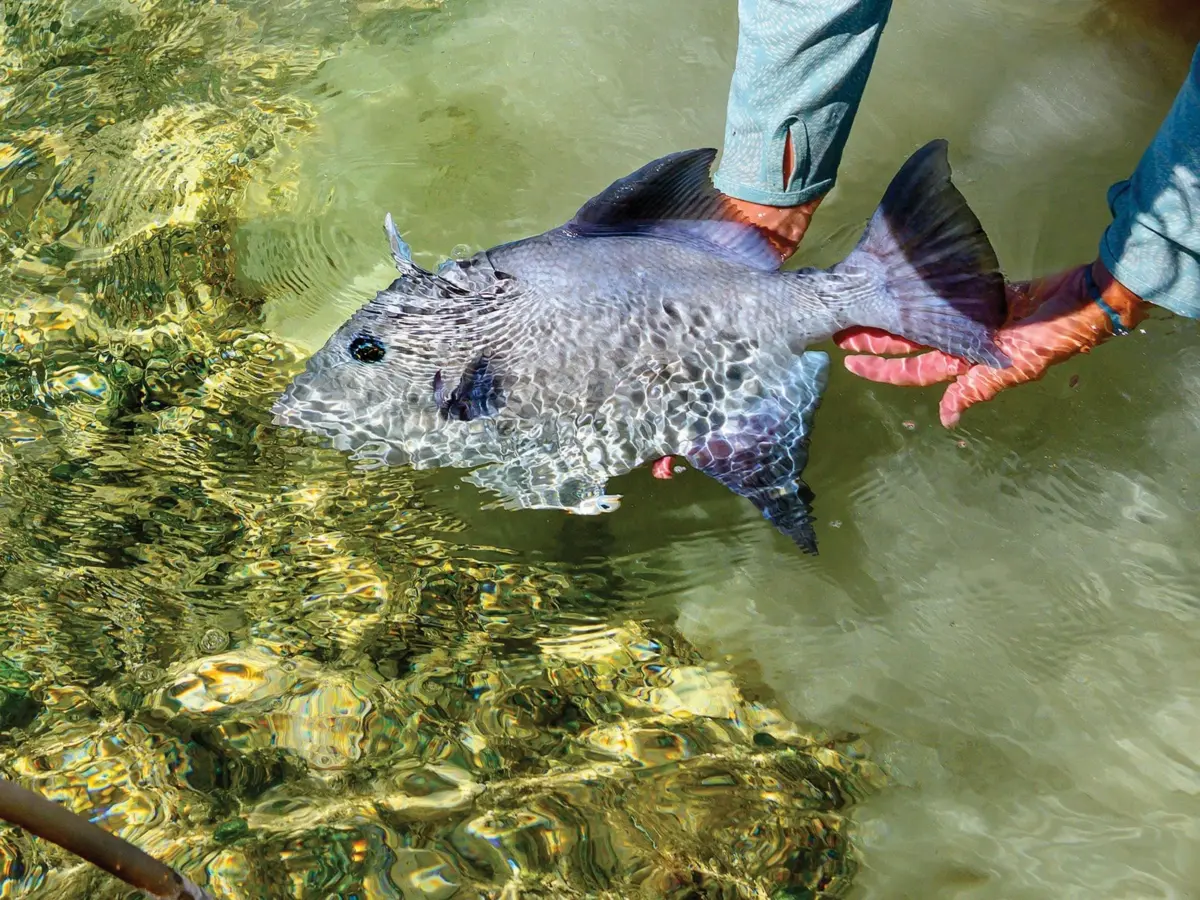
From the sun-baked reefs of the Sea of Cortez to the barnacle-encrusted buoy chains of the Northeast and the deepening artificial reefs of Southern California, triggerfish have firmly established themselves as one of the most enigmatic, hard-fighting, and rewarding targets in modern saltwater angling. Once dismissed as a nuisance—or an afterthought by anglers targeting more glamorous species like snapper, grouper, and bass—the various species of triggerfish (family Balistidae) are experiencing a massive surge in popularity.
Driven by warming oceanic temperatures, shifting migratory corridors, and a growing appreciation for their white, flaky, table-ready fillets, anglers across North America are modernizing their approach to these armor-plated reef dwellers. While they are renowned for their bone-crushing jaws, thieving peck bites, and a frustrating ability to use complex bottom structure to their advantage, cracking the code on triggerfish is entirely a matter of geography, specialized tackle, and razor-sharp timing. This report investigates regional tactics, gear specifications, and regulatory frameworks utilized by top captains from coast to coast to consistently conquer the mighty trigger.
Detailed Chronology: From Baja Relics to Biogeographic Shifts
The cultural and angling history of pursuing triggerfish is as textured as the species’ leathery, sandpapery hide.
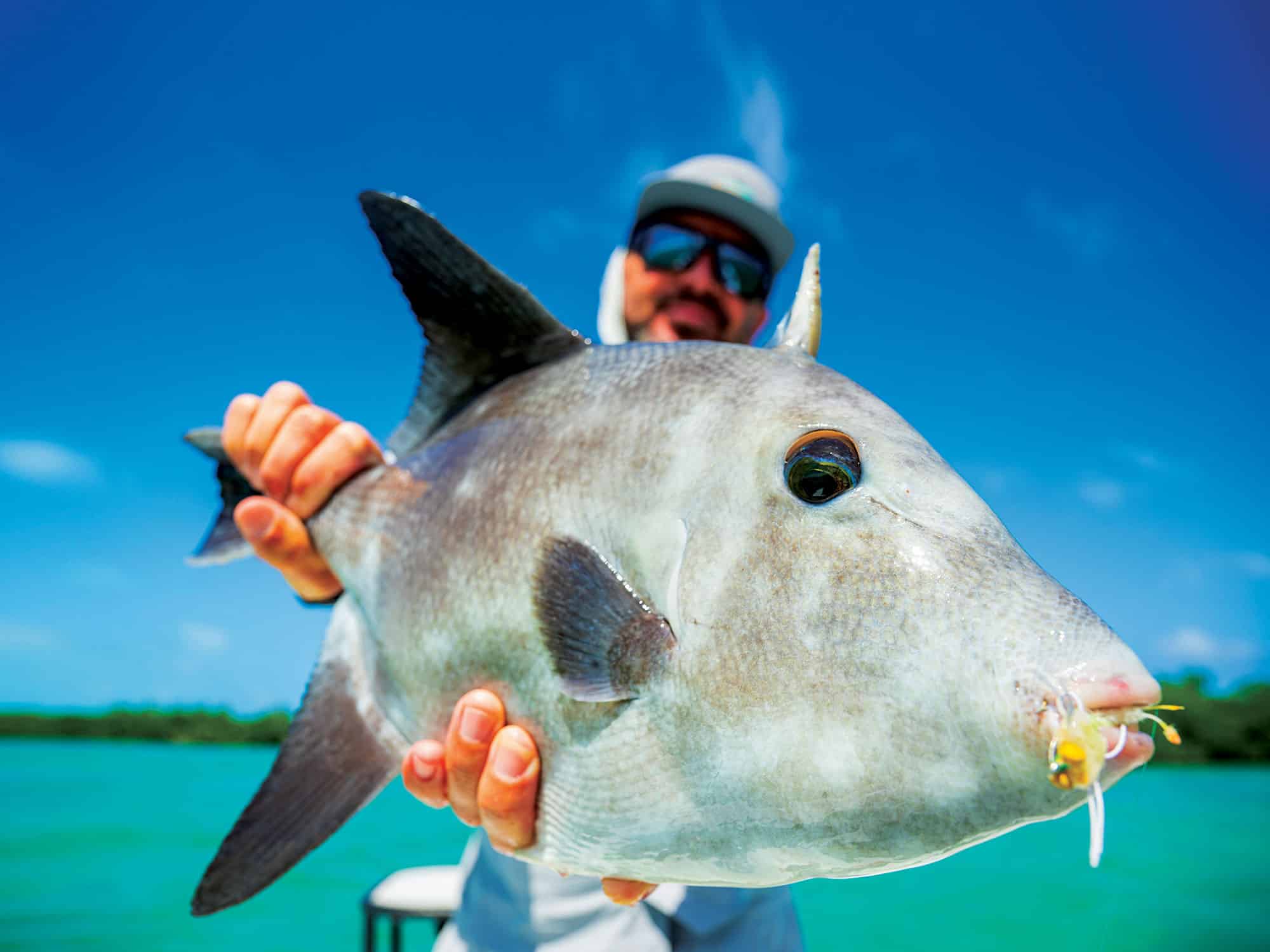
- The 1960s–1970s (The Baja Genesis): Decades ago, along the crystalline, nutrient-rich shores of Mexico’s Sea of Cortez (Baja California Sur), young anglers chasing coastal species routinely encountered the finescale triggerfish, locally known as cochi. Reaching weights exceeding 10 pounds, these fish were so ubiquitous in the shallows and around shore rocks that fishermen actively tried to avoid them, favoring pargo (snapper) and cabrilla (small groupers) instead. At the time, their tough, armor-like skin—demanding razor-sharp fillet knives—coupled with their relentless bottom-hugging fighting style, cast an undeserved shadow over the species.
- The Late 20th Century (East Coast and Gulf Expansion): While the Pacific coast viewed triggers as regional curiosities, anglers throughout the South Atlantic, the Gulf of Mexico, and as far north as Nova Scotia developed robust, methodical fisheries for gray triggerfish and their oceanic cousins. Destined for live-bottom habitats and deepwater wrecks, these populations became a staple of commercial and recreational bottom fishing.
- The 2020s (The Pacific Warming Wave): More than fifty years after those formative days in Baja, shifting climatic baselines and elevated Pacific ocean temperatures—accentuated by major El Niño cycles—have triggered a dramatic northward migration of finescale triggerfish. Southern California waters, historically late to the triggerfish game, are now home to robust, year-round populations inhabiting artificial reefs and oil platforms, transforming local fisheries and forcing a complete re-evaluation of SoCal bottom-fishing tactics.
Supporting Context & Metrics: Regional Profiles and Gear Architecture
Targeting triggerfish successfully requires an understanding that different regions host different species, each demanding tailored approaches to bait, rig construction, and presentation depth.
1. Southeast Grays: The Live-Bottom Heavyweights
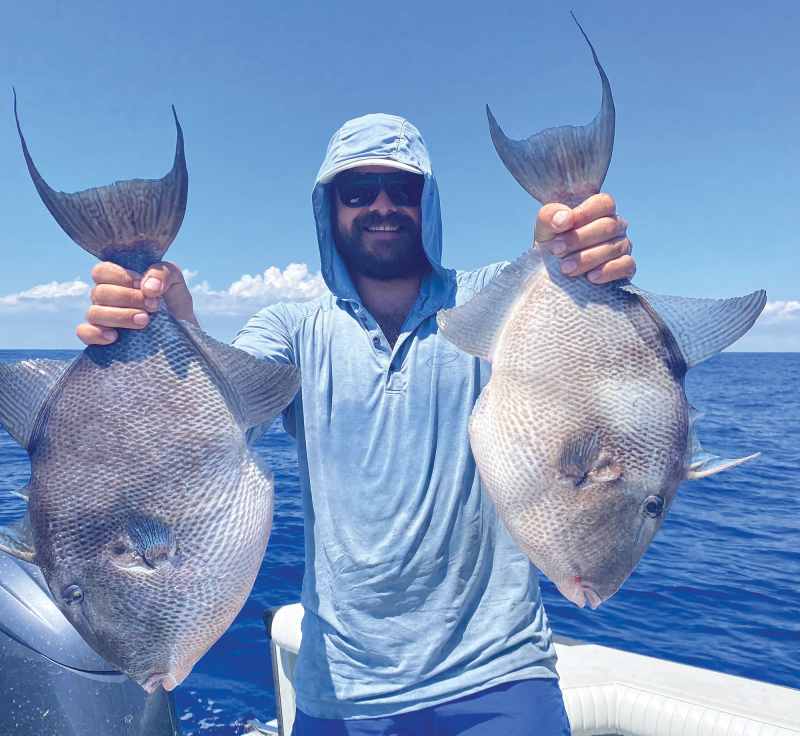
In the Atlantic waters off the coast of Florida—specifically around Ponce Inlet and New Smyrna Beach—captains like Daniel Glenn target gray triggerfish inhabiting complex "live bottom" areas.
- Habitat Metrics: Typically found in 120 to 150 feet of water, though incidental catches occur on grouper grounds down to 250 feet. Fish utilizing deeper drops routinely reach sizes up to 24 inches and 8 pounds.
- The Indicator Sign: When fishing live baits for grouper, the sudden disappearance of baitfish eyeballs and bellies is the classic signature of triggerfish presence.
- Rigging and Tackle: Anglers employ a "chicken-rig" leader crafted from 40-pound-test fluorocarbon, featuring two short dropper-loops spaced 10 to 12 inches apart, anchored by a heavy bank sinker (ranging from 12 to 24 ounces depending on current and wind). Because triggers possess small mouths paired with crushing power, terminal tackle demands a Mustad No. 2 O’Shaughnessy live-bait hook (Model 94151)—small enough to enter the mouth, yet featuring a 3X strong-wire construction to resist crushing.
- Bait Selection: Indiscriminate eaters, grays readily take cut mullet, grunt strips, shrimp chunks, or squid strips.
[Main Line: 30lb-50lb Braid]
       │
       ▼
[40lb Fluorocarbon Chicken Rig]
  ├── Top Dropper Loop (Mustad No. 2 Hook + Shrimp/Squid)
  ├── Bottom Dropper Loop (Mustad No. 2 Hook + Cut Bait)
       │
       ▼
[Bank Sinker: 12 to 24 oz (Adjusted for Current)]
2. Northeast Triggers: The Buoy-Chain Masters
As summer transitions to fall, gray triggerfish ride the Gulf Stream northward along the Atlantic seaboard, creating a high-profile seasonal fishery in the Northeast.
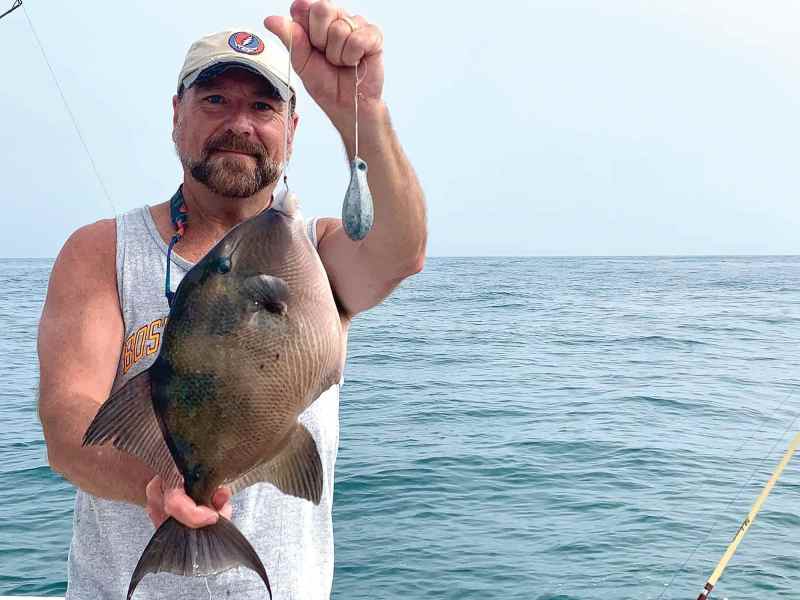
- Inshore Structures: New York-based charter captains like Kevin Falvey target these migratory populations inside bays (such as Shinnecock, Moriches, and Gardiners Bay) and around inlet "mile buoys." Triggers heavily colonize barnacle- and mussel-encrusted buoy chains, jetties, rockpiles, and wrecks.
- Rigging and Presentation: Falvey utilizes a two-hook chicken rig tied with 40-pound monofilament, paired with a Virginia-style hook (Size No. 1 or 1/0). The long-shank, hollow-point design ensures deep penetration on fast pecking bites. Baits include clam meat and squid, with the hook point explicitly left exposed.
- The Strike Window: Because triggerfish bites are notoriously fast and calculating, anglers must instantly reel down, pull the rod high over their heads, and engage a tight drag. Failure to do so results in the fish wrapping the line around razor-sharp barnacle chains within seconds.
3. Southern California Finescales: The Modern Gold Rush
Southern California’s expanding finescale triggerfish population inhabits natural reefs, rock piles, and oil platforms situated in 60 to 120 feet of water (with hotspots like the Bolsa Chica and Santa Monica Bay artificial reef complexes).
- Tackle Adaptations: SoCal experts deploy a double-dropper loop constructed from lighter 20- to 25-pound-test fluorocarbon. Terminal hooks are scaled down to No. 1 or No. 2 octopus hooks featuring 2X strong wire.
- Weight and Bait: A 4- to 6-ounce torpedo sinker keeps presentations vertical over the rocks. Raw shrimp meat is preferred; the head, shell, and tail can be discarded into the water column as a natural chum slick to draw fish up from the structure.
- The Battle: Anglers rely on a minimum of 50-pound-test braided mainline locked down with a heavy drag. Finescale triggers instantly dive for the safety of reef crevices; the entire contest is invariably decided within the first five seconds of the hookset.
Official Statements and Regulatory Frameworks
Managing sustainable triggerfish fisheries requires distinct regional oversight, balancing robust recreational demand with vulnerable localized reef populations.
- Florida (FWC Regulations): Management varies sharply between coasts. On the Atlantic side, the fishery remains open year-round with a 12-inch fork-length minimum size and a generous daily bag limit of 10 fish per harvester. Conversely, the Gulf side features strict seasonal closures (typically open March 1–May 31 and August 1–December 31) to protect spawning aggregations, alongside a stricter 15-inch minimum size limit and a bag limit of one fish per person.
- New York and Federal Waters: In New York state marine waters, gray triggerfish historically fall under "unregulated marine species" classifications, translating to no minimum size, no closed season, and no bag limits in state-managed bays and sounds. However, crossing into federal waters (beyond the 3-mile limit) subjects anglers to strict federal guidelines, including seasonal closures (January–February and June–July), a 15-inch minimum fork-length, and a bag limit of one.
- California Department of Fish and Wildlife (CDFW): Finescale triggerfish in Pacific waters currently carry no closed season and no minimum size limit, though catches are governed by the state’s general finfish bag limit of 10 fish per species, within a cumulative daily maximum of 20 finfish total.
Future Outlook
The future of triggerfish angling points toward continued expansion and increased specialization. As marine temperatures fluctuate, fisheries scientists anticipate that warm-water species like the finescale triggerfish will maintain—and potentially expand—their footprint along the Western Seaboard, creating permanent regional fisheries where none existed a generation ago.
Concurrently, Eastern and Gulf management agencies are expected to lean heavily into adaptive, science-based catch limits to combat localized overfishing around popular artificial reefs and wrecks. For the everyday angler, this evolution signals a bright horizon: triggerfish are no longer viewed as accidental bycatches, but as primary sport targets. Armed with specialized chicken rigs, razor-sharp reflexes, and an understanding of structural micro-habitats, coast-to-coast anglers are well-equipped to meet the challenge of America’s toughest-fighting reef dwellers.

0 Comments