
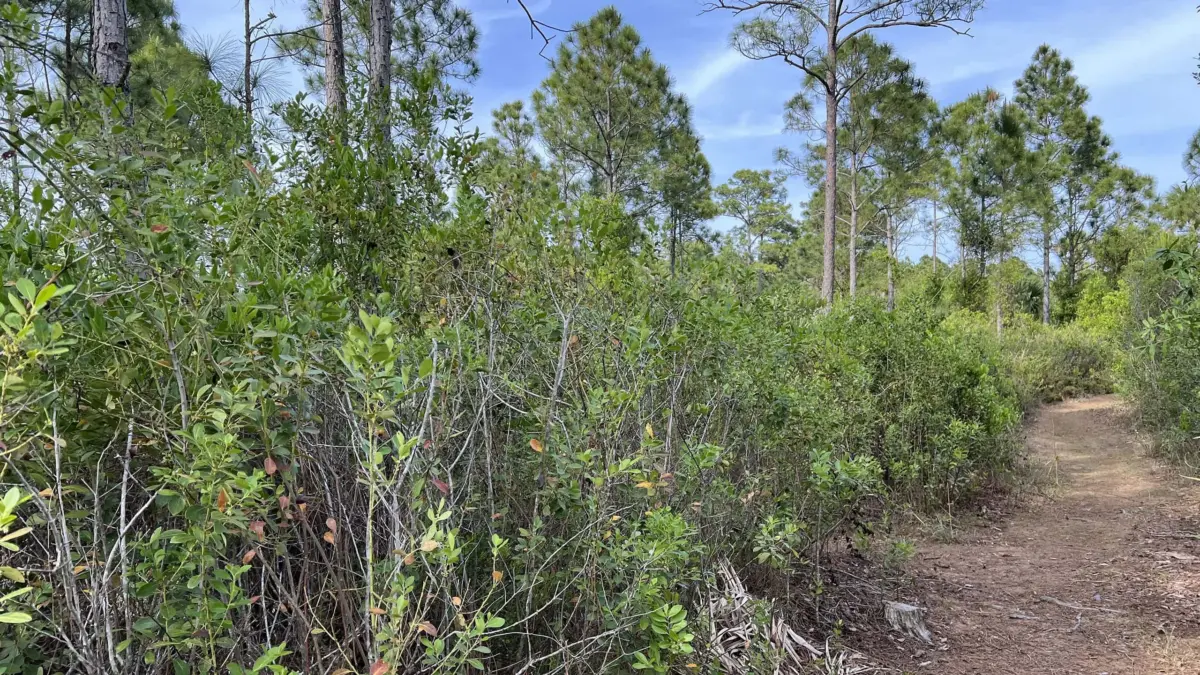

Nestled in the sprawling, master-planned subdivision of Lakewood Park—situated just west of historic Indrio and east of Interstate 95 in Fort Pierce, Florida—lies a vital ecological and recreational sanctuary: Lakewood Regional Park. Managed by St. Lucie County, this sprawling public space successfully bridges the gap between active community recreation and the preservation of native South Florida ecosystems. While the northern and central portions of the facility bustle with athletic energy, featuring manicured ballfields and a popular regional aquatic center, the wooded southern territory offers a stark, refreshing contrast. Here, a carefully curated network of multi-use pathways and rustic footpaths allows visitors to immerse themselves deeply in native pine flatwoods, palm hammocks, and transitional wetland ecotones.

This comprehensive field report provides an investigative breakdown of the 1.4-mile southern loop trail system. Designed for both casual walkers and dedicated naturalists, the route traces the edges of man-made aquatic features, burrows through tunnels of towering slash pines and aggressive saw palmetto, and borders hidden wilderness wetlands. As local municipalities increasingly grapple with the pressures of suburban sprawl, Lakewood Regional Park stands out as a masterclass in land management, balancing public health infrastructure with the protection of indigenous flora and fauna.

Detailed Chronology: A Step-by-Step Exploration of the Southern Loop
For outdoor enthusiasts looking to experience the wilder side of Lakewood Park, the journey begins at the heart of the facility’s recreational zone. The following chronological breakdown charts the 1.4-mile immersive trail route from its trailhead behind the aquatic center through the dense heart of the southern nature preserve.

Phase 1: The Aquatic Center Trailhead and the Central Pond
The journey originates on a broad, graded path situated immediately west of the Lakewood Park Aquatic Center. This primary access point is clearly demarcated by a prominent interpretive signage kiosk detailing the regional wildlife species commonly spotted within the park’s boundaries.

Heading south, the path traces the western perimeter of a large, man-made stormwater retention pond. This aquatic feature acts as a primary focal point for local fauna; visitors frequently observe American alligators (Alligator mississippiensis) basking lazily on the manicured grassy shorelines. Continuing past the pond, hikers cross a sturdy pedestrian bridge that signals a distinct transition from developed parklands into wilder, untamed habitats. The trail swings close to the boundary of the pine flatwoods, where an initial, unmarked side path ventures into the timber. However, hikers are advised to bypass this spur in favor of the subsequent “Y” junction, which guides visitors seamlessly into the main pine forest via a clearly marked map station.

Phase 2: Traversing the Pine-Palm Flatwoods
Upon entering the forest canopy, the pathway transforms into a wide, hard-packed forest road winding beneath a dense overhead lattice of slash pines (Pinus elliottii). The understory here is dense and dynamic; thickets of vibrant green sword ferns (Polystichum acrostichoides) cluster in low, damp micro-depressions, while towering wall-like thickets of saw palmetto (Serenoa repens) line the route. Because of the winding geometry of the forest road, each sweeping curve conceals the path ahead, heightening the sense of wilderness isolation despite the park’s suburban surroundings.

At approximately the 0.5-mile mark, the route hits a critical junction featuring an updated trail map kiosk. Here, a narrow, sandy footpath forks off to the left, beckoning hikers to leave the broader forest road behind and plunge deeper into the dense pine flatwoods.

Phase 3: The Narrow Footpath and Xeric Transition
The transition to the narrow footpath delivers an intimate, immersive hiking experience. Stepping onto a soft, natural carpet of amber pine duff, hikers find themselves enclosed within a natural arboreal tunnel. Branching palm fronds spill directly into the trail corridor, brushing against hikers as they navigate the terrain.

Along this stretch, the botanical profile shifts dramatically. Showy grassy coves appear, punctuated by delicate native wildflowers that pop against a dark backdrop of gallberry (Ilex glabra) thickets. A close inspection of the forest reveals that many of the pines feature unusually skinny, uniform trunks—telltale indicators of secondary-growth forests recovering from historic timber operations decades prior.

By the 0.7-mile mark, the narrow footpath terminates at a "T" intersection, meeting back up with the main graded path south of the central pond. Turning right, the trail enters a shaded corridor canopied by sprawling live oaks. Here, a lush carpet of marsh ferns creates a vibrant green ribbon running parallel to the base of the saw palmettos.

Phase 4: Navigating the Southern Boundary and Wetland Edges
As the trail loops toward its southernmost terminus, the topography subtly shifts. The path curves past an opening where residential homes just beyond the park’s legal boundary briefly materialize into view. To counter this urban intrusion, the trail immediately swings away from the property line, climbing onto slightly higher, drier ground characterized by scrubby flatwoods.

At the 1.0-mile mark, observant hikers will spot a well-defined secondary footpath branching off to the left. Turning onto this tight, vegetation-choked corridor, the habitat transitions once again into a damp, low-lying ecotone bordering a hidden interior wetland.

At ground level, bright yellow blossoms of candyroot (Polygala) offer a striking chromatic contrast against the dark brown pine needles. Towering cabbage palms (Sabal palmetto) pierce the upper canopy, rising far above an understory saturated with vines and gallberry bushes. In lower elevations, this section can occasionally hold standing water or present soggy conditions following heavy seasonal rains.

Phase 5: Return to Civilization
After navigating the tight wetland corridor, the path ascends onto marginally higher ground, offering a brief glimpse of the park’s open recreational fields. Emerging from the dense shade of the hammock at the 1.2-mile mark, the footpath empties directly onto a concrete multi-use path.

At this juncture, visitors have a logistical choice: they can extend their trek by taking the paved path on a counterclockwise loop around the northern sports complexes (adding an extra 0.5 miles, though primarily exposed to full sun), or they can turn left to head directly back toward the trailhead. Opting for the latter, hikers follow the broad sidewalk alongside the internal park road, passing the expansive central pond and the aquatic center to officially close the 1.4-mile loop.

Supporting Context & Metrics
Understanding the operational parameters of Lakewood Regional Park requires a look at its hard data and geographic positioning:

- Official Location: Lakewood Park neighborhood, St. Lucie County, Florida.
- Total Trail Length: 1.4 miles for the primary nature loop (with optional 0.5-mile paved extensions).
- Trailhead Coordinates: 27.53950, -80.41169
- Physical Address: 5990 Emerson Ave, Fort Pierce, FL 34947.
- Operational Hours: Daily, sunrise to sunset.
- Admission & Access: Park entry and nature trail usage are completely free of charge. Nominal fees apply for public access to the onsite aquatic center.
- Amenities: Restrooms and water fountains are available at the aquatic center facility near the primary parking lot.
- Pet Policy: Leashed dogs are strictly welcomed; visitors are legally and socially required to clean up after their pets to preserve local water quality and trail cleanliness.
- Naming Nomenclature: While historical signage and long-term locals refer to the facility as "Lakewood Park Regional Park," St. Lucie County online administrative portals have streamlined the designation to "Lakewood Regional Park."
Official Statements & Administrative Guidance
St. Lucie County land managers and parks department officials emphasize that properties like Lakewood Regional Park serve a dual ecological and civic purpose. In public communications regarding regional green spaces, county representatives note that maintaining natural buffers around suburban developments is paramount to preserving local watershed health and mitigating stormwater runoff.

Furthermore, park authorities issue strict guidelines regarding user etiquette within the southern natural areas:

- Wildlife Coexistence: Because the trails weave through natural wetlands and retention ponds, encounters with native wildlife—particularly American alligators and wading birds—are common. Visitors are instructed to maintain a safe distance and never feed wild animals.
- Leave No Trace: To protect delicate native wildflowers such as candyroot and fragile fern colonies, hikers must remain strictly on designated paths. Stepping off-trail damages second-growth root systems and accelerates soil compaction.
- Leash Laws: The enforcement of mandatory pet leashes is designed not only to protect trail-goers but also to prevent domestic animals from disturbing ground-nesting birds and sensitive herpetofauna residing within the flatwoods.
Future Outlook
As Fort Pierce and the broader St. Lucie County region continue to experience rapid population growth and residential expansion, the strategic value of protected green infrastructure cannot be overstated. Lakewood Regional Park acts as a crucial living laboratory and recreational escape valve for local residents.

Looking forward, county planners anticipate continued community utilization of the park’s dual-nature infrastructure. Future maintenance initiatives are expected to focus on invasive species removal within the pine-palm flatwoods, trail marker upgrades to assist novice hikers navigating the network of social paths, and ongoing water quality management for the internal hydrological features that support the park’s diverse apex predators and migratory bird populations. By preserving this 1.4-mile slice of native wilderness against the backdrop of modern suburban development, St. Lucie County ensures that future generations will retain direct, frictionless access to Florida’s irreplaceable natural heritage.

0 Comments