Tucked away just west of historic Indrio and east of the roaring corridor of Interstate 95, Lakewood Park stands as a sprawling, master-planned residential community built upon former ranchlands in northern St. Lucie County. Amidst the suburban grid lies a crucial environmental and recreational anchor: Lakewood Regional Park (frequently cataloged digitally simply as Lakewood Park). Managed expertly by St. Lucie County, this expansive green space accomplishes a difficult balancing act, harmonizing high-energy community needs—such as illuminated ballfields, open-air gathering spots, and a bustling regional aquatic center—with a remarkably secluded, ecologically diverse natural buffer zone.
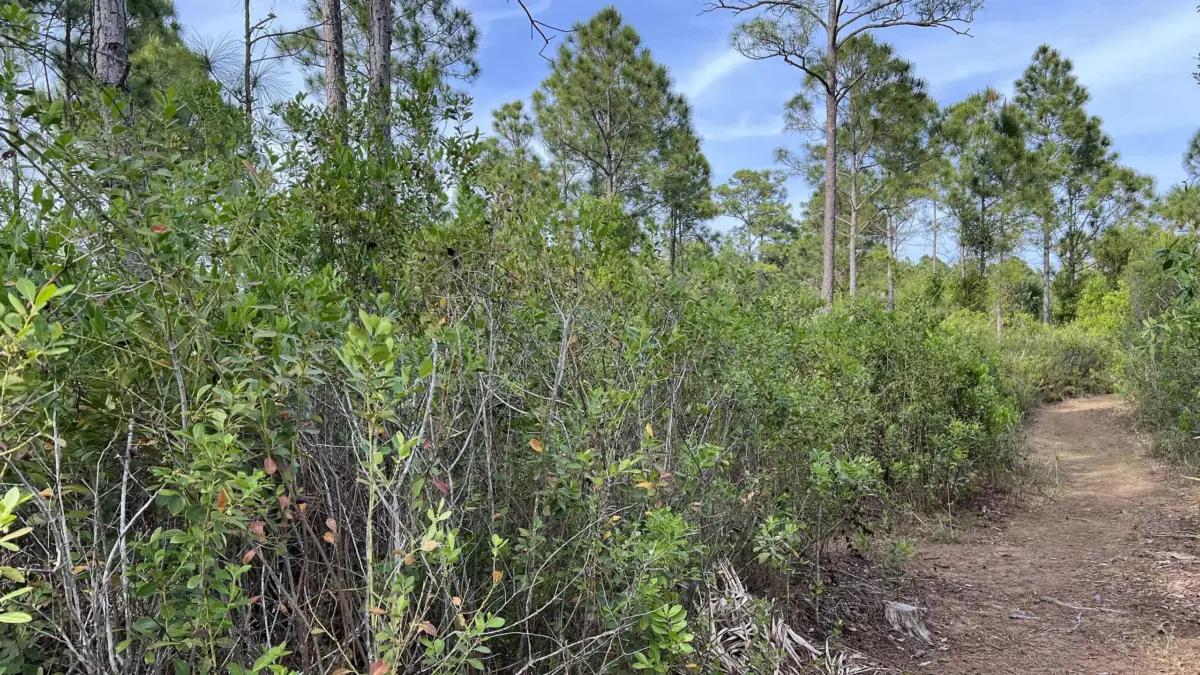
For local residents, naturalists, and visiting hikers alike, the real prize of the property lies just beyond the roar of the recreational complexes. The park’s wooded southern portion harbors a meticulously maintained 1.4-mile trail network that plunges explorers directly into classic Florida flatwoods ecosystems. From wide, sun-dappled forest roads canopied by towering slash pines to narrow, palm-lined footpaths threading through dense understories of saw palmetto and gallberry, the route offers a masterclass in native Florida ecology.
This comprehensive guide serves as an authoritative dispatch on navigating the Lakewood Park trail system. Drawing from field-tested research, geographical mapping, and local land stewardship logs, we break down the exact logistics, step-by-step route chronicles, and ecological significance of one of Fort Pierce’s premier outdoor destinations.
Detailed Chronology: Step-by-Step Trail Guide
The 1.4-mile loop at Lakewood Park is designed to transition visitors gradually from structured community spaces into raw, immersive wilderness.
Phase 1: Departure and the Aquatic Center Pond
The journey begins directly west of the prominent Lakewood Park Aquatic Center, located at 5990 Emerson Ave, Fort Pierce. Trail seekers will spot the trailhead marked by a large, permanent interpretive sign detailing the diverse wildlife species inhabiting the immediate micro-climate.
Setting out along a broad, graded pathway, hikers immediately pass the western edge of a substantial man-made retention pond. On any given morning, visitors should keep a watchful eye on the grassy shorelines, where native American alligators frequently bask in the Florida sun. Continuing forward, the trail crosses a broad pedestrian wooden bridge. This structure serves as a clear ecological threshold, swinging hikers closer to the dense pine flatwoods that define the property’s southern boundary. While an unmarked side path tempts shortcuts into the canopy, hikers are advised to press forward to the primary Y-junction, where an official trail map frames the entrance into the deep forest.
Phase 2: Forest Roads and Pine-Palm Flatwoods
Passing the junction, the path transforms into a wide forest service road winding beneath a towering overstory of slash pines. The understory here is dominated by thickets of native fan palms and delicate sword ferns thriving in localized damp pockets. Because of the density of the palm fronds, each sweeping curve of the road introduces a completely fresh perspective, heightening the sense of remote exploration despite the park’s suburban proximity.
Roughly a half-mile into the trek, a narrow, highly defined footpath forks to the left, identified by a secondary trail map station. Turning onto this narrower trace immediately alters the sensory experience. Pine needles (duff) form a soft, sound-dampening carpet beneath your boots, while fronds spill gracefully into the narrow corridor, creating an intimate green tunnel.
Phase 3: Shifting Flora and Southern Boundaries
Around the 0.7-mile mark, the narrow footpath reconnects with the primary graded trail just south of the main water feature. Turning right, hikers are enveloped by a canopy of sprawling live oaks whose overhanging branches cast deep, cool shadows. At the base of the surrounding saw palmettos, vibrant ribbons of marsh ferns flourish in damp soils.
As the route dips toward its southernmost geographic coordinate, brief glimpses of residential rooftops beyond the park boundary remind visitors of the suburban sea surrounding the preserve. The trail swiftly pivots away from these perimeter views, ascending slightly onto drier ground characterized by scrubby flatwoods.
Phase 4: The Wetland Edge and Final Stretch
At the one-mile mark, a sharp, well-defined corridor breaks off to the left. This segment edges a heavily concealed interior wetland. Here, the landscape dampens once more, yielding striking flashes of color—most notably the brilliant yellow blossoms of native candyroot piercing through the brown pine duff. Towering cabbage palms rise triumphantly above dense thickets of gallberry and wild vines.
Emerging from the shaded hammock onto higher ground at approximately 1.2 miles, a sudden splash of light signals the end of the dirt corridor. The path merges with a paved multi-use sidewalk. While visitors looking to log extra mileage can follow this sidewalk north to complete a longer loop around the sports complexes, purists will turn left to exit the woods immediately. Following the broad sidewalk parallel to the park road past the main pond and the aquatic center brings hikers back to the trailhead, completing an unforgettable 1.4-mile excursion.
Supporting Context & Metrics
Understanding the operational framework, environmental parameters, and physical layout of Lakewood Regional Park ensures a safe and fulfilling visit.
Key Facility Metrics
Official Location: Lakewood Park (St. Lucie County)
Trail Length: 1.4 miles (with optional paved extensions up to 2.0 miles)
Trailhead Coordinates: 27.53950, -80.41169
Physical Address: 5990 Emerson Ave, Fort Pierce, FL 34947
Operational Hours: Open daily from sunrise to sunset
Access Fees: Park entry and trail use are entirely free; nominal fees apply for public access to the regional aquatic center.
Amenities: Modern public restrooms located directly at the aquatic center facility; ample parking; sculpture-featured roundabouts; multi-sport ballfields.
Pet Policy: Leashed dogs are warmly welcomed. Standard environmental stewardship rules apply; visitors must clean up after their pets using waste disposal stations.
Ecological Breakdown
The southern trail system at Lakewood Park protects a transitional ecotone typical of Florida’s Atlantic coastal ridge transition zones:
Pine Flatwoods: Dominated by second-generation slash pines (Pinus elliottii) that seeded following historic timber operations across the former ranchlands.
Saw Palmetto & Gallberry Thickets: Dense understory components that provide crucial nesting cover for ground-dwelling birds, small mammals, and reptiles.
Hydric Hammocks & Wetlands: Interior low-lying pockets featuring marsh ferns, cabbage palms (Sabal palmetto), and seasonal pools that support native amphibians and wading birds.
Official Statements & Administrative Updates
Land management for this multi-use parcel falls under the jurisdiction of the St. Lucie County Parks and Recreation Department. County officials emphasize that Lakewood Regional Park was conceptualized to solve a dual civic need: providing high-density athletic infrastructure for a rapidly growing population while actively ring-fencing vital urban wildlife corridors.
In recent operational updates, St. Lucie County has streamlined its digital and physical nomenclature, officially referencing the property in modern web databases as simply Lakewood Park, though historical signage across the grounds may still display the traditional Lakewood Park Regional Park moniker.
County park administrators issue standard advisories regarding safety in Florida’s urban-adjacent green spaces:
"While our county parks offer incredible access to pristine native habitats, visitors must always remain mindful of shared wildlife spaces. Alligators naturally inhabit our retention ponds and wetland edges, and trail users are strictly advised to maintain a safe distance, keep pets securely leashed at all times, and respect the natural boundaries of the flora and fauna."
Future Outlook & Regional Adventure Network
As St. Lucie County continues to experience rapid residential development west of Interstate 95, properties like Lakewood Park serve as critical benchmarks for sustainable urban planning. Preserving these green lungs ensures that regional biodiversity remains intact while giving urban populations direct access to mental and physical health outlets.
For hikers and outdoor enthusiasts eager to expand their local itineraries beyond the borders of Lakewood Park, the greater Fort Pierce and St. Lucie County region boasts an exceptional network of preserved lands managed by local, state, and non-profit conservation groups:
Hallstrom Farmstead: Encircling the historic Hallstrom House, this 1.4-mile loop showcases rare sand pine scrub and serves as a vital habitat protection zone for endangered native plant species, including native mint varieties.
Sheraton Scrub Preserve: Located within residential Fort Pierce, this accessible loop offers upland scrub hiking tailored for spotting rare Florida scrub-jays from ground-level trails and elevated observation towers.
D.J. Wilcox Preserve: A stunning mosaic of habitats sustained by a natural freshwater spring near the Indian River Lagoon, located on the historic site of old Indrio.
Indrio Savannahs Preserve: Situated scarcely a mile west of the Indian River Lagoon, this protected area stands as a stellar example of municipal freshwater savannah restoration and wildlife conservation.
Whether you are seeking a quick midday stroll through pine-scented air, a family outing combining playground and pool access, or an entry point into the rich natural heritage of Florida’s Treasure Coast, Lakewood Park’s southern trail system delivers a rewarding, accessible wilderness experience right in the heart of the community.






0 Comments