

Executive Overview
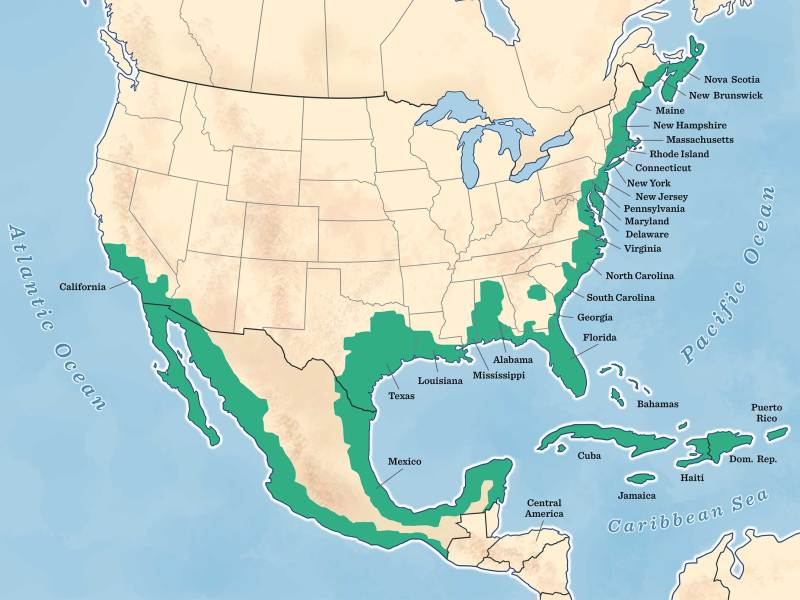
Every autumn, as the oppressive heat of the summer sun begins to relent along the Eastern Seaboard and the Gulf of Mexico, a marine phenomenon unfolds that rivals any terrestrial wildlife migration on the planet. From September well into November—and occasionally stretching into the depths of winter—millions upon millions of striped and silver mullet pour out of brackish rivers, sprawling bays, and quiet estuaries. They surge into the open Atlantic and Gulf waters in dense, pulsating pods that stretch for miles.
This epic movement is far more than a simple shift in habitat; it is an ecological trigger that sets off a feeding frenzy of monumental proportions. A veritable gauntlet of coastal apex predators—including colossal redfish, acrobatic tarpon, aggressive snook, blistering king mackerel, and ravenous jack crevalle—shadows these massive baitfish schools. For the coastal angler, the fall mullet run represents the ultimate calendar event. It is a period of high-octane fishing where knowing the behavioral patterns of both bait and predator separates the successful sportsman from the frustrated observer. This authoritative guide examines the mechanics of the migration, breaks down species-specific tactics, and outlines how to capitalize on the coastal carnage.
Detailed Chronology: The Lifecycle and Timing of the Run
To effectively target gamefish during the mullet run, an angler must first understand the biological clock driving the baitfish. Mullet spend the majority of their lives thriving in the nutrient-rich, low-salinity waters of inland estuaries, tidal creeks, and coastal rivers. Here, they grow from fragile fingerlings into robust adults, with some specimens reaching up to three pounds.
However, as autumn approaches, a primal biological imperative takes over. Marine biologists explain that adult mullet seek specific oceanic salinity gradients to successfully release eggs and milt. This quest for the perfect mix of saltwater and freshwater triggers a mass exodus.
- Late August to Early September: The precursor phase. The largest striped and silver mullet begin staging near river mouths and inlets. Water temperatures begin a gradual descent, signaling physiological changes within the fish.
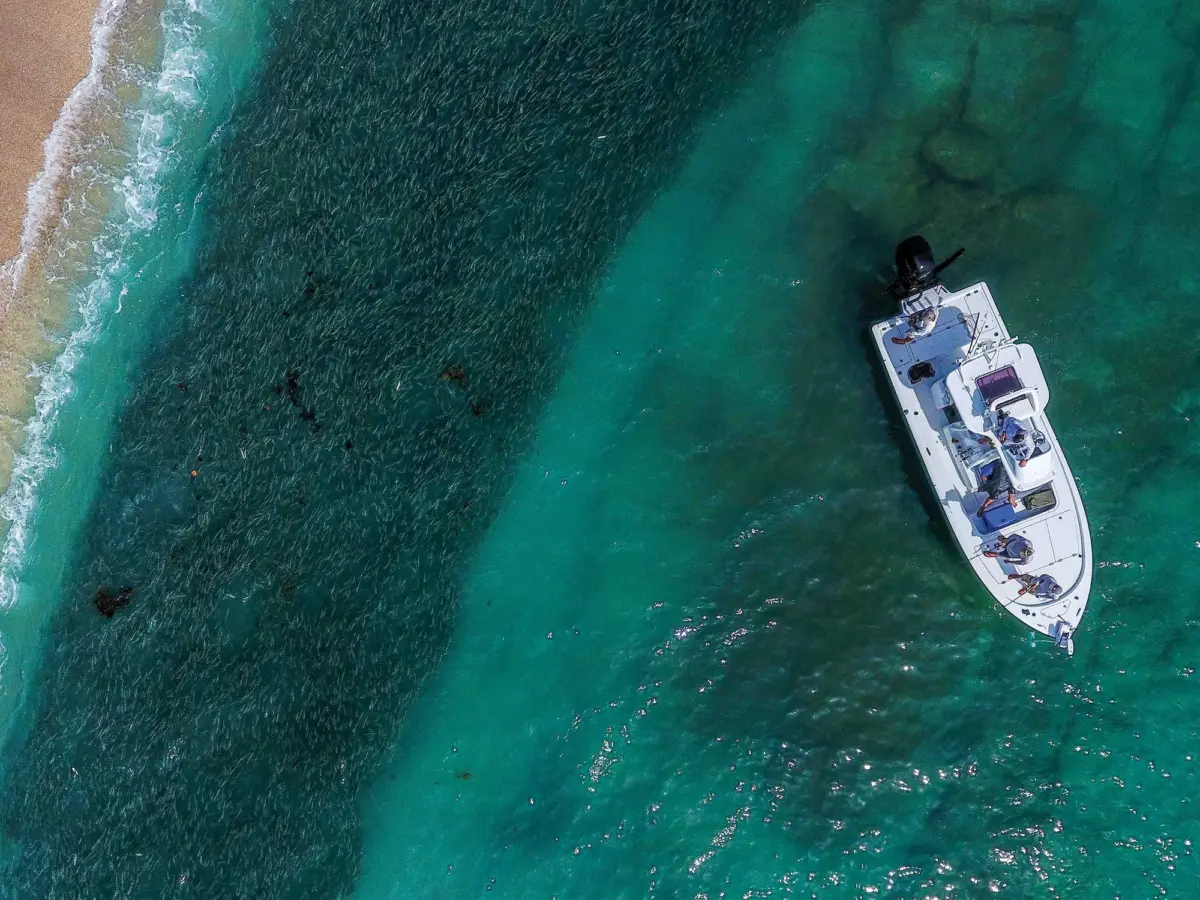
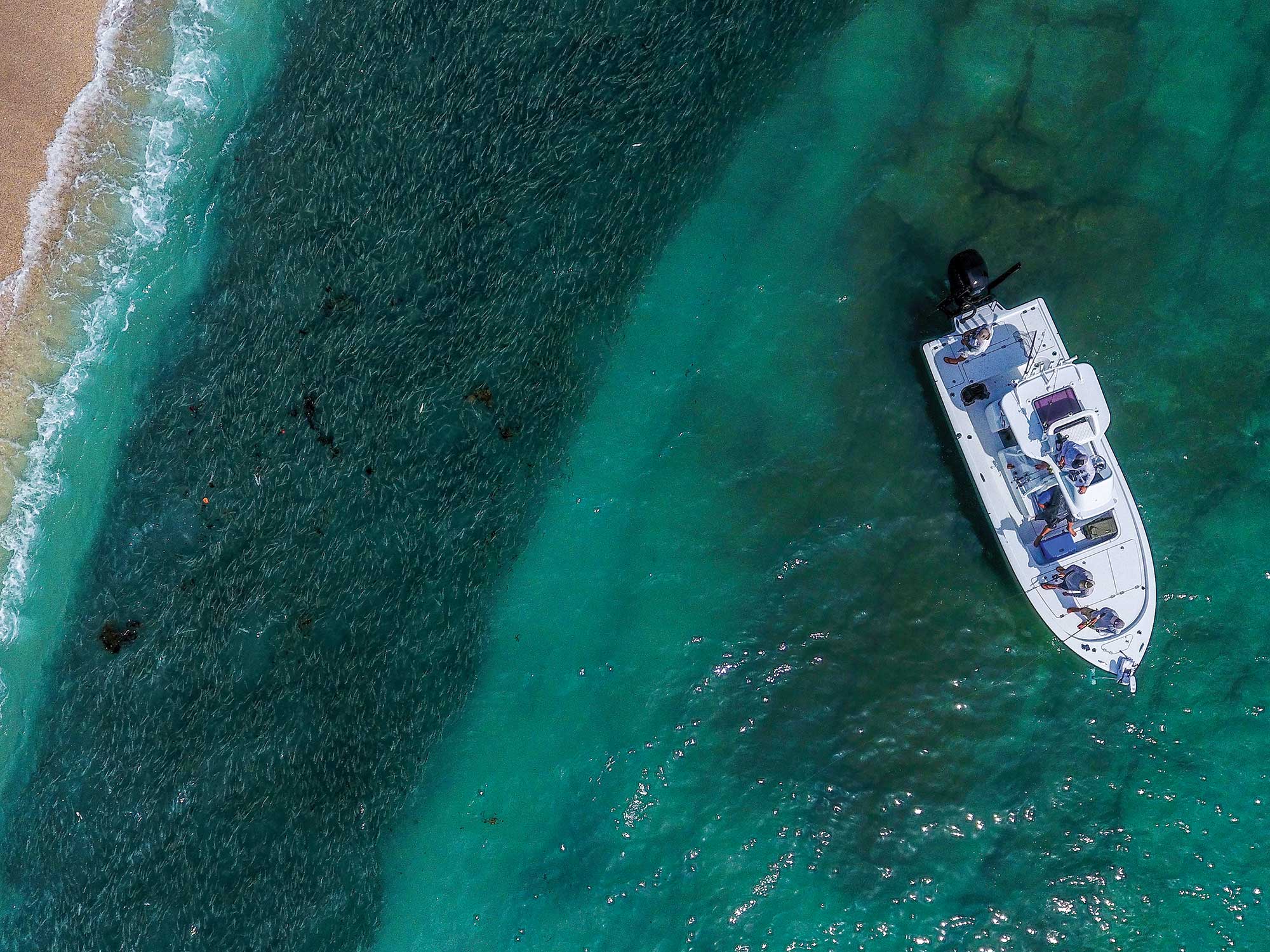
- Mid-September to Mid-October: Peak migration intensity. Millions of fish push out into the surf zone, creating massive, dark-colored brown patches visible from miles away. They move methodically down the Atlantic Coast, hugging the beaches or weaving through barrier island passes, while Gulf white mullet undertake lateral migrations of up to 100 miles.
- Late October through November: The tail end of the run. While the main body of fish has moved south or pushed offshore to spawn, lingering pods continue to feed local populations of resident gamefish, providing steady, albeit less predictable, opportunities.
Supporting Context & Metrics: Anatomy of a Forage Feast
The scale of the mullet run defies casual imagination. Ranging in size from 3-inch fingerlings to hefty 12-to-14-inch adults, these schooling fish form tight defensive pods. Yet, their safety-in-numbers strategy often backfires, as the sheer density of the biomass acts as a beacon for every predatory fish within miles.
Environmental triggers heavily influence how and when the run explodes. According to seasoned coastal guides and marine observers, a slight, crisp northeast wind provides the ideal meteorological setup. This wind direction stacks the migrating baitfish tightly against the shoreline and surf zone, compressing their escape routes. Trapped between the dry sand of the beach and an ocean full of hungry predators, the mullet become exceptionally vulnerable.
Furthermore, observers often note mullet aggressively "nosing" or leaping out of the water. While scientists debate whether this behavior is an attempt to escape subsurface predators, shake off parasites, or absorb extra oxygen in heavily populated, low-oxygen bait pods, the visual cue is unmistakable to the observant angler: a leaping mullet is almost universally a terrified mullet running for its life.
Species Breakdown: Targeting the Coastal Predators
The sheer variety of gamefish participating in the mullet run ensures that anglers utilizing everything from heavy offshore tackle to ultra-light fly rods will find heart-pounding action.
Raging Redfish in the Surf and Inlets
The southeast coast witnesses a massive redfish riot as the autumn mullet run coincides with the redfish spawning migration. Oversize red drum (bull reds) stack up around inlets, sounds, and lower river systems to gorge on the sudden, rich bounty.
- Where to Look: Focus on daybreak conditions, scanning the water for slick surfaces and dark brown patches of bait just a few hundred yards outside the breaking surf.
- The Catch: While the action is electrifying, anglers must remain mindful of local regulations, as many of the mature redfish feeding on beachside mullet pods exceed legal slot limits for retention. Practice careful catch-and-release protocols to preserve these vital breeding stocks.
Snook Suppers from Sebastian Inlet South
Consistent snook action ignites sharply around Sebastian Inlet south of Cape Canaveral, exploding in intensity down through the Miami coastline. As linesiders station themselves in current bottlenecks, around dock lights, and along mangrove-lined shorelines, they feed with reckless abandon.
"One important key for snook is to match the size bait to the size mullet in a school where linesiders are feeding," advises Capt. Phil O’Bannon, a renowned Charlotte Harbor guide. "If, for example, bait pods are holding mostly mullet in the 6-inch range, that’s the size bait to employ, preferably caught from the same schools snook are hitting."
Tarpon on a Tear
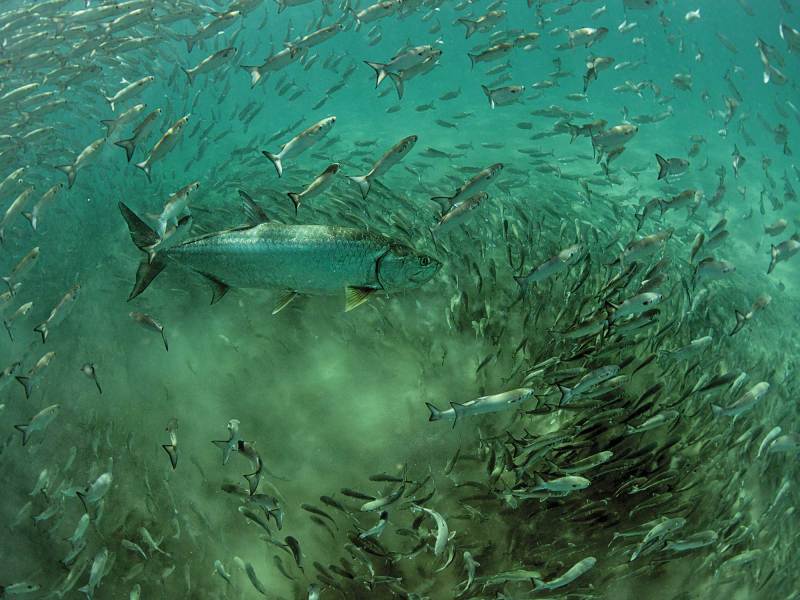
For fly-fishermen and conventional anglers alike, there is no more exhilarating quarry during the autumn months than the silver king. From the Carolinas through the length of Georgia and down the entire coast of Florida, tarpon crash through mullet schools with terrifying efficiency. A single lunge from a 150-pound tarpon can instantly vaporize an unlucky mullet. The primary challenge for the angler is not finding the fish, but rather convincing a well-fed, satiated tarpon to inhale a hooked offering when natural, unhooked baits are swirling by the thousands.
Kingfish, Barracuda, and Pelagic Invaders
When the mullet schools venture a mile or two offshore, or push tightly past deep-water ocean piers, pelagic predators crash the party.
- King Mackerel: Specimens in the 20-pound class eagerly patrol deep-water mullet pods. Because kingfish and barracuda have formidable teeth, wire leaders are mandatory. Slow-trolling live baits using tandem-hook rigs is the gold standard, as these predators have a frustrating habit of clipping the tails off live baits rather than swallowing them whole.
- Caution on the Water: When spotting king mackerel skyrocketing out of the water in pursuit of bait, resist the urge to run at top speed directly into the heart of the school. Approaching too aggressively will instantly spook the mullet, causing them to dive and dragging your target species away with them.
Jacks, Blues, and Spanish Mackerel: The Supporting Cast
While the marquee names command attention, ignoring the secondary players is a mistake. Aggressive schools of 15-pound jack crevalle, ferocious bluefish, and lightning-fast Spanish mackerel regularly decimate mullet pods. For fly-rodders and light-tackle enthusiasts looking to experience steady, high-action rod-bending, a surface blitz of jack crevalle attacking trapped mullet offers unrivaled sport.
Future Outlook: Conservation and Sustainable Angling
As coastal development, shifting water temperatures, and changing salinity levels continue to impact marine ecosystems along the Atlantic and Gulf coasts, the health of the mullet fishery remains paramount. Mullet are the foundational brick in the marine food web; without them, the magnificent apex predator fisheries that draw millions of tourists and sportsmen to coastal communities would collapse.
Management agencies and conservation groups increasingly emphasize responsible harvesting practices, adhering strictly to bag limits, and practicing ethical catch-and-release techniques for trophy-sized breeding stock like bull redfish and large snook. Furthermore, protecting estuarine nurseries—where juvenile mullet spend their formative years—is critical to ensuring that future generations can witness the awe-inspiring spectacle of the great fall migration. By respecting the fragility of this marine web, anglers ensure that the autumn mullet run will remain a thunderous, thrilling tradition for decades to come.

0 Comments