Nestled away within the bustling urban landscape of Sarasota, Florida, lies Pinecraft Park—a unique nexus where rich cultural heritage and subtropical wilderness converge. While long celebrated by the Amish and Mennonite communities as a cherished winter sanctuary, Pinecraft remains an understated gem for the wider public. Established originally as a tourist camp back in the 1920s, its geographic core features a humble collection of modest residential homes that edge a small yet ecologically vital county park along the banks of Phillippi Creek.
Today, Pinecraft Park serves a dual purpose. Culturally, it acts as an active community hub where traditional residents don distinctive plain clothing, navigate the grounds on three-wheel bicycles, and converse in the familiar German dialects of their ancestral heritage. Ecologically, it offers a surprisingly diverse sanctuary featuring a delicate, hurricane-impacted mesic hammock, rare native flora like the Pigmy fringetree, and crucial aquatic access to Phillippi Creek.
This comprehensive journalistic feature explores the structural layout, historical background, ecological recovery, and trail logistics of Pinecraft Park. Through an exhaustive examination of its 1.1-mile trail system, visitors and conservationists alike can gain a deeper appreciation for this fragile pocket of Florida biodiversity that coexists seamlessly with one of the state’s most unique cultural enclaves.
Detailed Chronology: Navigating the 1.1-Mile Pinecraft Park Trail System
For hikers, naturalists, and outdoor enthusiasts visiting Sarasota County, Pinecraft Park offers a captivating two-part walking experience. Spanning a total distance of 1.1 miles, the route seamlessly blends an active recreational park environment with a dense, untamed subtropical hammock.
Phase 1: The Mesic Hammock Trail Entry and Initial Circuit
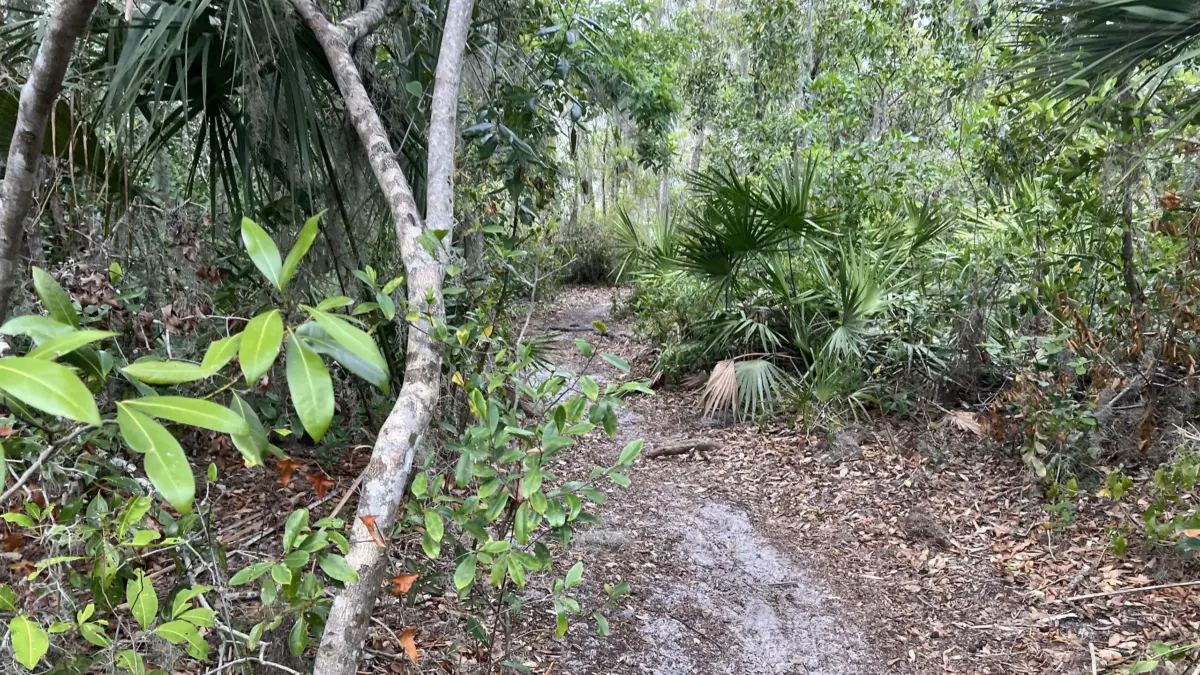
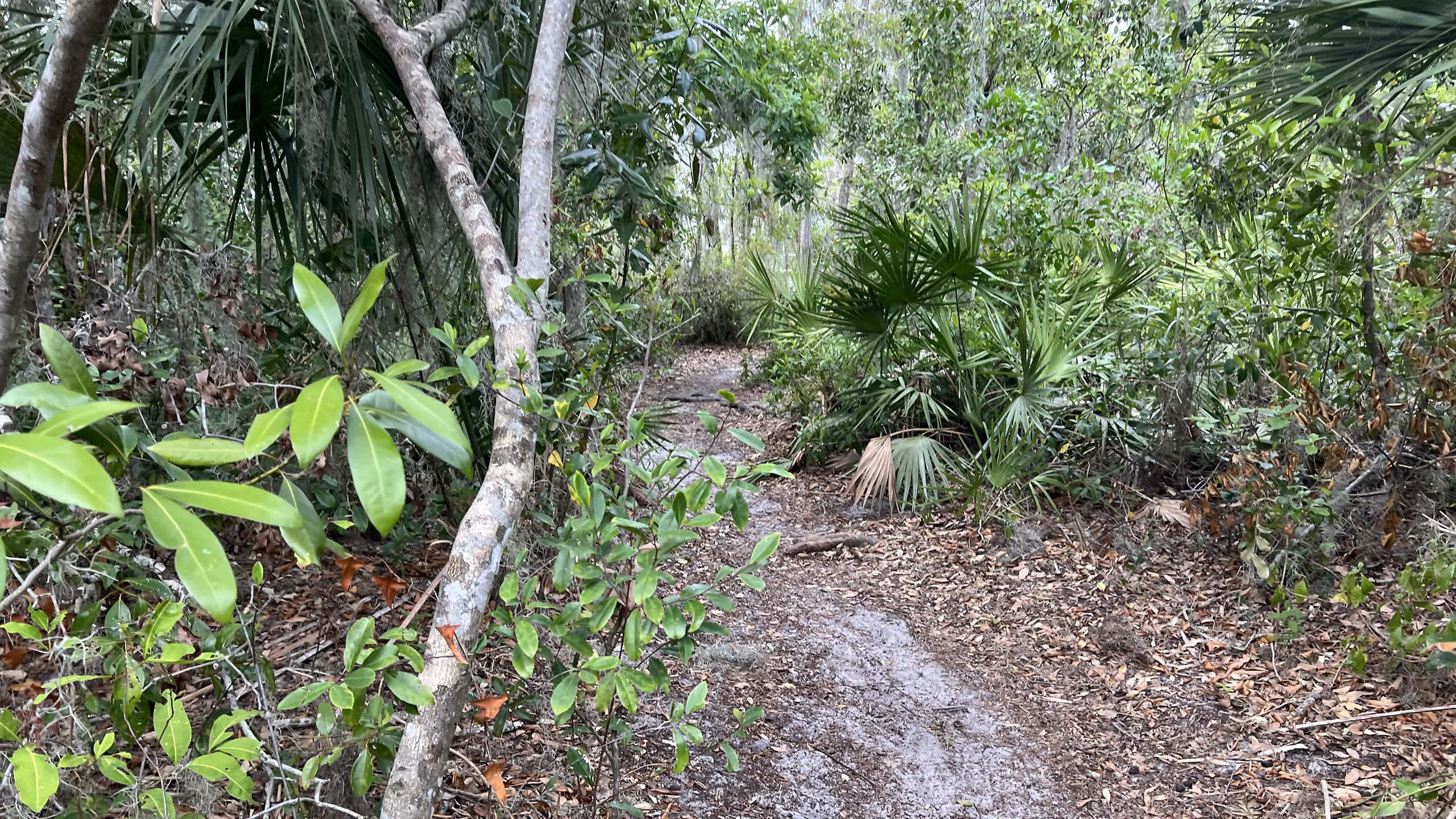
The journey begins at the southern edge of the park property, right at the entrance of the signposted Mesic Hammock Trail. Stepping across a modest pedestrian bridge over the water transports visitors instantly from manicured lawns into the thick of the hammock. Confronted by a three-way junction, hikers typically choose to bear left to initiate a clockwise circuit.
The forest canopy overhead—largely composed of mature live oaks and magnolias—bears the heavy scars of past meteorological events, most notably the severe impacts of Hurricane Milton. Many of the larger trees stand broken with shredded canopies, allowing shafts of brilliant Florida sunlight to pierce the understory. This sudden influx of light has fueled a dense, tangled proliferation of vegetation.
A narrow, winding footpath snakes directly through this thicket. Here, wild grapevines swarm competing foliage, while the coral bean (Erythrina herbacea) makes its presence known through striking, spiky crimson blooms bursting from the leaf litter. Southern red cedar and wild coffee (Psychotria nervosa) further complicate the vibrant understory mix.
Navigating deeper, hikers encounter a T-intersection. Because the left branch dead-ends shortly thereafter, the route bears right, channeling visitors through a tight, atmospheric corridor walled in by thick shrubs and low-hanging branches. Ducking beneath the juvenile limbs of young trees around a sharp curve, the trail ascends past a towering hickory tree, leading toward a back gate of the park property. While this minor detour simply rewards the curious with a view of a stream vigorously pouring out of the adjacent neighborhood, hikers quickly retrace their steps to the primary junction to continue the core loop.
Phase 2: Ravines, Confluences, and Rare Flora
Turning left past a yellow-blazed tree—one of the few explicit trail markers in the hammock—the path parallels the rushing stream along a distinct wooded bluff. Carved deep into the semi-tropical understory, the terrain drops steeply toward a ravine. Through occasional gaps in the dense, invasive-heavy landscaping plants spilling over from neighboring properties, a narrow channel becomes visible, cutting through a heavily obscured cleft at the bottom.
Ascending away from the stream, the path winds past a remarkable natural sculpture: the curlicue trunk and root system of a strangler fig whose organic architecture eerily mimics a musical treble clef. Bearing left, the sandy pathway slips straight through a thicket of marlberry before emerging into a slightly more open expanse of the hammock, where young bay trees stake their claim in the soil.
Reaching the 0.3-mile mark near the entrance bridge, hikers bear left again to descend into a depression thick with saw palmetto. A sandy spur trail to the right climbs sharply onto a bluff overlooking Phillippi Creek, offering a rare, unblemished glimpse of a natural, unaltered shoreline along the tannic waterway.
Descending back to the main route, the trail weaves gracefully between clusters of cabbage palms, pulling away from the creek briefly before dipping down to another T-junction. This junction meets a secondary waterway flowing straight out of the neighborhood, culminating in a dramatic confluence with the wider Phillippi Creek. The adjacent spur grants a sweeping vantage point of the mixing waters.
Tackling the upstream stretch requires a steep, heart-pumping ascent along a bluff that parallels the flow. Peeks of the tea-colored water shimmer through the screen of foliage. At approximately the 0.5-mile mark, hikers must navigate the steepest climb of the entire trail system—a narrow, scambling ridge that reconnects with the path previously traversed near the neighborhood waterway. Retracing steps past the musical-clef strangler fig brings hikers back to the initial pedestrian bridge at the 0.6-mile mark, officially concluding the Mesic Hammock Trail loop.
Phase 3: The Paved Levee and Park Amenities
To round out the full 1.1-mile expedition, hikers transition from the wild dirt paths to a paved, quarter-mile linear trail located in the developed heart of Pinecraft Park. Fronting a ditched, highly managed portion of Phillippi Creek, this paved walkway sits elevated upon a levee.
Visitors can complete a scenic round-trip journey past the park’s bustling amenities: the children’s playground, open-air picnic pavilions, and the iconic shuffleboard courts where Amish and Mennonite men regularly gather for spirited matches. Below the parking area, a concrete boat ramp serves as an official launch point for local paddlers looking to take their kayaks or canoes out onto Phillippi Creek.
Supporting Context & Metrics: Ecological and Geographical Profiles
Understanding the true value of Pinecraft Park requires analyzing the hard data, geographical parameters, and ecological oddities that define the site.
Core Site Metrics
Location: Sarasota, Florida (Sarasota County)
Total Trail Length: 1.1 miles (comprising a 0.6-mile natural hammock loop and a 0.5-mile paved park/levee round-trip)
Operational Hours: Open daily from 6:00 AM to 10:00 PM
Admission Fees: Free to the public
Facilities: Restrooms located conveniently at the trailhead; picnic pavilions; boat launch ramp; children’s playground; shuffleboard courts.
Land Manager: Sarasota County Parks and Recreation (Contact: 941-861-5000)
Restrictions: Bicycles are strictly prohibited on the nature/hammock trail (though off-road tire tracks indicate past violations); pets are not permitted within the park boundaries per official signage.
Botanical Highlights: The Pigmy Fringetree Range Limit
Despite the heavy presence of ornamental invasive plant species choking parts of the mesic hammock—a common issue for urban-edge Florida green spaces—Pinecraft Park harbors an extraordinary botanical surprise. In the month of March, the forest floor and understory light up with the delicate, ivory-green blooms of the Pigmy fringetree (Chionanthus pygmaeus).
These rare plants stand in stark visual contrast against the surrounding saw palmetto and dark leaf litter. Scientifically notable, Pigmy fringetrees are considered rare and endangered even within their primary strongholds in North and Central Florida. Pinecraft Park represents the absolute southernmost boundary of their natural geographic range. Their survival within this tiny, heavily impacted urban pocket underscores the critical importance of localized conservation efforts.
Official Statements & Community Perspectives
Pinecraft Park occupies a delicate psychological and physical space within Sarasota. It bridges the gap between a tight-knit, insular religious culture and a rapidly expanding coastal Florida municipality.
Preserving Cultural Identity in an Urbanized Paradise
Local historians and community liaisons note that Pinecraft’s unique status as Florida’s sole permanent Amish and Mennonite enclave dates back nearly a century. What began as a seasonal tent and tourist camp in the Roaring Twenties evolved into a permanent village where traditional values remain deeply entrenched.
County officials and park planners emphasize that Pinecraft Park was intentionally designed to serve as a shared community living room. The shuffleboard courts, picnic pavilions, and shaded green spaces are not merely recreational amenities; they are vital social infrastructure. Here, multi-generational families gather after Sunday services, elders converse in Pennsylvania German (Deitsch), and youth socialize while observing traditional dress codes.
Balancing Recreation, Conservation, and Hurricane Recovery
Sarasota County Land Management has faced significant hurdles in maintaining the ecological health of the park’s mesic hammock, particularly in the wake of catastrophic weather events. Following Hurricane Milton, which severely battered the coastal and near-coastal canopies of Southwest Florida, Pinecraft Park’s oak hammock suffered heavy tree-snapping and canopy fragmentation.
In official park management statements, county arborists and trail maintenance crews have stressed the delicate balancing act required to manage the park:
"Urban parks like Pinecraft face a triple threat: intensive public recreational use, aggressive encroachment by invasive ornamental flora from adjacent residential backyards, and increasingly severe meteorological impacts from major hurricanes. Our priority is maintaining safe public access while safeguarding micro-ecosystems that support rare native species like the Pigmy fringetree."
Furthermore, local authorities actively urge trail users to respect park rules—specifically the prohibition of bicycles on the narrow dirt footpaths. Off-road cycling not only erodes the delicate, undulating terrain of the mesic hammock but also accelerates the destruction of fragile root systems already stressed by storm damage.
Future Outlook: Stewardship, Conservation, and Sustainable Access
As Sarasota continues to experience rapid residential development and urban densification, the pressure on small urban green spaces like Pinecraft Park will inevitably intensify. The long-term viability of the park’s natural resources depends entirely on proactive environmental stewardship and community cooperation.
Ecological Restoration Priorities
Moving forward, Sarasota County Parks and Recreation has identified several key initiatives for Pinecraft Park:
Invasive Species Eradication: Targeted removal programs aimed at clearing out aggressive ornamental escapes within the mesic hammock, allowing native species like wild coffee, marlberry, and the endangered Pigmy fringetree to reclaim ground.
Post-Storm Canopy Recovery: Ongoing monitoring of hurricane-damaged live oaks and hickories to prevent hazard-tree risks while allowing natural forest regeneration to fill in shredded canopies.
Trail Armoring and Erosion Control: Upgrading signage and physical barriers to ensure compliance with the bicycle ban on nature trails, thereby protecting the vulnerable soil structure along the Phillippi Creek ravines.
Cultural Preservation and Public Education
Simultaneously, preserving the cultural integrity of Pinecraft remains paramount. As tourism and suburban sprawl creep closer to the enclave’s borders, educational outreach initiatives are being considered to foster mutual respect between park visitors and the resident Amish and Mennonite communities. By viewing the park not just as a recreational trailhead, but as a shared cultural and natural sanctuary, the public can help maintain the peaceful, low-key atmosphere that has defined Pinecraft for nearly a century.
Whether visiting in March to witness the ephemeral blooms of the Pigmy fringetree, paddling out onto the tannic current of Phillippi Creek, or simply taking a quiet, contemplative walk beneath the scarred live oaks of the mesic hammock, Pinecraft Park stands as a testament to resilience—cultural, historical, and ecological alike.







0 Comments