

Executive Overview
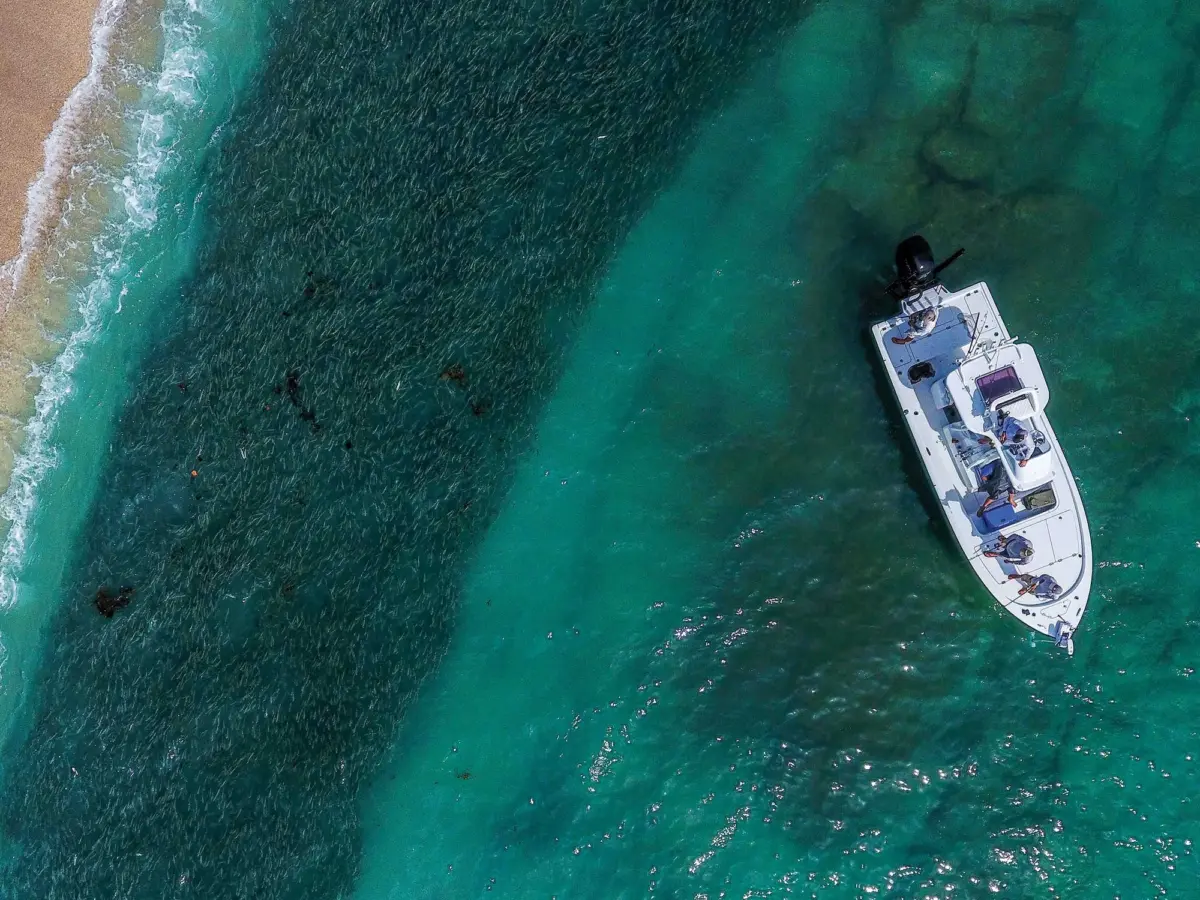
Every autumn, along the sun-bleached shores of the American Atlantic Coast and the sprawling saltwater estuaries of the Gulf of Mexico, a natural phenomenon occurs that rivals the great land migrations of the Serengeti. Known simply as the "mullet run," this event transforms quiet coastal beaches, river mouths, and inlets into high-octane predator-and-prey battlegrounds. Millions of striped (Mugil cephalus) and silver (Mugil curema) mullet pour out of backwater creeks, bays, and rivers, beginning a southward coastal pilgrimage that defies simple ecological categorization.
Ranging in size from fragile, three-inch fingerlings to hefty three-pound adults, these schooling baitfish travel in massive, dark pods that can stretch for miles. Their movement triggers a feeding frenzy among the region’s apex coastal gamefish. For inshore and nearshore anglers, this seasonal convergence represents the ultimate angling opportunity of the calendar year. Tarpon crash through the waves, mammoth redfish patrol the surf line, linesider snook ambush from the shadows, and king mackerel skyrocket on deepwater pods.
However, mastering the mullet run requires more than just showing up with a heavy rod and a pocketful of tackle. Success demands a comprehensive understanding of baitfish behavior, hydrodynamic conditions, salinity triggers, and targeted presentation strategies. This report offers an authoritative, in-depth breakdown of the fall mullet run, examining the underlying science of the migration, regional hotspots, prime gamefish species, and tactical blueprints to help you capitalize on the year’s greatest saltwater spectacle.
Detailed Chronology: The Seasonal Progression of the Run
The mechanics of the mullet run are dictated by a complex interplay of water temperature, photoperiod (day length), and biological imperatives tied to reproduction. While individual fish populations reside quietly within estuaries and river systems throughout spring and summer, the changing climate of early autumn acts as a universal starting gun.
Phase 1: The September Ignition (The Carolinas and North Florida)
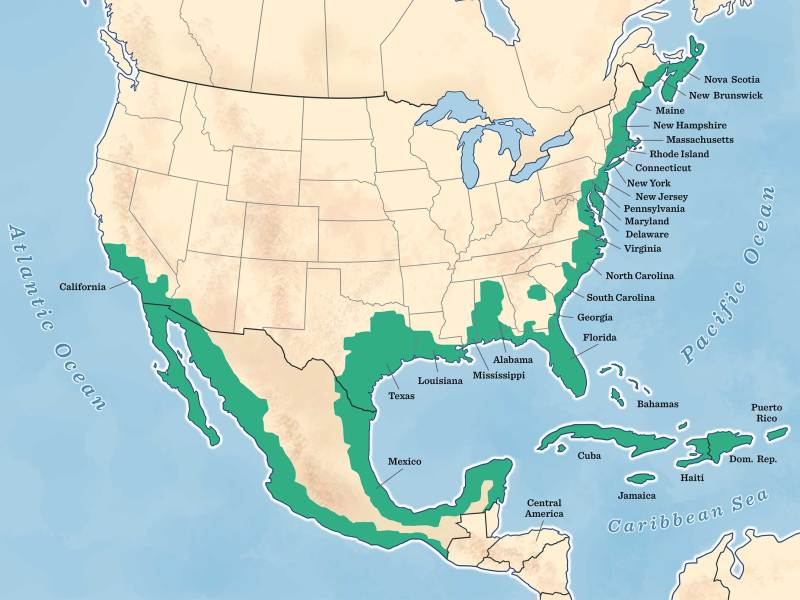
The migration typically ignites in September, occasionally dipping into late August if an early cold front sweeps down from the north. As nocturnal temperatures drop and day lengths shorten, adult mullet begin gathering in tight schools near the mouths of tidal rivers and inland bays from the Carolinas down through northern Florida.
During this initial phase, the baitfish are often spread out, but prolonged north-to-northeast winds start compressing them against the outer beaches. Coastal predators—specifically aggressive migratory tarpon, ravenous bluefish, and surging schools of jack crevalle—respond immediately. Anglers plying the surf zones in Georgia and the Carolinas experience explosive, opportunistic strikes as silver kings and heavy-shouldered jacks herd the vanguard of the mullet army into the breaking surf.
Phase 2: The October Peak (Central and South Florida Atlantic)
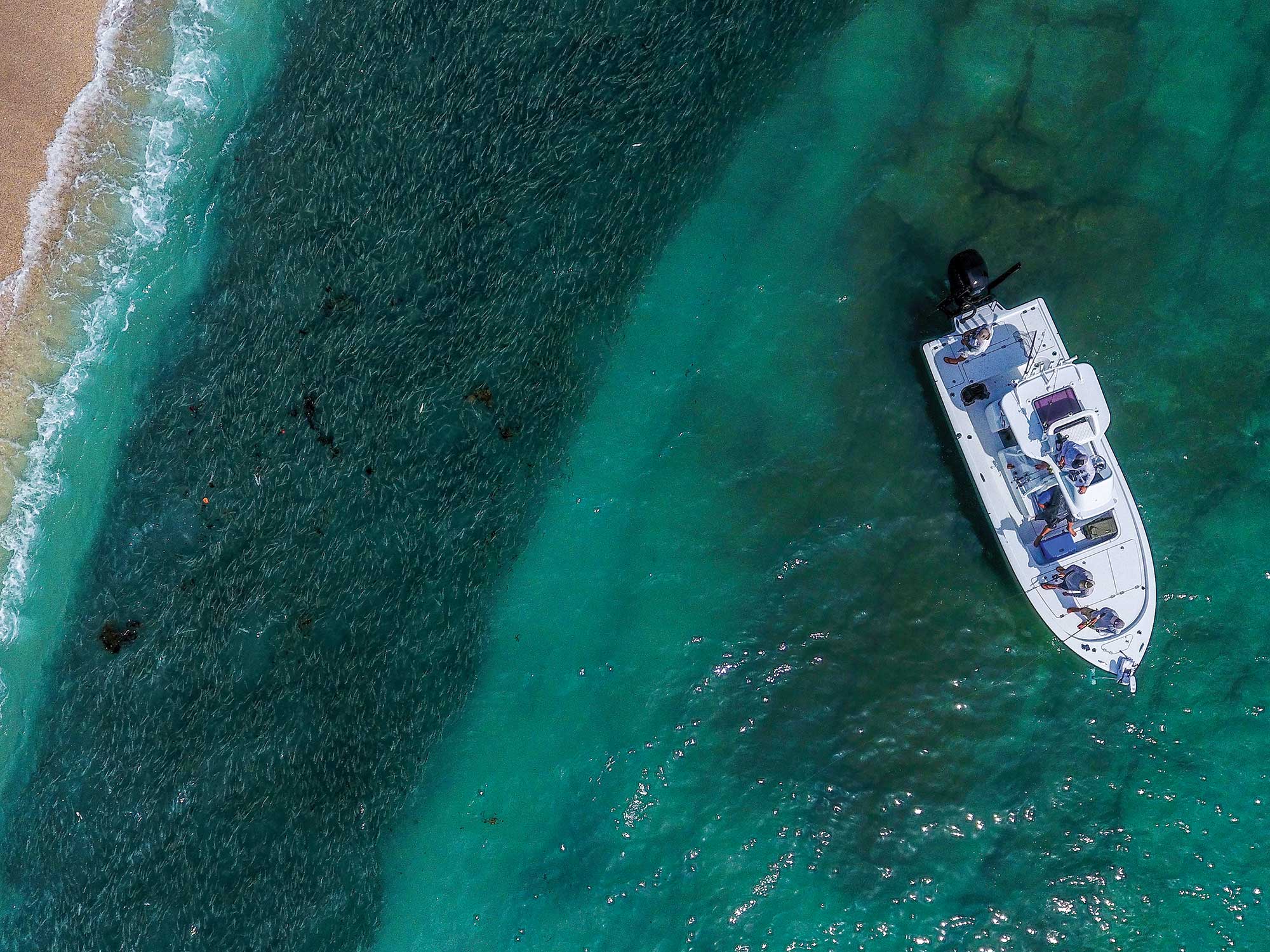
By October, the run reaches its crescendo. Millions upon millions of mullet flood past Cape Canaveral and barrel southward toward Sebastian Inlet, Jupiter, and Miami. This is the absolute peak of the migration. The water column teems with life, and the sheer volume of bait creates a floating highway of protein that attracts every predatory fish within miles.
This is the golden window for coastal redfish, massive snook, and predatory sharks. The bait pods are so dense that they often darken the water over vast reef systems and shallow beaches alike. Predators do not even need to hunt aggressively; they simply sit within or beneath the schools, inhaling hapless baitfish with minimal effort. For surfcasters and boat anglers alike, October offers a relentless succession of multi-species blitzes.
Phase 3: The November Tail-End and Gulf Coast Dynamics
As November rolls on, the main body of the Atlantic migration pushes further south toward the Florida Keys, while secondary pulses continue to trickle out of northern estuaries. Simultaneously, a parallel phenomenon occurs along the Gulf of Mexico. Biologists have documented Gulf white mullet executing lateral migrations of up to 100 miles, moving primarily east and west rather than north and south, driven by the same fundamental search for optimal spawning salinities.
By late November and into December, the frantic pace of the run begins to cool, though lingering bait schools can provide exceptional late-season action for anglers willing to brave volatile autumn weather patterns.
Supporting Context & Metrics: The Science Behind the Migration
To effectively target gamefish during the mullet run, an angler must think like a marine biologist. Understanding why mullet behave the way they do provides critical clues on where to find them and how predators will exploit them.
Salinity, Spawning, and Environmental Triggers
Fisheries biologists and coastal ecologists point to reproductive drive as the primary engine of the mullet run. Mullet spend the majority of their lives in brackish and low-salinity estuaries, growing fat on detritus, microalgae, and small invertebrates. However, to complete their life cycle, adult mullet must release their eggs and milt in high-salinity marine environments.
As autumn approaches, physiological changes prompt these fish to seek out specific oceanic salinity and temperature gradients. They push out of the rivers and head straight into the surf zone, waffling between the shallow beach breaks and several miles offshore until they encounter the precise ecological conditions required for offshore spawning.
The Mystery of the Jump
One of the most iconic sights of the mullet run is the constant, synchronized leaping of thousands of fish into the air. While amateur theories abound, marine scientists generally attribute this behavior to one of two primary factors:
- Oxygen Exchange: When massive pods of millions of fish compress into tight, shallow water, dissolved oxygen levels plummet rapidly. Jumping into the air allows mullet to gulp atmospheric oxygen or aerate their gills more efficiently.
- Predator Evasion: Leaping is a defensive reflex. When subsurface predators like tarpon or sharks slice through a school, the sudden disruption causes a chain-reaction panic, sending fish launching into the air to disorient pursuers.
Hydrodynamic Factors: The Power of the Northeast Wind
Wind direction is the single most important daily metric for surf and inshore anglers. A gentle-to-moderate northeast wind is the holy grail for the mullet run.
A northeast wind blows directly onshore or at an acute angle down the beach. This hydrodynamic force stacks the migrating baitfish tightly against the sandy shoreline and pushes them into the mouths of inlets and bays. When mullet are trapped against the beach by wind and wave action, they lose their maneuverability, becoming easy targets for ambush predators like redfish and snook. Conversely, a strong offshore westerly wind scatters the bait miles out to sea, making them much harder for shore-bound anglers to reach.
Official Statements and Expert Insights
To bridge the gap between academic theory and practical application on the water, seasoned coastal guides emphasize the importance of matching the hatch and respecting the delicate dynamics of the bait pods.
Capt. Phil O’Bannon, a renowned Charlotte Harbor guide with decades of experience tracking snook behavior along both of Florida’s coasts, highlights the golden rule of targeting apex predators during the run:
"One important key for snook is to match the size bait to the size mullet in a school where linesiders are feeding. If, for example, bait pods are holding mostly mullet in the 6-inch range, that’s the size bait to employ, preferably caught from the same schools snook are hitting."
O’Bannon notes that snook, tarpon, and oversized redfish become highly selective when surrounded by an inexhaustible supply of real bait. Throwing a standard lure that looks nothing like the local forage will often result in complete rejection by fish gorging themselves on specific-sized finger mullet.
Furthermore, state wildlife and fisheries officials consistently remind anglers to practice proper conservation and adhere strictly to regional size and bag limits during the height of the frenzy. Many of the mature, oversized redfish (Sciaenops ocellatus) and massive snook (Centropomidae) that work the beach zones during the autumn run are trophy-class breeders well over legal slot limits. Catch-and-release ethics are paramount to protecting the foundational breeding stock that ensures future generations of coastal gamefish.
Target Species Breakdown: Where to Focus Your Efforts
The beauty of the mullet run is its inclusivity. Nearly every major coastal predator participates in the feast. Here is how to target the primary gamefish species capitalizing on the autumn bounty.
1. Raging Redfish in the Surf and Inlets
The autumn mullet run coincides perfectly with the annual redfish spawning migration, bringing massive schools of mature "bull" redfish into inlets, sounds, and lower river mouths.
- Tactics: Target river mouths, deep-water channel edges near inlets, and troughs running parallel to the outer beaches at daybreak. Look for distinct brownish-colored water slicked down by a northeast wind.
- Presentation: Live-lining a free-swimming mullet hooked lightly through the lips or dorsal area near the edges of a bait pod is virtually unbeatable.
2. Snook in the Southern Zone
Consistent snook action ramps up significantly as you move south of Cape Canaveral, exploding in intensity from Sebastian Inlet all the way down to Miami.
- Tactics: Focus heavily on structure points—jetty rocks, dock pilings, bridge abutments, and deep mangrove shadows where current sweeps mullet past waiting linesiders.
- Presentation: Match your live bait or artificial lure precisely to the size of the local mullet pod. Topwater plugs and subsurface swimbaits that mimic a wounded, struggling mullet draw vicious reaction strikes.
3. Tarpon on a Tear
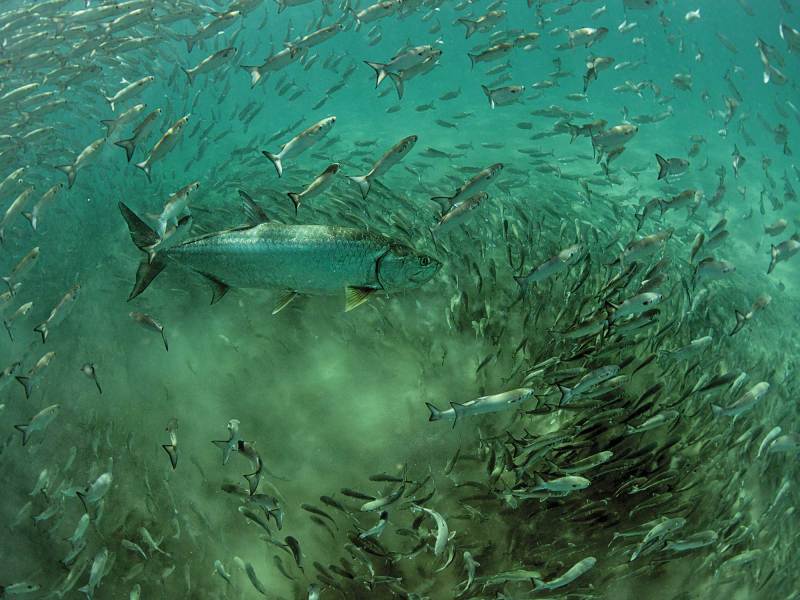
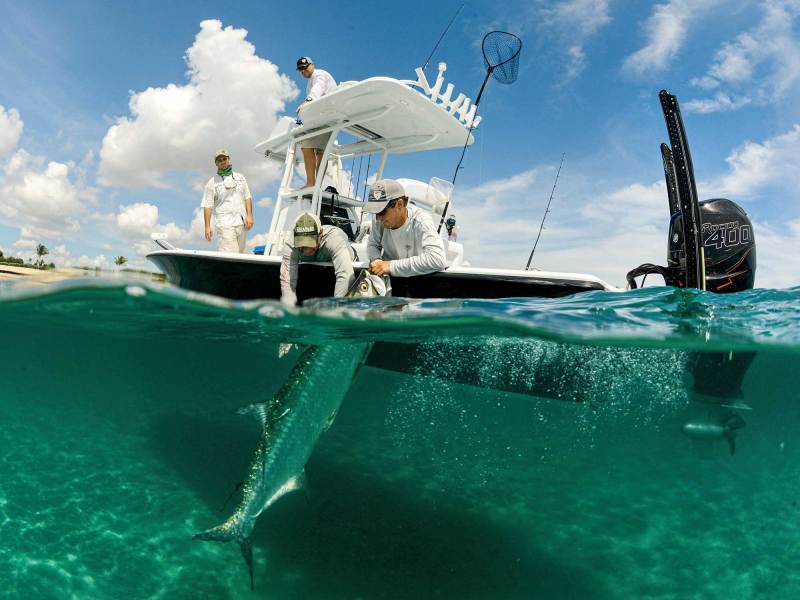
For sheer adrenaline, few experiences rival chasing "silver kings" as they carve massive holes through migrating mullet schools along the beaches of the Carolinas, Georgia, and Florida.
- Tactics: Scan the surf zone for greyhound-style leaps and rolling fish just outside the breaking waves.
- Presentation: Getting a tarpon to eat your hooked bait when billions of free, unhooked options are floating everywhere is the ultimate challenge. Use fluorocarbon leaders, live-line lively baits just on the periphery of the school, and avoid casting directly into the center of the pod, which can spook the bait.
4. Kingfish, Barracuda, and Pelagic Raiders
When mullet pods extend a mile or more offshore, pelagic predators crash the party.
- Tactics: Slow-troll live baits around deepwater mullet pods using tandem-hook trolling rigs equipped with wire leaders, as king mackerel and barracuda have a notorious habit of clipping baits from behind.
- Strategy: Watch the horizon for skyrocketing mackerel. Run—don’t walk—to the commotion, but take care not to drive your boat directly through the heart of the bait school, which will instantly scatter the mullet and turn off the bite.
5. Aggressive Supporting Cast: Jacks, Blues, and Spanish Mackerel
Do not overlook the high-octane secondary species. Jack crevalle, ferocious bluefish, and lightning-fast Spanish mackerel regularly decimate mullet pods. For fly-anglers and light-tackle enthusiasts, a surface blitz of 15-pound yellow-tinged jack crevalle offers some of the most frantic, rod-bending action available in saltwater fishing.
Future Outlook: Conservation and Climate in the Coastal Zone
As coastal development, shifting weather patterns, and environmental pressures continue to alter marine habitats along the Atlantic and Gulf coasts, the health of the mullet run remains an important barometric indicator of overall ecosystem vitality.
Marine biologists emphasize that the continuity of the mullet migration depends entirely on the health of inland estuaries and clean, unpolluted river systems where juvenile mullet spend their formative years. Wetland restoration, protection of mangrove forests, and responsible water management upstream in watersheds from North Carolina to South Florida are critical to ensuring that future generations continue to witness the staggering biological marvel of the autumn mullet run.
For the modern angler, the takeaway is clear: respect the resource, master the nuances of bait presentation, monitor the wind and weather, and be ready when the coast explodes. The fall mullet run is nature’s greatest show on water—and missing it is simply not an option.

0 Comments