

Executive Overview
In an era defined by data saturation yet stark educational silos, a multidisciplinary team of researchers at Florida State University (FSU) is spearheading a transformative initiative to reshape how K-12 mathematics is taught, understood, and analyzed nationwide. Funded by a prestigious $1.5 million grant from the National Science Foundation (NSF), the Integrated Data for Education, AI, and Learning in Mathematics Project (IDEAL-Math) Network seeks to democratize decades of accumulated educational research.
By unifying six distinct, previously isolated datasets encompassing approximately 90,000 elementary school students and 3,000 teachers, the FSU team is building a centralized digital resource. At the core of this project is an interactive, web-based dashboard equipped with a specialized artificial intelligence chatbot. This tool is designed to allow educators, school administrators, policymakers, and researchers to query vast troves of educational data using plain, conversational language rather than complex statistical syntax.
The project is more than a localized database; it is a vital component of the NSF’s broader Collaboratory to Advance Mathematics Education and Learning for K-12 initiative. As one of only five projects nationwide selected for this funding, the IDEAL-Math Network is poised to establish a national blueprint for how educational data is curated, shared, secured, and utilized. By bridging the historically wide chasm between rigorous academic research and practical classroom application, FSU is positioning itself at the intersection of psychology, scientific computing, and education reform.
Detailed Chronology: From Isolated Archives to an AI-Driven Ecosystem
The journey toward the IDEAL-Math Network did not begin overnight; it is the culmination of years of foundational research, institutional collaboration, and technological evolution within Florida State University.
Phase I: The Accumulation of Disparate Data
For decades, higher education institutions and specialized research centers—such as FSU’s Florida Center for Research in Science, Technology, Engineering, and Mathematics (FCR-STEM) and the Florida Center for Reading Research (FCRR)—have deployed massive studies to track cognitive development. Researchers have routinely collected diverse sets of quantitative and qualitative metrics: standardized test scores, student surveys, classroom observational videos, teacher evaluations, and longitudinal tracking data.
However, a systemic challenge has long plagued the academic research community. Once a study concludes and its findings are published in academic journals, the underlying datasets are frequently archived in hard-to-navigate formats or "squirreled away" on private servers. Due to the high cost and labor-intensive nature of back-end data management—such as producing exhaustive metadata documentation, standardizing variables across different studies, and de-identifying sensitive participants—these rich repositories rarely find a second life outside the original research team.
Phase II: The Convergence of Disciplines
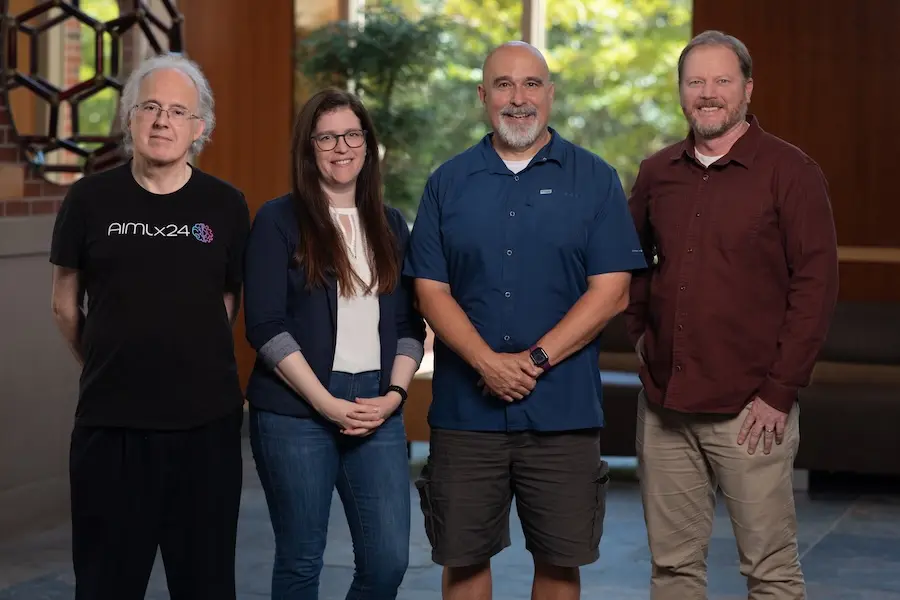
Recognizing this missed opportunity, an elite group of FSU faculty members across diverse departments began conceptualizing a unifying architecture. The leadership team brought together distinct academic perspectives:
- Colleen Ganley, Professor of Psychology and Director of the Developmental Psychology Program.
- Chris Schatschneider, Professor of Psychology and Associate Director of the Florida Center for Reading Research.
- Gordon Erlebacher, Professor of Scientific Computing and Director of the Interdisciplinary Data Science Master’s Degree Program.
- Robert Schoen, Associate Professor of Mathematics Education and Associate Director of FCR-STEM.
This cross-pollination of psychological science, computational modeling, and pedagogy formed the bedrock of the IDEAL-Math proposal. Rather than viewing data science as an isolated discipline, the team integrated it directly into educational practice to solve real-world pedagogical bottlenecks.
Phase III: The NSF Award and the Genesis of IDEAL-Math
In mid-2026, the National Science Foundation formally recognized the potential of this interdisciplinary framework, awarding the FSU team $1.5 million. The funding immediately catalyzed the formation of the IDEAL-Math Network.
Current operations focus on data ingestion, rigorous de-identification protocols, and the iterative engineering of the digital dashboard. By bridging the gap between raw research metrics and intuitive user interfaces, the team is systematically translating complex statistical architectures into actionable insights for the education sector.
Supporting Context & Metrics: The Scale and Stakes of IDEAL-Math
To fully comprehend the ambition of the IDEAL-Math Network, one must examine the sheer volume of data it handles, the technical safeguards protecting its participants, and the long-term socioeconomic stakes of early mathematical proficiency.
Scale of the Repository
The initial rollout of the IDEAL-Math dashboard integrates six comprehensive, pre-existing datasets compiled by FSU researchers. The sheer breadth of this information provides statistical power that single studies rarely achieve:
- Student Reach: Approximately 90,000 elementary school students, offering longitudinal insights into cognitive development across diverse demographics.
- Educator Participation: Roughly 3,000 teachers, allowing researchers to evaluate instructional strategies, classroom environments, and professional development impacts.
- Data Modalities: A combination of quantitative metrics (test scores, survey responses) and qualitative assets (classroom observation logs and instructional materials).
Navigating Privacy and De-Identification
A critical hurdle in aggregating educational datasets is compliance with privacy regulations and the ethical mandate to protect vulnerable populations—specifically minor children, their families, and educators.
The IDEAL-Math data governance framework employs multi-layered statistical and AI-driven methodologies to assess and mitigate re-identification risks:
- Scrubbing Direct Identifiers: All direct personal identifiers (names, student identification numbers, specific school names) are permanently stripped from the primary records.
- Broadening Demographic Categories: Highly specific data points that could inadvertently isolate an individual—such as exact parental occupations or niche community markers—are aggregated into broader, generalized occupational and geographic categories sourced from public databases.
- Risk-Assessment Algorithms: Automated computational models continuously test the aggregated datasets for vulnerabilities, ensuring that cross-referencing multiple data fields cannot reverse-engineer a participant’s identity.
The Lifelong Impact of Early Math Proficiency
Why focus so intensely on elementary mathematics? Educational research repeatedly demonstrates that mathematical competency established in early childhood is not merely an isolated academic metric; it acts as a foundational pivot point for lifelong achievement.
According to Dr. Gordon Erlebacher and his colleagues, early math proficiency exerts a profound "ripple effect" into adulthood. Longitudinal studies indicate that children who build strong mathematical confidence and foundational skills early on experience measurable benefits later in life:
- Enhanced general critical-thinking and reading comprehension capabilities.
- A significantly higher statistical likelihood of pursuing and succeeding in STEM (Science, Technology, Engineering, and Mathematics) higher education programs and careers.
- Improved long-term socioeconomic outcomes, including higher median adult earnings and career mobility.
By organizing data around these trajectories, the IDEAL-Math Network allows educational stakeholders to interrogate the exact conditions that foster early mathematical resilience.
Official Statements & Expert Perspectives
The launch of the IDEAL-Math Network has drawn praise from university leadership and project directors alike, highlighting FSU’s unique institutional strengths.
Brad Schmidt, Robert O. Lawton Professor of Psychology and Chair of the FSU Department of Psychology, emphasized the project’s alignment with institutional excellence:
"This project represents an important national investment in FSU’s strengths in psychological science, education, artificial intelligence, and data science. By bringing researchers together with teachers and technology experts, this project will organize the high-quality data needed to better understand how children learn mathematics and develop increasingly effective educational tools and practices."
Reflecting on the historical shortcomings of data archiving, Dr. Colleen Ganley noted the urgent need to make research actionable:
"Every year, researchers collect large amounts of data through surveys, test scores, classroom videos, and other methods trying to understand how children learn math. Too often, those data get squirreled away after a few publications and never make it back to the educational community or public. This project aims to change that by taking data that have already been collected and making them more useful for researchers, educators, and policymakers who want to ask their own questions."
From a computational standpoint, Dr. Gordon Erlebacher detailed the technical philosophy driving the user interface and AI integration:
"As a computational scientist, my role is in translation, or taking data that are meaningful to psychology and education researchers and turning them into a structured, validated, and well-documented dashboard that someone without coding experience, as well as AI systems, can easily understand. As we build the AI chatbot component, I am focused on lowering barriers for teachers and principals by eliminating weak points where the chatbot risks giving a confident-sounding wrong answer."
Erlebacher further illustrated the practical utility of the platform for everyday school administrators:
"Through this project, we hope that a district administrator, for example, can ask for strategies to increase students’ confidence in their math skills and receive a data-backed answer in seconds instead of never being able to ask the question at all."
Future Outlook: A National Hub for Educational Innovation
As the IDEAL-Math Network enters its active development and deployment phases, its architects are looking far beyond the initial two-year grant window. The project is designed to be a living, breathing ecosystem that evolves alongside advancements in artificial intelligence and educational research methodology.
Building Capacity Through Training and Workshops
Recognizing that cutting-edge technology is only as effective as the people wielding it, the FSU team is not merely building a dashboard and walking away. A core component of the IDEAL-Math initiative involves hosting specialized workshops and training seminars tailored for education researchers, school district leaders, and graduate students. These sessions will focus on:
- Ethical data-sharing protocols and compliance frameworks.
- Best practices in modern data management and metadata documentation.
- The safe, effective integration of AI tools in educational research and pedagogical planning.
Contributing to the National Landscape
As part of the NSF’s quintet of funded projects under the Collaboratory to Advance Mathematics Education and Learning for K-12 initiative, IDEAL-Math will help establish a shared national hub. This network of hubs is projected to exert a permanent, standardized influence on how educational data across the United States is collected, digitized, preserved, and disseminated.
By breaking down the walls between academic researchers who study learning and the teachers who facilitate it on the front lines, Florida State University is charting a new course. The IDEAL-Math Network promises a future where educational decisions are no longer driven by guesswork or isolated anecdotes, but by the synthesized wisdom of tens of thousands of students and educators—unlocked instantly through the power of artificial intelligence and collaborative science.

0 Comments