For centuries, the growth of human civilization followed the water. The nation’s largest and most economically vital metropolises were established at the confluence of freshwater rivers and saltwater estuaries, driven by maritime commerce, navigation, and access to aquatic resources. Historically, this rapid urbanization came at a steep ecological cost. Industrial expansion, pollution, and overfishing systematically degraded coastal habitats, driving down aquatic populations and transforming once-abundant shorelines into sterile shipping lanes.
However, decades of rigorous federal and state conservation efforts—bolstered by the Clean Water Act, grassroots environmental advocacy, and proactive municipal habitat restoration—have reversed this trend. Today, a surprising ecological renaissance is underway. Major American cities, from the rocky harbors of the Northeast to the sun-drenched beaches of Southern California and the volcanic flats of the Pacific, now host remarkably healthy and robust urban fisheries.
For the modern angler, this resurgence means that satisfying a passion for serious sportfishing no longer requires long-haul travel to remote wilderness lodges or offshore expeditions. World-class gamefish—including striped bass, massive tarpon, Pacific salmon, and record-breaking bonefish—are thriving within the shadows of skyscrapers, bridges, and industrial seawalls. This comprehensive guide explores six of the nation’s premier urban fisheries, detailing the local tactics, specialized gear, and insider strategies required to successfully target trophy fish against a backdrop of concrete and city lights.
Boston Harbor, Massachusetts: Beantown Bruisers
The Urban Commando Ethos
The historical waters of Boston Harbor represent a paradox: a heavily trafficked, densely developed maritime hub that simultaneously serves as one of the most productive striped bass fisheries on the Atlantic Seaboard. According to Eric Harrison, a veteran angler who has spent decades executing "commando fishing" missions around the harbor, accessibility is the primary hurdle rather than fish availability.
"Boston is full of fishy areas, but the best spots are not easy to access," Harrison notes. "I’ll tell you where I catch striped bass, but I won’t tell you where I park my car."
Harrison’s dedication to the fishery borders on the obsessive; he maintains an active streak of catching a striped bass every single month of the calendar year. While casual anglers pack away their gear by October, Harrison and a dedicated cadre of winter surfcasters brave sub-freezing temperatures to target resident and migratory stripers through the coldest months.
Tactics, Gear, and Strategies
To locate active fish without the benefit of a commercial vessel, Harrison relies on coastal reconnaissance. Driving along shoreline roads to spot diving gulls and surface-feeding bait is a primary method. When surface activity is absent, he focuses on dynamic currents, deep channels, and structural bottlenecks such as bridge abutments, rocky points, and pier pilings.
Rod and Reel Setup: Shore-based anglers require optimal casting distance to clear nearshore obstacles. Harrison recommends a robust 9-foot spinning rod paired with a 5000-class spinning reel.
Line and Leader: Spooling with 40-pound-test braided line provides the necessary strength and casting efficiency, finished with a short shock-absorbing leader of 40-pound fluorocarbon.
Lure Selection: While intricate, high-end plugs have their place, Harrison relies on simplicity. His most productive offerings include 7-inch straight-tail soft plastics, standard swimming plugs, and walk-the-dog topwater lures.
The Topwater Indicator:"Topwater lures are a 10-percent solution," Harrison explains. "If a fish swipes at the lure, I know more fish are in the area."
The combination of rugged granite shorelines, dynamic tidal flows, and metropolitan energy cements Boston’s reputation as an elite destination for urban striped bass.
Baltimore, Maryland: Charm City Rocks
Gritty Waters and Historical Architecture
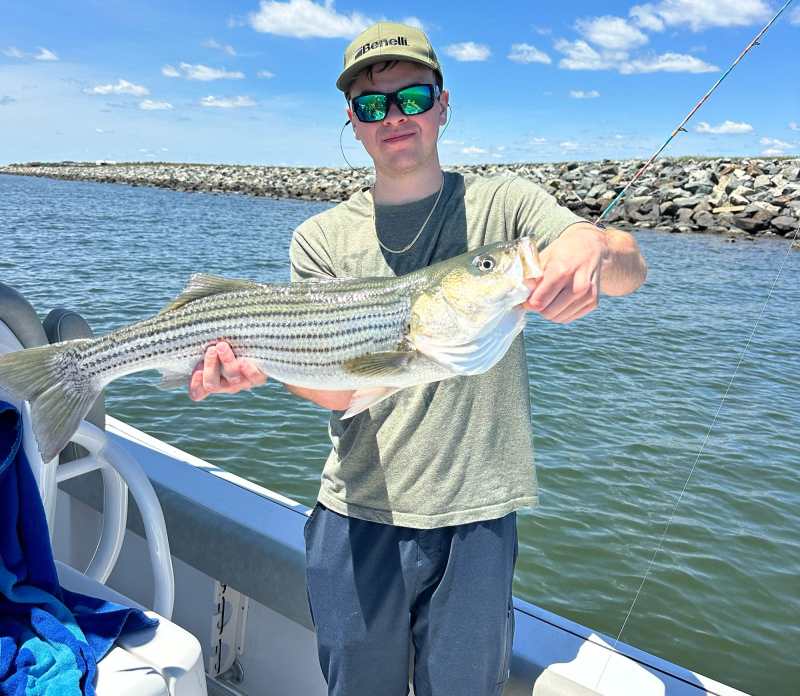
Moving down the Mid-Atlantic coast, Baltimore’s Patapsko River and the broader upper Chesapeake Bay offer a distinctly gritty, industrial style of angling. Target-rich environments framed by the towering spans of the Francis Scott Key Bridge and the historical brickwork of Fort McHenry provide a unique backdrop for chasing rockfish (striped bass).
Capt. Chuck Hill, owner and operator of Chill’s Light Tackle Guide Service, emphasizes the sheer volume of structural habitat available to urban anglers within city limits.
"All of the seawalls, docks, jetties, and bridge pilings hold rockfish," Hill reveals.
The fishery benefits from exceptional infrastructure, featuring numerous public boat ramps and accessible shorelines at locations such as Fort Armistead, Fort McHenry, and Hart Miller Island. Hill recommends timing expeditions around the first few hours of the outgoing tide, when predatory striped bass stage to ambush forage sweeping down from the tributary rivers.
Seasonal Breakdown and Tackle Insights
Baltimore provides a true 360-day fishery, with tactics shifting according to seasonal water temperatures:
Spring and Fall: Widely considered the premier seasons, these months are ideal for light-tackle casting and artificial lures.
Summer: As water temperatures peak, Hill transitions to live bait, deploying spot or white perch on a traditional fish-finder rig to target deeper holding fish.
Winter: Resident stripers retreat to deeper holes in the Patapsko River, where they feed aggressively on jerkbaits, jigs, and weighted soft plastics.
Pro-Tackle Recommendations: Hill’s primary weapon of choice is a Strike King 10K KVD jerkbait, selecting shallow- or deep-diving models to match the exact water column. When targeting deep basins, he switches to a heavy-duty jig head paired with a 4.75-inch KVD Shadalicious soft plastic. "If you fish those lures, you will eventually catch stripers," Hill guarantees.
Tampa Bay, Florida: Cigar City ‘Poons
Underground Tarpon Heritage
Tampa Bay is world-renowned for its expansive flats, mangrove-lined keys, and sprawling marine ecosystems. However, beneath the standard recreational charter culture lies a hard-core underground community of urban anglers who target massive migratory tarpon directly from municipal bridges, public piers, and industrial shipping channels.
Jose Chavez, a lure designer for Z-Man, cut his teeth navigating Tampa’s urban infrastructure to intercept the legendary "Silver Kings."
"There’s a hard-core group of anglers who chase tarpon from the piers and passes," Chavez states.
While tarpon can be encountered throughout the year, early summer represents the peak of the fishery. "If you can’t catch a tarpon in May and June, you should take up golf," Chavez remarks.
Mastering Current and Combat Drills
Public access points transform Tampa into a premier urban destination. Most notably, the Sunshine Skyway Bridge—recognized as the longest fishing pier in the world—offers anglers direct access to deep-water migratory paths. Tarpon congregate along the massive concrete pilings, utilizing them as current breaks to ambush disoriented baitfish swept through by the tide.
The Current Drift: Success depends entirely on presentation. Anglers must read current eddies and cast upstream, allowing the lure or live bait to sweep naturally through the strike zone at the exact depth where fish are staging.
The Strike and Fight: A tarpon strike is notoriously violent. "The fish destroys the bait," Chavez marvels, describing the subsequent acrobatic displays of jumping and head-shaking.
Applying Steady Pressure: To successfully land a giant tarpon from shore or a pier, anglers must master the balance of pressure. Applying too much force causes the fish to panic and bolt, while applying too little prolongs the fight. Maintaining steady, measured pressure creates a stalemate that restricts the fish’s oxygen consumption until it tires safely.
San Diego, California: Daygo Beach Subculture
The Surf, Skate, and Surfside Ethos
Southern California boasts a vibrant, counter-cultural fishing scene that mirrors its legendary surf and skate communities. Die-hard local anglers push traditional boundaries, utilizing advanced modern watercraft—primarily pedal-driven and motorized kayaks—to target trophy marine species just a short distance from densely populated public beaches.
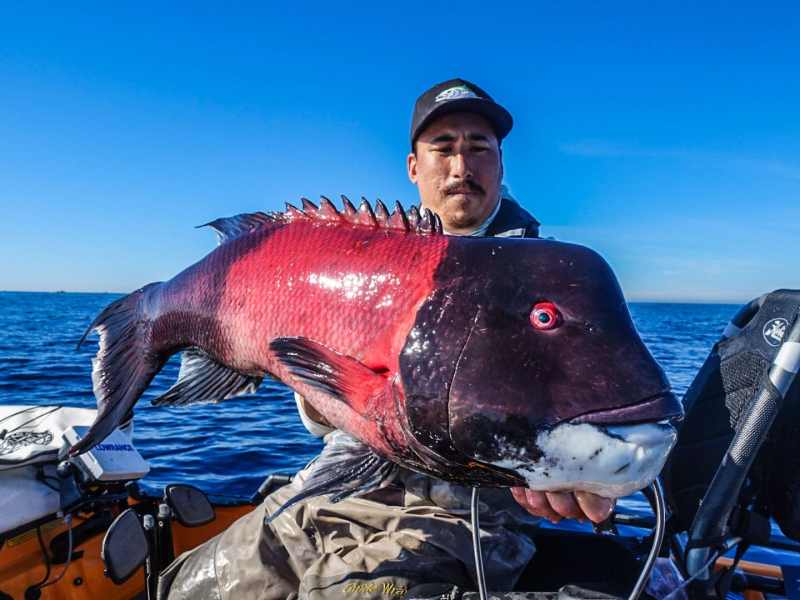
According to Howie Strech, product manager at Newport Vessels, urban SoCal waters hold an impressive diversity of gamefish, including California halibut, aggressive yellowtail, white seabass, and armored California sheephead.
"Some of the best fishing is swimming distance from shore," Strech emphasizes.
Squid Runs and Technological Precision
The pinnacle of the San Diego inshore calendar aligns with seasonal market squid runs, typically occurring during the colder winter months when millions of cephalopods flood the shallow inshore zones.
Locating the Bite: Anglers track commercial squid boats operating close to the coastline. "When the squid show up, it’s lights-out fishing," Strech notes.
Electronics and Live Bait: On the water, Strech relies heavily on marine electronics mounted to his kayak to locate structural bait schools and predatory marks. "My whole day is defined by the bait I catch," he explains. Live baits are deployed on weightless setups for slow-trolling or rigged on three-way swivels to reach deep-holding fish.
Technique Mastery: Strech advises against trying to master every style of fishing simultaneously. "Don’t try to know everything. Perfect a couple techniques then add to that knowledge."
Seattle, Washington: Emerald City Salmon
The Kingdom of the Pacific Salmon
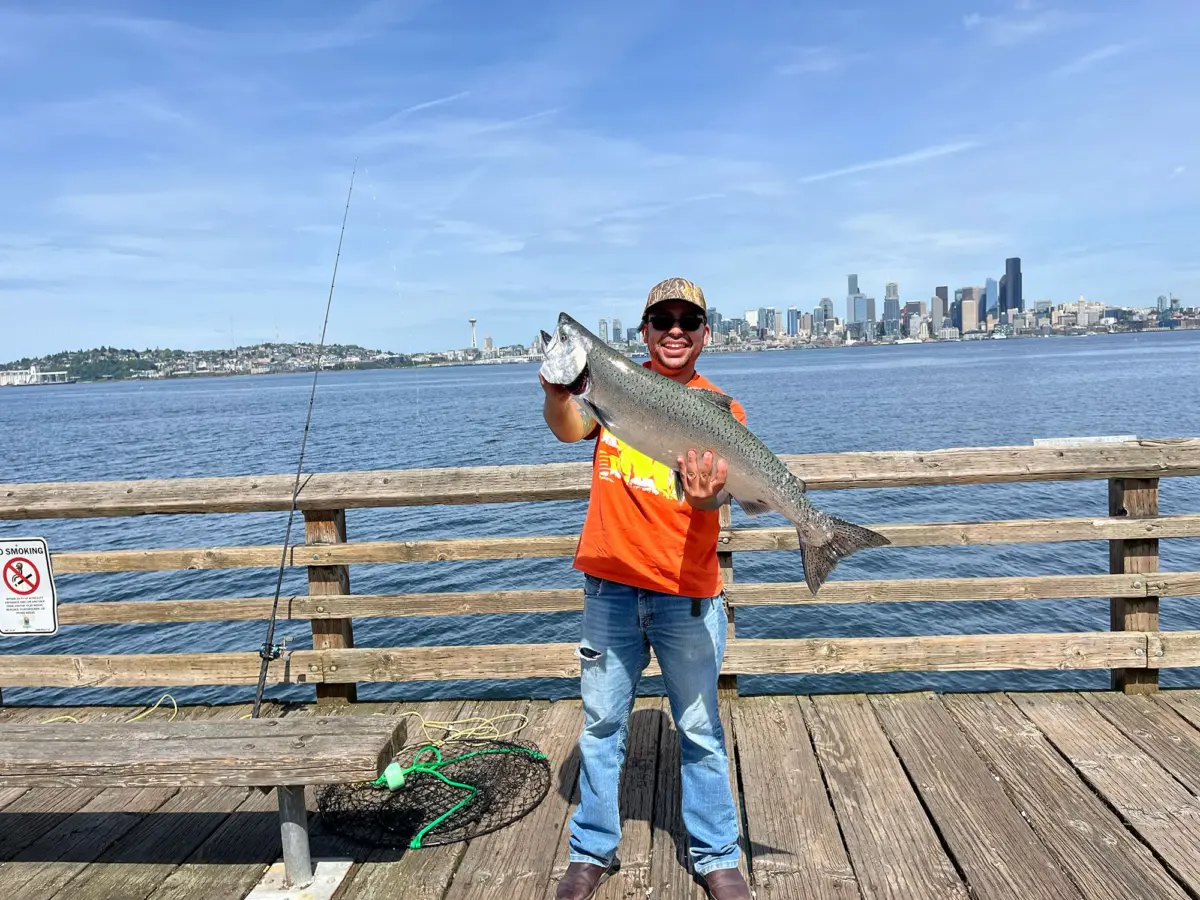
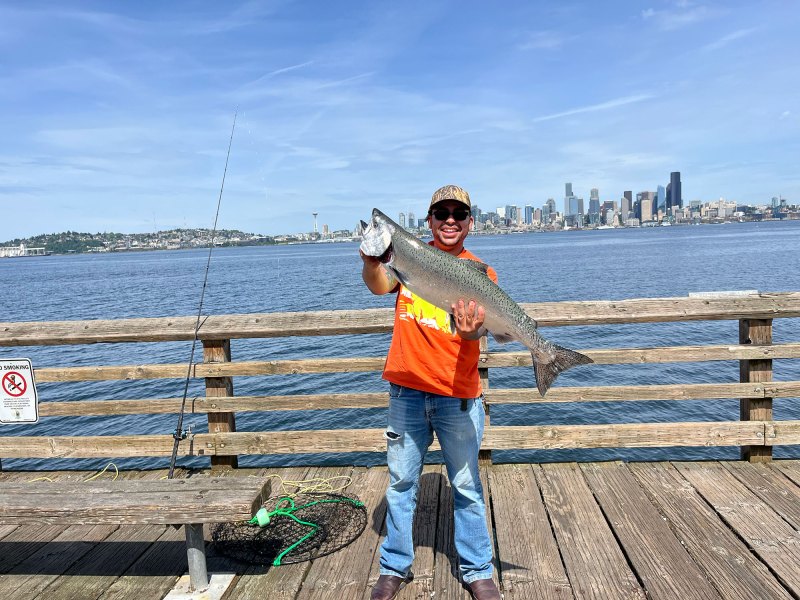
In the Pacific Northwest, salmon reign supreme. Brad Hole, a prominent regional angler and digital creator known for his work with Kayak Fishing Washington, notes that Seattle’s urban waters offer a unique blend of wilderness access and metropolitan convenience.
"We’re a salmon state, everything else takes a back seat," Hole asserts.
The city’s deep-water harbors, public piers, and sheltered bays witness the annual migration of millions of Pacific salmon returning to their native freshwater river systems. Anglers targeting the urban corridor have opportunities to hook into powerful Chinook (king), Coho (silver), and pink salmon.
Shore and Kayak Tactics
Timing the Bite: King salmon are famously challenging to fool, but their aggressive fighting strength and culinary value make them a primary target. Hole recommends hitting the water at first light when trophy kings forage aggressively in shallow shoreline areas.
The Pink Salmon Run: For high-volume action, anglers look forward to odd-year runs of pink salmon. "The migration only happens every other year," Hole points out. During these cycles, public piers and shorelines fill with enthusiastic anglers.
Gear and Tackle: To handle powerful runs in current-heavy environments, Hole recommends a medium-heavy, 8-foot spinning or casting rod, spooled with 30-pound braided main line and a 40-pound fluorocarbon leader, throwing heavy 2- to 4-ounce metal jigs like Buzz Bombs.
Navigating Regulations: Due to strict conservation initiatives, the greatest challenge in Seattle waters is mastering regional fishing laws. Hole strongly advises utilizing official state smartphone applications to ensure complete compliance with constantly shifting catch limits and closures.
Honolulu, Hawaii: Big Pineapple Bones
Diamond Head Flats and World-Class Wading
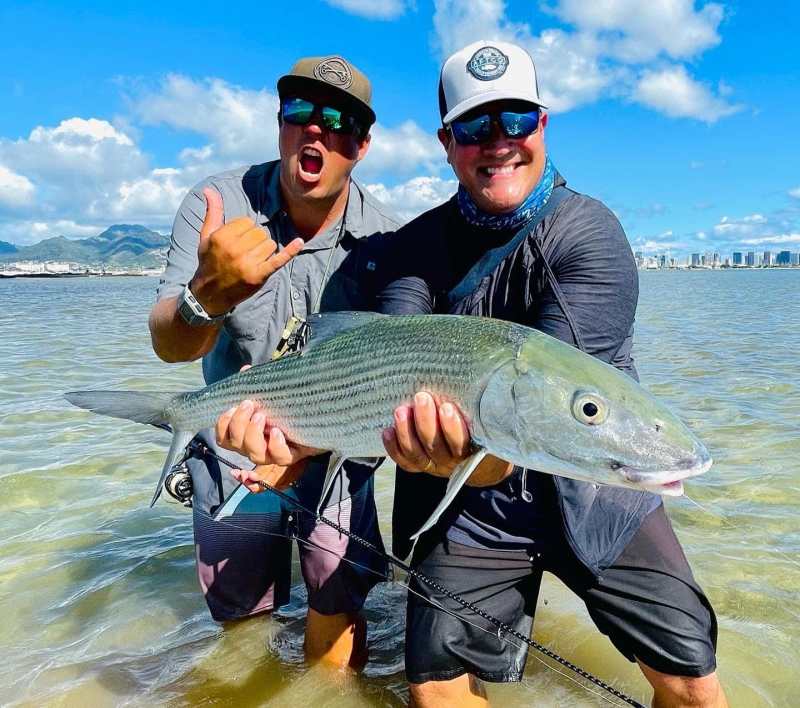
For anglers seeking tropical flats fishing without boarding an international flight, Honolulu, Hawaii, provides a world-class fishery set against a backdrop of luxury resorts, white-sand beaches, and volcanic peaks.
Capt. Chris Wright of Aloha Fishing Hawaii has successfully targeted and landed International Game Fish Association (IGFA) World Record caliber fish within direct line-of-sight of the iconic Diamond Head beach.
"We have tons of places where you can drive up and walk out into the water for the world’s biggest bonefish," Wright states.
Tidal Precision and Stealth Tactics
Success on the flats depends entirely on precise timing relative to tidal movement.
Low-Tide Advantage:"At low tide, the water clears and I can see the bones tailing in the shallows," Wright explains. Prime feeding windows can be extremely brief, lasting only 30 to 45 minutes in specific locations.
Spinning Tackle Setup: For sight-casting with conventional gear, Wright utilizes a medium-action spinning rod, 20-pound braided line, a long 15-pound fluorocarbon leader, and realistic crab imitations such as the Cranka Crab.
Fly Fishing Challenge: Fly anglers face an even greater degree of difficulty, requiring a 7-weight fly rod, fast-sinking or clear intermediate line, a 12-foot 15-pound leader, and weighted patterns like the Crazy Charlie. "Work it slow along the bottom or you’re not getting bit," Wright warns.
The Stealth Mandate: Because urban flats experience constant pressure, bonefish here are exceptionally wary. Wright insists on absolute discretion: "You have to walk hella slow, don’t wear bright clothes, barely move, make no noise."
Detailed Chronology of Urban Fisheries Restoration
Decade
Milestone Event
Ecological Impact
1970s
Passage of the Clean Water Act (1972)
Federal mandates halted industrial dumping into major metropolitan harbors (Boston, Baltimore, Puget Sound).
1980s
Municipal Wastewater Infrastructure Upgrades
Reduction of raw sewage overflow into urban estuaries, initiating dissolved oxygen recovery.
1990s
Implementation of Strict Catch-and-Release & Size Limits
Striped bass and tarpon populations rebounded significantly following regional harvesting restrictions.
2000s
Habitat Restoration & Dam Removals
Reopening of historical spawning rivers allowed anadromous species (salmon, shad) to re-enter urban watersheds.
2010s–Present
Rise of Kayak Fishing & Specialized Urban Angling
Enhanced public reporting, modern tackle innovations, and eco-tourism transformed city waters into premier sportfishing destinations.
Supporting Context & Metrics
The revival of urban fisheries is not merely anecdotal; it is supported by comprehensive ecological and economic data collected over the past two decades.
Water Quality Improvements: According to the Environmental Protection Agency (EPA), dissolved oxygen levels in metropolitan waterways such as Boston Harbor and Baltimore’s Patapsko River have increased by over 45% since 1980.
Economic Impact: The recreational fishing industry generates over $115 billion annually in the United States, with urban and nearshore fisheries accounting for a rapidly growing share of tackle sales, guide services, and marine electronics.
Fisheries Recovery Rates: Atlantic striped bass stocks, which faced near-collapse in the late 1980s due to overfishing, rebounded to historic population highs within urban corridors by the early 2000s following strict commercial and recreational quotas.
Species Diversity: Urban estuaries that historically supported only resilient scavenger species now host complex trophic webs, supporting apex predators like tarpon, sharks, giant king salmon, and sensitive benthic species like California sheephead.
Future Outlook: The Next Frontier in Metropolitan Angling
As municipal governments increasingly recognize the economic and ecological value of healthy waterways, the future of urban sportfishing looks exceptionally bright. Ongoing initiatives focusing on living shorelines—replacing dead concrete seawalls with marsh grasses, oyster reefs, and natural riprap—will continue to expand nursery habitats for juvenile gamefish.
Furthermore, technological advancements in light tackle, marine electronics designed for small watercraft (kayaks and SUPs), and real-time mobile regulatory apps are democratizing access. Anglers no longer need expensive multi-thousand-dollar offshore sportfishing yachts to participate in elite-level angling.
Whether navigating the frosty granite pilings of Boston Harbor at dawn, battling a heavy Chesapeake rockfish under Baltimore’s industrial bridges, or wading the crystalline flats of Honolulu within sight of urban skyscrapers, the modern angler has never had better opportunities. Urban fisheries prove that with sustained conservation, human infrastructure and wild marine ecosystems can not only coexist—they can thrive together.



0 Comments