

Executive Overview
The landscape of higher education is undergoing a quiet yet profound transformation. As the academic job market grows increasingly competitive and doctoral candidates face unprecedented pressures to distinguish themselves beyond traditional dissertation research, institutions are forced to rethink how they prepare future professors. Enter the Florida State University (FSU) University Honors Program, which has boldly stepped into this pedagogical frontier with the launch of its pioneering Graduate Teaching Fellowship.
This first-of-its-kind initiative is designed to bridge a persistent gap in doctoral training: the chasm between deep bench-science or humanities research and practical, autonomous classroom instruction. By empowering advanced Ph.D. candidates to conceptualize, design, and independently teach original, interdisciplinary "Honors Discovery Courses," FSU is simultaneously enriching its undergraduate curriculum and providing graduate scholars with an unmatched career-launching advantage.
Under the guidance of dedicated faculty mentors, the inaugural cohort of four doctoral fellows has introduced cutting-edge subjects to the undergraduate honors catalog—ranging from science communication and material book history to digital identity performance and nutritional media literacy. As higher education grapples with how to foster both rigorous research and engaging pedagogy, FSU’s Graduate Teaching Fellowship serves as a compelling blueprint for modern university innovation. Applications for the next cohort are currently open through October 1, signaling the university’s commitment to institutionalizing this forward-thinking academic model.
Detailed Chronology: From Concept to Classroom
The genesis of the Graduate Teaching Fellowship did not happen overnight. It represents the culmination of strategic planning, rigorous curriculum development, and an institutional dedication to elevating both graduate and undergraduate experiences at Florida State University.
Fall: The Competitive Crucible
The journey for the inaugural cohort began in earnest during the fall semester, when the FSU Honors Program opened applications for the competitive fellowship. The call went out to advanced doctoral students across various disciplines who possessed a dual passion: a hunger for groundbreaking research and an undeniable calling for the classroom.
The application process was intentionally demanding. Candidates were not merely asked to submit CVs and letters of recommendation; they had to pitch original course concepts. These proposals needed to be interdisciplinary, intellectually rigorous, and accessible to undergraduate honors students regardless of their primary major. Out of a pool of exceptional applicants, four standout Ph.D. candidates were selected: Laura Anthony, Sarah Bliss, Harrison Miller, and Cole Patoine.
Winter and Spring: Curriculum Design Under Mentorship
Once selected, the inaugural fellows entered an intensive curriculum-building phase. Guided by Michael Furman, associate director of the FSU Honors Program, the doctoral candidates spent months transforming raw ideas into fully realized, semester-long undergraduate courses.
This phase of the fellowship was crucial. Unlike typical teaching assistantships—where graduate students grade papers or lead discussion sections under a professor’s strict syllabus—the fellowship granted these doctoral candidates full autonomy over course design. They drafted syllabi, selected readings, designed assessment metrics, and formulated interactive pedagogical strategies, all while receiving high-level mentorship designed to refine their personal teaching philosophies.
Fall Semester: Hitting the Ground Running
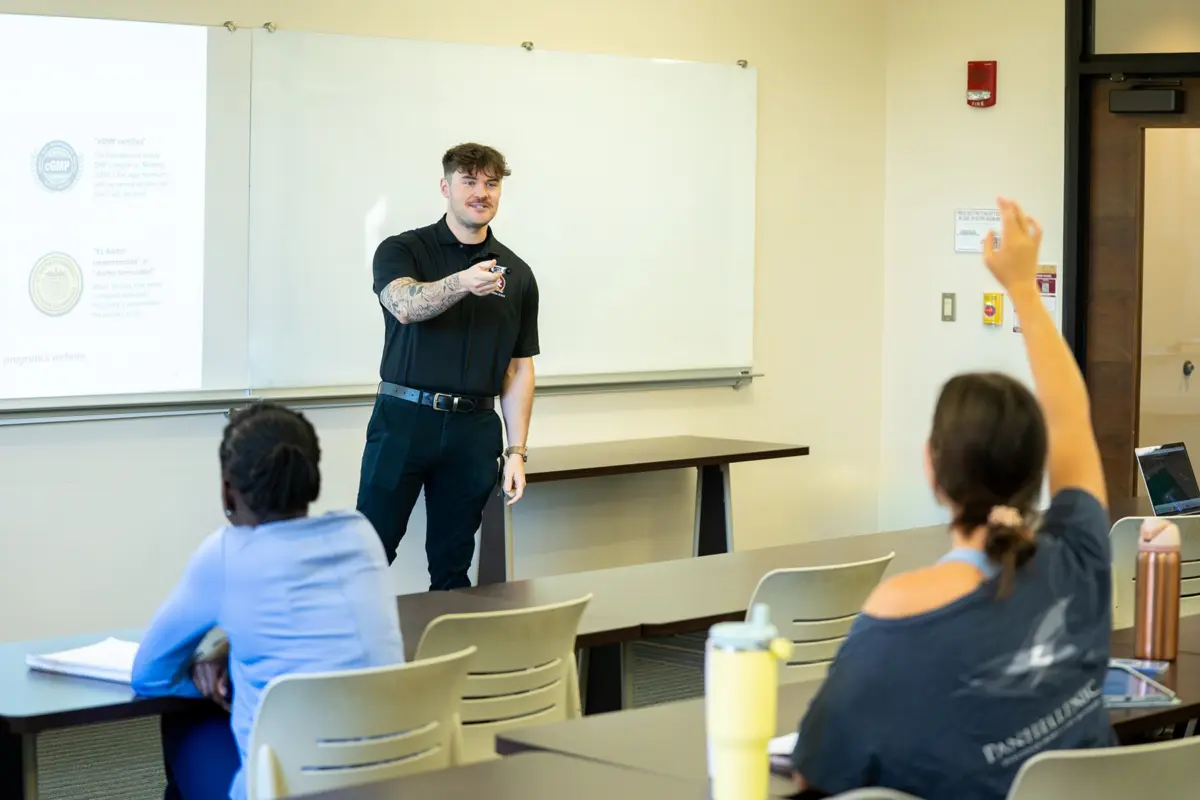
Fast forward to the present academic semester, and the fruits of this intensive preparation are on full display across FSU’s campus. The four fellows are now standing at the front of their own honors classrooms, delivering bespoke courses that reflect the bleeding edge of contemporary thought.
Laura Anthony is leading Telling Stories with Science: Communicating Science to Any Audience, a course designed to help students bridge the communication gap between complex empirical data and public understanding. Sarah Bliss is exploring the tangible history of literature through Books as Material Goods, while Harrison Miller dives into sociological complexities with Identity Performance in the Modern Digital Age. Meanwhile, Cole Patoine is captivating students with Nutrition in the Age of Misinformation: Evidence, Mechanisms, and Modern Health Trends.
For these graduate students, stepping into the role of primary instructor as a Ph.D. candidate is a career-altering milestone. "I didn’t expect to develop my own course until much later in my career, so the opportunity to do so as a Ph.D. candidate is invaluable," Anthony notes. "Creating an interdisciplinary course that spans several undergraduate majors was an exciting prospect."
Supporting Context & Metrics: Elevating FSU’s Honors Experience
To truly understand the impact of the Graduate Teaching Fellowship, one must examine the broader ecosystem of the Florida State University Honors Program—an academic powerhouse that consistently sets national benchmarks.
A Legacy of Excellence
Recently ranked No. 1 in Florida by the esteemed college ranking publication College Transitions, the FSU Honors Program is widely recognized for cultivating a vibrant, tight-knit community of intellectually curious and highly motivated scholars. The program provides a tailored undergraduate experience characterized by:
- Specially designed, small-cohort coursework.
- Dedicated academic advising tailored to high-achieving students.
- Priority registration windows to secure vital coursework.
- Living-learning communities housed within specific Honors residence halls.
To graduate with honors distinction, undergraduate students must successfully complete a minimum of 13 credit hours of rigorous honors coursework. The creation of the Graduate Teaching Fellowship directly expands this menu of options, injecting fresh, contemporary, and niche interdisciplinary topics into the academic catalog.
Democratizing Interdisciplinary Learning
One of the most celebrated aspects of the Honors Discovery Courses created by the fellows is their accessibility. Designed to cross traditional academic boundaries, these courses invite students from diverse majors to engage with complex topics without requiring extensive foundational prerequisites.
Cole Patoine emphasizes this inclusive pedagogical design:
"The courses let students get the opportunity to expose themselves to a new area they may not be familiar with while taking on little risk since the courses are taught in a way that allows anyone from any knowledge background to jump right in."
Patoine’s course, Nutrition in the Age of Misinformation, exemplifies this mission. Rather than forcing students to memorize fleeting nutritional fads or short-lived dietary guidelines, Patoine focuses on imparting meta-skills: the ability to critically analyze research methodologies, dissect sensationalized media headlines, and objectively evaluate scientific claims.
"What I want students to leave with isn’t a list of correct answers, because those change," Patoine explains. "It’s the ability to look at research through an objective lens and know what it can and cannot prove and then notice when a headline has claimed more than the research earned. That skill doesn’t stay in nutrition. It follows them into medicine, into policy, into whatever they read tomorrow."
Official Statements: The Vision Behind the Fellowship
The strategic importance of the fellowship is underscored by key leadership within the university, who view the program as a win-win initiative benefiting both emerging educators and exceptional undergraduates.
Michael Furman, associate director of the FSU Honors Program, has been instrumental in championing the initiative from its inception. Reflecting on the motivations driving the program, Furman highlights the realities of the modern academic landscape:
"There are so many incredible graduate students at FSU who are passionate about developing as both researchers and educators as they prepare to enter the increasingly competitive academic job market. We are proud to give them the opportunity to fulfill their potential in the classroom while continuing to provide our honors students with unique courses that enrich their academic experience."
Furman further elaborates on the long-term professional dividends the fellowship pays to participating doctoral candidates. In an era where tenure-track faculty positions demand proven excellence in both research output and student engagement, having a self-designed, independently taught course on one’s curriculum vitae is a game-changer.
"For graduate students, the fellowship offers a competitive advantage in the academic job market," Furman notes. "It grants doctoral candidates the intellectual space to reflect and further refine their teaching philosophy while building a concrete example of that philosophy in practice."
Future Outlook: Sustaining and Expanding the Momentum
As the inaugural cohort wraps up their teaching semesters and the institutional footprint of the program solidifies, the FSU Honors Program is already looking toward the horizon.
Continuous Curriculum Renewal
The structure of the Graduate Teaching Fellowship ensures that the undergraduate honors curriculum will never stagnate. With each incoming cohort of fellows, the university will introduce entirely new course subjects, reflecting emerging global trends, technological advancements, and evolving scholarly debates. Undergraduate honors students will continually find fresh, dynamic options to fulfill their 13-credit-hour honors requirement, ensuring the curriculum remains as vibrant and restless as the academic fields it represents.
Expanding Access and Inviting New Applicants
The success of the inaugural year has generated immense enthusiasm across campus among both undergraduate and graduate students. Recognizing this momentum, university administrators have officially opened the application window for the next cohort of Graduate Teaching Fellows.
Advanced doctoral candidates interested in blazing a trail in pedagogical innovation have until October 1 to submit their applications. Detailed information regarding the fellowship requirements, mentorship structures, and application guidelines can be accessed directly through the FSU University Honors Program website.
A New Standard for Doctoral Training
In higher education, institutional inertia can often delay meaningful reform. By cutting through conventional red tape and trusting advanced Ph.D. candidates with the pedagogical reins, Florida State University has established a bold new precedent. The Graduate Teaching Fellowship is more than an internal grant or a localized teaching assignment—it is a visionary investment in the future of academia, ensuring that tomorrow’s professors are forged not just in research laboratories and libraries, but in dynamic, interactive classrooms where innovation thrives.

0 Comments