
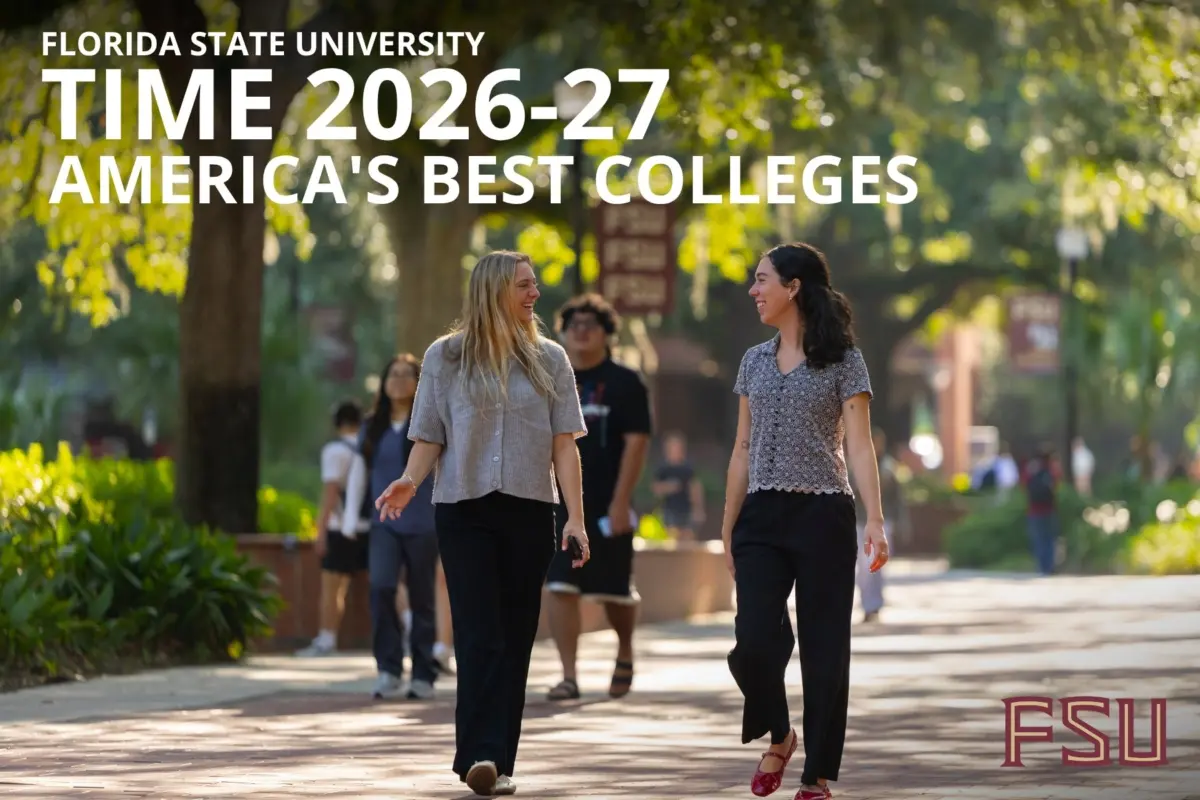

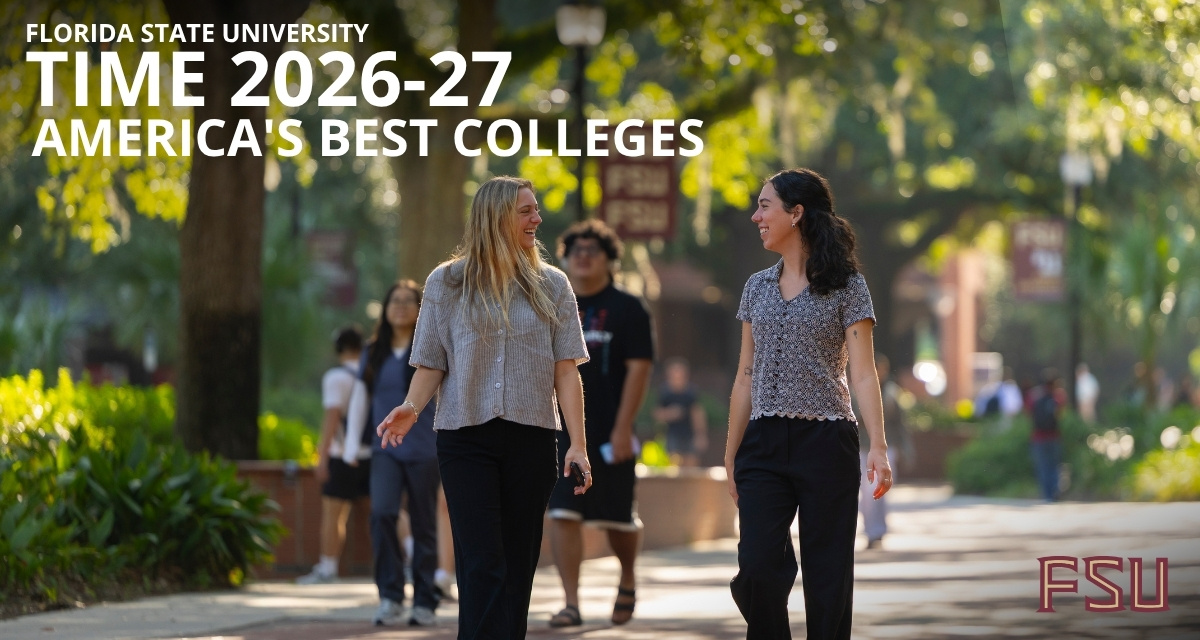
TALLAHASSEE, Fla. — In a milestone recognition that underscores its rapid ascent among elite American public research institutions, Florida State University (FSU) has captured a coveted position within the top 20 public universities nationwide. According to TIME magazine’s inaugural "America’s Best Colleges" list for the 2026–2027 academic year, FSU secured the No. 17 spot among public institutions and placed No. 53 overall.
The ranking—developed in partnership with global data and business intelligence firm Statista—evaluates higher education institutions through a lens that heavily prioritizes real-world student outcomes, the economic value of a degree, and institutional attractiveness. For FSU, the recognition serves as independent validation of a multi-year institutional strategy focused on academic rigor, student success, and fiscal accessibility.
Executive Overview: A New Benchmark for Institutional Excellence
The debut of TIME’s college ranking methodology marks a shift in how national publications evaluate higher education. Rather than focusing primarily on traditional metrics like institutional wealth, historical prestige, or selective input metrics alone, the TIME-Statista evaluation places an overwhelming 75% weight on student outcomes. This category assesses graduation metrics, post-graduate earnings, and the precise return on investment (ROI) delivered to graduates relative to the cost of attendance.
Against this rigorous framework, Florida State University posted an impressive overall score of 82.93 out of 100. Breaking down the core pillars of the evaluation, FSU earned a stellar 88.06 in student outcomes and an even higher 92.92 in institutional attractiveness—a metric derived from admission selectivity and enrollment yield, demonstrating the intense draw the university holds for prospective students.
For university leadership, the ranking is both an acknowledgment of past achievements and a mandate for future growth.
"Florida State is one of the most sought-after universities in America, and this new ranking confirms that we deliver exceptional value and outstanding results," said FSU President Richard McCullough. "We are competing with the best public universities in the nation, and we intend to keep climbing."
Detailed Chronology: The Methodology and the Metrics Behind the List
To understand the weight of FSU’s achievement, it is necessary to examine the architecture of the TIME-Statista ranking. Released in late August 2026, the comprehensive study analyzed hundreds of institutions nationwide before distilling the field down to the top 500 colleges with the highest cumulative scores.
Data Sources and Aggregation
The methodology was built upon robust, verifiable federal and state data repositories, including:
- The U.S. Department of Education’s Integrated Postsecondary Education Data System (IPEDS).
- The federal College Scorecard.
- State-level earnings data compiled via the U.S. Census Bureau.
To protect against statistical anomalies and single-year market fluctuations, researchers relied on the most recent data available as of April 2026, typically synthesizing a rolling average spanning four years.
The Weighting System: Outcomes Over Inputs
While many legacy college guides weigh institutional prestige heavily, TIME structured its evaluation around three primary pillars:
- Student Outcomes (75% of total score): This heavily weighted category scrutinizes graduation rates, median earnings of graduates, and the "return on education." This specific metric calculates the estimated timeframe required for a graduate’s earnings advantage—gained via their degree—to fully offset the total cost of attendance.
- Learning Environment: Evaluating faculty-to-student dynamics, institutional resources, and academic support systems.
- Attractiveness (Driving FSU’s 92.92 score): Measured via application volume, acceptance rates, and enrollment yields, reflecting how aggressively prospective students and their families target the institution.
FSU’s strong performance across these metrics highlights an institutional identity centered on accessibility paired with high-yield career preparation.
Supporting Context & Metrics: Unprecedented Demand and Record Success
FSU’s placement on the TIME ranking does not happen in a vacuum; it is the culmination of a decade-long trajectory characterized by surging admissions demand, unprecedented academic profiles among incoming classes, and world-class retention and graduation rates.
The Class of 2030: Raising the Bar
The immense market demand for an FSU education is vividly illustrated by the numbers surrounding the incoming Class of 2030, which arrived on campus in August 2026.
- Record Application Pool: FSU received nearly 97,000 applications for the fall 2026 term—marking a staggering 233% increase over the past ten years.
- Selectivity: From this historic applicant pool, approximately 6,000 freshmen were admitted, forming one of the most academically accomplished cohorts in university history.
- Academic Caliber: The incoming class boasts an average high school GPA of 4.5, an average SAT score of 1430, and an average ACT score of 32.
- Class Rank: An overwhelming 92% of the incoming freshmen graduated in the top 10% of their respective high school graduating classes.
- Social Mobility: Demonstrating FSU’s commitment to educational equity and access, 25% of the incoming class are first-generation college students.
Unmatched Student Success and Retention
Once students arrive at Florida State, the university’s institutional support structures ensure they stay and succeed. FSU routinely outperforms national averages across every critical student success benchmark:
- Retention Rate: FSU boasts a remarkable 97% first-year retention rate, placing it securely among the top four universities in the United States. Furthermore, recent data highlights a blistering 99.2% fall-to-spring student retention rate.
- Graduation Rates: The university maintains a 78% four-year graduation rate and an 86% six-year graduation rate, outstripping many of its peer institutions across the Association of American Universities (AAU) and the broader public higher education landscape.
These metrics directly fueled FSU’s high score in the TIME student outcomes category, proving that the university not only attracts top-tier talent but successfully shepherds them to timely, economically viable graduation.
Official Statements: Perspectives from University Leadership
The convergence of record-breaking admissions data and elite national rankings has fostered a palpable sense of momentum across the Tallahassee campus. University leaders attribute these milestones to a campus-wide dedication to holistic student development, rigorous academic programming, and fiscal stewardship.
"Demand for an FSU education has never been stronger, and our students succeed at rates that place us among the nation’s very best universities," President McCullough reiterated. "Students want to be here because FSU offers an exceptional education, an unforgettable college experience, and a clear path to a successful future."
Administrators emphasize that FSU’s focus on the "return on education"—a cornerstone of the TIME evaluation—aligns seamlessly with the university’s strategic vision. By keeping tuition competitive while simultaneously expanding career placement networks, undergraduate research opportunities, and internship pipelines, FSU ensures that its graduates enter the workforce equipped not only with knowledge, but with a distinct economic advantage.
Faculty senate leaders and student government representatives have similarly praised the collaborative campus culture that makes such high retention and graduation rates possible, noting that investments in academic advising, mental health resources, and modern facilities have paid substantial dividends.
Future Outlook: Sustaining Momentum and Continuing the Climb
As Florida State University digests its debut at No. 17 among public universities in TIME’s rankings, the institutional mindset is firmly fixed on the horizon. The university has made it clear that resting on its laurels is not an option.
Strategic Priorities for Continued Growth
Looking forward, FSU’s leadership has outlined several key initiatives designed to sustain its upward trajectory:
- Expanding Research Infrastructure: Building upon its status as a preeminent research university, FSU continues to invest heavily in STEM facilities, laboratory spaces, and faculty recruitment to drive cutting-edge discoveries and enhance undergraduate research integration.
- Enhancing Career Readiness: Strengthening corporate partnerships and expanding alumni mentoring networks to ensure post-graduate earnings continue to outpace national inflation and education costs.
- Preserving Affordability: Maintaining a commitment to low net-price thresholds for in-state students while expanding scholarship opportunities to attract top-tier national and international talent.
- Campus Infrastructure Investments: Accommodating a growing student body without sacrificing the unique campus culture and tree-lined pathways that define the FSU experience.
As higher education faces increasing public scrutiny regarding value, return on investment, and accessibility, Florida State University’s performance in the 2026–2027 TIME rankings provides a compelling blueprint for success. By aligning rigorous academics with tangible economic mobility and an unmistakable institutional charm, FSU has firmly cemented its status not just as a regional powerhouse, but as a premier public university of national consequence.

0 Comments