

By Logan Lowery
Published: August 31, 2026
Executive Overview
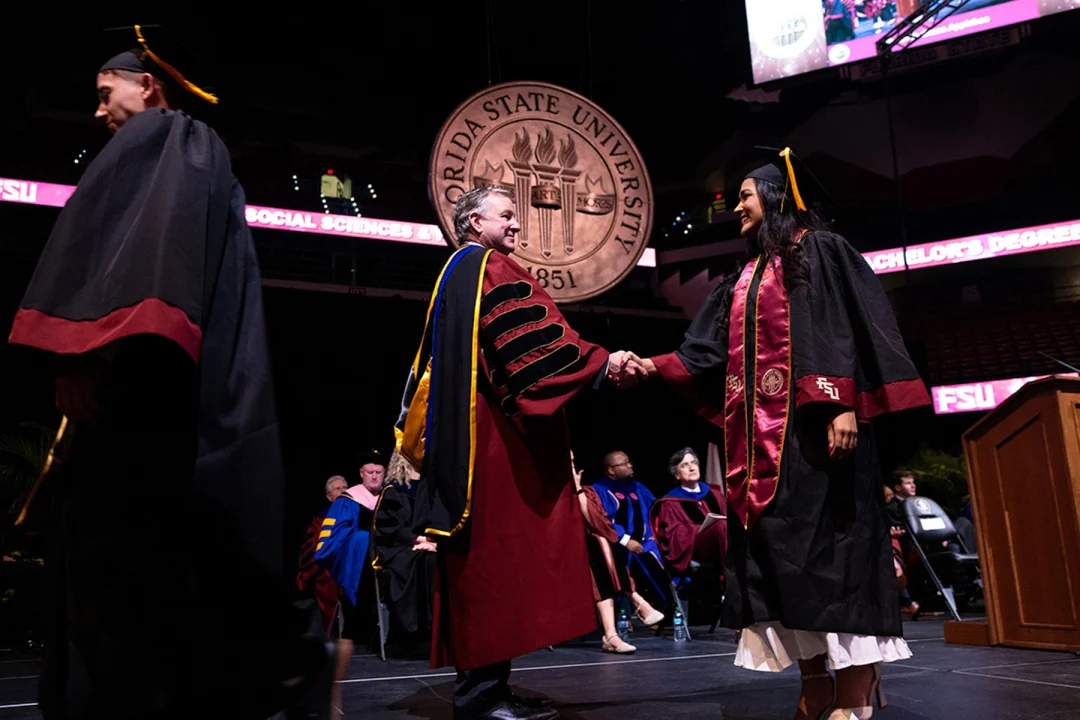
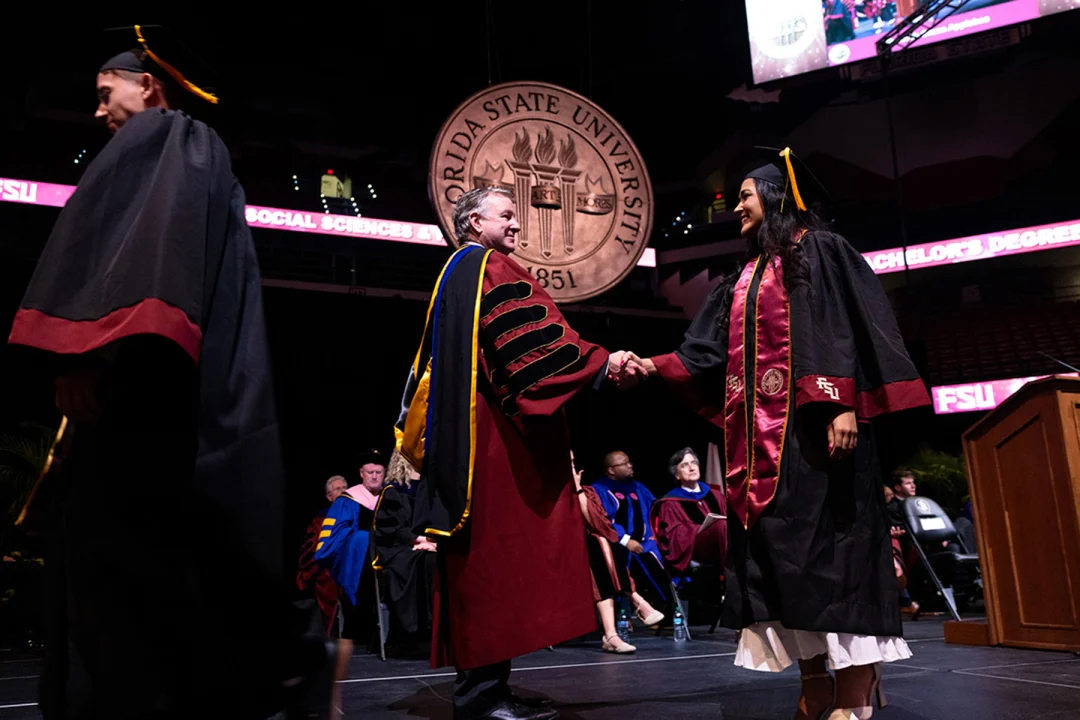
In a milestone achievement that further cements its status as a preeminent national leader in higher education, Florida State University (FSU) has officially announced a historic student success benchmark. According to institutional data released on August 31, 2026, FSU has reached an astounding 82% four-year graduation rate.
This unprecedented figure is not merely an internal victory for the Tallahassee-based institution; it establishes the highest four-year graduation rate ever recorded within the entire State University System of Florida. For years, higher education analysts, state legislators, and university administrators have watched FSU steadily climb national rankings by focusing intensely on student retention, timely degree completion, and equitable academic support systems. Now, crossing the 80% threshold places FSU in an elite echelon of public universities nationwide, matching or exceeding metrics typically associated with heavily endowed private institutions.
The announcement comes at a crucial juncture for modern academia, where public scrutiny regarding the value, affordability, and efficiency of a college degree has never been higher. By ensuring that four out of every five incoming students cross the commencement stage within 48 months, FSU is actively mitigating the financial burdens of student debt, reducing opportunity costs for its graduates, and feeding a highly educated, job-ready workforce directly into Florida’s expanding economy.
Detailed Chronology: The Journey to 82%
The road to achieving an 82% four-year graduation rate was neither accidental nor instantaneous. It represents the culmination of a multi-year, highly strategic institutional transformation that systematically dismantled traditional bottlenecks to student success.
The Foundational Shift (Mid-2010s)
Roughly a decade ago, FSU leadership—recognizing that national conversations in higher education were pivoting sharply toward accountability and completion metrics—initiated a comprehensive internal audit. At the time, while the university boasted strong overall retention numbers, its four-year graduation rate, though respectable by public university standards, left room for improvement. University administrators realized that students taking five or six years to graduate incurred unnecessary financial debt and delayed their entry into the workforce.
Data-Driven Interventions (2018–2022)
During this window, FSU pioneered several cutting-edge academic tracking systems. The university deployed predictive analytics tools to monitor student performance in real-time. Rather than waiting for a student to fail a midterm or miss a prerequisite, academic advisors were equipped with software that flagged early warning signs—such as a sudden drop in campus learning management system engagement or a struggle in foundational gateway math courses.
Simultaneously, FSU invested heavily in expanding its academic advising infrastructure. The university significantly lowered the student-to-advisor ratio, ensuring that every undergraduate received personalized, proactive guidance. Degree mapping programs were streamlined, giving students crystal-clear pathways through their chosen majors and reducing the likelihood of accumulating extraneous credit hours that could delay graduation.
Post-Pandemic Resilience and Acceleration (2023–2025)
When higher education faced the unprecedented disruptions of the COVID-19 pandemic, many institutions saw their retention and graduation metrics stall or decline. FSU, however, leveraged its existing digital infrastructure to pivot seamlessly, offering targeted financial emergency grants, expanded mental health resources, and flexible course delivery options.
By 2024 and 2025, these compounding investments began to yield exponential returns. The four-year graduation rate ticked upward past 75%, then approached 80%, outperforming state and national projections.
The Benchmark Year (2026)
With the release of the August 2026 data, FSU’s multi-year strategy reached its apex. Crossing the 82% mark represents a monumental leap that validates the university’s holistic approach to undergraduate education, proving that large public research institutions can achieve elite completion outcomes without sacrificing academic rigor or student accessibility.
Supporting Context & Metrics: Analyzing the Florida State System
To fully comprehend the magnitude of FSU’s 82% graduation rate, one must examine the broader landscape of the State University System of Florida (SUS) and national higher education standards.
+--------------------------------------------------------------------------+
|                       STATE HIGHER EDUCATION BENCHMARKS                  |
+------------------------------------+-------------------------------------+
| Metric                             | Institutional / System Status       |
+------------------------------------+-------------------------------------+
| FSU 4-Year Graduation Rate         | 82% (All-Time State Record)         |
| State University System Average    | Significantly Below FSU Benchmark   |
| National Public University Average | Mid-50% to Low-60% Range            |
| Student Retention (First-to-Second)| Exceeds 94%                         |
+------------------------------------+-------------------------------------+
The State University System Context
Florida has long been recognized by organizations like U.S. News & World Report and the Lumina Foundation for maintaining some of the most affordable and efficient public universities in the United States. Within the 12-institution State University System of Florida, competition for academic excellence has driven systemic improvements across the board.
However, FSU’s latest milestone distances it from regional peers. While several SUS institutions boast impressive metrics, an 82% four-year completion rate establishes a new gold standard for the state. It demonstrates that large-scale enrollment does not have to come at the expense of individual student progression.

Financial and Economic Implications
The financial impact of this achievement is profound. According to conservative economic estimates, graduating a cohort a year or two earlier saves students tens of thousands of dollars in tuition, housing, and living expenses, while simultaneously allowing them to earn a full year’s professional salary earlier in life.
Furthermore, for the state of Florida, an accelerated pipeline of college graduates bolsters key industry sectors—including technology, healthcare, finance, education, and public service—providing a steady stream of highly skilled talent crucial for sustaining the state’s economic momentum.
Official Statements and Institutional Perspectives
While formal statements accompanying the August 31 release emphasized collective institutional effort, university leadership and academic stakeholders have frequently pointed to a shared campus culture as the true driver of this success.
"Reaching an 82% four-year graduation rate is a testament to the unwavering dedication of our faculty, advisors, staff, and, most importantly, our students," university officials noted in the release. "This milestone reflects our core institutional philosophy: that access to higher education must be paired with an uncompromising commitment to seeing every student cross the finish line successfully."
Faculty leaders have similarly emphasized that maintaining high academic standards while improving graduation rates requires a delicate balance. Rather than "dumbing down" coursework to push students through, FSU’s departments have focused on innovative pedagogical strategies, experiential learning opportunities, and robust peer tutoring networks that ensure students truly master their disciplines while staying on track for timely graduation.
Student government representatives and alumni associations have also praised the achievement, noting that a high graduation rate enhances the global prestige of an FSU degree, increasing its value in the competitive job market and strengthening the university’s brand recognition worldwide.
Future Outlook: Sustaining Excellence and Looking Beyond 2026
As Florida State University savored this historic achievement on the final day of August 2026, leadership was quick to emphasize that reaching the summit is only half the battle—maintaining altitude is the true challenge.

The Next Frontier: Eliminating Equity Gaps
Looking forward, FSU’s strategic planning committees are shifting their focus toward fine-grained equity analytics. While an 82% aggregate graduation rate is extraordinary, university leadership has pledged to ensure that completion rates across all demographic subsets—including first-generation college students, Pell Grant recipients, and underrepresented minority populations—achieve absolute parity. Early data indicates that FSU is already a national leader in closing these traditional achievement gaps, but administrators view total parity as the ultimate destination.
Technological Integration and AI in Advising
Looking toward the late 2020s, FSU is exploring the next generation of artificial intelligence and machine learning tools to enhance academic advising. By utilizing advanced predictive modeling, advisors hope to anticipate roadblocks even earlier in a student’s academic lifecycle, offering hyper-personalized course recommendations and intervention strategies before academic distress can take root.
Infrastructure and Capacity Building
With enrollment demand at an all-time high, driven in large part by the university’s surging national reputation and stellar graduation outcomes, FSU must balance growth with resource allocation. Investments in state-of-the-art research facilities, modern residence halls, and expanded library and collaborative study spaces will be critical to supporting future student cohorts.
Conclusion
Florida State University’s achievement of an 82% four-year graduation rate marks a watershed moment in modern public higher education. By proving that a major research university can combine high-volume accessibility with exceptional, timely completion outcomes, FSU has set a new benchmark for what public universities can—and should—achieve for their students. As the fall 2026 semester unfolds, the entire higher education landscape will undoubtedly be watching to see how Florida State sustains and builds upon this historic legacy of success.

0 Comments