

Executive Overview
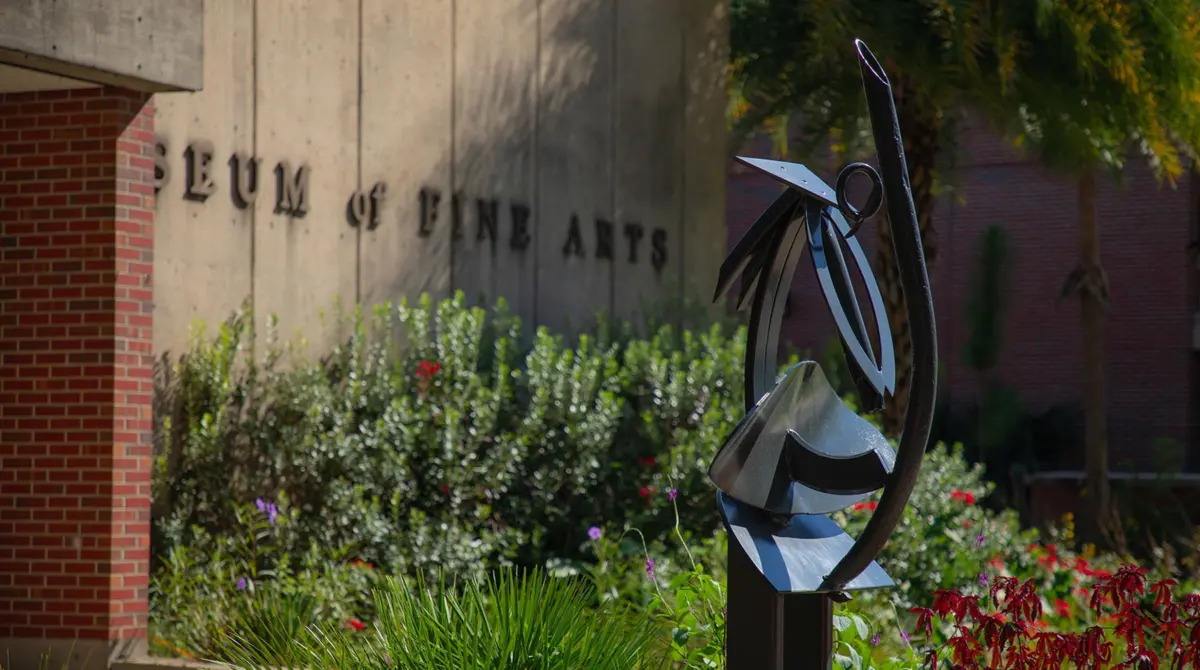
The Florida State University Museum of Fine Arts (MoFA) is set to host a groundbreaking and deeply personal multidisciplinary exhibition that bridges generations, artistic mediums, and familial legacies. Opening on August 27, “Floating Metal: UNDERcurrents In My Father’s Garden” brings together the visionary works of a father and daughter who have both left indelible marks on the academic and creative fabric of Florida State University.
Conceived by acclaimed School of Dance Professor, Guggenheim-winning choreographer, and researcher nia love, alongside co-curator Benin Ford, the exhibition serves as a living archive and an emotional landscape. It directly places love’s contemporary choreography, immersive dance films, and live performances into a profound dialogue with the striking, monumental metal sculptures of her late father, Ed Love. A celebrated member of the Black Arts Movement and a fellow Guggenheim recipient, Ed Love was renowned for transforming discarded scrap metal into powerful sculptural tributes to Black historical figures. He served as a professor of visual arts at FSU from 1990 until his passing in 1999.
This multi-sensory exhibition merges dance, live jazz, large-scale video projections, and a striking live performance camera obscura installation that encompasses the museum’s central gallery. By weaving together archival materials, sculpture, and physical movement, Floating Metal transcends a traditional gallery retrospective. It becomes an active site of remembrance, familial reckoning, and artistic innovation.
Funded in part by major national arts foundations and cultivated through years of meticulous research—beginning with nia love’s residency at FSU’s prestigious Maggie Allesee National Center for Choreography (MANCC)—the exhibition promises to challenge visitors’ perceptions of legacy, archive, and space. Free, public-facing live performances will run from August 27 through August 29, followed by an official opening reception on Thursday, September 3.
Detailed Chronology: From Creative Genesis to Museum Exhibition
The journey toward Floating Metal: UNDERcurrents In My Father’s Garden is rooted in decades of artistic evolution, personal history, and institutional research. To understand the depth of the exhibition, one must trace its timeline from Ed Love’s foundational decades as a sculptor through nia love’s choreographic evolution and final realization at MoFA.
1988–1999: The Foundations of Ed Love’s Legacy
Decades before the exhibition took shape, Ed Love established himself as a vanguard of contemporary American sculpture. Best known for his uncompromising command over heavy-gauge scrap metal, Love welded discarded industrial fragments into expressive, totem-like monuments that honored the resilience, struggles, and triumphs of Black historical figures. His artistic voice flourished during the height of the Black Arts Movement, a period defined by a fierce commitment to cultural autonomy and Black aesthetic expression.
In 1988, Love completed his celebrated “Beloved” series, a body of photographic work that captured intimate, evocative aspects of his artistic vision. In 1990, Love brought his radical approach to sculpture and education to Florida State University, where he served as a professor of visual arts. For nearly a decade, until his death in 1999, he mentored generations of students at FSU, instilling in them a deep respect for materiality and socio-political consciousness in art.
2022: The MANCC Residency and Research Catalyst
The intellectual and physical framework for Floating Metal began to crystallize in 2022, when nia love was selected for a prestigious residency at FSU’s Maggie Allesee National Center for Choreography (MANCC). Long before she officially joined the FSU School of Dance faculty, love used the MANCC residency as a laboratory to investigate her father’s archive, his impact on her artistic lineage, and the emotional geography shared between them.
During this intensive residency, love conducted deep archival research, tested spatial relationships between bodies and heavy metal structures, and drafted foundational choreographic scores. This incubation period allowed her to translate familial memory into movement, turning personal grief and historical reflection into a dynamic, embodied language.
August 27–29, 2026: Live Performances & Immersive Debut
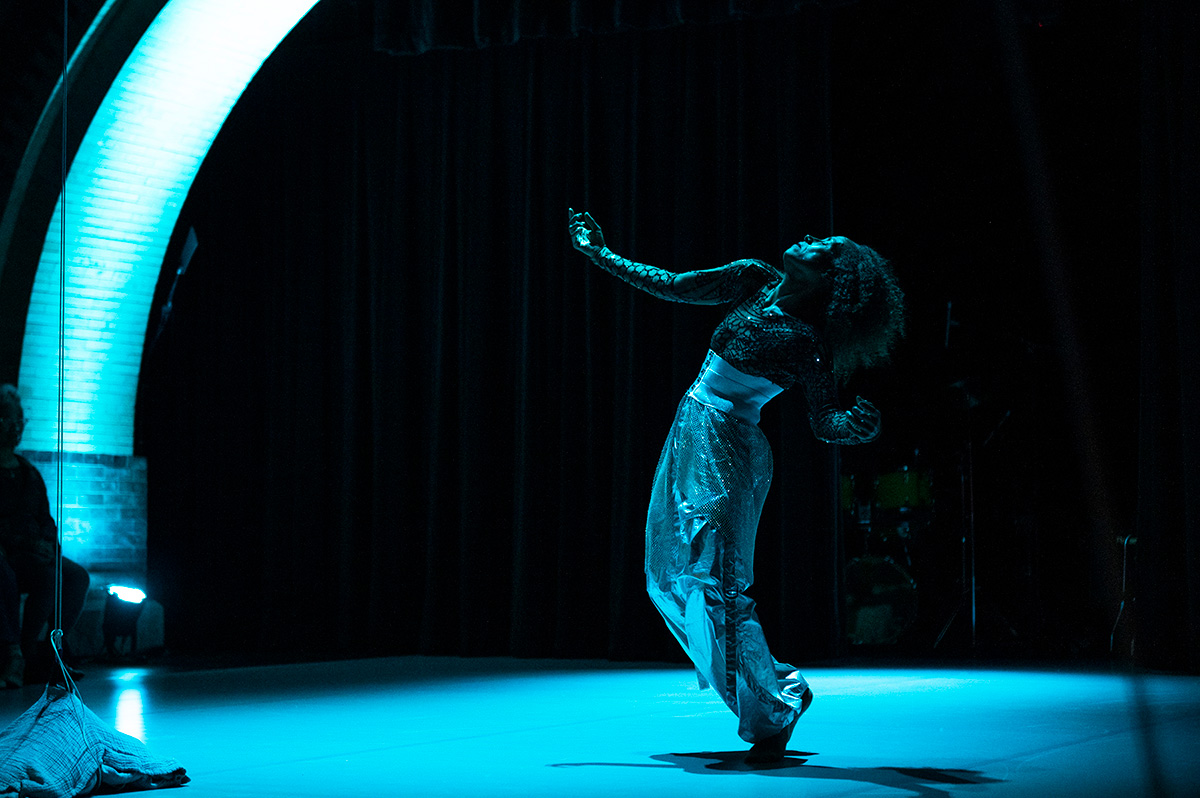
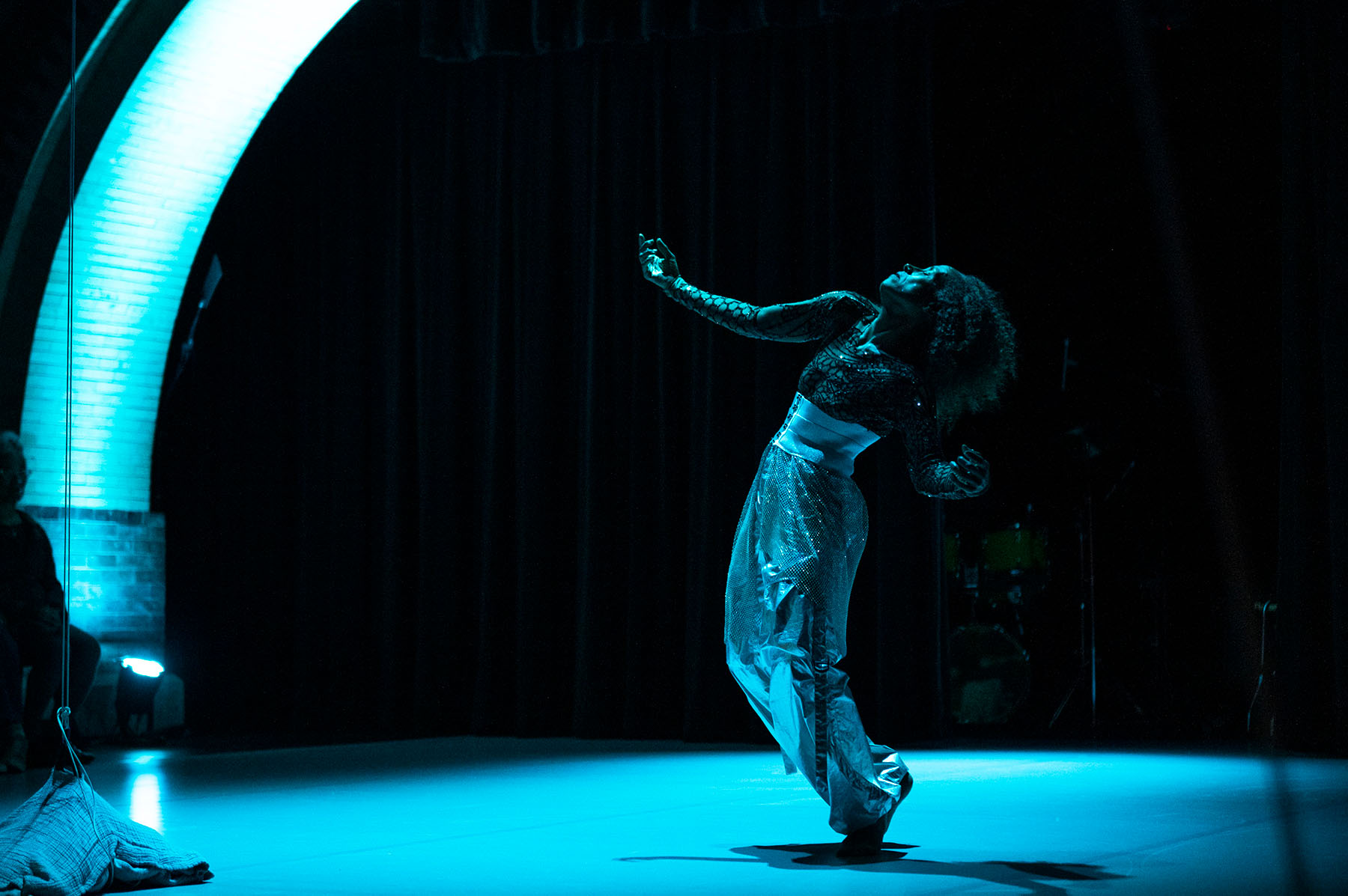
The public manifestation of years of research opens in late August 2026. Floating Metal officially introduces visitors to an immersive environment where Ed Love’s sculptures—including selections from the 1988 “Beloved” photographic series making their first-ever museum presentation—interact with live choreography.
nia love will perform live within the gallery spaces across a tightly scheduled series of performances:
- Thursday, Aug. 27: 5:30 p.m.
- Friday, Aug. 28: 5:30 p.m.
- Saturday, Aug. 29: 11:30 a.m. and 3:30 p.m.
Due to the intimate, immersive nature of the choreography and strict capacity limits within the museum galleries, these performances require advance reservations via Eventbrite.
September 3, 2026: Official Opening Reception
Following the initial performance run, MoFA will host the official public opening reception for the broader exhibition on Thursday, September 3, starting at 5:30 p.m. This free event welcomes the broader Tallahassee and academic communities to experience the full scope of the exhibition, which features the striking live-feed camera obscura installation in the central gallery, projecting real-time movements of visitors and performers onto the museum walls.
Supporting Context & Metrics
Floating Metal is not merely an emotional reunion across generations; it is a meticulously supported, institutional undertaking backed by major national arts organizations, academic bodies, and regional cultural heavyweights.
Institutional Backing and Funding
The realization of this complex, multidisciplinary exhibition required substantial financial and logistical scaffolding. Major support for Floating Metal has been secured through the New England Foundation for the Arts’ National Dance Project, bolstered by lead funding from two of the nation’s most prestigious philanthropic organizations:
- The Doris Duke Foundation
- The Mellon Foundation
Additionally, the project received crucial internal support from the FSU Council on Research + Creativity, underscoring the university’s commitment to fostering cross-departmental faculty research that bridges the visual arts and performance disciplines.
The Venue: FSU Museum of Fine Arts (MoFA)
Hosting the exhibition is the Florida State University Museum of Fine Arts, Tallahassee’s sole art museum accredited by the American Association of Museums. With a permanent collection housing over 7,000 objects and works of art, MoFA serves as a vital cultural nexus in Florida’s capital region.
Director Kaylee Spencer emphasizes that MoFA’s mission is deeply aligned with the goals of Floating Metal. By providing a platform for complex, dialogic exhibitions, the museum continues to anchor itself as a hub for critical inquiry, community engagement, and cross-disciplinary collaboration.
Key Exhibition Metrics & Components
- Artists Featured: 2 (Ed Love, posthumous visual artist; nia love, contemporary choreographer and filmmaker).
- Co-Curators: nia love and Benin Ford.
- Core Media: Steel and scrap-metal sculpture, archival photography (“Beloved” series, 1988), contemporary dance film, live choreography, live jazz music, and a room-scale camera obscura installation.
- Permanent Collection Scope of MoFA: Over 7,000 objects.
- Residency Origin: Maggie Allesee National Center for Choreography (MANCC), 2022.
Official Statements and Artistic Perspectives
The conceptual weight of Floating Metal rests heavily on the testimonies of its creator and the institution hosting it. The exhibition is framed not as a closed chapter, but as an ongoing conversation that refuses static interpretations of history.
Kaylee Spencer on the Evolution of Meaning
Museum Director Kaylee Spencer highlights how the exhibition reshapes our understanding of historical artists through contemporary lenses:
"One of the central ideas of ‘Floating Metal: UNDERcurrents In My Father’s Garden’ is that our understanding of an artist is never complete," Spencer noted. "Knowledge unfolds as new works, memories, archives, relationships, and perspectives are brought into conversation. By looking at Ed Love’s work through the experience of nia love’s performances and video installations, we can revisit the past with new information and see the present differently. We are excited to share this experience with the Tallahassee community."
nia love on Inheritance, Rupture, and Healing
For nia love, the exhibition is a deeply visceral, ancestral reckoning. The weight of her father’s physical medium—scrap metal—finds its counterpart in the kinetic elasticity of the human body. Her statement speaks to the generational transfer of art, trauma, and resilience:
"My father sent me forth to do the dance," love reflected. "What happened to tear us apart is not a small thing. It all crosses the seas, estuaries and rivers. Floating Metal recalls and continues this movement. It is a prayer of memory and healing, and a message of invention and rupture."
Through this framing, the exhibition acknowledges historical ruptures—both familial and sociopolitical—while actively deploying art as a mechanism for suture and spiritual continuation.
Future Outlook
“Floating Metal: UNDERcurrents In My Father’s Garden” sets a high water mark for how academic art museums can approach retrospective exhibitions. By moving away from passive display cases and static wall texts, MoFA and nia love have constructed a living, breathing ecosystem where the past is interrogated, re-animated, and transformed in real time.
Looking forward, the exhibition serves as a testament to the power of interdisciplinary faculty research within the Florida State University system. By nurturing long-term incubators like the MANCC residency, FSU continues to position its campus as a national crucible for experimental dance, sculpture, and critical theory.
As the camera obscura captures the ephemeral shadows of contemporary visitors moving past Ed Love’s welded steel monoliths, Floating Metal offers a profound glimpse into the future of curation: one where heritage is never buried, but is instead set into motion, crossing rivers, estuaries, and generational divides to speak directly to the present.

0 Comments