

By Jay Capasso
Published: August 20, 2024 | Updated: September 9, 2025
Executive Overview
Water policy in North Florida is entering a critical juncture. The Florida Department of Environmental Protection (FDEP), working in tandem with the Suwannee River Water Management District (SRWMD) and the St. Johns River Water Management District (SJRWMD), has introduced a sweeping, highly consequential regulatory framework: a proposed Minimum Flows and Levels (MFL) rule specifically targeting the Lower Santa Fe and Ichetucknee Rivers, along with their associated priority springs.
At its core, an MFL establishes the absolute water flow and level thresholds below which "significant harm" to local water resources and aquatic ecology is legally deemed to occur. When water bodies fall below these federally and state-mandated floors, regulatory agencies are compelled by law to step in, halt further degradation, and design comprehensive recovery strategies.
While the rule carries profound implications for the entire regional ecosystem, its operational ripple effects will be felt most acutely by commercial stakeholders, municipal utilities, and—above all—agricultural producers throughout the North Florida Regional Water Supply Partnership area. Spanning 15 distinct counties from Alachua and Suwannee to Duval and St. Johns, this expansive geographic footprint means that thousands of consumptive use permit (CUP) holders will soon face stringent new compliance standards.
With the rule slated for formal finalization during the 2026 Florida legislative session, the window for regional stakeholders to digest these complex mandates, evaluate their operational exposure, and make their voices heard is rapidly closing. The foundational parameters of how North Florida manages its precious groundwater and surface water are being redrawn, making active engagement not just recommended, but essential for the long-term viability of local agribusinesses and regional water security.
Detailed Chronology and Regulatory Framework
Understanding how the current MFL proposal came to be requires tracing a multi-year trajectory of environmental monitoring, scientific re-evaluations, and inter-agency coordination.
The Path to Rulemaking
For over a decade, scientists and water resource managers have monitored declining flows across North Florida’s primary spring-fed river systems. The Santa Fe and Ichetucknee basins, renowned for their crystal-clear waters, rich biodiversity, and vital economic contributions to rural communities, have shown chronic stress indicators during dry seasons and periods of sustained regional pumping.
In response to these persistent hydrological deficits, the FDEP and regional water management districts initiated technical assessments to update existing MFLs. These updates reflect refined hydrological models, climate considerations, and a more comprehensive understanding of ecological thresholds. The culmination of these scientific assessments is the current rulemaking process, which formally integrates the updated MFLs into the state’s consumptive use permitting framework.
Key Milestones and Timelines
- Initial Scientific Assessments and Stakeholder Workshops: Conducted across multiple years to establish baseline data, ecological metrics, and hydrological modeling for the Santa Fe and Ichetucknee basins.
- Formal Rule Development and Public Notice: Released to the public in mid-2024, triggering stakeholder review periods across the 15-county North Florida Regional Water Supply Partnership region.
- Public Comment Window: Officially established with a strict deadline of October 31, 2024, allowing agricultural producers, environmental advocates, and municipal leaders to submit formal critiques, technical data, and policy recommendations to the FDEP.
- Legislative Finalization Target: The rule is on a definitive track for formal adoption and finalization during the 2026 Florida legislative session, at which point its provisions will be systematically codified into active permitting guidelines.
Supporting Context & Metrics: The Science and Math of Compliance
To fully grasp the gravity of the FDEP’s proposed rule, stakeholders must examine the precise metrics, compliance points, and mathematical formulas that will dictate future water allocations.
Geographic Scope
The regulatory umbrella of the North Florida Regional Water Supply Partnership covers a vast and economically diverse territory. The counties directly impacted by the consumptive use permit adjustments under this rule include:
- Alachua
- Baker
- Bradford
- Clay
- Columbia
- Duval
- Flagler
- Gilchrist
- Hamilton
- Nassau
- Putnam
- St. Johns
- Suwannee
- Union
The Three MFL Compliance Points
The regulatory enforcement of the proposed rule hinges entirely on three designated river gages, each representing a critical hydraulic node within the basin:
- Santa Fe River near Fort White: Currently meeting the required MFL thresholds. Permits tied to this zone must demonstrate non-degradation of current conditions.
- Santa Fe River at US HWY 441 near High Springs: Officially designated as being in a state of recovery. Flow levels here persistently fall below the legally mandated MFL threshold.
- Ichetucknee River at HWY 27 near Hildreth: Also classified as being in a state of recovery, indicating that historical withdrawals have driven flows beneath sustainable ecological baselines.
The Mathematics of Mitigation: Calculating Permit Offsets
For permit holders whose water extractions influence the recovering compliance points near High Springs or Hildreth, the rule introduces a rigorous, proportional accountability model. Permittees are required to prove that their ongoing water use will not exacerbate existing flow deficits. If a user impacts multiple recovering compliance points, their mandatory offset requirements are anchored to the single point where their individual impact is greatest.
A permittee’s required water offset is calculated using their proportionate share of the Net Flow Deficit from a standardized baseline period (2014–2018). The governing formula is expressed as:
$$textProportionate Share = left( fractextIndividual Impact (I_p)textTotal Impact (It) right) times textNet Flow Deficit (Infd)$$
Practical Calculation Example
To visualize how this plays out on the ground, consider a hypothetical agricultural producer:
- Individual Impact ($I_p$): The permittee’s historical water extractions reduce the flow at the recovering MFL compliance point by 1 cubic foot per second (cfs).
- Total Impact ($I_t$): The cumulative impact of all regulated water uses during the 2014–2018 baseline period equals 10 cfs.
- Net Flow Deficit ($I_nfd$): The total flow deficit recorded at that specific recovering compliance point stands at 6.3 cfs.
Applying the formula:
$$textProportionate Share = left( frac1 text cfs10 text cfs right) times 6.3 text cfs = 0.63 text cfs$$
Under this mandate, the grower would be legally obligated to implement an offset project or efficiency measure capable of recovering 0.63 cfs to balance their hydrological footprint.
Agricultural Operations and Water Conservation Mandates
For agricultural producers across the Suwannee Valley and surrounding counties, the proposed rule is far more than a bureaucratic exercise; it introduces direct, operational mandates centered on irrigation efficiency and structural upgrades.
Irrigation System Maintenance and Evaluation Standards
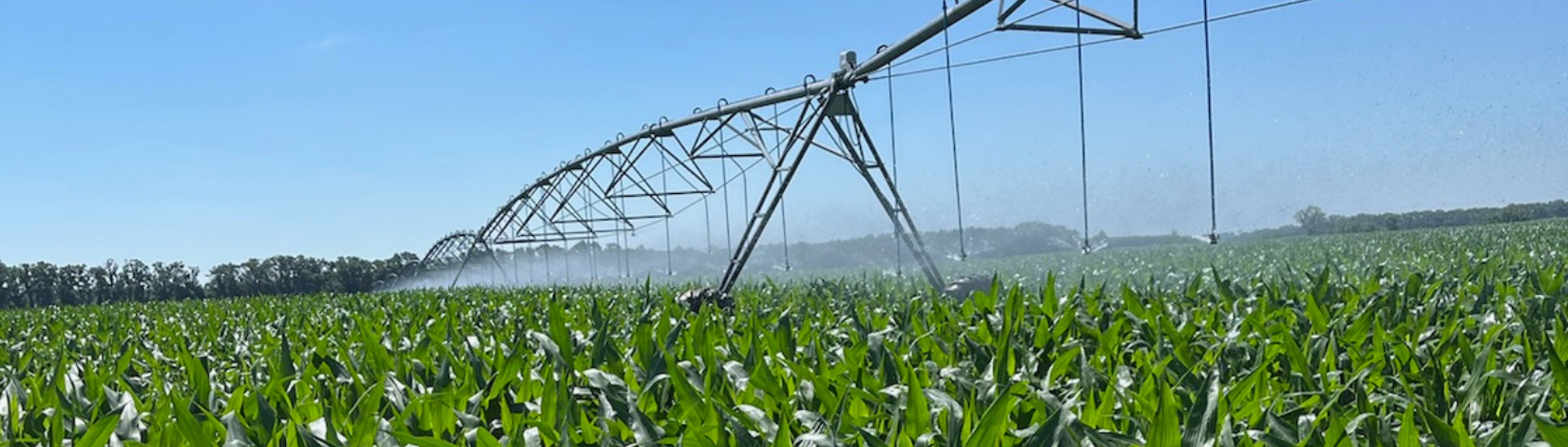
Distribution uniformity (DU) measures how evenly an irrigation system applies water across a given field, directly correlating with resource waste and energy consumption. Under the proposed rule, agricultural permittees must maintain their systems to meet strict minimum DU standards, which vary significantly by system technology:
- Micro-drip systems: Must achieve a DU of 80% to 90%.
- Micro-spray systems: Must achieve a DU of 75% to 85%.
- Low-pressure center pivot or lateral move systems: Must achieve a DU of 75% to 85%.
- Standard center pivot systems with end guns: Must achieve a DU of 65% to 75%.
- In-place overhead sprinklers: Must achieve a DU of 70% to 75%.
To verify compliance, growers must submit formal evaluations of their irrigation equipment. Regional agricultural extension agents and Mobile Irrigation Labs (MILs)—which frequently provide free evaluations to growers—are anticipated to see a massive surge in demand. Policymakers have also signaled strong interest in establishing an additional Mobile Irrigation Lab specifically within the Suwannee Valley to help local producers navigate these rigorous testing requirements.
The Phase-Out of Inefficient Technologies
For legacy irrigation methods, particularly traditional seepage irrigation, the rule adopts an uncompromising stance. Permittees currently relying on seepage systems must submit a comprehensive, binding transition plan detailing how and when they will upgrade to more modern, water-efficient infrastructure over the life of their permit. This ensures that archaic, highly wasteful watering techniques are systematically phased out across the region.
Tiered Water Conservation and Alternative Water Supplies
Beyond hardware adjustments, the rule establishes a tiered framework for active water conservation practices. Agricultural permittees must prove they are deploying high-level conservation protocols or propose alternative methods of equal or greater effectiveness.
High-priority conservation strategies include:
- Advanced Irrigation Technologies: Deployment of real-time soil moisture sensors, weather-station-linked controllers, and fully automated variable-rate irrigation systems.
- Conservation Tillage: Farming practices that preserve soil moisture, enhance organic matter, and reduce the need for excessive post-planting irrigation.
- Tailwater Recovery Systems: Engineering infrastructure designed to capture, store, and recycle agricultural runoff water rather than allowing it to be lost or discharged downstream.
- Alternative Water Supply (AWS) Projects: Utilizing reclaimed water, captured stormwater, or deep aquifer storage options, which receive top regulatory priority due to their immense potential for offsetting traditional groundwater withdrawals.
Official Statements and Stakeholder Perspectives
While the FDEP and water management districts champion the proposed rule as a necessary, science-based safeguard for Florida’s aquatic natural heritage, agricultural and industrial stakeholders have voiced complex mixtures of concern, pragmatism, and calls for economic collaboration.
Environmental and Regulatory Perspective
State hydrologists and environmental regulators maintain that updating the Lower Santa Fe and Ichetucknee MFLs is non-negotiable if Florida is to protect its iconic springs from irreversible ecological collapse. In official agency briefings, representatives from the FDEP and the Suwannee River Water Management District have emphasized that waiting for complete river recovery without stringent regulatory intervention is no longer a viable option.
"The science clearly indicates that our recovering compliance points require active, collective management," noted agency analysts during preliminary outreach sessions. "By establishing transparent formulas for offsets and tying permits directly to measurable efficiency standards, we are providing a predictable regulatory roadmap that balances human water use with the undeniable survival needs of our spring-fed ecosystems."
Agricultural and Industrial Concerns
Conversely, farming coalitions, agribusiness leaders, and rural landowners have expressed deep anxieties regarding the financial and operational feasibility of compliance. Implementing high-efficiency center pivots, constructing tailwater recovery basins, and paying for professional irrigation audits represent substantial capital expenditures—costs that are particularly burdensome for independent, family-owned farms operating on tight margins.
Furthermore, agricultural advocates have pointed out that calculating offsets using historical baselines (2014–2018) may penalize operations that have already made voluntary strides in water conservation over the past decade. Industry groups have consistently urged the state to provide robust financial cost-share programs, grants, and technical assistance funds to ensure that rural economies are not inadvertently crushed by environmental mandates.
Future Outlook: Preparing for 2026 and Beyond
As the regulatory calendar advances toward the 2026 Florida legislative session, stakeholders across North Florida must transition from passive awareness to active preparation.
Actionable Steps for Water Users
- Review Current Permitting Data: Agricultural producers and industrial permit holders should immediately audit their existing consumptive use permits, historical water use records, and geographical proximity to the Fort White, High Springs, and Hildreth compliance gages.
- Schedule Mobile Irrigation Lab Evaluations: With strict distribution uniformity standards becoming mandatory, growers should proactively contact regional extension offices or MILs to schedule system evaluations well in advance of enforcement deadlines.
- Explore Cost-Share and Grant Opportunities: Producers should investigate state and federal funding streams—such as those offered by the USDA Natural Resources Conservation Service (NRCS) and the FDEP—designed to offset the capital costs of transitioning to micro-irrigation, soil sensors, and tailwater recovery systems.
- Engage in Ongoing Dialogue: Although the formal public comment window closed on October 31, 2024, regional stakeholders can continue working through agricultural associations, county extension agents, and district advisory committees to shape implementation guidelines, request technical clarifications, and advocate for practical, economically viable enforcement mechanisms.
The proposed Lower Santa Fe and Ichetucknee Rivers MFL rule marks a definitive turning point in Florida water law. How the state, agricultural producers, and regional water management districts navigate this transition over the next several years will determine not only the ecological fate of North Florida’s legendary springs, but also the enduring resilience of the region’s agricultural economy.

0 Comments