
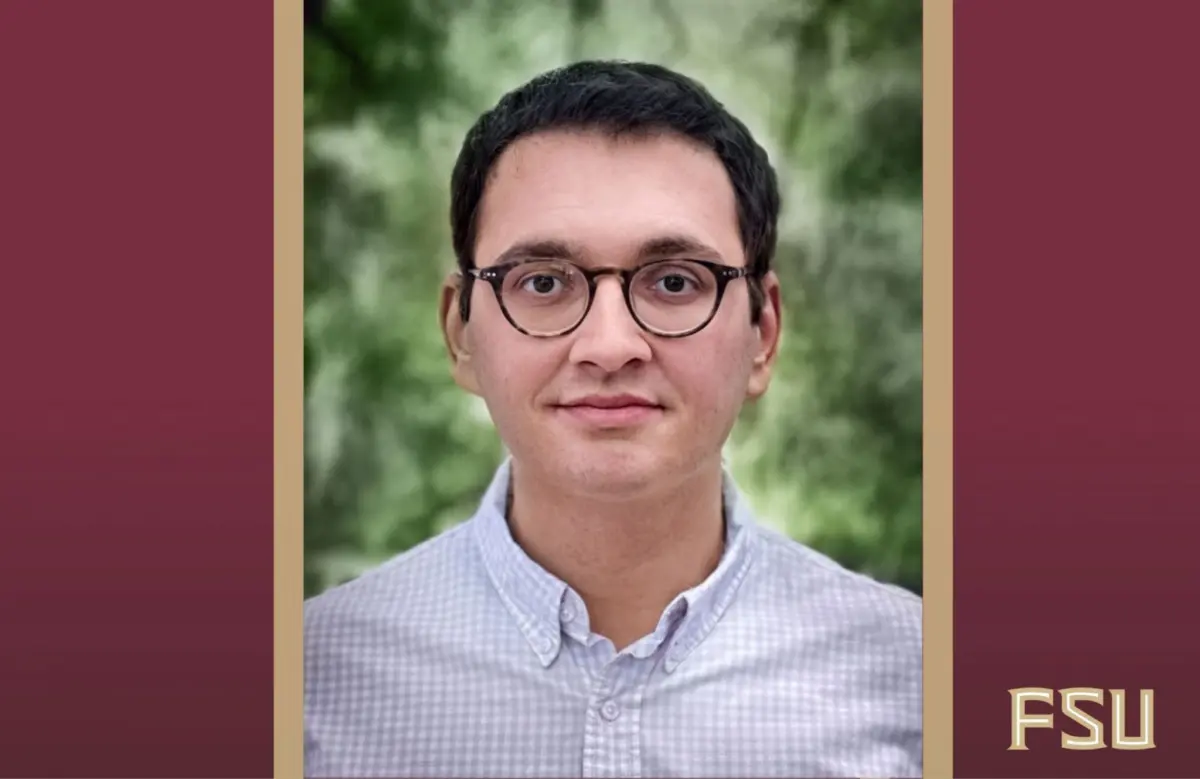

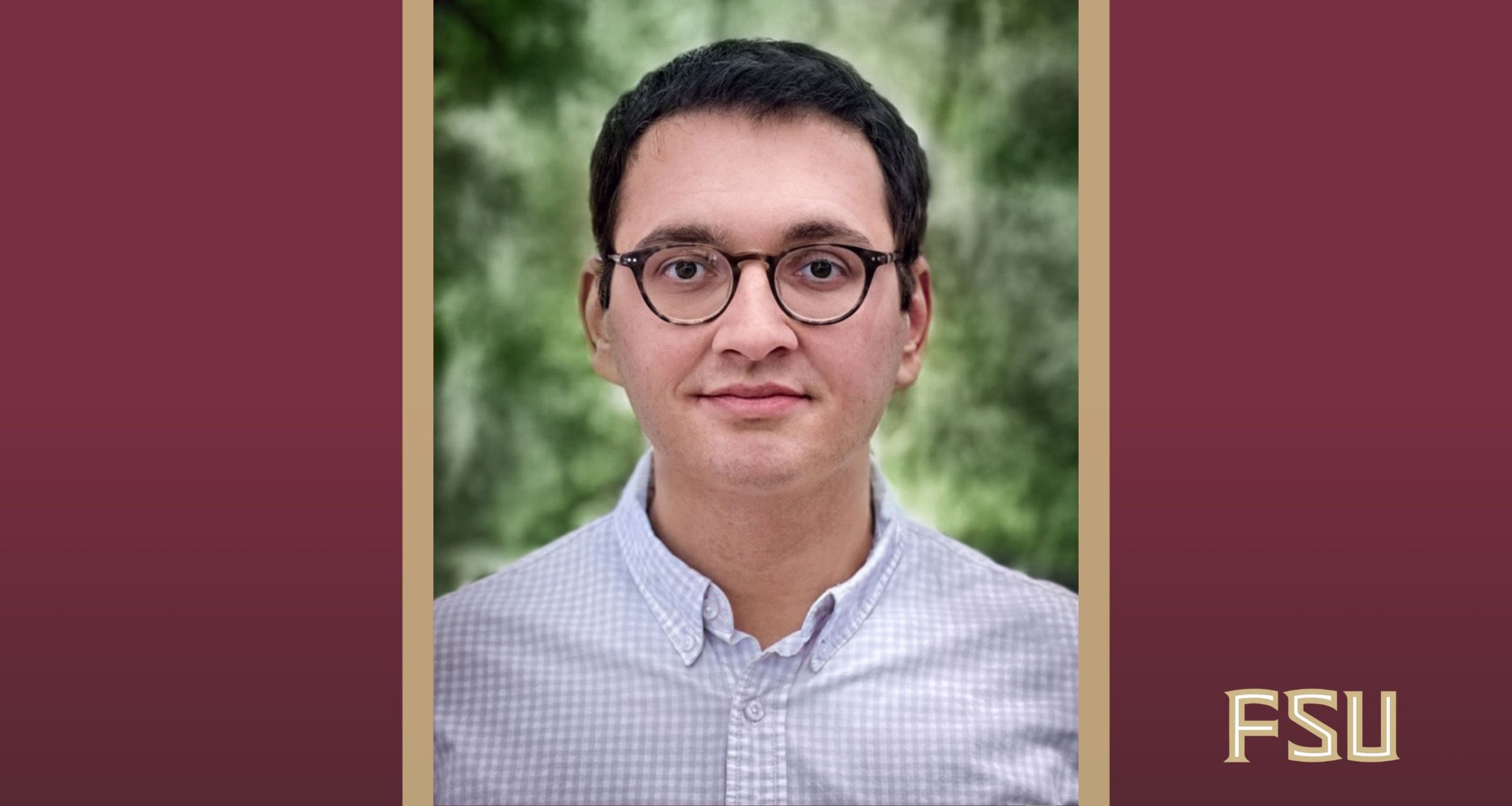
TALLAHASSEE, Fla. — As artificial intelligence rapidly reshapes the foundational architecture of the global workforce, the race to understand its long-term societal and economic implications has reached a critical juncture. In recognition of his pioneering empirical research on the intersection of artificial intelligence and labor markets, Pellumb Reshidi, an assistant professor of economics in the Florida State University (FSU) College of Social Sciences and Public Policy, has been named a Senior Fellow of Microsoft’s prestigious AI Economy Institute (AIEI).
Reshidi joins an elite, highly selective international cohort of economists, data scientists, and public policy researchers tasked with examining how frontier artificial intelligence technologies are transforming modern enterprise, organizational behavior, and the future of work. As part of this appointment, Reshidi and his multinational research collaborators—Brian Jabarian of Carnegie Mellon University and Luca Henkel of Erasmus University Rotterdam—have been awarded a competitive Microsoft research grant. Their mandate: to conduct a rigorous, large-scale empirical investigation into "agentic hiring"—the cutting-edge deployment of AI systems capable of autonomously screening, interviewing, and evaluating job candidates.
This appointment places FSU at the vanguard of economic research concerning the digital transformation of labor. It also underscores a growing urgency within both academia and private industry to measure the downstream economic consequences of automation before corporate adoption completely outpaces regulatory frameworks and economic theory.
Executive Overview: The Rise of Agentic Hiring and Economic Uncertainty
The modern labor market stands at an unprecedented crossroads. For decades, technological revolutions—from the mechanization of agriculture to the advent of enterprise software—have steadily altered the nature of employment. However, the current wave of generative and agentic artificial intelligence represents a structural departure from past innovations. Rather than merely accelerating human labor or automating routine, rules-based tasks, modern AI systems are beginning to execute complex cognitive functions, including interpersonal evaluation, cultural fit assessments, and behavioral screening during the hiring process.
Despite the widespread commercial adoption of AI recruitment tools by corporations worldwide, a profound knowledge gap persists. Economists and policymakers know relatively little about how the widespread, systemic integration of AI recruitment platforms influences labor market efficiency, candidate outcomes, wage dynamics, and overall firm productivity.
"Adoption has moved faster than the evidence, particularly on what happens when an entire industry takes up these systems rather than a single firm, and how the added competition affects firm and worker welfare," Reshidi explained, highlighting the core dilemma driving his current research agenda. "Those effects need careful measurement, and we’re approaching them less as a question of AI substituting for people than as one about where the two together outperform either alone."
This conceptual pivot—moving away from a simplistic binary of "humans versus machines" and toward a nuanced analysis of human-AI collaboration—forms the theoretical backbone of Reshidi’s fellowship project. By examining how hiring algorithms alter the recruitment funnel, Reshidi and his co-investigators aim to provide empirical clarity to one of the most pressing labor market transformations of the twenty-first century.
Detailed Chronology: From Concept to Global Research Cohort
The path leading to Reshidi’s appointment and the launch of his collaborative research initiative spans years of methodological refinement, institutional partnerships, and institutional backing from Microsoft’s policy and research divisions.
Phase One: Identifying the Gap in Labor Economics
The intellectual origins of the project trace back to the immediate post-pandemic economic recovery, a period marked by unprecedented labor shortages, remote work adoption, and a massive surge in automated hiring software. While tech companies rushed to market with AI-driven applicant tracking systems (ATS) and video interview analysis tools, labor economists noted a stark absence of rigorous, causal empirical research evaluating these systems under real-world market conditions. Most existing studies relied on laboratory experiments or self-reported surveys from software vendors, which often failed to capture the strategic interactions between competing firms, skilled recruiters, and discerning job applicants.
Phase Two: Building the Interdisciplinary Team
Recognizing that the complexities of algorithmic hiring required an interdisciplinary approach bridging microeconomic theory, experimental economics, and machine learning, Reshidi joined forces with Brian Jabarian, an expert in market design and algorithmic economics at Carnegie Mellon University, and Luca Henkel, a behavioral economist at Erasmus University Rotterdam renowned for his work on human decision-making under technological constraints.
Together, the trio formulated a research design capable of moving beyond observational data to establish true causal relationships in the recruitment ecosystem.
Phase Three: The Partnership and the 70,000-Interview Dataset
To test their economic models, Reshidi’s team forged a strategic partnership with a major international recruiting firm. This collaboration yielded an unprecedented and exceptionally rich dataset: a natural field experiment encompassing approximately 70,000 job interviews.
Unlike small-scale academic trials, this dataset tracks candidates and recruiters longitudinally, capturing every phase of the employment lifecycle. It records initial resume submissions, algorithmic screening scores, human-versus-AI interview routing choices, interview performances, hiring decisions, and subsequent workplace retention metrics. This scale of empirical observation provides researchers with a rare window into the micro-foundations of algorithmic labor matching.
Phase Four: Selection into the Microsoft AI Economy Institute
In July 2026, Microsoft officially announced its third cohort of AI Economy Institute Fellows. While the institute’s first two cohorts focused primarily on macroeconomic questions surrounding how educational institutions must adapt to prepare the workforce for an AI-enabled economy, the third cohort represents a strategic pivot toward the micro-level behavior of firms themselves.
Out of hundreds of global applicants, Reshidi and his collaborators were selected for funding and fellowship status, positioning their work at the center of Microsoft’s ongoing dialogue with global policymakers, labor leaders, and industry executives regarding the governance and economic impact of frontier AI technologies.
Supporting Context and Metrics: Dissecting the Microeconomics of Recruitment
To fully appreciate the significance of Reshidi’s research, one must examine the specific market dynamics that occur when artificial intelligence enters the recruitment pipeline. Economics traditionally models labor markets as matching arenas where employers and workers seek optimal pairings based on wage offers, skill sets, and geographic or operational constraints. The introduction of autonomous AI agents fundamentally alters this matching function.
The Mechanics of Agentic Hiring
"Agentic hiring" refers to recruitment technologies that possess a degree of autonomy—not merely sorting keywords on a resume, but actively engaging candidates in dialogue, evaluating non-verbal cues, assessing cognitive problem-solving capabilities, and generating structured summaries or hiring recommendations for human managers.
Reshidi’s research investigates three primary dimensions of this technological shift:
- Human-AI Interaction and Complementarity: How do human recruiters interact with AI-generated evaluations? Do hiring managers suffer from automation bias (over-relying on algorithmic recommendations), or do they systematically override AI judgments based on unquantifiable human insights? The study measures the exact conditions under which human-machine pairings outperform purely human or purely algorithmic decision-making.
- Candidate Choice Architecture: In modern recruitment environments, applicants increasingly face choices regarding whether to interact with an automated bot or wait for a human scheduler or interviewer. Reshidi’s field experiment analyzes how applicant sorting behavior changes when candidates can self-select their interaction medium, and how demographic or professional characteristics correlate with these choices.
- Competitive Equilibrium Among Firms: When multiple competing corporations within the same industry adopt identical or similar commercial AI screening tools, how does market equilibrium shift? Standard economic theory suggests that homogeneous screening technologies could lead to herd behavior in hiring, potentially exacerbating labor market frictions or marginalizing qualified candidates who fall outside narrow algorithmic parameters.
Empirical Rigor in the Era of Big Data
The sheer volume of the dataset—spanning 70,000 interviews—allows Reshidi and his team to deploy advanced econometric techniques, including machine learning-assisted causal inference, to separate correlation from causation. By tracking candidates from initial application through post-hire performance metrics, the researchers can evaluate whether AI-assisted recruitment genuinely improves long-term job match quality or merely accelerates short-term administrative throughput at the expense of employee retention.
Official Statements and Perspectives
The appointment of Professor Reshidi has drawn widespread praise from academic leadership at Florida State University, highlighting the institution’s growing prominence in the social sciences and public policy.
"Dr. Reshidi’s selection as a Senior Fellow of the Microsoft AI Economy Institute is a testament to the world-class caliber of faculty within the College of Social Sciences and Public Policy," said Tim Chapin, dean of the college. "His research addresses one of the most defining economic questions of our era: how artificial intelligence alters the fundamental ways organizations acquire human capital. This fellowship not only amplifies Dr. Reshidi’s scholarly impact but also reinforces FSU’s role as a leading institution for cutting-edge economic policy research."
For his part, Reshidi emphasizes that the overarching goal of the project is not to champion or critique technology blindly, but to generate objective, empirical evidence that can guide both corporate strategy and public policy.
"Adoption has moved faster than the evidence, particularly on what happens when an entire industry takes up these systems rather than a single firm, and how the added competition affects firm and worker welfare," Pellumb Reshidi noted regarding the impetus for the study. "Those effects need careful measurement, and we’re approaching them less as a question of AI substituting for people than as one about where the two together outperform either alone."
Future Outlook: Publications, Policy Impact, and the Road Ahead
As the fellowship progresses, the timeline for disseminating these critical findings is already accelerating.
The immediate output of the AIEI cohort’s collective research will be featured in a comprehensive, edited volume scheduled for publication in January. Reshidi, alongside collaborators Brian Jabarian and Luca Henkel, is contributing a foundational chapter to this publication, synthesizing the core empirical insights derived from their 70,000-interview field experiment.
In tandem with the book project, the research team is preparing comprehensive academic papers for submission to top-tier, peer-reviewed open-access economics and management journals. By prioritizing open access, the researchers ensure that their findings are immediately available to policymakers, labor economists, human resource professionals, and civil society organizations navigating the rapid evolution of workplace technology.
Implications for Public Policy and Industry Standards
The policy implications of Reshidi’s work extend far beyond corporate boardrooms. As legislative bodies across the United States and the European Union debate the regulation of automated decision-making systems in employment—exemplified by initiatives such as the European Union Artificial Intelligence Act and various state-level municipal algorithmic accountability laws—regulators face a severe shortage of empirical data regarding market-level equilibria.
By demonstrating how firm competition and candidate behavior interact under the influence of agentic AI, Reshidi’s research will provide a vital empirical foundation for drafting balanced, evidence-based regulations that protect worker welfare while fostering technological innovation and market efficiency.
Ultimately, Professor Reshidi’s fellowship at Microsoft’s AI Economy Institute marks a significant milestone for Florida State University, cementing its status as an intellectual hub where rigorous economic science meets the defining technological challenges of the modern global economy.

0 Comments