

Executive Overview
Following a transformative year-long hiatus, the Maggie Allesee National Center for Choreography (MANCC) at Florida State University (FSU) is officially reopening its studio doors to the vanguard of contemporary dance. As one of only two national choreographic centers embedded within a major research university, MANCC occupies a singular space in the American performing arts ecosystem. By bridging the gap between rigorous academic inquiry and professional dance creation, the center provides a crucial incubator for artists working at the bleeding edge of physical expression.
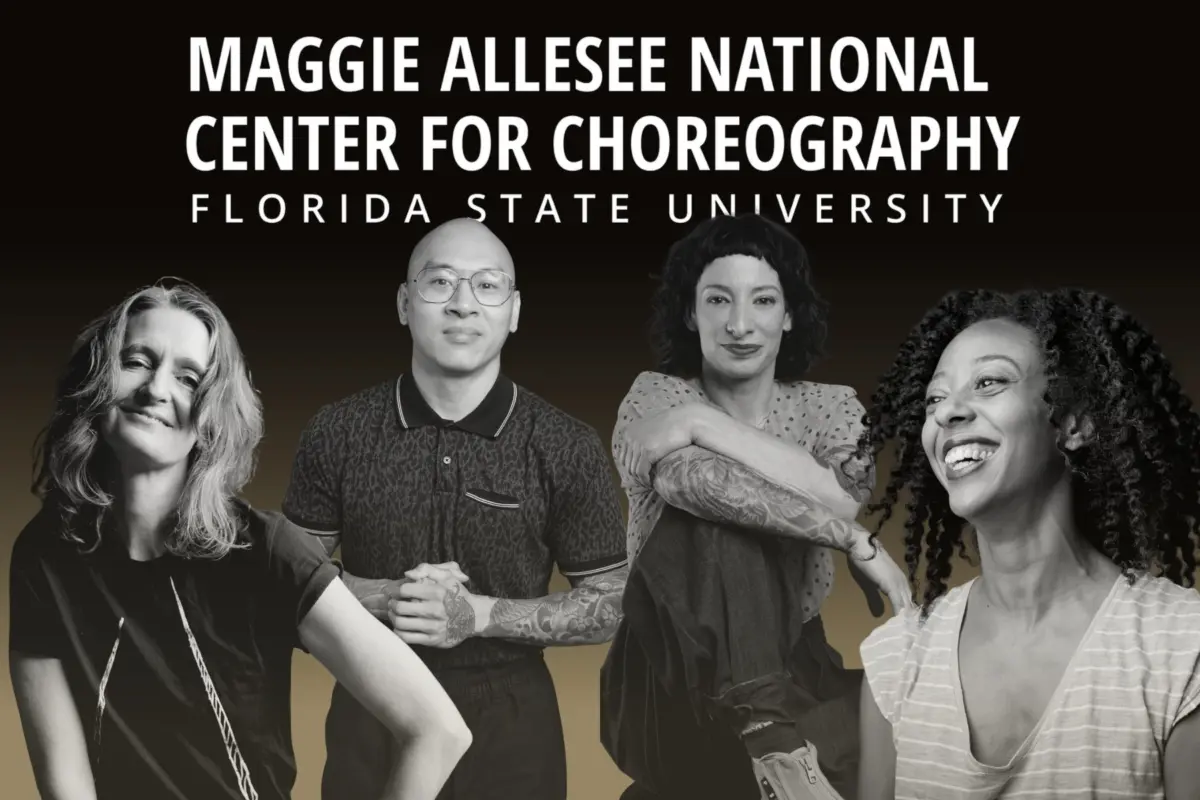
The Fall 2026 residency lineup features a celebrated cohort of national artists and companies: acclaimed multidisciplinary artist, director, and producer Fana Fraser; Guggenheim Fellowship-winning choreographer Kimberly Bartosik; and Joseph “MN Joe” Tran and Lisa “MonaLisa” Berman, co-founders of the Minnesota-based BRKFST Dance Company. These artists arrive at FSU during the foundational, embryonic stages of creation. Their residencies will not only yield groundbreaking new work exploring human emotion, trauma, resilience, and interiority, but they will also directly integrate FSU School of Dance students into the creative methodologies of today’s foremost movement architects.
This comprehensive report examines the structural importance of MANCC, details the upcoming residency schedules and artistic frameworks, and analyzes the profound reciprocal impact these programs hold for both contemporary dance and higher education.
Detailed Chronology: The Fall 2026 Residency Roadmap
The Fall 2026 residency calendar is structured to provide each artist with deep, uninterrupted studio time, customized technical resources, and meaningful engagement with the academic community. The programming unfolds across a carefully curated timeline designed to maximize the developmental trajectories of three distinct creative projects.
Fana Fraser: After the Fallow (September 2026)
Kicking off the fall season this month is the return of Fana Fraser to the MANCC fold. Fraser, whose dynamic career spans performance, direction, and cultural production, is no stranger to the center, having previously participated in MANCC’s prestigious Forward Dialogues laboratory program in 2017.
Since that time, Fraser’s dance films and live performance installations have toured internationally, earning critical acclaim for their visceral exploration of Caribbean identity, womanhood, and somatic memory. At MANCC, Fraser is spearheading the early-stage development of a major new project titled After the Fallow.
During this residency, Fraser’s primary objective is to translate an outdoor movement practice into the controlled environment of a professional dance studio. Working closely with collaborating dancers and professional dramaturgs, Fraser will interrogate how spatial dynamics shift when moving from open-air environments to architectural interiors. FSU dance students and local audiences will gain a rare, behind-the-scenes look at this transposition during scheduled open studio showings and interactive movement workshops.
Kimberly Bartosik: blood anchor (October 2026)
In October, the center will welcome Guggenheim Fellowship-winning choreographer, performer, and educator Kimberly Bartosik for her inaugural MANCC residency. Bartosik is internationally renowned for her fierce, rigorous aesthetic that probes the psychological depths of the human condition.
At FSU, Bartosik will embark on the early developmental phase of blood anchor, an ambitious new work that confronts the complex, often fraught power dynamics of blood relations alongside the escalating epidemic of modern loneliness. The project serves as an anatomical and emotional investigation into how familial ties can act simultaneously as lifelines and anchors dragging the individual into isolation.
To bring this dark, emotive landscape to life, Bartosik will utilize MANCC’s expansive studio resources to collaborate in real time with a cast of three performers, a dedicated dramaturg, and a lighting designer. By integrating lighting design at such an early stage of creation, Bartosik aims to construct a unified visual and emotional vocabulary from the ground up, offering FSU students a masterclass in multidisciplinary dance production.
BRKFST Dance Company: Untitled Duet (Fall 2026)
Rounding out the fall roster are Joseph “MN Joe” Tran and Lisa “MonaLisa” Berman, co-founders of the critically acclaimed, Minnesota-based BRKFST Dance Company. Marking their first residency at the center, Tran and Berman are utilizing MANCC as a launchpad for an evening-length duet that pushes the boundaries of contemporary movement by synthesizing breaking (breakdance), rigorous improvisation, and intricate partnering techniques.
This deeply personal work investigates how human connections—to oneself, the somatic body, and interpersonal relationships—fracture, adapt, and evolve in the wake of severe trauma. The conceptual foundation of the piece is profoundly intimate: it draws directly from Berman’s lived experience as a two-time cancer survivor and Tran’s role and emotional journey as her primary caregiver through treatment.
The inclusion of BRKFST Dance Company is bolstered by prestigious external validation. Tran and Berman are recipients of the coveted 2026 McKnight Choreography Fellowship. Their MANCC residency is generously supported by funds administered by Springboard for the Arts and funded by the McKnight Foundation, underscoring the national importance and institutional backing of their creative inquiry.
Supporting Context & Metrics: The MANCC Model
To fully understand the weight of these residencies, one must examine the unique structural architecture of the Maggie Allesee National Center for Choreography. Established to elevate the art form of choreography, MANCC operates on a philosophy that treats the choreographer not merely as a guest, but as a lead researcher embarking on a vital investigation.
A Unique University Partnership
Housed within the Florida State University School of Dance, MANCC is one of only two national choreographic centers embedded inside a university infrastructure nationwide. This positioning provides visiting artists with advantages that standard, commercial performing arts centers simply cannot replicate.
While commercial spaces are frequently bound by the imperative to produce finished, ticket-selling commodities within compressed commercial windows, MANCC explicitly prioritizes process over product. Artists are given the rare luxury of failure, iteration, and deep, unstructured somatic research.
Interdisciplinary Cross-Pollination
Because the center is situated within a comprehensive tier-one research university, visiting choreographers can cross disciplinary boundaries with ease. A choreographer examining the neurological impacts of trauma, for instance, can consult directly with FSU faculty in psychology or neuroscience. Those designing complex physical sets can leverage the university’s advanced engineering and digital arts facilities.
Furthermore, MANCC tailors each residency to meet the precise developmental needs of the project at hand. Whether an artist requires a week of pure physical experimentation alongside FSU School of Dance students, specialized technical support for complex lighting architectures, or critical feedback from academic scholars, the center functions as an elastic, highly responsive ecosystem.
Official Statements and Institutional Vision
The resumption of the residency program after a one-year hiatus marks a renewed commitment by FSU and MANCC leadership to champion the development of new American dance works.
“We are excited to have artists back in the studio,” said MANCC Director Ansje Burdick. “Joining us from across the country, our fall artists are all in early developmental stages of creation as they explore human emotion and interior experiences, collaborate with dramaturgs, refine movement vocabularies, and construct soundscapes.”
Burdock’s emphasis on the "early developmental stages" highlights MANCC’s distinct role in the national arts pipeline. By catching works while they are still malleable, the center allows artists to take structural risks that would be impossible further down the production cycle.
From an educational standpoint, the presence of these luminaries fundamentally transforms the student experience at the FSU School of Dance. Rather than learning dance solely through historical technique classes or faculty-led choreography, students are immersed in the living, breathing reality of contemporary art-making.
Throughout the fall semester, FSU dance majors and minors gain unprecedented access to the creative process through:
- Exclusive Work-in-Progress Showings: Offering students a front-row seat to the vulnerabilities and breakthroughs of professional creation.
- Open Studio Sessions: Allowing scholars and aspiring artists to observe how movement vocabularies are tested, discarded, and refined.
- Direct Movement Experiments: Providing hands-on opportunities to collaborate directly with visiting choreographers and their company members, fostering mentorships that often extend far beyond graduation.
Future Outlook: The Horizon of Contemporary Choreography
As MANCC opens its doors for the Fall 2026 term, the ripple effects of these residencies will inevitably be felt far beyond the borders of Tallahassee, Florida. Works incubated within these walls will go on to tour national performing arts venues, grace international film festivals, and challenge audiences to rethink the boundaries of the human body and mind.
By serving as a sanctuary for rigorous physical research, MANCC ensures that contemporary choreography remains a vital, responsive, and intellectually demanding art form. Through the deeply personal explorations of Fana Fraser, the psychological depth of Kimberly Bartosik, and the somatic resilience of BRKFST Dance Company, the Fall 2026 residency season promises to be a watershed moment for both Florida State University and the broader landscape of American dance.

0 Comments