

Executive Overview
For decades, a fundamental paradox has defined the architecture of sportfishing vessels. Avid anglers demand maximum, unobstructed deck space to fight fish, manage gear, and execute precise casting maneuvers. Conversely, passengers, family members, and even offshore crewmates navigating hours of heavy sea-states require comfortable, ergonomic seating to survive long runs and choppy conditions. For a long time, this meant owners had to choose between a dedicated family-cruising platform and a bare-bones, utilitarian battlewagon.
Today, marine naval architects and center-console manufacturers are bridging this divide through sophisticated, on-demand seating solutions. Modern fishing boats increasingly feature convertible, folding, removable, and multipurpose seating arrangements that disappear when the hooks go into the water and deploy instantly when comfort is required.
This comprehensive analysis examines the engineering, practical applications, pros, cons, and essential specifications of six primary on-demand seating options dominating the contemporary marine market: Bow Seats, Pedestal Casting Seats, Bring-Aboard Foldable Deck Chairs, Bean Bag Chairs, Flip-Down Bench Seats, and Cooler Seats. By evaluating these options through the lenses of ergonomics, deck spatial dynamics, and structural integrity, boat owners can curate a vessel that satisfies both hardcore fishing performance and all-day cruising comfort.
Detailed Chronology and Evolution of Marine Seating
To understand how modern fishing boats achieved their current level of versatility, it is helpful to look back at the historical progression of marine deck layouts.
- The Utility Era (Pre-1990s): Historically, dedicated offshore fishing boats—particularly classic custom Carolina builders and early production center consoles—featured entirely open decks. Seating was typically restricted to a leaning post or helm chair, with perhaps a small cooler cushion. Bows were elevated casting platforms with deep storage lockers, utterly devoid of upholstery. While optimal for chasing pelagics, these boats alienated non-fishing spouses and guests, limiting the market appeal.
- The Shift Toward Multi-Use (Late 1990s–2000s): As the center-console segment exploded in popularity, builders realized that buyers wanted vessels capable of both weekend family cruising and serious offshore fishing. This era saw the introduction of integrated forward-console seating and basic bow benches. However, these early iterations were often permanent fixtures with fixed, high backrests, which infuriated hardcore anglers who lost the ability to lean against the gunwales while fighting fish.
- The Ergonomic and Modular Revolution (2010s–Present): Driven by advanced CAD modeling, composite manufacturing, and high-density polymer engineering, modern boat builders began introducing modular, flush-folding, and removable seating systems. Bow seats received removable backrests and flush-fitting filler cushions that could transform a lounge area into a casting deck in under sixty seconds. Meanwhile, aftermarket innovations—such as marine-grade teardrop bean bags and articulating flip-down transom benches—redefined how crews manage fatigue during long offshore runs.
Supporting Context & Metrics: The Ergonomics of Offshore Fatigue
Navigating rough water places immense physical strain on the human body. According to ergonomic assessments in marine physiology, repetitive shock and vibration from slamming hulls can lead to chronic lower back pain, joint fatigue, and diminished situational awareness among crew members.
- The Impact of Sea-States: In a typical 30-mile offshore run through a 2-to-3-foot chop at 30 knots, a vessel experiences hundreds of high-frequency vertical acceleration impacts. Standing the entire time forces the knees and spine to act as shock absorbers, consuming critical physical energy before the fishing even begins.
- Space Optimization Metrics: On a standard 28-to-32-foot center console, the cockpit and bow casting spaces account for roughly 60 to 70 percent of usable deck area. Permanent seating structures consume up to 40 percent of this perimeter. On-demand seating solutions aim to reduce permanent footprint intrusion to near zero, preserving over 90 percent of peripheral deck space for angling operations during active fishing windows.
Comprehensive Breakdown of On-Demand Seating Options
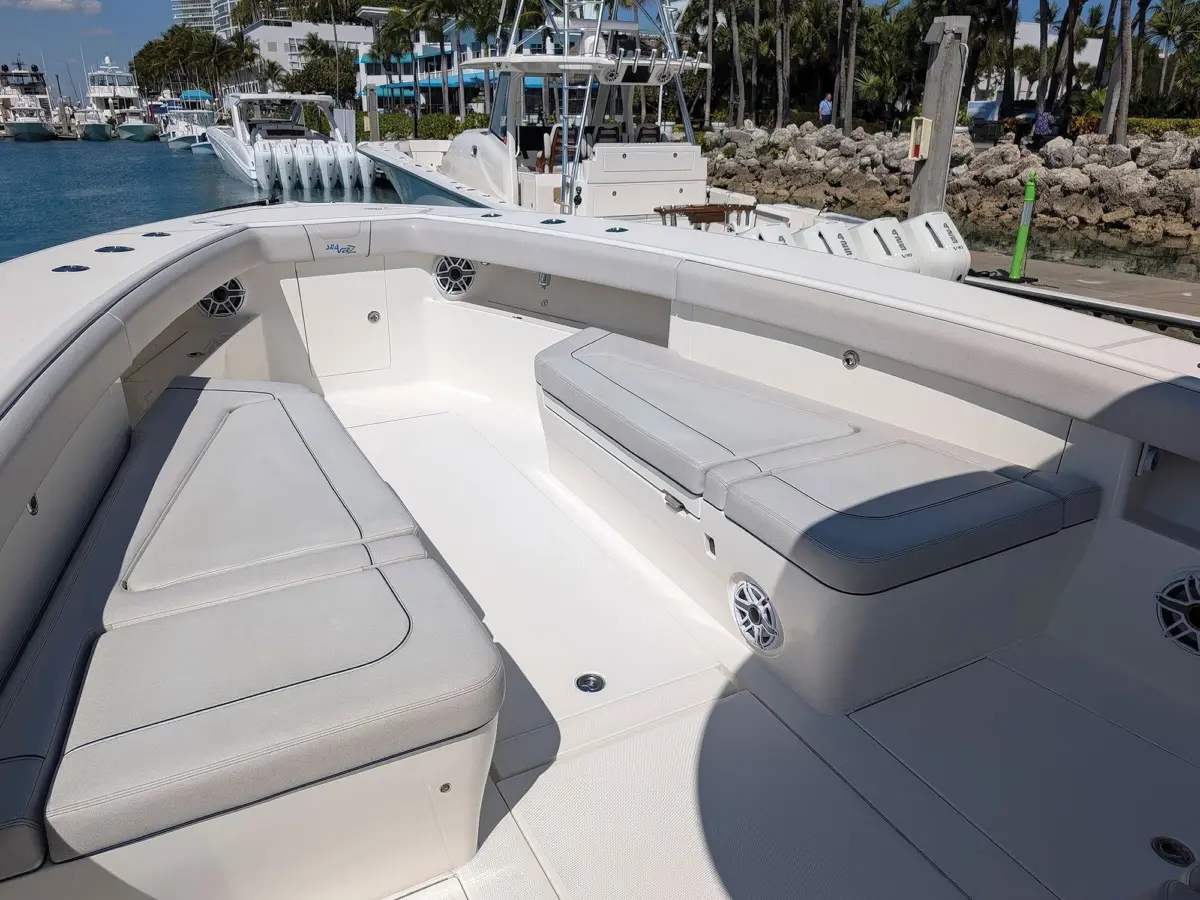
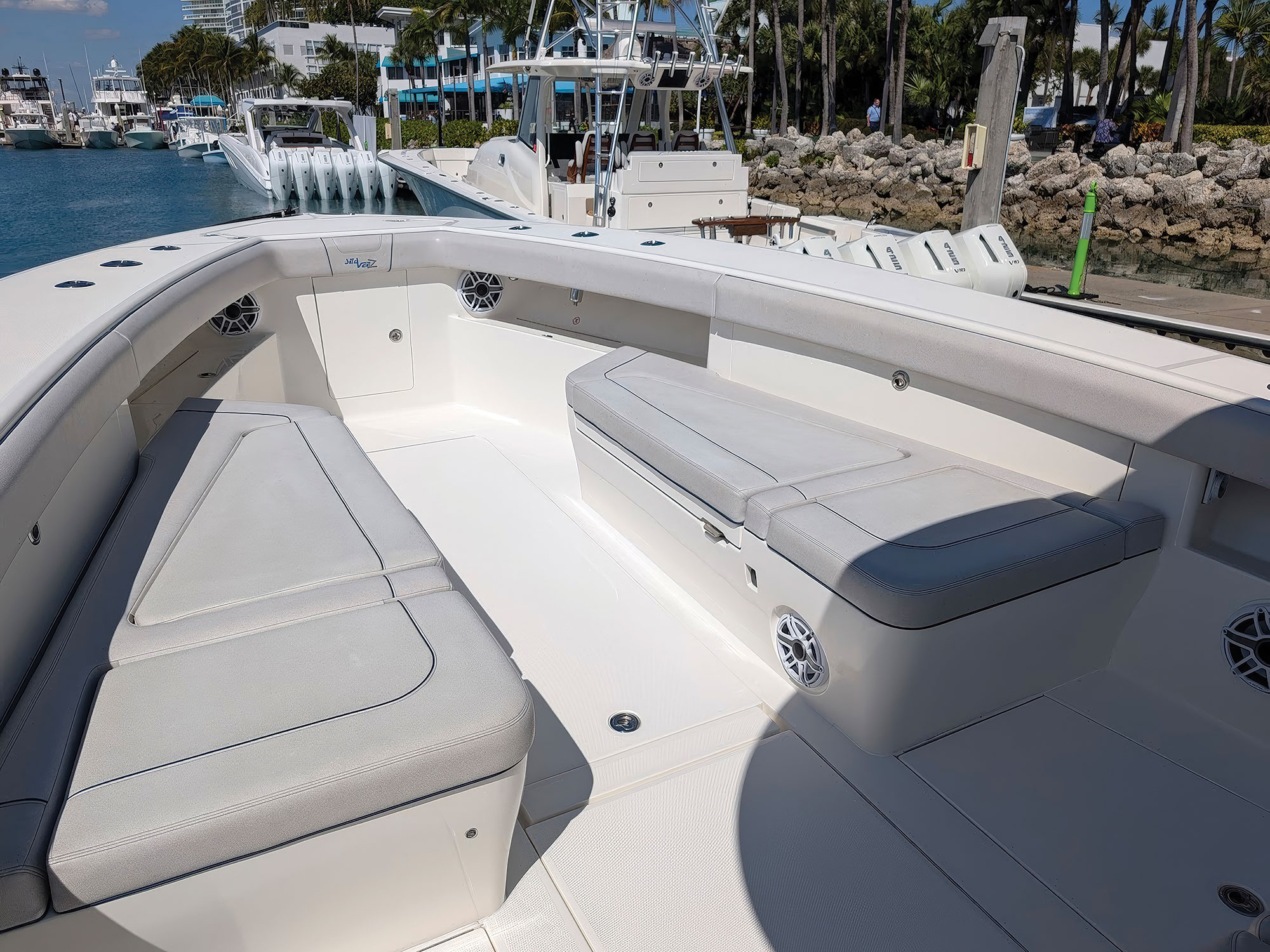
1. Bow Seats: The Luxury-Versatility Compromise
It is increasingly rare to find a new center-console boat without a forward seating option. This design shift reflects strong consumer demand for enhanced comfort during cruising and anchoring, but it remains a point of contention among traditionalists.
[Forward Casting Mode]  <--- (Removable Cushions/Magnets) --->  [Lounge/Cruising Mode]
      * Open Gunwales                                                * Padded Reclining Backrests
      * Flush Coaming Pads                                           * Elevated Bow Seating
Pros and Cons
- Pros: Reclining during long runs to distant offshore grounds keeps anglers refreshed. Furthermore, plush bow seating often serves as the decisive selling point for non-fishing family members. On smaller center consoles, the gap between forward bench seat bottoms can be bridged with a temporary filler section, transforming the bow into a massive, raised casting platform.
- Cons: Boats featuring fixed backrests severely impede fishing functionality. Anglers cannot easily lean their hips and thighs against the gunwale to brace themselves while fighting a powerful fish. (This issue is less pronounced on larger vessels with higher freeboard, but critical on smaller hulls).
Must-Have Features
- Removable or Pivot-Flush Backrests: The structural framework must allow backrests to either pop out entirely or fold completely flat against the coaming pads.
- Magnetic or Toolless Fasteners: Seat bottoms should secure via heavy-duty marine magnets or quick-release pins to enable instantaneous transitions from luxury seating to unobstructed fishing decks.
2. Pedestal Casting Seats: Precision Angling Support
Saltwater anglers have increasingly adopted pedestal casting seats from their freshwater bass-fishing counterparts. These seats are designed to support casters who spend hours throwing lures in dynamic environments.
Pros and Cons
- Pros: Highly compact, easily installed, and quickly stowed. Pedestal seats offer optimal ergonomic support for anglers working bow or stern casting platforms without claiming valuable floor space.
- Cons: If the deck receptacle and under-deck backing plates are improperly engineered, the intense levering force generated in rough seas can crack fiberglass substrates and cause structural mount failures.
Must-Have Features
- Stout Aluminium Backing Plates: Essential for distributing heavy lateral loads across a wide surface area of the deck substrate.
- Adjustable-Height Gas-Spring Pedestals: Accommodates anglers of varying heights and provides customizable posture support.
- Contoured Posture Support: Features a raised rear section or minimalist lumbar support to keep the user secure when the boat rocks.
3. Bring-Aboard Foldable Deck Chairs: Ultimate Adaptability
Often overlooked in favor of built-in upholstery, premium foldable deck chairs offer unmatched versatility for dynamic vessel layouts.
Pros and Cons
- Pros: Total operational flexibility. They can be deployed where needed, temporarily stowed in deck lockers, or left entirely at the dock when targeting pelagic species that require an utterly clear cockpit.
- Cons: Cheap, lightweight lawn chairs are dangerous hazards offshore; they easily catch the wind, blow overboard, or tip violently in rolling seas.
Must-Have Features
- Weighted, Low-Center-of-Gravity Frames: Constructed from marine-grade stainless steel or anodized aluminum with sufficient mass to stay grounded when unoccupied.
- Integrated Gimbal Options: Select high-end portable chairs feature built-in rod gimbals, transforming a simple seat into a stable fighting chair during extended battles with large gamefish.
4. Bean Bag Chairs: The Offshore Shock Absorber
For long, punishing runs through lumpy offshore water, bean bag chairs have become a staple across the sportfishing community, prized for their ability to absorb vertical wave impacts.
Pros and Cons
- Pros: Internal polystyrene beads conform to the body, absorbing the shock of offshore wave impacts and protecting the spine. They allow crew members to sleep comfortably during extended transits. Sitting low to the deck, they shield occupants from wind and spray. In emergency scenarios, they can double as temporary flotation devices.
- Cons: They are bulky and demand significant storage space when it is time to fish. Over time, internal beads compress and require replenishment. Furthermore, compromised vinyl covers or unsealed zippers can allow water to saturate the interior.
   _____
  /           <- Teardrop Ergonomic Shape (Low profile, wind-sheltered)
 /
|         |    <- UV-Resistant Marine Vinyl / Water-Tight Zipper
        /
  _____/      <- Virgin Polystyrene Beads (High impact absorption)
Must-Have Features
- UV-Resistant Marine Vinyl and Sealed Zippers: Prevents saltwater degradation and moisture intrusion.
- Virgin Polystyrene Beads: Resists water absorption and maintains structural integrity longer than recycled bead fills.
- Teardrop Ergonomic Profile: Avoids the oversized, amorphous shape of household bean bags in favor of an offshore-specific profile that stays stable and keeps the center of gravity low.
- Robust Grab Handles: Simplifies shifting bags between the cabin, deck, and tower.
5. Flip-Down Bench Seats: The Transom Gold Standard
Widely considered the gold standard for temporary cockpit seating, fold-down transom bench seats provide maximum comfort with zero permanent footprint penalty.
Pros and Cons
- Pros: Deploys in seconds, accommodating multiple crew members. Because the transom experiences the least vertical motion during high-speed runs, this location minimizes motion sickness. Individual jump seats can also be integrated into cockpit sides and console walkarounds.
- Cons: Folding mechanisms can occasionally bind or corrode if neglected, making deployment frustrating. Seatbacks typically rely on standard coaming pads with zero recline angle. Additionally, a flat transom requirement can restrict space for large livewells.
Must-Have Features
- Flush-Folding Geometry: Seat bottoms must fold completely flush against the transom or coaming when stowed, leaving zero hardware protruding into the working cockpit.
- Corrosion-Resistant Hinges: Heavy-duty 316 stainless steel or coated aluminum pivots that operate smoothly in salt-spray environments.
6. Cooler Seats: Dual-Purpose Efficiency
For smaller center consoles where every square inch counts, mounting a high-density cushion atop a beverage cooler is a classic, highly functional space-saving tactic.
Pros and Cons
- Pros: Perfectly positioned on the centerline of the boat (usually immediately forward of the console) where weight distribution is stable and occupants are less prone to sliding. It combines two vital boat assets into one footprint.
- Cons: Ergonomically basic, offering minimal lumbar support. Additionally, accessing beverages requires occupants to stand up, interrupting conversations or relaxation.
Must-Have Features
- Secure Track-Lock Anchoring: The cooler base must be firmly anchored to the deck to prevent shifting during tight high-speed turns.
- Snaps or Velcro Cushion Fasteners: Prevents high-speed winds from lifting the cushion off the cooler top while underway.
Official Industry Perspectives and Expert Insights
Marine architects and custom boat builders emphasize that modern boat design is no longer about choosing between a cruiser and a fisherman—it is about modular intelligence.
"The modern sportfishing consumer is uncompromising," notes naval architect and marine design consultant Thomas Vance. "They want a tournament-ready battlewagon on Friday morning and a comfortable sunset-cruiser for the family on Friday night. If a builder cannot deliver flush, stowable, or modular seating that vanishes when called upon, they are losing market share. The engineering challenge is ensuring these moving parts do not rattle, fail structurally, or create snag hazards when a line is screaming off the reel."
Furthermore, safety authorities emphasize that all on-demand seating must be rated for dynamic offshore loads. Portable items like deck chairs and bean bags must be stowed securely in dedicated lockers during high-speed transits or rough weather to prevent them from becoming dangerous projectiles.
Future Outlook: What Lies Ahead for Marine Seating
As materials science and composite engineering continue to evolve, the future of on-demand marine seating points toward even greater integration and automation.
- Pneumatic and Hydraulic Automation: Expect to see wider adoption of remotely actuated, hydraulic folding benches and flush-deck seating modules that rise and lower at the push of a digital helm switch.
- Advanced Shock-Mitigation Materials: The integration of open-cell memory foams, advanced gel matrices, and carbon-fiber spring frames will reduce the physical footprint of shock-absorbing seats, making heavy-duty offshore ergonomics available in sleeker, lower-profile packages.
- Smart Deck Layouts: Future vessel hulls will likely incorporate modular track systems embedded directly into the non-skid deck, allowing owners to snap in pedestal seats, lean posts, or cooler modules anywhere on the deck layout within seconds.
Conclusion
The evolution of on-demand marine seating proves that anglers no longer have to sacrifice comfort for functionality. By carefully selecting a combination of bow seat inserts, pedestal mounts, foldable deck chairs, shock-mitigating bean bags, and flip-down transoms, boat owners can construct a vessel that adapts seamlessly to any mission. Whether chasing aggressive billfish offshore or enjoying a calm evening cruise with family, modern seating technology ensures your boat is always ready for whatever lies ahead on the water.

0 Comments