

EXECUTIVE SUMMARY
When Travel + Leisure released its highly anticipated roster of the 10 Best Places to Retire in the South, the editorial spotlight fell heavily on the Sunshine State. Capturing multiple slots on the prestigious index, Florida solidified its standing as the nation’s premier destination for aging populations. Yet, the inclusion of three distinct Florida enclaves—Sarasota, Lake Nona, and The Villages—tells a far more complex story than simple geographic preference.
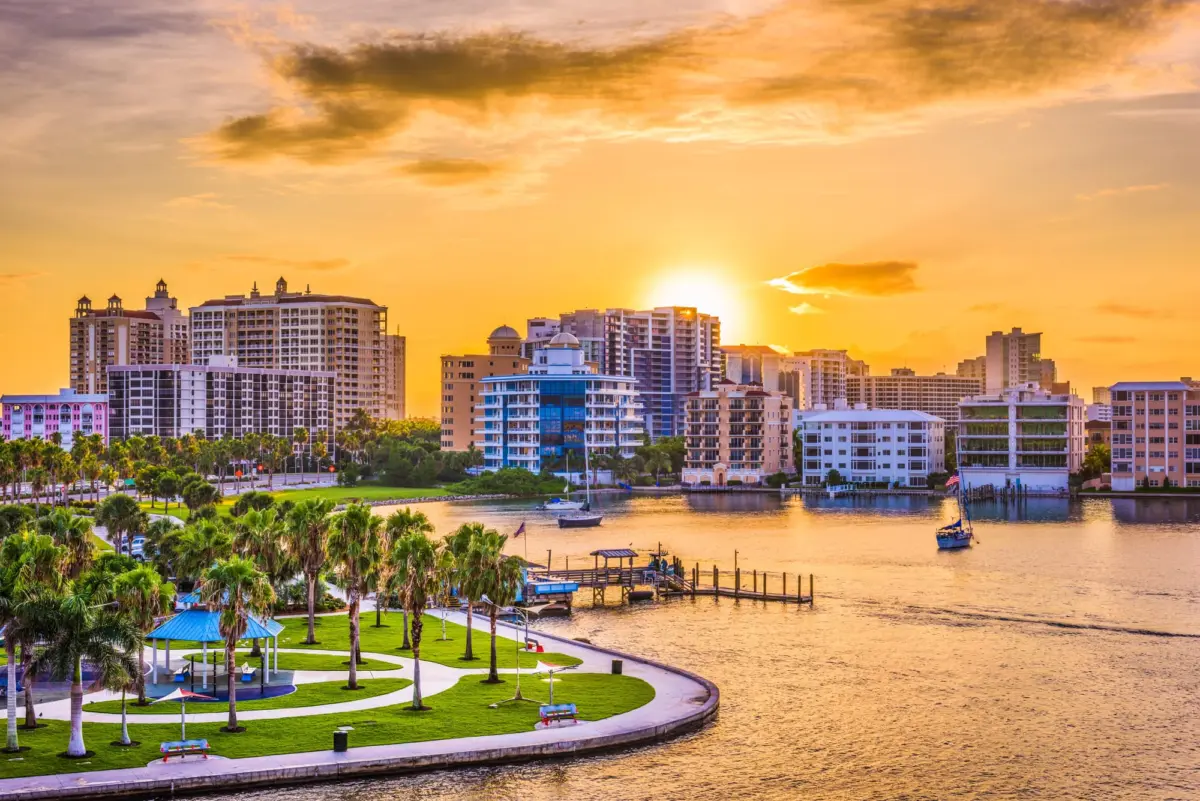
Rather than presenting a monolithic vision of retirement, these three locations illustrate a profound diversification in how modern Americans choose to spend their post-career decades. From Sarasota’s sophisticated, culture-infused coastal charm to Lake Nona’s futuristic, wellness-centric master-planned environment, and The Villages’ legendary, activity-packed age-restricted sprawl, Florida offers a kaleidoscope of retirement paradigms.
This comprehensive report examines the economic, infrastructural, and social factors driving retirees to these three distinct hubs. By analyzing healthcare accessibility, urban planning, cultural density, and shifting generational expectations, we explore why Sarasota, Lake Nona, and The Villages have captured the national imagination and what their success signals for the future of American senior living.
1. Executive Overview: The Shifting Landscape of Southern Retirement
For decades, the American retirement narrative followed a predictable script: work for forty years, pack up the moving van, and relocate to a warm, low-tax coastal town where the primary daily objectives involved golf and beachfront relaxation. While that traditional model retains significant appeal, the demographic wave of retiring Baby Boomers—and the vanguard of early-retiring Gen Xers—demands far more dynamic options.
The latest Travel + Leisure ranking captures this evolution. The publication’s methodology evaluated southern locales not merely on climate and cost-of-living metrics, but on a holistic matrix that includes cultural vitality, technological integration, top-tier medical infrastructure, and community design. Within this competitive landscape, Florida emerged as a dominant force, proving that the state’s appeal extends far beyond perpetual sunshine and the absence of a state personal income tax.
What makes the selection of Sarasota, Lake Nona, and The Villages so compelling is their sheer dissimilarity. They represent three distinct socioeconomic and architectural philosophies:
- Sarasota caters to the cultural connoisseur, blending urban arts administration with relaxed Gulf Coast natural beauty.
- Lake Nona appeals to the forward-thinking longevity seeker, embedding health, biotechnology, and hyper-connectivity into the daily residential fabric.
- The Villages champions active adult communalism, offering an all-encompassing, self-contained ecosystem where socialization and recreation are scaled to industrial proportions.
As municipal planners, developers, and healthcare executives look to the future, these three Florida communities serve as living laboratories for how society will house, care for, and engage an aging population in the decades to come.
2. Detailed Chronology & Evolution: How Florida’s Big Three Developed
To understand why Sarasota, Lake Nona, and The Villages occupy the apex of Southern retirement living, one must examine the evolutionary trajectories that shaped them. Each community followed a vastly different historical path to reach its current prominence.
Sarasota: From Circus Winter Quarters to Cultural Epicenter
Sarasota’s journey to becoming a retirement haven is rooted in a rich history of arts and eccentricity. Long before it was celebrated for luxury condominiums and pristine white-sand beaches, Sarasota gained international fame in the early 20th century as the winter home of the Ringling Bros. and Barnum & Bailey Circus. John Ringling poured his immense fortune into the region, endowing it with grand European architecture and an extraordinary collection of Renaissance art.
Throughout the mid-to-late 20th century, Sarasota developed its own architectural identity—the Sarasota School of Architecture—characterized by modernist structures designed to embrace the subtropical climate through natural ventilation and open floor plans. As the city grew, civic leaders consciously invested in cultural infrastructure. The establishment of the Asolo Repertory Theatre, the Sarasota Ballet, and the Sarasota Orchestra transformed the sleepy Gulf coast town into a vibrant cultural hub.
When retirees began discovering the area in large numbers during the late 1980s and 1990s, they did not find a manufactured retirement park; they found an authentic, culture-rich city that seamlessly integrated arts, education, and coastal ecology. Today, Sarasota’s evolution is marked by a delicate balance between historic preservation and high-end urban densification, making it a magnet for affluent retirees seeking intellectual stimulation alongside natural splendor.
Lake Nona: The Accidental Evolution of a Medical Metropolis
In stark contrast to Sarasota’s century-long maturation, Lake Nona’s rise has been meteoric. Located on the southeastern edge of Orlando, the 17-square-mile master-planned community barely existed as a distinct concept twenty years ago. Owned largely by the Lewis Chemical family and developed through Tavistock Development Company, Lake Nona was envisioned not as a traditional bedroom community, but as a blank canvas for human-centric innovation.
The turning point for Lake Nona occurred in the mid-2000s with the establishment of Lake Nona Medical City—a massive, multi-billion-dollar health and life sciences cluster anchored by the University of Central Florida College of Medicine, the Orlando VA Medical Center, Nemours Children’s Health, and the UCF Burnett School of Biomedical Sciences.
Rather than marketing itself purely to retirees, Lake Nona was designed as a "smart city" focused on holistic wellness, complete with miles of walking trails, gigabit fiber internet infrastructure, autonomous shuttle buses, and cutting-edge residential architecture. As word spread about its pristine environment and focus on longevity, wellness-minded retirees began moving in alongside young families and tech professionals. Lake Nona proved that modern retirees increasingly desire intergenerational, technologically advanced environments over age-segregated enclaves.
The Villages: From a Mobile Home Park to a Global Phenomenon
The story of The Villages is a masterclass in visionary real estate marketing and scale. Its origins date back to the 1970s, when entrepreneur Harold Schwartz purchased land in central Florida and initially sold mail-order real estate plots. Early iterations, such as "Orange Blossom Gardens," struggled to gain traction until Schwartz’s son, H. Gary Morse, took over operations and refocused the development entirely on manufactured housing and modular homes for adults aged 55 and older.
In the 1980s and 1990s, Morse transformed the project into a comprehensive master-planned community. He introduced the signature element that would define The Villages: the ubiquitous golf cart as primary street-legal transportation, supported by a vast network of dedicated cart paths connecting residential neighborhoods to commercial town squares.
Through aggressive expansion across Sumter, Lake, and Marion counties, The Villages grew from a modest retirement park into the largest master-planned retirement community in the United States, spanning tens of thousands of acres and housing well over 130,000 residents. Its evolution has been defined by constant infrastructural scaling—adding dozens of executive and championship golf courses, recreation centers, country clubs, polo fields, and specialized healthcare networks. Today, The Villages operates with the population and economic footprint of a mid-sized city, entirely custom-built for leisure and social engagement.
3. Supporting Context & Metrics: Analyzing the Appeal
The inclusion of Sarasota, Lake Nona, and The Villages in Travel + Leisure’s top ten is supported by hard data regarding demographic shifts, healthcare infrastructure, economic stability, and lifestyle metrics.
Economic and Tax Advantages
Florida’s tax structure remains a formidable draw for retirees migrating from high-tax states in the Northeast and Midwest. With zero state personal income tax, no estate tax, and protective homestead exemptions, the state allows retirees to stretch fixed incomes and investment portfolios significantly further.
- Sarasota County boasts a higher median household net worth compared to the national average, driven by a concentration of affluent professionals and retirees who monetize high-value real estate from northern markets.
- The Villages operates on a unique financial model where community development district (CDD) fees cover the vast maintenance of amenities, keeping property tax structures predictable for fixed-income residents while ensuring pristine upkeep of public spaces.
- Lake Nona commands some of the highest residential property values in Central Florida, attracting high-net-worth retirees who view real estate as both a lifestyle investment and a secure asset class.
Healthcare Infrastructure as a Primary Driver
For the modern retiree, healthcare proximity is no longer a secondary consideration; it is often the deciding factor in relocation. All three Florida locations excel in this category, though through completely different structural models:
- Sarasota Memorial Health Care System anchors Sarasota’s healthcare landscape. As a massive, award-winning regional medical center, it offers comprehensive sub-specialty care, consistently earning high national marks for patient safety, cardiology, and oncology.
- Lake Nona Medical City represents the gold standard of integrated medical ecosystems. By concentrating research hospitals, clinical care, and biotechnology firms in a single contiguous footprint, Lake Nona offers residents immediate access to cutting-edge clinical trials, preventative medicine, and specialized geriatric care.
- The Villages Health model revolutionized senior healthcare delivery within a retirement community. Instead of relying solely on distant regional hospitals, The Villages developed an integrated network of localized multi-specialty clinics utilizing a patient-centered primary care model tailored specifically to the chronic care management needs of older adults.
4. Comparative Breakdown of Florida’s Top Retirement Destinations
To fully grasp the diversity of options highlighted by Travel + Leisure, the table below contrasts the core attributes, target demographics, and lifestyle offerings of Sarasota, Lake Nona, and The Villages.
| Feature / Metric | Sarasota | Lake Nona | The Villages |
|---|---|---|---|
| Primary Lifestyle Focus | Culture, arts, coastal recreation, and urban sophistication. | Wellness, technology, innovation, and master-planned connectivity. | Active adult socialization, recreation, golf, and club-based community life. |
| Demographic Profile | Affluent retirees, arts patrons, empty-nesters, and second-home owners. | Intergenerational residents, health-conscious early retirees, and professionals. | Exclusively 55+ active adults seeking a vibrant, social, age-segregated environment. |
| Housing Architecture | Historic downtown high-rises, Mediterranean revival estates, and beachfront condos. | Modern smart homes, townhouses, luxury apartments, and architectural innovations. | Single-family homes, courtyard villas, and manufactured homes in planned villages. |
| Primary Transportation | Automobiles, walkable downtown districts, and regional air service via SRQ. | Autonomous shuttles, bike networks, golf cart paths, and proximity to MCO. | Extensive golf cart infrastructure connecting neighborhoods to town squares. |
| Healthcare Anchor | Sarasota Memorial Health Care System and specialized private practices. | Lake Nona Medical City (UCF, VA, Nemours, and advanced clinical research). | The Villages Health network and regional hospital partnerships. |
| Recreational Highlights | Siesta Key beach, Ringling Museum, Asolo Rep Theatre, and botanical gardens. | Hogan Park, Laureate Park fitness centers, tennis complexes, and culinary trails. | Over 50 golf courses, recreation centers, town square nightly entertainment, and 3,000+ clubs. |
5. Official Statements & Expert Perspectives
Urban planners, real estate analysts, and senior housing experts have weighed in extensively on the factors that make these three Florida communities stand out on the national stage.
Dr. Elena Vance, a senior demographer specializing in aging populations at the University of Florida, notes that the success of Florida’s varied retirement models reflects a broader psychological shift among older adults.
"Retirement is no longer viewed as a withdrawal from society; it is viewed as a transition into a new chapter of personal exploration," Dr. Vance explains. "When you look at Sarasota, Lake Nona, and The Villages, you see three distinct answers to the same fundamental question: How do we want to live when we are no longer bound to a 9-to-5 job? Sarasota answers with culture and beauty; Lake Nona answers with innovation and wellness; The Villages answers with community and continuous play. That diversity is why Florida continues to capture the lion’s share of interstate retirement migration."
Real estate development executives also emphasize the intentionality behind these communities’ infrastructures. Marcus Sterling, a managing partner in Southern residential master-planning, highlights the importance of experiential design.
"Twenty years ago, you could build a standard subdivision in the sun, put up a sign that said ’55 and Older,’ and expect people to line up," Sterling remarks. "Today’s retirees are sophisticated consumers. They demand high-speed digital infrastructure, walkable town centers, exceptional dining, and robust preventative healthcare. Lake Nona and Sarasota prove that you must integrate living spaces with vibrant civic life. Meanwhile, The Villages proves that hyper-social connectivity and organized activity can create an immune system against loneliness, which is one of the greatest health risks facing seniors today."
Furthermore, healthcare administrators point out that the integration of wellness into community design is saving lives and reducing long-term medical costs. Representatives from the Lake Nona Institute have frequently emphasized that designing built environments that encourage walking, healthy eating, social interaction, and mental engagement yields measurable improvements in health outcomes for residents of all ages.
6. Future Outlook: The Next Era of Retirement Living in Florida
As we look toward the horizon, the dominance of Sarasota, Lake Nona, and The Villages offers a predictive glimpse into the future of American senior living. Several key trends will dictate how these communities—and the state of Florida at large—adapt to the evolving needs of coming generations.
The Rise of Gen X and Tech-Savvy Seniors
The demographic composition of retirees is shifting rapidly. Baby Boomers are now well into their retirement years, and the oldest members of Generation X are approaching the threshold. Gen X retirees bring different expectations than their predecessors: they are more technologically literate, less inclined toward rigid social structures, and often desire greater flexibility in housing and lifestyle choices.
- Lake Nona is uniquely positioned to capture this tech-forward demographic, with its emphasis on smart-home automation, electric vehicle integration, and high-tech wellness monitoring.
- Sarasota will continue to attract independent-minded individualists who value cultural autonomy, culinary sophistication, and coastal aesthetics over organized club activities.
- The Villages is actively modernizing its programming and recreational offerings to appeal to younger retirees, introducing new sports (such as pickleball and padel) and expanding entertainment options to match shifting cultural tastes.
Environmental Resiliency and Infrastructure Sustainability
With climate change and sea-level rise presenting ongoing challenges for coastal and peninsular regions, the long-term viability of Florida retirement havens depends heavily on infrastructural resilience.
- Sarasota is investing heavily in stormwater management, coastal resilience, and elevated construction standards to protect its historic and high-density urban core.
- Lake Nona, built on higher ground inland, benefits from advanced civil engineering designed with modern stormwater mitigation and sustainable water management systems.
- The Villages relies on sophisticated inland water retention networks and continuous infrastructure upgrades to maintain its sprawling landscape.
Ensuring that these communities remain safe, sustainable, and economically accessible will be the defining challenge for developers and local governments over the next quarter-century.
Conclusion: A Blueprint for the Golden Years
Travel + Leisure’s recognition of Sarasota, Lake Nona, and The Villages is more than just a travel accolade; it is a validation of America’s most successful laboratories for aging in place. By demonstrating that there is no single "correct" way to retire, these three Florida destinations have redefined what is possible when community design aligns with human aspirations.
Whether one seeks the high-minded cultural engagement of Sarasota’s museums and theaters, the cutting-edge, wellness-driven innovation of Lake Nona’s medical city, or the boundless, club-centric camaraderie of The Villages’ town squares, Florida proves that the golden years can be as vibrant, varied, and fulfilling as any chapter of life that came before. As the nation’s demographic profile continues to age, the blueprint established by these three Southern havens will undoubtedly guide the future of retirement living across the globe.

0 Comments