

Executive Overview
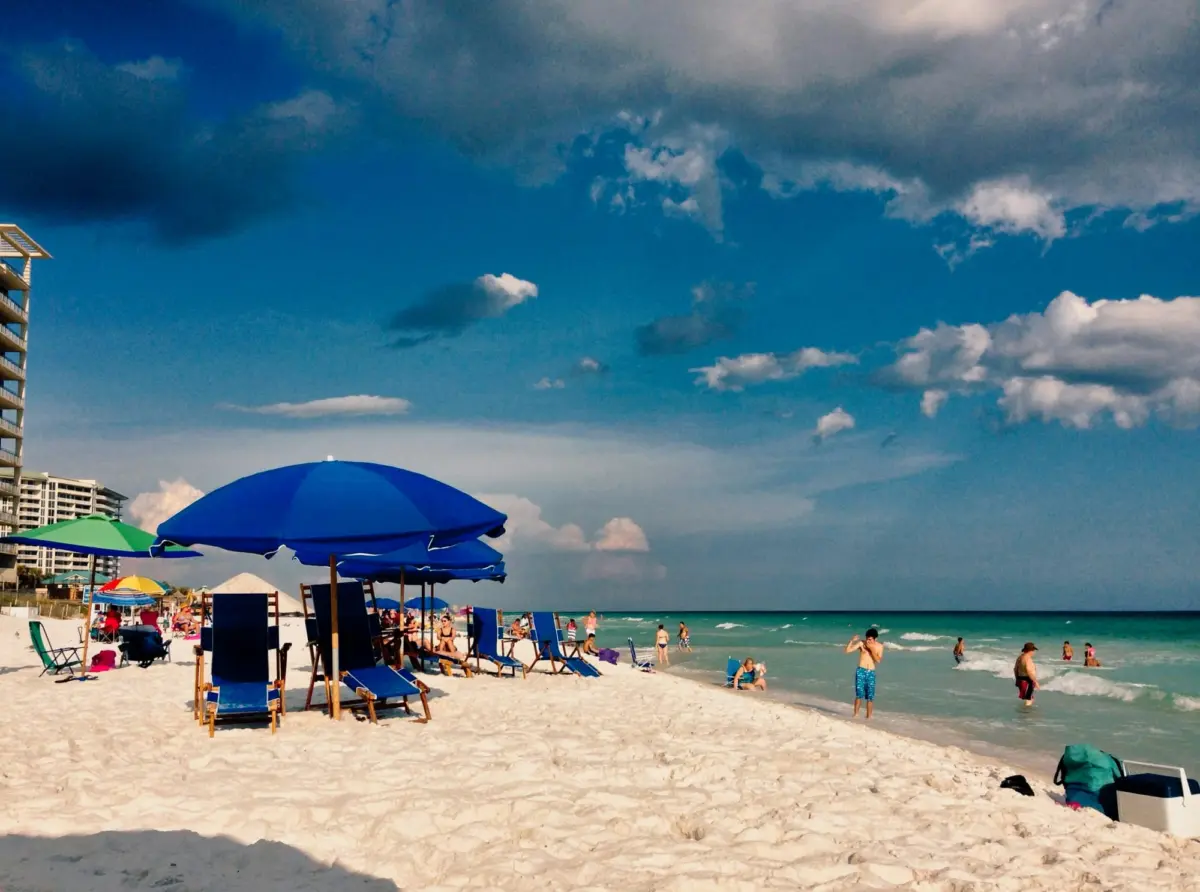
For over half a century, "The Sunshine State" has served as the undisputed cultural and official emblem of Florida. Emblazoned on license plates, tourism campaigns, and postcards worldwide, the phrase evokes images of endless blue skies, golden rays, and perpetual summer. Yet, beneath the polished veneer of multi-billion-dollar tourism marketing lies a surprising meteorological reality: Florida may not actually be the sunniest state in the nation.
Official data from federal health agencies, meteorological organizations, and climate researchers reveal a paradox that challenges the state’s foundational identity. Far from commanding the top spot for solar exposure, Florida routinely lands outside the top five—and sometimes slips as low as tenth—when measured by total annual sunshine. Microclimate realities, legendary afternoon summer downpours, and fierce competition from the arid American Southwest suggest that another state entirely holds a truer claim to the title.
This investigative report examines the historical origins of Florida’s nickname, evaluates the hard meteorological data behind national sunshine rankings, analyzes the quirky climatology of the peninsula, and explores compelling arguments for a more geographically accurate alternative moniker.
Detailed Chronology: How Florida Claimed the Sun
To understand the weight of Florida’s nickname, one must trace its journey from a casual promotional catchphrase to an enshrined legislative reality.
The Pre-Legislative Era (Late 19th Century to 1969)
Long before politicians codified the moniker, boosters, real estate developers, and early tourism pioneers recognized the immense economic power of marketing Florida’s weather. Following the Civil War and accelerating through the railway expansions led by figures like Henry Flagler and Henry Plant, advertisements frequently referenced the peninsula’s balmy winters and abundant light to lure frost-bitten travelers from the industrial Northeast and Midwest.
By the early 20th century, variations of "the land of sunshine" appeared regularly in travel literature and promotional pamphlets. However, the exact phrasing "The Sunshine State" circulated organically for decades without official legal backing, appearing unofficially on various iterations of state automobile license plates by the mid-20th century.
The 1970 Legislative Enshrinement
The turning point arrived in 1970. Recognizing the need to standardize state symbols and capitalize on a booming post-war tourism economy, the Florida Legislature officially designated "The Sunshine State" as the official state nickname. Lawmakers sought to solidify the identity of a rapidly modernizing state whose economy was shifting permanently from agriculture toward leisure, aerospace, and hospitality.
At the time, little scrutiny was applied to comparative meteorological data from other states. The moniker was embraced as an intuitive truth—after all, Florida was famously warm, bright, and deeply associated with tropical paradises. For nearly fifty years, the title went largely unquestioned by the general public, embedding itself deep into the American cultural lexicon.
Supporting Context & Metrics: The Numbers Behind the Rays
When climatologists and meteorologists pull the data, a starkly different picture emerges. Defining what makes a state "sunniest" usually involves calculating the percentage of possible sunshine—the proportion of daylight hours during which sunlight actually reaches the ground, unobstructed by clouds, fog, or heavy haze.
National Rankings: Where Florida Actually Lands
According to data compiled by the Centers for Disease Control and Prevention (CDC) alongside long-term National Weather Service metrics, Florida frequently finds itself ranked 10th nationally in terms of overall sunny days and total percentage of possible sunshine. Other analyses conducted by federal weather agencies place the state slightly higher, at No. 6, but it routinely trails a formidable lineup of western and southwestern states.
Which states routinely beat Florida at its own game? The podium is almost exclusively dominated by the arid and semi-arid climates of the American Southwest:
- Arizona: Regularly claims the top spot, boasting cities like Yuma and Phoenix that record sun up to 90% of the year.
- New Mexico: High elevations and low relative humidity provide exceptionally clear skies year-round.
- Nevada: Home to vast expanses of high desert where cloud cover is a statistical rarity.
- Texas, California, and Colorado: Portions of these expansive states also outperform Florida in pure, uninterrupted solar accumulation.
The Meteorologist’s Perspective: "The Partly Cloudy State"
Why does a subtropical peninsula surrounded by water fall behind landlocked or desert states? The answer lies in thermodynamics. Florida is bounded by the Atlantic Ocean and the Gulf of Mexico, creating massive bodies of warm water that pump immense moisture into the lower atmosphere.
During the late spring, summer, and early autumn months, this high humidity interacts with sea breezes converging from both coasts. The result is a daily meteorological clockwork: bright, intense morning sunshine followed reliably by towering cumulus clouds, torrential downpours, and dramatic afternoon thunderstorms.
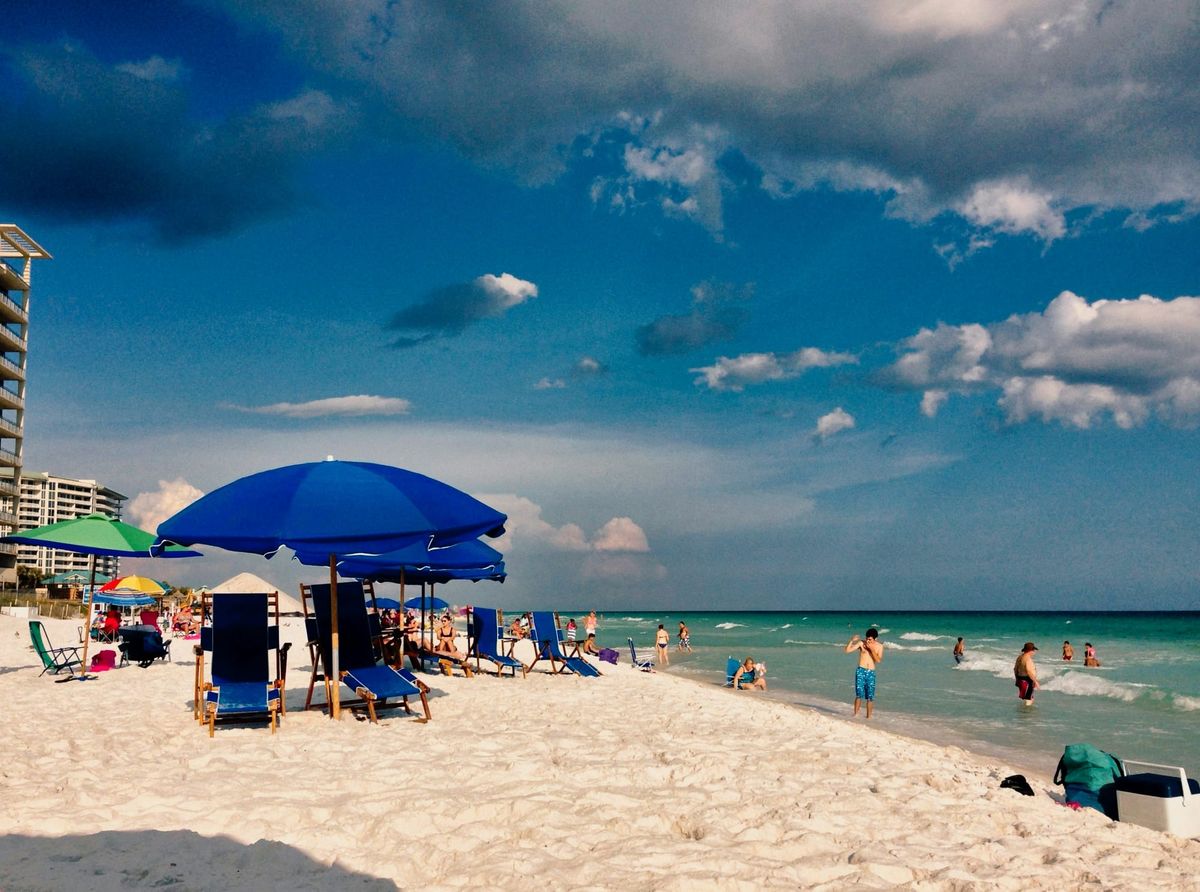
As a prominent Chicago-based meteorologist wryly noted when reviewing national weather trends, a far more accurate descriptor for Florida’s climate pattern might be "The Partly Cloudy State." While the mornings are blindingly bright, the afternoons frequently shroud large swaths of the state in heavy cloud cover and heavy precipitation.
Urban Realities: Do Florida Cities Make the Top Ten?
When examining individual urban centers rather than statewide averages, the story remains remarkably consistent. Major national indices tracking the sunniest cities in the United States rarely feature Florida municipalities in the upper echelons. Cities in Arizona, California, and Nevada consistently sweep the top ten rankings.
Nevertheless, internal regional comparisons within Florida reveal distinct microclimates. Weather data compiled by regional analysts highlights that the sunniest pockets of the state tend to cluster heavily in Southwest Florida. Cities such as Naples, Fort Myers, and Punta Gorda regularly record higher percentages of clear skies and lower annual rainfall totals than their counterparts in Central Florida or the panhandle, largely due to unique localized wind patterns and coastal geography.
Official Statements & Expert Perspectives
The friction between public perception and meteorological reality has sparked lighthearted debate among travel experts, weather historians, and local environmental advocates.
"Marketing is a powerful engine, and once a nickname like ‘The Sunshine State’ achieves critical mass, it becomes cultural armor," notes Dr. Elena Vance, a cultural geographer specializing in regional American identities. "People do not visit Florida expecting a desert; they visit expecting a tropical escape. The fact that it rains almost every summer afternoon doesn’t diminish the experience—it’s part of the ecosystem. But strictly from a climatologist’s ledger, the title is a misnomer."
Environmental groups and outdoor recreation advocates have similarly weighed in on the absurdity of clinging strictly to a sun-based identity when the state’s defining physical feature is something entirely different.
In a widely discussed commentary piece published by Play Hard Florida, outdoor recreation strategists argued that focusing exclusively on sunlight overlooks the state’s most dominating geographical superpower: its liquid landscape. "We spend billions advertising the sky," the publication noted, "while ignoring the sprawling, irreplaceable aquatic networks that actually define our ecology and economy."
Future Outlook: A Candidate for a New Moniker?
If Florida were forced to relinquish its crown to a more deserving western state—perhaps Arizona or New Mexico—what moniker should take its place?
Urban planners, historians, and environmentalists point to an obvious, undeniable alternative: The Water State.
The Case for "The Water State"
No other state in the continental United States is so utterly defined, shaped, and sustained by water. Consider the staggering geography of Florida:
- Unrivaled Coastline: Florida boasts approximately 1,350 miles of general coastline, the most of any state in the contiguous United States, offering an endless mosaic of shores facing both the Atlantic Ocean and the Gulf of Mexico.
- Inland Seas: The state features over 30,000 named lakes, ranging from small sinkhole ponds to the massive, inland sea of Lake Okeechobee.
- A Fluid Interior: Interlaced across the landscape are roughly 26,000 miles of rivers and streams, paired with iconic natural springs that pump millions of gallons of crystal-clear freshwater daily.
- Unique Ecosystems: The world-famous Everglades—a slow-moving, 1.5-million-acre sheet of shallow water—represents an ecosystem entirely unique on the planet.
- Beach Access: Combined, the state features over 663 miles of sandy beaches that draw millions of visitors annually.
Conclusion
While "The Sunshine State" is unlikely to be scraped off license plates or erased from tourism brochures anytime soon, the reality remains clear. Florida is not the sunniest place in America. Its skies are dynamic, interrupted by refreshing afternoon storms, and steeped in a tropical rhythm that defies dry desert classifications.
Yet, whether the sun is shining brightly overhead or a summer squall is rolling across the horizon, Florida remains anchored by its ultimate defining feature: the water. Perhaps it is time to embrace the truth—Florida is, and always has been, America’s ultimate Water State.

0 Comments