

Executive Overview
For decades, the life of the male green sea turtle (Chelonia mydas) has remained one of marine biology’s most elusive mysteries. While female green sea turtles are routinely studied when they haul themselves ashore to deposit eggs on nesting beaches—providing scientists with predictable, accessible windows for tagging and demographic monitoring—males disappear beneath the waves shortly after hatching. Once they enter the sea as juveniles, they almost never touch land again. This profound behavioral split has left monumental gaps in our comprehension of male turtle life histories, critical marine habitats, migratory corridors, and spatial conservation needs.
Now, a groundbreaking study led by researchers at Florida State University (FSU) has cracked open this tightly guarded window into male sea turtle behavior. Published in the prestigious journal Marine Ecology Progress Series, the research tracks adult male green sea turtles off the remote Brazilian archipelago of Fernando de Noronha across three distinct breeding seasons spanning from 2019 to 2022.
The findings are both surprising and consequential for conservation policy. The FSU team discovered that male green sea turtles employ two entirely distinct migration strategies following the breeding season: roughly 80 percent embark on grueling, month-long oceanic odysseys spanning 300 to 1,000 kilometers to distant foraging grounds, while the remaining 20 percent choose to remain in the same breeding waters year-round. Furthermore, by utilizing advanced satellite telemetry, the researchers mapped out the animals’ three-dimensional movements—analyzing dive depths, frequencies, and durations—to understand how these marine reptiles navigate their environment.
Against the backdrop of a rapidly changing global climate, where rising sand temperatures are skewing hatchling sex ratios heavily toward females, understanding the behavioral ecology of male sea turtles has never been more urgent. This comprehensive investigation not only illuminates the complex navigational feats of male marine turtles but also offers a vital blueprint for reshaping marine protected areas (MPAs) in the Atlantic to prevent fatal overlaps between wildlife corridors and human industrial activities.
Detailed Chronology: Unraveling the Invisible Lives of Marine Nomads
The genesis of this multi-year undertaking required immense logistical coordination, specialized training, and deep international collaboration. The research initiative brought together experts from FSU’s Department of Earth, Ocean, and Atmospheric Science (EOAS), the Marine Turtle Research, Ecology and Conservation Group, and prominent institutions including the University of California Santa Cruz, the University of Massachusetts Amherst, Oregon State University, and Brazil’s premier sea turtle conservation nonprofit, Projeto Tamar.
The Fieldwork Phase: Diving into the Remote Atlantic
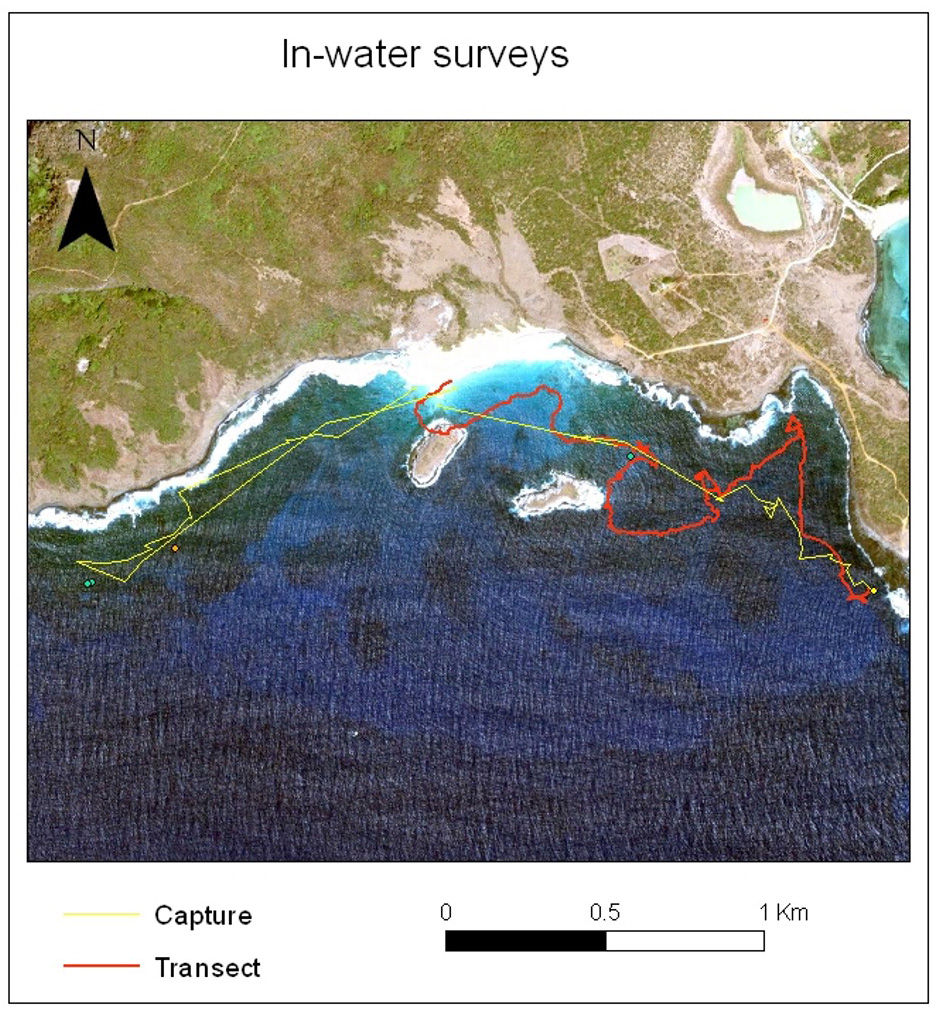
Between 2019 and 2022, the research team focused their efforts during late spring and early summer in the crystal-clear waters of Fernando de Noronha. Situated approximately 350 kilometers off the northeastern coast of Brazil, this volcanic archipelago of 21 islands and islets serves as a vital ecological hotspot. Brazilian coastal waters are widely recognized as prime foraging habitats for adult green sea turtles—the most abundant turtle species in the region—as well as crucial staging grounds for courtship and reproduction.
To capture and tag the elusive males, the FSU researchers relied on specialized training. Team members underwent rigorous preparation through FSU’s Academic Diving Program, hosted by the FSU Coastal and Marine Laboratory. This preparation enabled the team to execute more than 230 safe free-dives in open-ocean conditions.
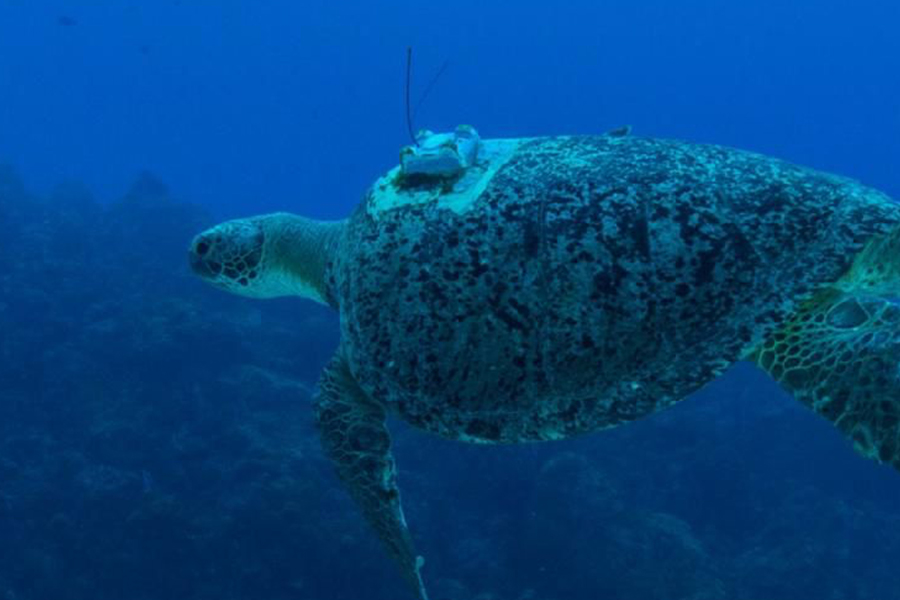
Catching an adult male green sea turtle is no small feat. Although they are generally smaller than their female counterparts, adult males can still reach lengths of up to 5 feet and scale weights exceeding 500 pounds. Hand-capturing these powerful, torpedo-shaped swimmers requires exceptional physical endurance, precise timing, and deep-water freediving expertise.
Satellite Telemetry and Behavioral Observations
Once a male turtle was successfully secured during the breeding windows, the team fitted the animal with advanced satellite transmitters capable of relaying precise geographic coordinates and vertical movement metrics. As the breeding seasons concluded and the turtles dispersed, the satellite data began painting a vivid picture of contrasting behavioral phenotypes.
The data revealed that approximately 80 percent of the tagged males set off on extensive migratory routes. These journeys often lasted nearly a month, with turtles navigating vast stretches of open ocean to reach distant, highly productive feeding grounds 300 to 1,000 kilometers away from the Fernando de Noronha breeding site. Conversely, the remaining 20 percent of the cohort bucked migratory norms altogether, opting to establish permanent residence in the breeding archipelago, where they foraged and maintained residency year-round.
In addition to horizontal tracking, the satellite tags monitored vertical behavior—recording how frequently the turtles dove, how deep they descended, and how long they stayed submerged. The data exposed a striking divergence in diving mechanics tied to migration strategy. Turtles that elected to stay in the breeding area engaged in frequent, short daytime dives interspersed with longer nighttime submersions. In contrast, the migrating cohort exhibited a diverse and highly specialized array of dive profiles. Researchers hypothesize that these dynamic migration dives serve a dual evolutionary purpose: minimizing the risk of detection by pelagic predators while simultaneously reducing wave drag and optimizing energy expenditure during their month-long ocean crossings.
Supporting Context & Metrics: Decoding the Data
To fully appreciate the weight of the FSU findings, one must analyze the quantitative metrics, environmental variables, and physiological data that underpin the study.
Quantitative Breakdown of the Study
- Research Timeline: Conducted annually from 2019 to 2022 during late spring and early summer.
- Geographic Location: Fernando de Noronha archipelago, located 350 km off Brazil’s northeastern coast.
- Diving Operations: More than 230 specialized free-dives executed under strict academic diving protocols (FSU Dive Plan #042923).
- Migratory Split:
- Migratory Phenotype: ~80% of tracked males traveled distances between 300 and 1,000 kilometers over approximately one month.
- Resident Phenotype: ~20% of tracked males remained in the immediate breeding and foraging habitat year-round.
- Physical Dimensions of Subjects: Adult males measuring up to 5 feet in length and weighing in excess of 500 pounds.
- Protection Status: Brazil’s marine protected areas currently encompass over 25 percent of the nation’s sovereign waters, yet significant spatial mismatches remain regarding actual sea turtle migratory corridors.
The Thermal Threat: Temperature-Dependent Sex Determination
Beyond spatial tracking, the study addresses a looming ecological crisis facing chelonian species globally: temperature-dependent sex determination (TSD). Unlike mammals, where sex is determined genetically at conception, sea turtle embryos are sexually differentiated by the thermal environment within the nest. Cooler incubation temperatures produce male hatchlings, while warmer sand temperatures yield females.
As global temperatures climb due to anthropogenic climate change, nesting beaches are experiencing prolonged heatwaves. This thermal shift is skewing sex ratios globally, producing heavily female-biased cohorts. While a surplus of females might seem advantageous for egg production in the short term, an acute deficit of males threatens long-term population viability. Males are vital repositories of genetic diversity, population connectivity, and reproductive resilience. Understanding how many females a single male can successfully impregnate, and determining the minimum viable ratio of males required to sustain genetic health, is an urgent priority for conservation biologists.

Official Statements & Expert Insights
The research team emphasizes that unlocking the three-dimensional movement ecology of male sea turtles provides unprecedented tools for proactive wildlife management.
"Many turtles undertook long-distance migrations, with some migrating for almost a month," noted Armando Barsante Santos, a postdoctoral researcher in the Marine Turtle Research, Ecology and Conservation Group at FSU and co-author of the study. "Their sense of navigation is impressive, and identifying paths they use during their oceanic migrations is essential for conservation management."
Santos highlights that knowing how turtles utilize the water column is just as important as knowing where they travel horizontally. "Understanding the three-dimensional use of the environment gives us more details about how susceptible turtles might be to certain fishing gear or vessel strikes, for example," Santos explained. "With different fishing gear used at the water’s surface, in the middle water, and at the bottom of the ocean, we need to know how turtles’ use of the area overlaps with these layers. This can inform strategies that harmonize the use of environment between humans and turtles, including enhancing the effectiveness of the marine protected areas that currently cover more than a quarter of Brazil’s waters."
Professor of Oceanography and Environmental Science Mariana Fuentes, leader of the Marine Turtle Research Group and co-author on the paper, underscored the critical need to bridge the gap between animal movements and human-made threats.
"Assessing the overlap between key habitats, such as migratory corridors and areas of high turtle density, and anthropogenic—human-made or -connected—threats is crucial for redefining conservation strategies in the region," Fuentes stated. "This can minimize the mismatch in important areas for sea turtles and marine protected areas in Brazil."
Addressing the broader ecological implications of skewed sex ratios, Santos added: "We’re interested in understanding how many female turtles one male can breed with and how males’ behavior can buffer these environmental changes. Knowing how many males are needed for a population to be resilient is important information that’s hard to obtain since males aren’t easily accessible for study."
Future Outlook: Redefining Marine Conservation
The revelations from the Florida State University team arrive at a critical juncture for international marine conservation. For decades, marine protected areas (MPAs) have been designed primarily around nesting beaches—terrestrial zones heavily favored by females—and opportunistic coastal sightings. Consequently, millions of square kilometers of oceanic migratory pathways and pelagic feeding grounds utilized by male sea turtles have remained functionally unprotected, leaving animals vulnerable to accidental bycatch, commercial longline fisheries, boat strikes, and marine pollution.
Armed with high-resolution satellite tracking data and nuanced behavioral profiles of both migratory and resident male green sea turtles, conservationists now possess the empirical evidence needed to redesign MPAs. By aligning protected zones not just with fixed geographic coastlines, but with dynamic oceanic corridors and vertical water-column usage strata, policy-makers can drastically reduce human-wildlife conflicts.
Engaging the Next Generation
In tandem with high-level ecological modeling, the FSU research team integrated community outreach into the core of their project. Working closely with local educational institutions in Brazil—including Escola Arquipélago de Fernando de Noronha and Escola de Surf Alma Solar—the researchers invited local schoolchildren to participate directly in the scientific process.
Students were given the unique opportunity to name the tracked male sea turtles and follow their trans-oceanic journeys in real-time using satellite-tracking data. This grassroots educational initiative fostered a deep personal connection between the youth of Fernando de Noronha and the marine megafauna inhabiting their backyard waters, ensuring that the stewardship of these ancient mariners passes into dedicated hands.
As funding from the National Science Foundation and collaborative efforts with organizations like Projeto Tamar continue to drive scientific inquiry forward, the work conducted by FSU’s Department of Earth, Ocean, and Atmospheric Science serves as an international model. By illuminating the invisible journeys of male green sea turtles, researchers are helping guarantee that these resilient navigators will continue to roam the Atlantic for generations to come.

0 Comments