

By Jay Capasso (UF/IFAS Extension), Jason Mallard (UGA Cooperative Extension), and Phillip Edwards (UGA Cooperative Extension)
Published: December 4, 2024 | Updated: September 9, 2025
Executive Overview
Water is arguably the single most critical input in modern agricultural production, serving as the lifeblood of crop vitality and yield optimization. However, as regional water tables face increasing scrutiny, environmental pressures mount, and input costs continue to fluctuate, agricultural producers across the Southeastern United States are forced to look beyond mere water application. Today, true agricultural sustainability requires a granular understanding of how water moves across, through, and into the soil profile.
At the heart of this modern irrigation management paradigm are two foundational, yet frequently misunderstood, metrics: Distribution Uniformity (DU) and Irrigation Efficiency. While these terms are occasionally used interchangeably by casual observers, they represent two entirely distinct physical properties of an irrigation system. DU measures the spatial consistency of water application across a field, ensuring that every acre receives an equitable share of moisture. Irrigation efficiency, on the other hand, evaluates the proportion of applied water that is actually utilized for beneficial crop production—primarily meeting crop evapotranspiration (ET) demands.
Mastering both metrics is no longer just an academic exercise for agronomists; it is an economic and operational imperative for modern growers. Poor uniformity leads to localized over-irrigation and under-irrigation, resulting in wasted pumping energy, leached nutrients, uneven crop maturity, and diminished yields. Conversely, optimizing DU and system efficiency allows producers to stretch limited water supplies, maximize fertilizer efficacy through fertigation, and protect natural water resources.
Fortunately, growers in regions like the Suwannee Valley and across Georgia and Florida are not navigating these challenges alone. Extension services, mobile irrigation labs, and regional conservation programs offer professional evaluations and financial assistance to help agricultural operations fine-tune their center pivot and linear overhead systems. This comprehensive guide breaks down the science of irrigation uniformity and efficiency, explores the variables that disrupt them, and outlines actionable resources available to regional producers.
Detailed Chronology and Diagnostic Framework: Unpacking Irrigation Performance
To understand why irrigation performance degrades over time—and how to systematically correct it—agronomists rely on a structured diagnostic framework. Evaluating an irrigation system is not a one-time setup event; it is an ongoing process of monitoring, testing, and adjustment that mirrors the seasonal lifecycle of the crops being cultivated.
Phase 1: Baseline Assessment and the Catch-Can Methodology
The diagnostic journey typically begins with a baseline evaluation of the field’s physical distribution uniformity. For center pivot and linear overhead irrigation systems, achieving a DU of 90% is considered an attainable gold standard. When a system reaches a 90% DU, it means that 90% of the field is receiving water in a uniform, predictable manner, drastically reducing localized water stress and input waste.
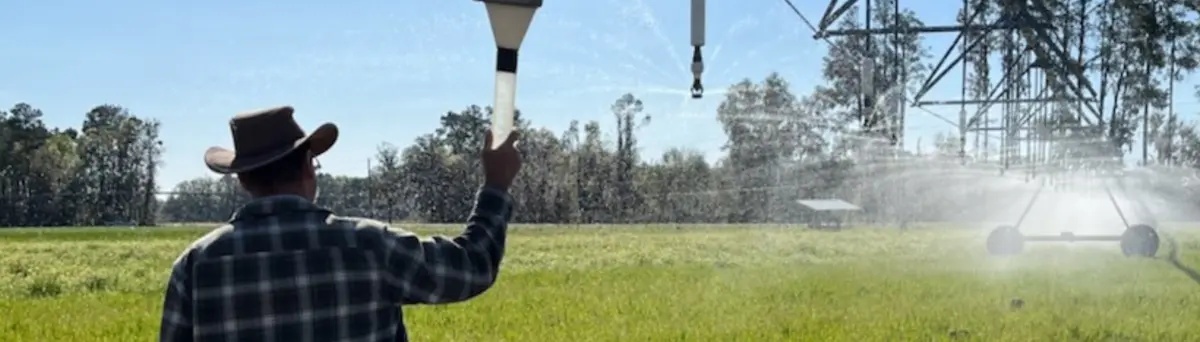
To determine this metric, irrigation specialists frequently employ the time-tested catch-can method. This procedure involves strategically placing a grid of catch cans across the span of the field beneath the operating path of the irrigation system. Once a simulated or active irrigation cycle is completed, the depth of water collected in each individual container is meticulously measured.
Mathematically, DU is calculated by taking the average of the lowest 25% of the catch-can measurements and dividing that figure by the total average depth of water applied across all cans in the field:
$$textDistribution Uniformity (DU) = left( fractextAverage of Lowest 25% of MeasurementstextAverage Depth of Total Applied Water right) times 100$$
A low DU percentage immediately signals to the grower that water is being applied unevenly, prompting a deeper investigation into the mechanical and environmental factors causing the discrepancy.
Phase 2: Identifying Mechanical and Operational Bottlenecks
Once an irregular DU is identified, field technicians embark on a diagnostic sweep to isolate the root causes of flow rate variability. Pressure differentials are often the primary culprit. As water travels through mainlines and laterals, friction losses naturally occur. If changes in field elevation are present, gravity further exacerbates pressure shifts, causing sprinklers at lower elevations to discharge more water than those perched on ridges.
Pressure regulators, designed to maintain a consistent output pressure, can fail, wear out, or become fouled with mineral deposits and debris. When regulators malfunction, the downstream spray patterns of individual sprinklers become distorted, leading to overlapping spray paths, misting, or large droplet formation that disrupts soil surface integrity.
Beyond pressure regulators, nozzle wear is a silent efficiency killer. Over time, pressurized water continuously erodes the interior orifice of sprinkler nozzles, gradually enlarging them. An enlarged nozzle discharges more water at a lower pressure, ruining the engineered application rate designed for that specific span. Conversely, particulate matter or biological growth can clog nozzles entirely, starving specific crop zones of vital moisture.
Structural and operational elements also play a prominent role in the chronology of system degradation:
- End Gun Misalignment: End guns are designed to extend the wetted radius of a center pivot, but if their arc or timing is misaligned, they can over-apply water to areas already thoroughly saturated by the primary overhead sprinklers.
- Startup and Shutdown Inconsistencies: As systems charge with water or drain at the end of a cycle, traveling speeds and fluctuating pressures can dump excessive water near the pivot point or the outer boundary.
- Pipe Diameter Variations: Upgrades or repairs over the lifespan of a system can result in mismatched pipe diameters, altering internal flow dynamics and friction coefficients.
- Edge Effects: The physical overlap of sprinkler patterns at the outermost boundaries of a field often creates border anomalies that require careful scheduling adjustments.
Phase 3: Environmental Interferences and Crop-Stage Interactions
As the irrigation season progresses, environmental and biological factors introduce dynamic variables into the equation. Wind is a notorious disruptor of overhead irrigation, causing spray drift that alters the physical catch-can distribution and leaves dry streaks across the field.
Furthermore, as crops mature and grow in height, plant interference becomes a major factor. Tall canopy crops like corn can physically block water droplets from reaching the lower soil profile if the sprinkler drops are positioned incorrectly or if the crop outpaces the system’s clearance capabilities. Diagnosing these mid-season bottlenecks requires moving past static hardware checks and evaluating dynamic plant-soil-water interactions.
Supporting Context and Metrics: DU vs. Irrigation Efficiency
To truly master farm-scale water management, growers must understand the mathematical and functional distinction between Distribution Uniformity and Irrigation Efficiency. While they are closely linked, they measure entirely different dimensions of an irrigation system’s performance.
Defining Irrigation Efficiency
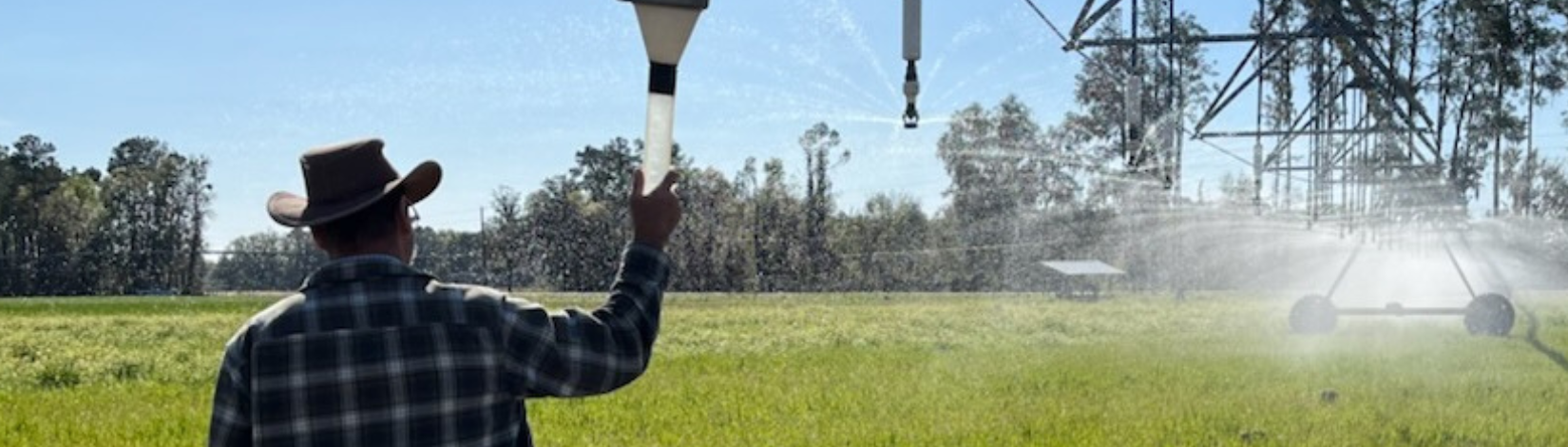
While DU evaluates how evenly water is spread across a geographic footprint, Irrigation Efficiency evaluates how well the applied water is utilized by the crop. The foundational equation is expressed as:
$$textIrrigation Efficiency = fractextWater Beneficially UsedtextTotal Water Applied$$
In the agricultural context of the Southeastern United States—including Florida and Georgia—irrigation efficiency is overwhelmingly defined by how effectively applied water meets crop evapotranspiration (ET) demands. ET represents the total water consumed by plant transpiration and evaporated from the surrounding soil surface.
In arid or semi-arid Western agricultural regions, irrigation efficiency calculations often must account for "leaching fractions"—deliberately applying excess water to flush harmful salts down below the root zone and prevent soil salinization. However, in the humid Southeast, native rainfall and high baseline water quality mean that salt leaching is rarely a primary beneficial use of irrigation water. Other secondary beneficial uses, though much less common, can include climate control (such as frost protection) or the intentional promotion of weed germination so that emerging weeds can be systematically eradicated prior to cash crop planting.
The Critical Role of Soil Moisture Sensors
Measuring irrigation efficiency can be exceptionally challenging because it requires tracking water far beyond the sprinkler head, deep into the subterranean root zone where plant uptake actually occurs. This is where modern soil moisture sensor technology transforms farm management.
Soil moisture sensors provide real-time telemetry regarding volumetric water content at various soil depths. When strategically placed, these sensors allow growers to visualize how deep irrigation water is penetrating and whether it is lingering in the root zone or percolating past it (deep percolation loss).
However, growers must exercise extreme caution regarding sensor placement relative to system DU. Sensors installed in areas with poor distribution uniformity will yield corrupted data. If a sensor is inadvertently placed in an under-watered zone, the grower may be tricked into running the system longer, inadvertently waterlogging the rest of the field. Conversely, a sensor placed in an over-watered zone will signal that the field has plenty of moisture while other acreage suffers from drought stress. Therefore, soil moisture sensors must be deployed in statistically representative areas of the field—ideally guided by a professional DU evaluation.
The Power of Uniformity in Fertigation
The importance of high Distribution Uniformity extends far beyond basic hydration; it is equally critical for chemical and nutrient applications. Fertigation—the injection of liquid fertilizers directly through the irrigation system—relies entirely on uniform water distribution to achieve uniform nutrient delivery.
When a center pivot exhibits a poor DU of, say, 60%, the accompanying fertilizer application is distributed with that exact same erratic variance. Certain sections of the crop receive heavy doses of nitrogen or potassium, potentially leading to nutrient toxicity, lodging, or excessive vegetative growth. Meanwhile, adjacent zones are starved of essential nutrients, resulting in stunted growth, chlorosis, and severe yield penalties. By optimizing DU, growers ensure that every drop of injected fertilizer is delivered in precise, proportional amounts, maximizing nutrient uptake efficiency and minimizing the environmental risk of leaching nitrates into groundwater aquifers.
Official Statements and Expert Guidance
Regional agricultural extension specialists and water resource management agencies emphasize that evaluating irrigation systems is one of the highest-return investments a grower can make.
"Irrigation is arguably the most powerful tool a producer has to stabilize yields against unpredictable weather patterns, but water is a finite resource," notes extension literature from the collaborative efforts of UF/IFAS and UGA. "Achieving a high Distribution Uniformity is not merely about saving water on paper; it directly translates to reduced energy consumption from pumping, lower fertilizer costs through precise fertigation, and uniform crop quality that commands top market value at harvest."
Extension specialists underscore that many irrigation inefficiencies go entirely unnoticed by the naked eye. A center pivot may look like it is operating smoothly from the roadway, but worn internal pressure regulators or slightly degraded nozzles can quietly siphon thousands of dollars away from a farm’s profit margin over the course of a single growing season.
To combat this, university extension networks and state agencies have institutionalized diagnostic support services. In Florida, the Florida Department of Agriculture and Consumer Services (FDACS) and local water management districts offer specialized Mobile Irrigation Labs (MILs). These labs travel directly to farming operations to conduct comprehensive, hands-on evaluations of center pivot and linear move systems.
Similarly, the University of Georgia (UGA) Cooperative Extension provides robust system evaluations for agricultural clients across the state. These professional audits provide growers with hard data on application rates, pressure profiles, and uniformity coefficients, replacing guesswork with empirical science.
Future Outlook: Technology, Cost-Share Programs, and Sustainability
As agriculture looks toward the horizon, the pressures of climate variability, regulatory oversight, and economic volatility will only intensify. The future of Southeastern farming hinges on the adoption of smart, data-driven irrigation management practices that bridge the gap between mechanical hardware and advanced agronomic software.
Leveraging Cost-Share and Financial Assistance Programs
Recognizing that upgrading aging or inefficient irrigation infrastructure can require significant capital outlay, federal and state agencies offer robust financial incentive programs to offset modernization costs.
- In Florida: Growers enrolled in the FDACS Best Management Practices (BMP) program may qualify for agricultural cost-share opportunities through the Florida Department of Agriculture and Consumer Services or their local water management districts. These funds assist producers in replacing worn nozzles, installing pressure regulators, upgrading filtration systems, and adopting variable-rate irrigation (VRI) technology.
- In Georgia: Producers looking to rehabilitate or upgrade their irrigation systems can tap into technical and financial assistance programs administered by the USDA Natural Resources Conservation Service (NRCS), such as the Environmental Quality Incentives Program (EQIP).
The Next Frontier: Precision Irrigation and Automation
The integration of high-resolution soil moisture monitoring, weather station telemetry, and Variable Rate Irrigation (VRI) represents the cutting edge of water management. VRI allows center pivots to adjust application depths dynamically as they traverse zones with differing soil types, topographies, or crop densities. When paired with a high baseline Distribution Uniformity, VRI ensures that water and nutrients are applied precisely where needed, down to the individual wedge of a field.
Ultimately, the journey toward sustainable water management begins with understanding the mechanics of the system. Growers are strongly encouraged to connect with their local extension offices—such as the UF/IFAS Extension or UGA Cooperative Extension—to schedule a mobile irrigation lab evaluation. By identifying system bottlenecks today, agricultural producers can secure their operational profitability, protect vital natural resources, and cultivate a resilient harvest for years to come.
For more information on scheduling a mobile irrigation lab evaluation, Florida growers can visit the official FDACS portal at https://www.fdacs.gov/Water/Mobile-Irrigation-Labs, while Georgia producers should contact their local UGA Cooperative Extension office.

0 Comments