

By Derrick Conover
Published: March 18, 2026
Executive Overview
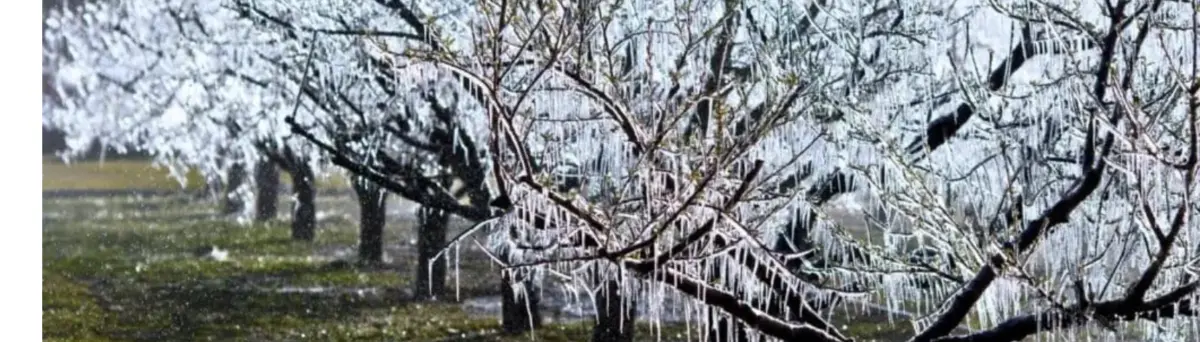
Agricultural producers across Columbia County and the broader North Florida region are navigating a treacherous meteorological tightrope following what local farming communities hope will be the final cold front of the season. The arrival of these late-season temperature swings could not come at a more precarious point in the annual agricultural calendar.
Right now, perennial fruit trees are breaking their winter dormancy, pushing out tender new buds and entering delicate bloom cycles. Simultaneously, farmers are aggressively planting or managing the emergence of vital spring row crops. This convergence creates an exceptionally narrow window of vulnerability where even brief, marginal drops in temperature can trigger cascading negative impacts on crop performance, physiological development, and ultimate yield potential.
Compounding the immediate threat of frost is an invisible yet potent adversary: persistent regional drought. When sub-freezing or near-freezing air temperatures coincide with severely parched soils, the resulting agricultural stress is exponentially magnified. Dry soils lack the thermal buffering capacity of moist earth, causing ground temperatures to plummet far more rapidly after sunset.
For local growers cultivating everything from high-value blueberries and peaches to staple spring vegetables like watermelons and sweet corn, managing this dual threat requires acute vigilance, strategic irrigation planning, and swift reactionary measures. In an environment where margins are razor-thin, navigating this convergence of frost and drought will ultimately determine the boundary between a profitable harvest and an economically devastating season.
Detailed Chronology of the Event and Immediate Impacts
The meteorological disruption materialized swiftly this week, sweeping a cold front across Columbia County that caught certain early-developing flora in a vulnerable transition state. To fully understand the gravity of this weather event, one must examine the precise timeline of how plants react when winter dormancy abruptly gives way to spring physiological activity.
The Fruit Tree Vulnerability Window
During the heart of winter, deciduous fruit crops such as peaches, plums, and blueberries possess a remarkable natural defense mechanism. In this dormant state, plant cells contain low amounts of free water and high concentrations of natural cryoprotectants, allowing them to withstand freezing temperatures with little to no structural damage.
However, as ambient temperatures warm during late winter and early spring, these crops initiate a biological countdown. Trees begin to break dormancy, mobilizing sugars and water into developing buds and pushing them toward full bloom. As this transition occurs, the cold tolerance of the plant declines precipitously.
Once blossoms fully open, their reproductive tissues—specifically the pistils and stamens—are shockingly fragile. A light frost that would have rolled harmlessly over a dormant orchard a month prior can now scorch and kill delicate flower parts.
- Hidden Injury: One of the most insidious aspects of frost damage in orchards is its delayed visibility. Growers often inspect their fields the morning after a freeze to find blossoms that appear deceptively normal. However, internal cellular death has already occurred; days later, the flowers wither, fail to set fruit, or drop prematurely.
- The Pollinator Disconnect: Beyond direct freeze injury, cooler weather patterns drastically suppress pollinator activity. Honeybees and native pollinators rarely forage effectively when ambient temperatures remain low, or when skies are overcast and winds are high. Because the window for successful pollination during a tree’s bloom is already fleeting, a concurrent cold snap effectively halts fertilization, leading to dismal fruit set rates even on blossoms that survived the cold itself.
Physiological Stagnation and Long-Term Stress
Direct tissue necrosis is only the tip of the iceberg. Late-season cold events trigger widespread physiological sluggishness throughout the entire tree structure. Following a cold snap, growers frequently observe delayed leaf-out, prolonged and erratic bloom periods, and severely stunted fruit development.
Ironically, an extended bloom period increases the tree’s overall vulnerability by dragging out the window of risk, exposing successive waves of flowers to secondary frost events. Furthermore, forcing a tree to recover from repeated cold stress drains its internal carbohydrate reserves. This metabolic toll impacts more than just the current year’s harvest; it weakens the overall vigor of the orchard, casting a long shadow over productivity and bud development for the following season’s cycle.
Row Crops and the Early-Season Survival Battle
While orchards face unique arboreal threats, North Florida’s row crop producers are waging a different yet equally high-stakes battle. Spring-planted crops—including watermelons, sweet corn, and a diverse array of commercial vegetables—rely heavily on optimal soil and air temperatures to transition from seeds or fragile transplants into established, thriving plants.
Germination Challenges in Cold, Dry Earth
When cold air fronts drive down soil temperatures, the germination process for spring crops slows to a crawl. In crops like watermelon, where uniform field emergence is the holy grail of efficient commercial production, uneven germination spells operational disaster.
- Variable Stands: Seeds that linger in cold, dense soil emerge erratically over an extended period. This creates a staggered canopy where mature plants compete aggressively with late-emerging runts for sunlight, water, and nutrients, ultimately tanking overall field performance and complicating harvest logistics.
- Pathogen Proliferation: Cold, wet soil conditions—or conversely, poorly managed soils oscillating between dry spells and sudden cold—create an ideal incubator for soil-borne pathogens. Pathogens responsible for damping-off and early-season root rots thrive in these conditions, rapidly decimating young seedlings before they ever break the soil surface.
The Plight of Transplants and Young Seedlings
For crops already established in the field as young seedlings or tender green transplants, a frost event acts as a blunt instrument. Foliage experiences severe leaf burn, stems suffer structural splitting or chilling injury, and in worst-case scenarios, entire crop blocks face total mortality.
Even when young plants manage to survive a cold event, the chronic cold stress leaves deep physiological scars. Growth stalls for weeks, root systems fail to establish robust networks, and prolonged transplant shock sets in. This period of enforced vulnerability leaves the crop wide open to opportunistic pests and secondary diseases that effortlessly exploit weakened plant tissue.

Supporting Context & Metrics: The Amplifying Danger of Drought
To fully evaluate the severity of this year’s agricultural challenges, one must factor in the pervasive drought conditions gripping large swathes of Florida. Drought and frost are frequently analyzed by agriculturalists as entirely distinct phenomena. In reality, they are deeply intertwined stressors that interact at both the plant physiological level and the localized field microclimate level.
The Physics of Soil Moisture and Frost Severity
At the heart of this interaction lies the thermodynamic property of soil.
$$textMoist Soil longrightarrow textHigh Heat Capacity longrightarrow textSlow Nighttime Cooling$$
$$textDry Soil longrightarrow textLow Heat Capacity longrightarrow textRapid Nighttime Cooling$$
Moist soils act as a massive thermal battery. During daylight hours, they absorb vast amounts of solar radiation and store that thermal energy. As night falls and ambient temperatures drop, moist soils slowly release this stored heat back into the microclimate immediately surrounding the plant canopy, providing a natural buffer against rapid, destructive temperature crashes.
Conversely, bone-dry soils possess a severely compromised heat capacity. They heat up quickly under the sun, but they lose that heat just as fast once the sun sets. As a result, dry fields experience significantly colder near-ground temperatures than adjacent, well-watered fields under the exact same regional weather forecast.
The North Florida Grower’s Dilemma
For agricultural producers across North Florida, this dynamic transforms dry field conditions into an active risk multiplier. Two neighboring farms experiencing identical official air temperatures can suffer wildly divergent fates: the farm with adequate soil moisture may emerge unscathed, while the drought-stricken farm suffers catastrophic frost injury.
Mitigating this risk requires proactive resource management. Where water allocations and infrastructure permit, ensuring that fields are thoroughly irrigated prior to an anticipated cold front can provide a vital margin of protection. Pre-wetting soils elevates their thermal mass, moderating the microclimate right at the soil-plant interface and bolstering individual plant resilience against chilling injury.
Official Statements and Industry Insights
Agricultural extension agents and regional farming authorities have closely monitored the progression of these weather events, emphasizing that tactical management during seasonal transitions is non-negotiable for commercial viability.
In a recent advisory briefing addressing local growers, agricultural specialists underscored the critical nature of real-time meteorological tracking:
"These temperature swings arrive at the exact moment when our production cycles are most unforgiving. When fruit trees break dormancy, they lose their biological armor. Paired with ongoing regional dryness, our local producers are managing compounding risk factors that leave virtually zero margin for error."
Extension offices have reiterated that while farmers cannot control atmospheric fronts or regional precipitation deficits, informed field-level interventions can tip the scales. Experts urge growers to maintain strict surveillance over localized soil temperature probes, cross-reference hyper-local weather models rather than generalized county forecasts, and remain fully prepared to deploy defensive strategies—such as overhead sprinkler irrigation for frost protection or wind machines where available—at a moment’s notice.
Future Outlook and Strategic Recommendations
As weather patterns across the Southeast continue to exhibit heightened volatility and unpredictability, Columbia County growers must adapt their long-term operational strategies to withstand increasingly complex environmental pressures.
Looking ahead, the intersection of late-season cold fronts and prolonged droughts points to several essential takeaways for the agricultural community:
- Enhanced Microclimate Monitoring: Growers should invest in localized sensor networks capable of tracking real-time canopy and soil temperatures at various depths across different field blocks, replacing guesswork with hard data.
- Proactive Irrigation Scheduling: Recognizing the intimate link between soil moisture and frost protection, strategic pre-irrigation must become a standard protocol ahead of forecasted radiative freezes, particularly during drought cycles.
- Diversified Planting Timelines: Staggering planting dates for sensitive row crops can help mitigate the risk of catastrophic loss, ensuring that an entire seasonal investment isn’t concentrated within a single, highly vulnerable weather window.
- Variety Selection and Resilience: Long-term planning should increasingly factor in cold-hardy and drought-tolerant cultivar selections, ensuring orchards and vegetable operations possess inherent genetic resilience against extreme climatic variability.
Ultimately, while the recent cold front has tested the resilience of Columbia County’s agricultural sector, it also serves as a stark reminder of the complexities modern farming demands. Through vigilance, data-driven management, and proactive field preparation, local producers continue to prove that careful stewardship can successfully navigate the unpredictable forces of nature.

0 Comments