

By Derrick Conover
Published: March 18, 2026
Category: Agriculture / Crops
Executive Overview
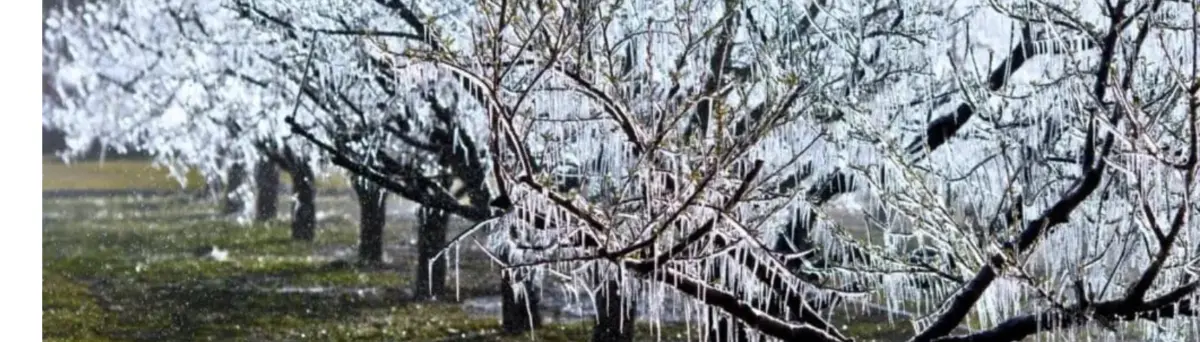
Agricultural producers across Columbia County and the broader North Florida region are currently navigating a high-stakes operational environment, precipitated by what local agricultural extension officials hope will be the final cold front of the season. Arriving at a structurally sensitive juncture in the annual agricultural production cycle, these sudden temperature swings intersect dangerously with a pivotal developmental window. Fruit trees are actively breaking dormancy, while numerous warm-season row crops are simultaneously undergoing germination, early emergence, or active field transplantation.
This narrow, high-vulnerability window means that even brief, localized incursions of sub-optimal temperatures can exert profound, compounding negative impacts on overall crop performance, physiological vigor, and ultimate yield potential. Compounding this climatic volatility is a persistent regional drought. The convergence of late-season frost risk and severe soil moisture deficits creates an intensely stressful physiological matrix for crops. Dry soils lack the thermal mass necessary to buffer microclimate temperatures, amplifying frost severity at the ground level and exacerbating plant tissue damage.
For commercial growers, navigating this complex interplay of climatic stressors requires heightened vigilance, real-time forecast monitoring, and the strategic deployment of mitigating management practices. As local agriculture works to absorb these shocks, the current season underscores the mounting challenges regional producers face in balancing erratic weather patterns with long-term economic viability.
Detailed Chronology: The Anatomy of a Late-Season Frost Event
The recent weather event that swept through Columbia County arrived with little operational runway, catching regional crop cycles at their most delicate developmental phase. To understand the gravity of these late-season cold snaps, one must examine the precise physiological chronology of how fruit trees and spring row crops transition from winter dormancy into active spring growth.
Fruit Tree Production and the Fragile Transition from Dormancy to Bloom
During deep winter dormancy, perennial fruit crops—such as peaches, blueberries, and other stone fruits native to or cultivated in North Florida—exhibit a remarkable tolerance for freezing temperatures. Cellular structures are largely quiescent, and moisture content within active vascular tissues is minimized, allowing plants to withstand severe frosts with negligible structural or physiological damage.
However, as ambient temperatures trend upward in late winter and early spring, these trees receive thermal cues that trigger the breaking of dormancy. Buds swell, green tissue emerges, and the trees rapidly transition into full bloom. This developmental shift is accompanied by a dramatic, often precipitous decline in cold tolerance.
Once blossoms open, reproductive tissues become acutely sensitive. A light frost—temperatures dipping only slightly below freezing for a brief duration—can inflict irreversible damage on pistils, stamens, and developing ovaries. In many instances, this damage is deceptively insidious. Blossoms may retain a normal external appearance for days following a frost event, creating a false sense of security among growers, only to fail entirely in setting fruit as the metabolic machinery of fertilization breaks down.
Compounding direct tissue damage is the secondary impact on pollination dynamics. Cool, cloudy, and windy weather conditions that frequently accompany late-season cold fronts severely depress the flight and foraging activity of vital insect pollinators, including honeybees and native bees. With pollinator populations grounded or lethargic during an already compressed flowering window, the rate of successful cross-pollination plummets, further compromising final harvest volumes even on blossoms that escaped direct frost injury.
Long-Term Physiological Stress and Tree Vigor
Beyond immediate blossom mortality, late-season cold events trigger a cascade of systemic physiological slowdowns within perennial fruit crops. Tree metabolism cools significantly, resulting in delayed leaf-out, protracted and erratic bloom periods, and stunted early-season fruit development.
A prolonged, staggered bloom period inadvertently exposes the crop to a higher cumulative risk of subsequent frost events, as flowers open in successive waves rather than uniformly. Furthermore, the energetic toll of recovering from cold stress forces the tree to expend valuable carbohydrate reserves. This depletion of stored energy not only jeopardizes the immediate season’s yield but can also undermine tree vigor and floral bud differentiation for the following production cycle, setting off a multi-year economic deficit for orchard operators.
Row Crops: Germination Vulnerabilities and Establishment Delays
While perennial fruit trees battle physiological shock and pollination failures, spring-planted row crops—including extensive acreage of commercial watermelon, sweet corn, and diverse commercial vegetables across North Florida—face an entirely distinct yet equally hazardous set of operational hurdles.
Many of these warm-season crops are planted into soils that are still subject to rapid nocturnal cooling. When soil temperatures remain sub-optimal, seed germination is significantly delayed and rendered highly uneven. In crops like watermelon, where field uniformity is paramount for efficient, synchronized harvesting and optimal market grading, erratic emergence creates cascading operational inefficiencies.
Furthermore, cold, damp soil conditions provide an ideal microenvironment for soil-borne pathogens. The risk of seedling diseases, notably damping-off caused by fungi such as Pythium and Rhizoctonia, escalates sharply under these conditions, leading to early plant mortality and compromised stand densities.
For crops that have already emerged or have been established via field transplants, frost and sustained cold stress pose direct, lethal threats. Young seedlings suffer leaf burn, structural stem injury, or total tissue collapse. Even when plants possess the hardiness to survive a marginal cold event, the resulting cold stress severely stunts root development, extends transplant shock, and triggers an extended lag in vegetative growth.
This prolonged growth lag leaves young, compromised plants acutely vulnerable to opportunistic secondary pests and aggressive plant pathogens that readily colonize weakened or necrotic plant tissues.

Supporting Context & Metrics: How Drought Conditions Intensify Cold Damage
The agricultural challenges confronting Columbia County are magnified by an ongoing regional drought. While agricultural risk models frequently analyze frost vulnerability and drought stress as isolated, distinct phenomena, their physiological and microclimatic interactions are deeply intertwined. When combined, their cumulative impact far exceeds the sum of their individual effects.
Soil Moisture Dynamics and Microclimate Buffering
From a field-level agronomic perspective, soil moisture plays a critical, active role in determining the severity of a frost event. Wet or adequately irrigated soils possess a high thermal heat capacity. Throughout the daylight hours, moist soil absorbs and stores substantial thermal energy from solar radiation. As ambient temperatures drop sharply after sunset, moist soil slowly radiates this stored heat upward into the plant canopy, creating a microclimatic thermal buffer that can elevate near-ground temperatures by several critical degrees—often enough to prevent tissue-damaging frost formation.
Conversely, dry soils exhibit a low heat capacity. They absorb less solar energy during the day and release what little heat they hold very rapidly after sunset. Without the thermal buffering capacity of soil moisture, fields characterized by dry soil conditions experience significantly colder near-ground temperatures during a cold front, drastically increasing both the frequency and intensity of frost formation.
[Daytime Solar Radiation]
       │
       ├──> Moist Soil: Absorbs & Stores Heat ──> [Nighttime Slow Heat Release] ──> Microclimate Buffered (Frost Prevented)
       │
       └──> Dry Soil:   Poor Heat Absorption ──> [Nighttime Rapid Heat Loss]   ──> Severe Ground-Level Cooling (Frost Formed)
Practical Implications for North Florida Growers
For growers operating across North Florida’s sandy, well-drained soils, these thermodynamic realities carry profound management implications. Two adjacent fields subjected to the exact same regional air temperature can experience wildly divergent biological outcomes based entirely on their respective soil moisture status.
Agricultural extension guidance emphasizes that prevailing drought conditions must be factored in not merely as a water-deficit hazard, but as an acute multiplier of frost risk. Where water availability and irrigation infrastructure permit, executing pre-emptive irrigation prior to a forecasted cold front can provide a vital layer of defense. Pre-irrigation elevates soil moisture levels, directly enhancing the thermal buffering capacity of the field while simultaneously improving the overall physiological resilience of the crop to withstand temperature shocks.
Official Statements and Industry Insights
Agricultural extension specialists and industry stakeholders have closely monitored the progression of these late-season weather anomalies, emphasizing the critical need for proactive risk management and adaptive operational strategies.
Derrick Conover, agricultural agent and author of the recent Columbia County Extension advisory, highlighted the delicate timing of the recent weather patterns:
"These temperature swings come at a particularly sensitive time in the production cycle, when fruit trees are breaking dormancy and many row crops are being planted or emerging. The result is a narrow window where even brief periods of cold weather can have negative impacts on crop performance and yield potential."
Elaborating on the insidious nature of frost damage in fruit production, extension reports note that visible inspection alone is entirely inadequate for assessing crop health following a freeze.
"In many situations, injury is not immediately visible; blossoms may appear normal but fail to develop into fruit days later. Compounding this issue, cooler temperatures during bloom also reduce pollinator activity… further limiting successful pollination during an already narrow flowering window."
Addressing the complex compounding effects of the ongoing regional drought, extension authorities stress that soil management is just as critical as canopy protection.
"Dry soils have lower heat capacity and cool down rapidly after sunset. This leads to colder near-ground temperatures, increasing the likelihood of frost formation. In practical terms, two fields with identical air temperatures can experience very different levels of frost injury depending on soil moisture conditions."
Local farming cooperatives and crop consultants have echoed these assessments, urging producers to maintain rigorous scouting schedules and utilize localized weather monitoring networks rather than relying solely on generalized regional forecasts.
Future Outlook: Risk Management in an Era of Climatic Volatility
As agricultural producers look toward the remainder of the spring production season and prepare for the summer cycle, the events in Columbia County serve as a stark reminder of the mounting volatility characterizing modern regional agriculture. Late-season cold fronts, erratic freeze-thaw cycles, and prolonged dry spells are placing unprecedented demands on farm management strategies.
Strategic Recommendations for Growers
- Enhanced Monitoring Networks: Producers are increasingly encouraged to invest in microclimate sensors and localized in-field temperature monitoring systems. Relying on broad county-level forecasts can lead to miscalculated risk assessments, particularly given the high spatial variability of frost pockets driven by topography and soil moisture differentials.
- Proactive Irrigation Management: Given the tight coupling between drought stress and frost severity, strategic pre-event irrigation must be integrated into standard farm operating procedures whenever water rights and infrastructure allow. Managing soil moisture ahead of forecasted temperature drops represents one of the most cost-effective microclimate modification tools available to growers.
- Diversified Planting Schedules: To mitigate the catastrophic risks associated with a single, compressed flowering or emergence window, growers should consider staggered planting dates where commercially viable. Spreading out emergence timelines reduces the probability that an entire enterprise will be compromised by a single anomalous weather event.
- Vigor and Health Maintenance: Post-stress management—including targeted nutritional programs and vigilant pest and disease scouting—will be essential as crops recover from the combined impacts of cold stress and drought. Protecting weakened tissue from opportunistic pathogens will dictate whether a stressed crop can recover sufficient vigor to salvage harvest profitability.
Ultimately, navigating the challenges highlighted by this season’s weather events requires a blend of traditional agronomic vigilance and modern adaptive technology. As Columbia County producers work to secure their yields against the backdrop of shifting climatic baselines, careful, data-driven management will remain the defining line between a resilient agricultural operation and a challenging, unpredictable season.

0 Comments