

By Derrick Conover
Published: March 18, 2026
Category: Agriculture / Crops
Executive Overview
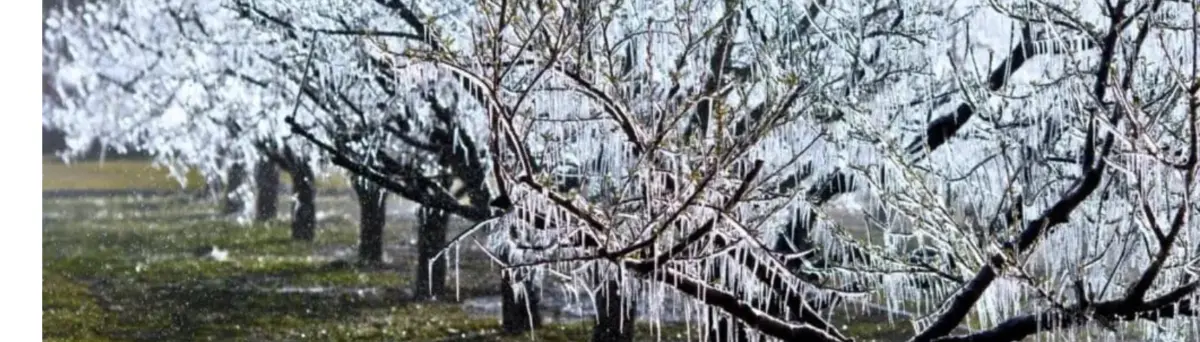
Agricultural producers across Columbia County and the broader North Florida region are navigating a precarious start to the spring production cycle. Following what agricultural extension experts hope will be the final cold front of the season, local farmers find themselves managing an unforgiving convergence of late-season frost risks and persistent, compounding drought conditions.
This dramatic temperature fluctuation hits regional agriculture during its most vulnerable physiological window: a critical juncture when perennial fruit trees are breaking dormancy and emerging into active bud break, and early-season spring row crops are either being sown in the soil or fighting to establish viable stands.
The resulting narrow margin of error means that even transient dips into freezing temperatures can severely impair crop performance, diminish yield potential, and threaten long-term plant vitality. Compounding these atmospheric threats, North Florida’s ongoing drought acts as a silent multiplier, stripping fields of their natural microclimate heat buffers and transforming a standard late-season cold snap into a high-risk event for regional harvests.
As local growers assess the damage, extension specialists emphasize that proactive field management, vigilant monitoring of weather modeling, and strategic pre-frost irrigation will spell the difference between economic resilience and catastrophic crop loss.
Detailed Chronology: The Anatomy of a Late-Season Weather Shock
The recent weather event arrived swiftly, plunging overnight temperatures below freezing across low-lying agricultural areas in Columbia County. To fully understand the gravity of this cold front, agricultural analysts examine the precise timing and physiological stages at which these temperature swings intercepted regional crops.
The Vulnerable Transition: Fruit Trees at Risk
During the depth of winter dormancy, the vast majority of commercial fruit crops—including regional staples like peaches and blueberries—can effortlessly weather sub-freezing temperatures. Physiological processes are slowed, water content in sensitive tissues is minimized, and cell walls remain resilient against ice crystal formation.
However, as ambient temperatures warm during late winter, trees undergo a profound biological transition. They break dormancy, swell their buds, and drive energy upward to initiate bloom. It is precisely during this transition that cold tolerance plummets.
When a late-season frost strikes an orchard in full or partial bloom, the delicate reproductive tissues of the flowers are instantly compromised. Even a light frost can sterilize open blossoms, causing unseen cellular damage. Growers frequently report a deceptive phenomenon: flowers appear visually normal in the immediate aftermath of a frost event, only to wither, drop, or fail to set fruit days later.
Furthermore, the timing of the cold front negatively impacted pollination mechanics. Most vital agricultural pollinators—including honeybees and native species—exhibit significantly reduced activity under cold, cloudy, or windy conditions. When a frost event coincides with a delayed or extended bloom period, the functional window for successful pollination is severely compressed, leading to sparse fruit set and heavily compromised yields.
Physiological Strain and Cumulative Tree Stress
The impact of the cold front extends far beyond immediate blossom injury. Low temperatures exert a systemic drag on tree physiology, triggering a cascade of secondary stress responses:
- Delayed Leaf-Out: Slowed metabolic processes push back the arrival of a full canopy, limiting the tree’s capacity for early-season photosynthesis.
- Extended Bloom Periods: Rather than a uniform, manageable flowering window, trees may bloom erratically, exposing subsequent waves of flowers to recurring frost risks.
- Depleted Carbohydrate Reserves: Repeated physiological stress forces the tree to draw heavily upon stored energy reserves just to survive and attempt recovery.
This metabolic drain does not merely threaten the current season’s fruit harvest; it undercuts tree vigor for the following year. Orchards forced to expend disproportionate energy recovering from late-season cold shocks often display reduced structural resilience and lower production capacities well into future growing cycles.

Row Crops and the Battle for Early Stand Establishment
While orchards battle blossom and canopy stress, North Florida row crop producers face a completely distinct, yet equally daunting, set of challenges. Spring-planted commodities—such as commercial watermelons, sweet corn, and diverse regional vegetables—are exceptionally sensitive to cold soil and air temperatures during germination and early vegetative development.
When cold fronts chill agricultural soils, seed germination becomes erratic and severely delayed. In high-value crops like watermelons, where field uniformity directly dictates harvesting efficiency and market value, uneven emergence ruins production schedules. Cold, wet soils also create an ideal nursery for soil-borne pathogens, exponentially increasing the incidence of damping-off and early seedling mortality.
For crops that have already emerged or been transplanted from greenhouses, frost presents an immediate, lethal hazard. Young plant tissues suffer severe leaf burn, stem splitting, and root shock. Even when seedlings manage to survive the cold exposure, the resulting chronic cold stress stunts vegetative growth, weakens natural defenses, and leaves the plants vulnerable to secondary opportunistic pests and diseases that easily colonize compromised tissue.
Supporting Context & Metrics: How Drought Amplifies Cold Damage
While frost and drought are frequently cataloged as distinct environmental hurdles, plant physiologists view them as deeply interconnected stress factors. In North Florida, the persistence of regional drought conditions has radically altered field microclimates, turning a standard cold snap into an acute agricultural hazard.
The Soil Moisture Heat Buffer
To understand why dry soils worsen frost impacts, one must look at basic thermodynamic properties within the field microclimate.
- Moist Soils: Water boasts a remarkably high specific heat capacity. Soils saturated with adequate moisture absorb vast amounts of solar radiation throughout the day, storing that thermal energy and slowly radiating it upward into the crop canopy during the night. This natural buffering effect moderates temperature drops near the soil surface, frequently keeping ambient plant tissue just above the critical freezing threshold.
- Dry Soils: Drought-stricken soils lack this vital moisture buffer. Lacking thermal mass, dry soils heat up rapidly under the sun but cool down with alarming speed the moment the sun sets. Consequently, fields experiencing drought conditions routinely record significantly colder near-ground temperatures than adjacent, well-watered fields under the exact same macro-weather forecast.
+-------------------------------------------------------------------------+
|                  SOIL MOISTURE VS. FROST INTENSITY                      |
+-------------------------------------------------------------------------+
|                                                                         |
|  [MOIST SOIL]  ==> Absorbs Day Heat ==> Slow Night Release              |
|                    RESULT: Natural buffer against rapid temp drops.     |
|                                                                         |
|  [DRY SOIL]    ==> Low Heat Capacity  ==> Rapid Night Cooling           |
|                    RESULT: Colder near-ground temps; severe frost risk. |
|                                                                         |
+-------------------------------------------------------------------------+
This dynamic means two neighboring farms can experience identical regional air temperatures while suffering vastly different levels of crop damage, strictly dictated by their individual soil moisture profiles. For North Florida growers operating under ongoing drought advisories, dry soil must be factored in as a primary risk multiplier when evaluating impending frost alerts.
Official Statements and Extension Guidance
Agricultural extension agencies and regional specialists have stepped up monitoring efforts, issuing urgent advisories to farming communities across Columbia County and surrounding agricultural districts.
“These unseasonable temperature swings arrive at the absolute worst possible point in our production calendar,” noted agricultural extension advisors in recent bulletins. “When perennial fruit crops are pushing tender buds and row crop producers are trying to establish uniform stands, even a few hours of sub-freezing weather can undo months of preparation and investment.”
Extension networks emphasize that growers must shift away from passive observation and adopt active, data-driven mitigation strategies wherever infrastructure permits:
- Pre-Event Irrigation: Where water availability allows, pre-irrigating dry fields prior to a forecasted freeze is critical. Elevating soil moisture levels maximizes the soil’s thermal storage capacity, moderating the microclimate directly around emerging crops and root zones.
- Close Forecast Monitoring: Growers are urged to abandon broad regional weather forecasts in favor of microclimate-specific meteorological tracking, paying close attention to ground-level dew points and radiative cooling predictions.
- Strategic Planting Delays: For row crop producers who have not yet committed seed to cold, dry soils, delaying planting dates until soil temperatures reliably stabilize can prevent costly replanting efforts and substandard stand establishments.
Future Outlook: Building Resilience in a Variable Climate
As global and regional weather patterns continue to display heightened volatility, North Florida agriculture faces an evolving paradigm of early springs, unpredictable late frosts, and prolonged meteorological droughts. The convergence of these weather extremes highlights the urgent need for long-term adaptive strategies across regional farming operations.
Moving forward, agricultural researchers and progressive growers are investigating enhanced management practices designed to buffer crops against compounding environmental stressors. These include:
- Improved Irrigation Infrastructure: Upgrading to advanced, high-efficiency micro-irrigation systems that can be rapidly deployed for targeted frost protection and moisture management during severe droughts.
- Resilient Cultivar Selection: Breeding and planting crop varieties that exhibit broader thermal tolerance windows, delayed bloom characteristics, or enhanced resistance to cold-induced root shock.
- Soil Health Management: Implementing cover cropping, no-till practices, and organic matter enrichment to naturally improve soil moisture retention, thereby preserving the vital thermal buffering capacity that dry soils currently lack.
Ultimately, navigating the squeeze between late-season freezes and persistent drought requires unyielding vigilance. As Columbia County growers recover from the season’s latest cold front, careful field management, strategic resource allocation, and adaptive planning will remain the cornerstone of agricultural survival and profitability in North Florida.

0 Comments