

By Derrick Conover
Published: March 18, 2026
Category: Agriculture / Crops
Executive Overview
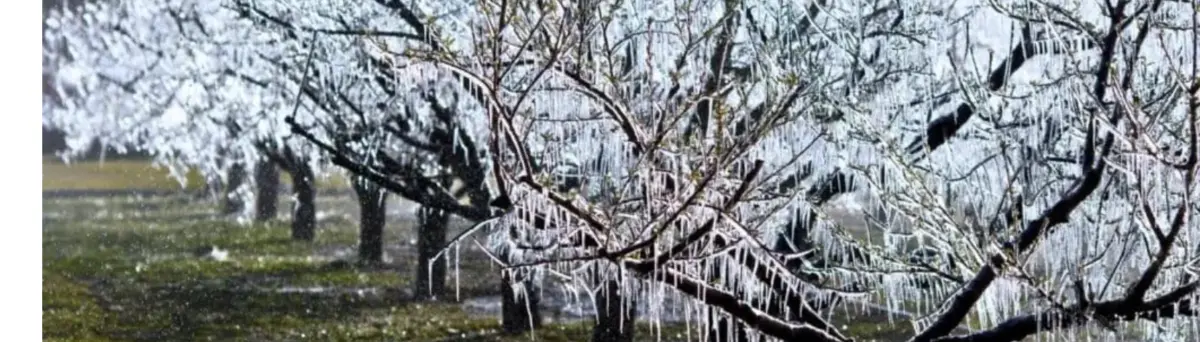
Agricultural producers across Columbia County and the broader North Florida region are grappling with a high-stakes convergence of environmental pressures following what growers hope will be the final cold front of the season. Arriving at a critically sensitive juncture in the annual agricultural calendar, these erratic temperature swings threaten both perennial fruit orchards and newly established row crops.
The hazard lies in a narrow, unforgiving temporal window. Fruit trees are breaking winter dormancy, pushing vulnerable buds, and entering bloom cycles, while spring row crops are concurrently undergoing germination and emergence. Even brief incursions of sub-optimal, freezing, or near-freezing temperatures during this transition phase can inflict catastrophic damage on plant physiology, severely depressing yield potential and disrupting market supplies.
Compounding this immediate frost risk is a pervasive, ongoing drought across the region. While agriculturalists traditionally analyze cold snaps and water deficits as distinct environmental stressors, their physiological and microclimatic impacts are deeply intertwined. Dry soils lack the thermal mass of moisture-laden earth, leading to accelerated nighttime cooling and intensified near-ground frost formation. For North Florida farmers, this dual threat transforms a standard seasonal cool-down into a multi-layered crisis that demands heightened vigilance, proactive soil management, and strategic risk mitigation.
Detailed Chronology and Vulnerability Dynamics in Perennial and Row Crops
The timing of this recent cold front has exposed local agriculture to maximum biological vulnerability. Understanding the cascading impacts requires examining how distinct agricultural sectors—specifically fruit trees and spring row crops—respond to abrupt thermal shocks during their most fragile developmental stages.
Fruit Tree Production and the Blossom Vulnerability Window
During the depths of winter dormancy, perennial fruit crops such as peaches and blueberries can withstand freezing temperatures with minimal to no internal structural damage. Their physiological systems are essentially on pause, heavily protected by hardened cellular structures. However, as ambient temperatures warm and daylight hours lengthen, trees break dormancy, mobilize stored nutrients, and push buds toward bloom.
As this transition occurs, cold tolerance declines precipitously. Once floral tissues are exposed and blossoms open, even a light, fleeting frost can destroy the delicate reproductive organs—the pistils and stamens—leading to immediate pollination failure. In many instances, the physical injury is deceptively insidious. Blossoms may outwardly appear normal and undamaged immediately following a cold event, only to fail in developing into fruit days later.
Furthermore, the collateral damage extends beyond direct tissue freeze. Cool, cloudy, and windy weather patterns that frequently accompany these late-season cold fronts severely inhibit pollinator activity. Honeybees and native pollinators become drastically less active when ambient temperatures drop and skies overcast. This compounds the biological crisis, shrinking an already brief flowering window and resulting in poor fruit set and devastating crop reductions.
Physiological Strain and Carryover Effects
Beyond immediate reproductive failure, late-season cold events trigger systemic physiological slowdowns within perennial trees. Following a cold shock, growers frequently observe:
- Delayed leaf-out: The vegetative canopy takes significantly longer to develop, reducing photosynthetic capacity during a critical energy-demanding period.
- Extended bloom periods: Erratic temperature fluctuations can cause staggered flowering. While seemingly a hedge against risk, an extended bloom actually exposes successive waves of flowers to multiple frost events.
- Depleted carbohydrate reserves: Repeatedly fighting cold stress forces the tree to draw heavily on stored energy reserves. This metabolic drain not only compromises the current season’s harvest but also diminishes tree vigor and bud set for the following year’s production cycle.
Row Crop Vulnerability: Germination, Establishment, and Transplant Shock
While orchards contend with blossom preservation, North Florida’s row crop producers—cultivating high-value commodities such as watermelon, sweet corn, and diverse market vegetables—face an entirely different set of physiological hurdles.
Spring-planted row crops are exceptionally sensitive to cold soil and air temperatures during the delicate phases of seed germination and early seedling development. When soil temperatures plummet, germination rates drop, and emergence becomes highly erratic. In crops like commercial watermelon, where field uniformity is paramount for efficient harvest scheduling and market timing, uneven stands degrade overall operational efficiency and profitability.
Moreover, cold, wet soil conditions create an ideal microclimate for soil-borne pathogens. Pathogens responsible for damping-off and early-season seedling blights thrive in chilled soils where plant growth is already sluggish. This dramatically increases plant mortality rates before seedlings can establish robust root systems.

For crops already emerged or recently transplanted, frost poses an immediate, lethal threat:
- Direct Tissue Necrosis: Young leaves and tender stems suffer severe burn, cellular collapse, or complete mortality depending on the duration of the freeze event.
- Prolonged Transplant Shock: Transplanted vegetable crops are particularly susceptible. Cold conditions stall root establishment, locking the plant in a prolonged state of shock.
- Secondary Pest Invasions: Stunted, weakened plant tissues are inherently less resilient, signaling an open invitation for opportunistic insect pests and secondary diseases to colonize the stressed crop.
Supporting Context and Metrics: The Amplifying Role of Drought Conditions
To fully grasp the severity of this agricultural event, one must evaluate the compounding macro-environmental conditions—specifically, the ongoing drought plaguing Florida. Drought and frost are frequently studied and managed as isolated meteorological hazards; however, at the plant physiological level and within the microclimate of the field, their interactions are profoundly synergistic. When combined, their destructive capacity far exceeds the sum of their individual impacts.
The Physics of Soil Moisture and Thermal Buffering
At the field level, soil moisture plays an indispensable role in moderating surface temperatures during a radiation frost event.
- Moist Soils: Water boasts a high specific heat capacity. Moist soils absorb significant solar radiation during daylight hours, storing thermal energy. As ambient temperatures drop sharply after sunset, damp earth slowly releases this stored heat back into the boundary layer directly above the soil surface, providing a natural thermal buffer that can ward off damaging frost.
- Dry Soils: In contrast, the drought-parched soils currently prevalent across Columbia County lack sufficient moisture content. Dry earth exhibits a much lower heat capacity and thermal conductivity. Consequently, it heats up rapidly under direct sun but cools down with alarming speed once the sun sets.
This rapid nocturnal cooling causes temperatures immediately above the ground to plummet significantly lower than standard meteorological weather station readings might indicate. In practical farming terms, two adjacent fields experiencing identical ambient air temperatures can suffer wildly divergent frost injury outcomes entirely driven by local soil moisture variations. For North Florida growers, persistent drought must be calculated as a primary risk amplifier when assessing vulnerability to cold weather.
Official Insights and Agronomic Management Strategies
Agricultural extension agents and crop specialists emphasize that while growers cannot control meteorological phenomena, proactive management strategies can mitigate their worst effects.
+-----------------------------------------------------------------------------------+
|                        PROACTIVE COLD PROTECTION CHECKLIST                        |
+-----------------------------------------------------------------------------------+
|  [ ] SOIL MOISTURE MANAGEMENT: Pre-irrigate dry fields prior to forecasted freezes|
|      to maximize thermal retention and buffer near-ground temperatures.           |
|                                                                                   |
|  [ ] MONITORING & FORECASTING: Track local mesonet data rather than regional      |
|      averages to account for microclimate variances.                              |
|                                                                                   |
|  [ ] PLANTING TIMING: Stagger planting dates or utilize row covers for sensitive  |
|      transplants during early-season cold risks.                                  |
|                                                                                   |
|  [ ] POST-FRESS RECOVERY: Avoid aggressive pruning of frost-damaged tree limbs    |
|      until new active growth clearly defines the extent of dead tissue.           |
+-----------------------------------------------------------------------------------+
Where irrigation infrastructure permits, maintaining adequate soil moisture prior to a forecasted freeze event serves as an essential line of defense. Pre-irrigation not only improves the internal water status and physiological resilience of the plant tissues but directly modifies the field microclimate by elevating baseline surface heat retention.
Furthermore, agricultural authorities urge producers to remain hyper-vigilant regarding microclimate mapping. Standard weather forecasts often report temperatures measured at standard screen heights (typically five feet above turf grass), whereas the coldest air pools directly at the soil surface where young row crops and low-growing fruit blooms reside. Understanding these localized inversion layers allows growers to deploy localized protective measures—such as wind machines, overhead sprinklers, or protective row covers—with maximum precision and efficiency.
Future Outlook: Building Long-Term Resilience in North Florida Agriculture
As shifting global weather patterns continue to introduce weather volatility—characterized by unusually warm winter interludes followed by abrupt, late-season polar incursions—agricultural risk management in Columbia County is entering a new era.
The events of this season underscore the urgent need for a paradigm shift in regional farm management. Moving forward, growers must integrate climate-resilient practices into their operational blueprints:
- Enhanced Water Infrastructure: Given the frequency of concurrent drought and frost events, investing in efficient, rapid-deployment irrigation systems will become non-negotiable for thermal buffering.
- Varietal Selection: Long-term orchard planning will increasingly prioritize fruit cultivars featuring higher chilling-hour requirements, delayed bloom times, or enhanced cold-hardiness during early reproductive phases.
- Soil Health Initiatives: Increasing organic matter in row crop soils can improve water-holding capacity, gradually mitigating the extreme thermal volatility characteristic of parched, sandy soils.
Ultimately, careful, data-driven management during this critical transitional period can spell the difference between economic viability and severe operational loss. As Columbia County producers look toward the remainder of the season, vigilance, adaptability, and proactive environmental management will remain the bedrock of agricultural survival and success.
For more information on crop protection strategies, soil moisture management, and local weather monitoring tools, agricultural producers are encouraged to contact the Columbia County Extension Office or visit local University of Florida IFAS Extension resources.

0 Comments