

By Derrick Conover
Published: March 18, 2026
Executive Overview
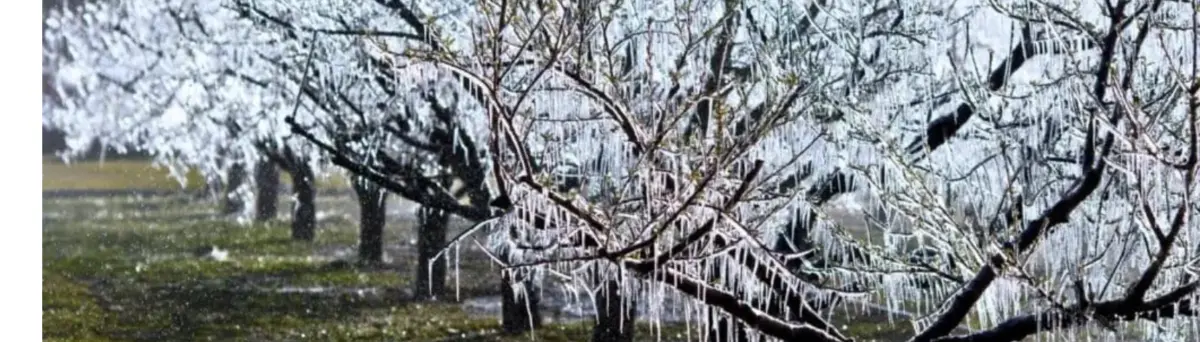
As winter reluctantly loosens its grip on North Florida, agricultural producers across Columbia County are grappling with a punishing weather dynamic that threatens the integrity of the 2026 growing season. This week brought what regional farmers and horticulturists hope will be the final cold front of the season—a dramatic temperature plunge arriving at one of the most sensitive junctures in the annual agricultural production cycle.
This late-season meteorological event occurs at a precarious crossroads: fruit trees are breaking dormancy and entering their critical bloom phases, while early-season row crops are either being planted or trying to establish initial stands. In this narrow, high-stakes window, even brief exposures to freezing or near-freezing temperatures can trigger cascading physiological shocks, compromising crop performance, lowering marketable yields, and threatening long-term orchard health.
Compounding the immediate threat of frost is an invisible yet pervasive adversary: ongoing drought conditions across Florida. The synergy between dry soils and freezing air temperatures creates a compounding agricultural crisis. While frost and drought are frequently evaluated as isolated environmental challenges, their intersection at the plant-soil-atmosphere interface dramatically amplifies the severity of agricultural damage.
For local growers, navigating this volatile landscape requires vigilant crop monitoring, a sophisticated understanding of microclimate dynamics, and strategic, proactive management. As climate variability continues to challenge traditional production timelines, the margin for error in North Florida agriculture has never been narrower.
Detailed Chronology: The Anatomy of a Late-Season Freeze
The recent cold front did not arrive in a vacuum; it followed a warming trend that had prematurely signaled to perennial crops that spring had arrived. Understanding the precise sequence of biological and meteorological events reveals why late-season cold snaps inflict disproportionate damage compared to mid-winter freezes.
Phase One: The Premature Transition from Dormancy
During the deep winter months, deciduous fruit trees—such as peaches, plums, and blueberries—exist in a state of physiological dormancy. In this protective resting phase, cellular water content is tightly regulated, and tissues are engineered to withstand sub-freezing temperatures with minimal or zero structural injury.
However, as ambient temperatures rise during late winter and early spring, trees receive biological cues indicating that the growing season has begun. Buds swell, green tissue emerges, and the trees rapidly transition into active growth. With this transition comes a sharp, dramatic decline in cold tolerance. The biochemical defenses that protected the plant in January are largely decommissioned by March, leaving tender new tissues entirely exposed to the elements.
Phase Two: The Reproductive Vulnerability Window
When freezing or frost conditions strike during the bloom phase, the damage is concentrated in the reproductive organs of the plant. For stone fruit and berries, open flowers represent the entirety of the upcoming harvest. Even a light frost—temperatures hovering just below freezing for a short duration—can rupture the cell walls within the pistils, stamens, and developing ovaries.
The insidious nature of this damage often delays detection. Growers inspecting their orchards the morning after a frost may observe outwardly normal blossoms, lulling them into a false sense of security. Yet, days later, these seemingly healthy flowers fail to set fruit, shrivel, and drop.
Furthermore, the timing of the cold front introduces a secondary biological bottleneck: pollinator disruption. Bees and other vital pollinators are ectothermic creatures whose activity levels are strictly dictated by ambient conditions. When a cold front brings low temperatures, heavy cloud cover, and brisk winds, pollinator flight drops precipitously. Even if a percentage of blossoms escape direct frost injury, the absence of active pollinators during their brief, receptive window severely curtails successful fertilization and subsequent fruit set.
Phase Three: Physiological Stagnation and Cumulative Stress
Beyond immediate tissue death, late-season cold events induce a profound physiological slowdown in perennial crops. Symptoms manifest as delayed leaf-out, prolonged and erratic bloom periods, and stunted fruit development.
An extended bloom period, paradoxically, increases a crop’s vulnerability by staggering the emergence of flowers over a longer timeline, thereby exposing subsequent waves of blossoms to any lingering cold snaps or secondary frost events. Moreover, the metabolic cost of recovering from frost stress depletes a tree’s internal carbohydrate reserves. This exhaustion reduces overall tree vigor, stunting the current season’s yield while casting a long shadow over productivity and bud development for the following year’s harvest.
Supporting Context & Metrics: Row Crops and the Soil-Moisture Matrix
While orchards battle physiological dormancy shifts and bloom failures, North Florida row crop producers face an entirely distinct set of biological and mechanical hurdles. The region’s staple spring plantings—including watermelons, sweet corn, and a diverse array of warm-season vegetables—are profoundly sensitive to the thermal properties of both soil and air during germination and early vegetative development.
The Vulnerability of Germinating and Emerged Row Crops
For crops like watermelon, uniformity is the gold standard of efficient commercial production. Growers rely on synchronized germination and emergence to streamline cultural practices, fertilizer applications, and harvesting schedules. However, when cold soils stall germination, emergence becomes erratic and staggered. This variability devastates field performance, resulting in uneven canopies, resource competition among plants, and a fragmented harvest window.

Cold, wet soil conditions—frequently accompanying early-spring weather systems—also create an ideal microclimate for soil-borne pathogens. Pathogens such as Pythium, Rhizoctonia, and Fusarium thrive in cool, sluggish soils, drastically increasing the incidence of damping-off and early-season seedling mortality.
For young plants that have already emerged or been transplanted into the field, frost poses an existential, immediate threat:
- Leaf Burn and Stem Necrosis: Tender foliage scorched by ice crystal formation loses photosynthetic capacity, while stem damage can girdle young plants, leading to collapse.
- Transplant Shock Prolongation: Transplanted vegetable crops are particularly susceptible. Cold ambient and soil temperatures inhibit root system establishment, trapping plants in an extended state of transplant shock. This physiological lag renders them sitting ducks for opportunistic pests and secondary infections that readily colonize weakened plant tissues.
How Drought Intensifies Cold Damage: The Physics of Dry Soil
To fully comprehend the impact of Columbia County’s recent weather, one must factor in the backdrop of ongoing drought conditions. The interplay between soil moisture and atmospheric temperature is governed by fundamental thermodynamic principles that dictate whether a field experiences a catastrophic freeze or escapes with minor stress.
Moist soils act as a massive thermal reservoir. During daylight hours, water-rich soils absorb and store vast amounts of solar radiation. As ambient temperatures plummet after sunset, this stored heat is slowly released back into the microclimate immediately above the soil surface, providing a natural buffering effect that can keep canopy temperatures a critical few degrees above the damaging threshold.
Conversely, dry soils possess a drastically lower heat capacity. Lacking moisture, dry earth cannot efficiently absorb daytime heat, nor can it radiate thermal energy upward during the night. Consequently, dry fields cool rapidly and precipitously after sunset, plunging near-ground temperatures far below ambient air readings.
[Daytime Solar Radiation]
       │
       ├──> Moist Soil: Absorbs & Stores Heat ──> Slow Nighttime Release ──> Buffers Against Frost
       │
       └──> Dry Soil: Poor Heat Retention ────> Rapid Nighttime Cooling ─> Severe Ground-Level Frost
This thermodynamic reality means that two adjacent fields experiencing the exact same macro-weather forecast can suffer vastly different fates based entirely on soil moisture. For North Florida farmers operating under drought constraints, dry soils represent a severe, compounding risk factor for frost injury.
Official Statements and Expert Guidance
Agricultural extension specialists and regional authorities emphasize that navigating these compounded environmental stressors requires a shift from reactive damage assessment to proactive, precision management.
Derrick Conover, agricultural extension expert for Columbia County, highlights the critical nature of the current production window:
"These temperature swings come at a particularly sensitive time in the production cycle… The result is a narrow window where even brief periods of cold weather can have negative impacts on crop performance and yield potential."
Addressing the hidden dangers of the drought-frost nexus, extension advisories stress that growers must factor soil moisture deficits into their cold-protection calculus. According to regional agricultural guidance:
"Dry soils contribute to more severe frost conditions… In practical terms, two fields with identical air temperatures can experience very different levels of frost injury depending on soil moisture conditions."
Experts strongly recommend that where water resources permit, growers should implement pre-irrigation strategies prior to a forecasted cold event. Applying water to fields ahead of a freeze elevates soil moisture levels, directly enhancing the soil’s heat-retention capacity, moderating near-ground microclimates, and simultaneously boosting the internal hydration and resilience of the plants themselves.
Future Outlook: Building Resilience in a Changing Climate
As North Florida agriculture looks toward the remainder of the 2026 growing season and beyond, the events in Columbia County serve as a stark reminder of the mounting challenges posed by climate volatility. The convergence of unseasonable temperature oscillations and persistent regional drought is no longer viewed as a statistical anomaly, but rather as an operational reality that modern farming systems must adapt to withstand.
Strategic Adaptations for Growers
To safeguard future yields against similar late-season threats, agricultural stakeholders are increasingly turning to advanced management and technological solutions:
- Precision Microclimate Monitoring: Installation of networked soil and canopy temperature sensors enables real-time tracking at the field level, providing early warnings before critical frost thresholds are breached.
- Enhanced Irrigation Infrastructure: Upgrading to efficient overhead sprinkling or micro-irrigation systems allows growers to rapidly utilize water-based freeze protection protocols, leveraging the latent heat of fusion to protect tender tissues.
- Varietal Selection and Diversification: Breeding programs focusing on cold-hardy, late-blooming stone fruit varieties and robust, vigor-retaining vegetable lines offer genetic buffers against erratic spring weather.
- Soil Health Management: Practices that enhance soil organic matter—such as cover cropping, reduced tillage, and residue management—improve soil structure and water-holding capacity, indirectly strengthening thermal buffering capabilities during dry spells.
Ultimately, vigilance remains the grower’s most effective tool. By closely monitoring meteorological forecasts, understanding the intricate feedback loops between soil moisture and thermal dynamics, and executing timely protective interventions, Columbia County producers can bridge the gap between a vulnerable early season and a successful, high-yielding harvest.

0 Comments