

By Agricultural Extension & Entomology Reporting Desk
Published: October 14, 2025
Executive Overview
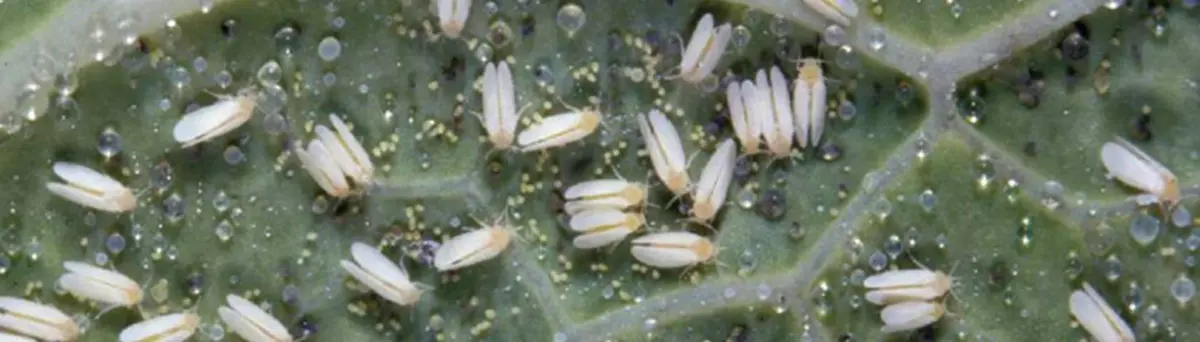
For vegetable growers across the Suwannee Valley and greater North Florida, late summer and early autumn bring a familiar, unwelcome phenomenon: swirling clouds of tiny, white insects erupting from the foliage at the slightest brush of a hand or tool. While their diminutive size might lead the untrained eye to dismiss them, whiteflies—chief among them the notoriously resilient Bemisia tabaci—pose a severe, multi-faceted threat to regional agriculture. These agricultural pests are far more than a simple seasonal nuisance. They inflict direct physiological damage by draining vital plant sap, act as devastating vectors for aggressive plant viruses, and severely degrade the visual and market quality of high-value produce right on the precipice of harvest.
As North Florida transitions into the cooler months of late year, local agricultural extension specialists are sounding the alarm. Driven by sustained warm temperatures that accelerate reproductive rates and virus transmission cycles, whitefly populations are peaking precisely when staple autumn crops—including tomatoes, peppers, and various cucurbits—are most vulnerable. Compounding the challenge for independent and small-scale farmers is a dynamic landscape-level migration pattern: as large commercial operations harvest or transition crops, massive populations of displaced whiteflies shift hosts, cascading onto smaller, localized farms.
To safeguard regional food security and the economic viability of small farms, agricultural experts are urging producers to abandon single-solution mindsets in favor of a proactive, Integrated Pest Management (IPM) framework. By synthesizing cultural safeguards, biological controls, targeted biopesticides, and judicious chemical applications, growers can reclaim control over their fields and secure their seasonal yields against this tiny yet formidable adversary.
Detailed Chronology: The Seasonal Lifecycle and Migration of Bemisia tabaci
Understanding the seasonal surge of whiteflies requires examining how environmental pressures and agricultural cycles intersect throughout the calendar year in North Florida.
Spring and Early Summer: The Buildup
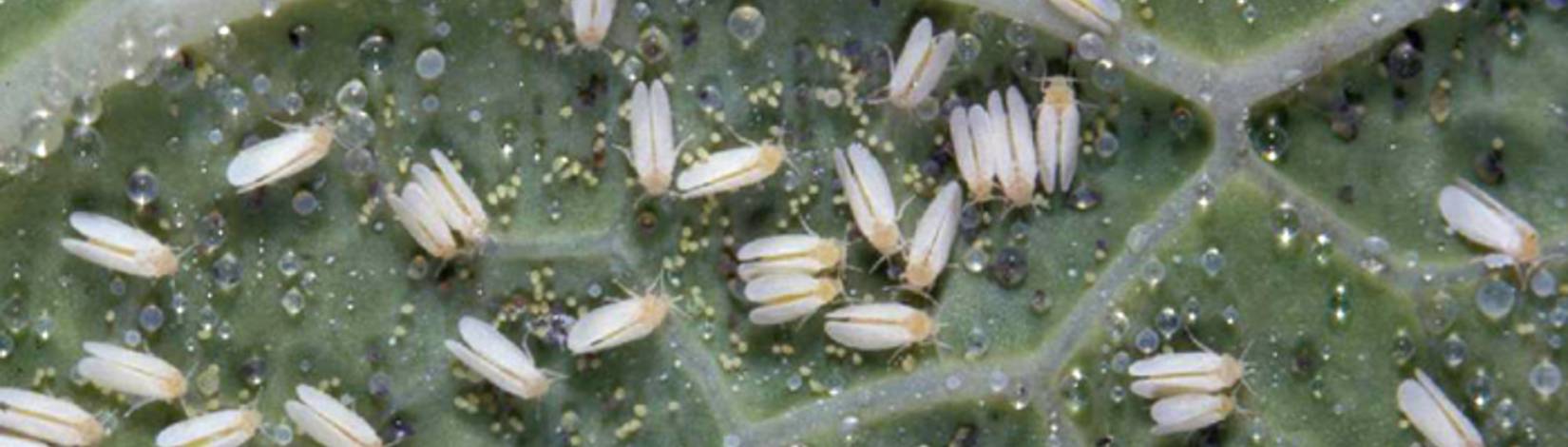
The whitefly lifecycle begins in earnest as winter gives way to spring. Species like Bemisia tabaci find refuge in a wide variety of perennial weeds, ornamental plants, and early-season field crops such as cotton. During these months, populations remain relatively stable, regulated in part by natural predators and moderate weather fluctuations. However, as temperatures steadily climb into the 80s and 90s, the metabolic and reproductive rates of the insects skyrocket. A single female whitefly can lay hundreds of eggs on the undersides of leaves, which hatch into mobile nymphs—often called "crawlers"—before settling down to feed and eventually transform into adults.
Late Summer to Early Fall: The Critical Window
The true crisis for North Florida vegetable growers unfolds between late August and November. Unlike many other agricultural pests whose numbers are heavily suppressed by heavy seasonal downpours, whitefly populations show remarkable resilience to rainfall, responding far more dramatically to ambient temperatures.
As North Florida experiences prolonged autumn warmth, reproduction peaks. More alarmingly, this seasonal timing coincides with the harvest cycles of large-scale commercial agriculture across the region. As massive fields of cotton, cucurbits, and tomatoes are harvested, tens of thousands of acres of host plants are suddenly destroyed or plowed under. Deprived of their primary food sources, dense clouds of surviving whiteflies are forced to migrate. Driven by wind and the instinctual search for food, these migratory waves frequently land on adjacent, smaller-scale farms, overwhelming local perimeter defenses and infesting late-season vegetable crops.
Harvest Season: The Culmination of Damage
By the time crops approach maturity in mid-to-late fall, the cumulative damage reaches its zenith. The convergence of peak vector populations, high ambient temperatures, and migrating adults creates an environment where virus transmission rates soar. Farmers face a race against time, forced to balance the necessity of crop protection against the risk of chemical residue and resistance development.
Supporting Context & Metrics: Mechanisms of Destruction and Management Efficacy
Whiteflies impair crop productivity through a dual-threat mechanism: direct physical damage via feeding and indirect biological devastation via viral transmission. Furthermore, agricultural research conducted by institutions like the University of Florida’s Institute of Food and Agricultural Sciences (UF/IFAS) has cataloged the varying efficacy of modern intervention strategies.
Direct vs. Indirect Crop Damage
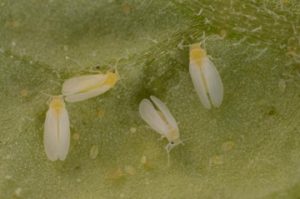
- Direct Feeding Damage: Whiteflies possess piercing-sucking mouthparts. By inserting these stylets into the phloem of host plants, they extract large quantities of plant sap. This continuous drainage deprives the plant of essential nutrients, resulting in stunted growth, leaf yellowing, wilting, and, ultimately, significantly reduced overall yield. Additionally, as they feed, whiteflies excrete a sticky, sugary substance known as "honeydew." This residue coats the leaves and fruit, fostering the growth of black sooty mold. This mold not only blocks vital sunlight, further inhibiting photosynthesis, but also severely stains the produce, rendering it unmarketable to commercial buyers and consumers alike.
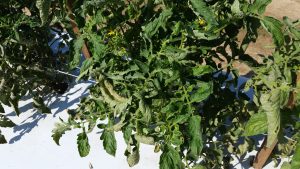
- Pathogen Transmission: Perhaps the most terrifying aspect of whitefly infestations is their efficiency as vectors for debilitating plant pathogens. In North Florida, whiteflies are primary vectors for the Tomato Yellow Leaf Curl Virus (TYLCV) and a complex of destructive cucurbit viruses. When a whitefly feeds on an infected plant, it acquires the virus and can subsequently transmit it to healthy crops within minutes of feeding. Plants infected with TYLCV experience severe stunting, leaf curling, and flower drop, frequently resulting in total crop failure. In the fall, when virus incidence peaks alongside vector populations, a minor oversight in pest management can wipe out an entire harvest.
Research-Backed Protection Strategies for Fall Crops
To combat these threats, researchers at UF/IFAS have evaluated multiple management practices tailored specifically to small-scale North Florida farming operations. The findings are summarized in the matrix below:
| Strategy | Effectiveness in Fall | Notes / Best Practices |
|---|---|---|
| Reflective Mulch & Row Covers | High | Effectively repels adult whiteflies and significantly reduces the incidence of vector-borne viruses during early plant development. |
| Limonene-Scented Kaolin Sprays | High (in dry years) | Demonstrates optimal performance during low-rainfall periods; acts as a physical barrier and repellent, reducing virus transmission and boosting marketable yield. |
| Biological Control (Predators & Fungi) | Moderate to High | Functions best as a core component of an Integrated Pest Management (IPM) plan; preserves natural beneficial insect populations. |
| Synthetic Insecticides | High (Short-term) | Provides rapid knock-down of high populations; must be strictly rotated to prevent the rapid development of chemical resistance. |
| Area-Wide / Landscape Management | High | Requires coordination among neighboring farms and landowners to minimize inter-crop migration and subsequent reinfestation waves. |
Official Statements and Expert Insights
Addressing the agricultural community in the Suwannee Valley, extension specialists emphasize that managing whiteflies requires a sophisticated, long-term paradigm shift rather than reliance on quick fixes.
Dr. Derrick R. Conover of the UF/IFAS Extension in Columbia County underscores the psychological and operational toll these pests take on regional growers. "Whiteflies are an undeniable fact of life for North Florida growers, but they do not have to spell absolute disaster for your fall crops," Dr. Conover explains. "Too often, independent producers panic when they see populations spike in September and October, leading to reactive, uncoordinated spraying. What our research demonstrates is that success comes down to preparation, timing, and integration."
Echoing this sentiment, Dr. Xavier Martini, Assistant Professor of Entomology at the University of Florida, points to the physiological vulnerabilities of the pests and the innovative tools now available to farmers. "The intersection of high fall temperatures and massive agricultural transitions creates a pressure-cooker environment for vegetable producers," says Dr. Martini. "However, by leveraging physical deterrents like reflective mulches and integrating novel, eco-friendly barriers such as limonene-scented kaolin particle films, farmers can dramatically disrupt whitefly host-seeking behavior. When combined with the conservation of natural predators, these proactive strategies shield crops without accelerating insecticide resistance."
The consensus among these experts is clear: the era of depending solely on chemical sprays is over. Modern agricultural defense demands a holistic understanding of insect ecology, regional crop landscapes, and preventative barrier deployment.
Future Outlook: Sustainable IPM and Landscape-Level Cooperation
Looking ahead, the long-term sustainability of vegetable production in North Florida hinges on the widespread adoption of Integrated Pest Management (IPM) and enhanced regional collaboration. As climate patterns continue to shift—bringing warmer, more extended fall seasons—agricultural entomologists anticipate that pest pressures will remain elevated, potentially expanding the seasonal window during which whiteflies pose an active threat.
To stay ahead of these evolving pressures, future research is focusing on several key areas:
- Advanced Biopesticides: Developing microbial insecticides, such as entomopathogenic fungi (Beauveria bassiana), that target whitefly nymphs and adults without leaving harmful chemical residues or harming beneficial insect populations like lady beetles and parasitic wasps.
- Resistant Crop Varieties: Breeding programs aimed at introducing stronger genetic resistance to TYLCV and cucurbit-infecting viruses into commercial vegetable lines.
- Cooperative Regional Management: Encouraging county-wide and valley-wide grower associations to coordinate planting schedules, post-harvest crop destruction (such as promptly disking under harvested cotton and vegetable fields), and weed management. By eliminating bridge hosts that sustain whiteflies between cropping cycles, communities can collaboratively lower baseline pest populations before the autumn migration season begins.
Ultimately, while the whitefly remains a formidable adversary for North Florida’s agricultural community, the integration of science-backed field practices offers a beacon of hope. By embracing proactive, multi-layered defense strategies, small and independent farmers can protect their livelihoods, preserve regional food supplies, and ensure that the fall harvest remains a time of abundance rather than loss.

0 Comments