

By Jay Capasso | Published: August 20, 2024 | Updated: September 9, 2025
Executive Overview
North Florida’s delicate hydrological landscape is entering a critical new era of regulatory oversight. In a joint initiative, the Florida Department of Environmental Protection (FDEP), alongside the Suwannee River and St. Johns River Water Management Districts, has formally proposed a sweeping update to the Minimum Flows and Levels (MFL) rules for the Lower Santa Fe and Ichetucknee Rivers and their associated priority springs.
At its core, an MFL rule establishes the legal threshold—the absolute minimum water flow and level—below which further withdrawals would cause significant harm to the ecology and natural water resources of the region. While designed to safeguard the ecological vitality of these iconic waterways, the rule carries profound implications for all regional water users, with agricultural producers, commercial enterprises, and local municipalities facing stringent compliance metrics.
The proposed rule directly impacts water withdrawals across the expansive North Florida Regional Water Supply Partnership area. This multi-county zone encompasses Alachua, Baker, Bradford, Clay, Columbia, Duval, Flagler, Gilchrist, Hamilton, Nassau, Putnam, St. Johns, Suwannee, and Union counties.
As the state moves toward finalizing the regulation for the 2026 Florida legislative session, stakeholders are navigating a complex landscape of permit modifications, offset calculations, and strict new water conservation mandates. With the official public comment window closing on October 31, 2024, regional agricultural and industrial stakeholders have faced an urgent mandate to evaluate their water footprints, understand their proportionate contributions to flow deficits, and prepare for long-term operational adjustments.
Detailed Chronology & Regulatory Timeline
Understanding the trajectory of the Lower Santa Fe and Ichetucknee Rivers (LSFIR) MFL rule requires examining the multi-year scientific assessments, stakeholder workshops, and regulatory milestones that have shaped current policy.
The state’s framework for establishing MFLs is rooted in statutory mandates under Chapter 373 of the Florida Statutes, which directs water management districts to protect water resources from significant harm. For the Santa Fe and Ichetucknee systems, decades of declining spring flows and shifting hydrological baselines prompted joint monitoring efforts by the FDEP and the Suwannee River and St. Johns River Water Management Districts.
- The Baseline Era (2014–2018): Regulators established the foundational metrics for water use using historical averages from this four-year window. These figures serve as the benchmark for calculating net flow deficits and evaluating individual permit holder impacts.
- Initial Rule Development and Scientific Peer Review: Years of data collection culminated in draft proposals that identified critical flow disparities across the system’s primary monitoring gages. While the FDEP refined its modeling, agricultural extension agents, industry groups, and environmental advocates engaged in localized workshops to understand the impending regulatory shifts.
- August 20, 2024 — Initial Public Release: UF/IFAS Extension published comprehensive guidance detailing the proposed rule, alerting agricultural producers and regional stakeholders to the impending October deadline and the structural changes heading toward the 2026 legislative session.
- October 31, 2024 — Public Comment Deadline: The formal FDEP public comment period closed, drawing feedback from agricultural coalitions, environmental organizations, and local government utilities regarding the economic feasibility of offset projects and conservation tiers.
- September 9, 2025 — Regulatory Refinement and Guidance Updates: As the state continues to process stakeholder feedback and draft final legislative packages ahead of the 2026 session, regional agencies have focused heavily on compliance education, Mobile Irrigation Lab (MIL) availability, and technical assistance for impacted permittees.
Supporting Context & Metrics: Analyzing the Science and Math of MFL Compliance
The operational backbone of the proposed MFL rule rests on three key compliance points—specific river gages monitored continuously by hydrologists to gauge system health.
1. The Three Compliance Gages
- Santa Fe River near Fort White: Currently meeting the required MFL thresholds, indicating stable or sufficient baseline flow.
- Santa Fe River at US Highway 441 near High Springs: Officially designated as being in "recovery," meaning current flow levels persistently fall below the required MFL threshold.
- Ichetucknee River at Highway 27 near Hildreth: Also designated as being in "recovery," reflecting historical flow reductions that demand corrective action from regional water users.
2. Permit Modifications and Impact Evaluations
Under the proposed rule, the updated MFLs will serve as the definitive baseline for regulating water withdrawals during the consumptive use permit (CUP) renewal and modification process. Permit holders must complete rigorous evaluations to determine whether their historical and projected water withdrawals impact any of the three MFL compliance points.
Crucially, if a permittee’s withdrawals impact multiple compliance points that are currently in a state of recovery, their regulatory offset requirements will be anchored to the specific compliance point where their proportional impact is greatest. Permittees must demonstrate that their ongoing water use will not exacerbate flow deficits or hinder recovery trajectories at these critical nodes.
3. The Mathematics of Offsets
For permittees whose historical withdrawals contribute to flow deficits at recovering compliance points, the rule establishes a transparent, mathematically rigorous formula to calculate required water offsets.
A permittee’s required offset is determined by calculating their proportionate share of the Net Flow Deficit ($I_nfd$) at the recovering compliance point. This is achieved by dividing the individual permittee’s impact ($I_p$) by the total collective impact of all water uses at that compliance point ($I_t$), utilizing baseline average data from 2014–2018, and multiplying the resulting fraction by the Net Flow Deficit.
$$textProportionate Share Offset = left( fractextIndividual Impact (I_p)textTotal Impact (It) right) times textNet Flow Deficit (Infd)$$
Practical Calculation Example:
Imagine a regional agricultural producer whose historical water use reduces the flow at a recovering MFL compliance point by 1 cubic foot per second (cfs).
- If the total combined impact from all regulated water users at that baseline compliance point is 10 cfs,
- And the established Net Flow Deficit for that specific river gage is 6.3 cfs,
- The permittee’s mandatory offset is calculated as follows:
$$textProportionate Share = left( frac1 text cfs10 text cfs right) times 6.3 text cfs = 0.63 text cfs$$
To maintain compliance, the water user must either reduce consumption by 0.63 cfs or implement approved offset projects—such as tailwater recovery or alternative water supply investments—that yield an equivalent net benefit to the river system.
Official Statements and Institutional Perspectives
The intersection of stringent environmental protection and regional economic viability has generated robust dialogue among state agencies, agricultural extension specialists, and regional water management districts.
Dr. Jay Capasso, a prominent voice within the University of Florida’s Institute of Food and Agricultural Sciences (UF/IFAS), has emphasized the critical need for proactive engagement among agricultural producers. In early guidance releases, Capasso highlighted that while the rules are tailored to preserve North Florida’s irreplaceable spring-fed ecosystems, they demand unprecedented technical precision from farm managers.
"Agricultural producers in the Suwannee Valley and surrounding counties have long recognized the intrinsic value of clean, abundant water," notes regional extension analysis. "However, transitioning from voluntary stewardship to mandatory, mathematically enforced offset calculations represents a fundamental shift in how consumptive use permits will operate."
Representatives from the Florida Department of Environmental Protection stress that the MFL rule is not designed to shutter agricultural operations or halt regional growth, but rather to establish a sustainable operating ceiling. FDEP officials point out that collaborative watershed planning and state-backed cost-share programs for water conservation are vital components of the transition.
Meanwhile, water management district hydrologists underscore that the recovery strategies for the High Springs and Hildreth gages are legally mandated obligations. Without aggressive mitigation of existing flow deficits, the unique subterranean aquifer systems feeding the Santa Fe and Ichetucknee basins face irreversible ecological degradation, threatening everything from recreational economies to endemic aquatic species.
Agricultural Water Conservation Requirements & Technical Standards
To mitigate individual impacts and satisfy compliance obligations under the proposed MFL rule, agricultural permittees must adhere to rigorous new standards focused on irrigation efficiency and systemic conservation.
Distribution Uniformity (DU) Standards
Distribution uniformity measures how evenly an irrigation system applies water across a targeted crop area, directly minimizing waste and deep percolation loss. Under the proposed rule, agricultural permittees must maintain their irrigation systems to meet specific minimum DU percentages, which vary strictly by technology type:
- Micro-drip Systems: Must achieve a DU of 80% to 90%.
- Micro-spray Systems: Must achieve a DU of 75% to 85%.
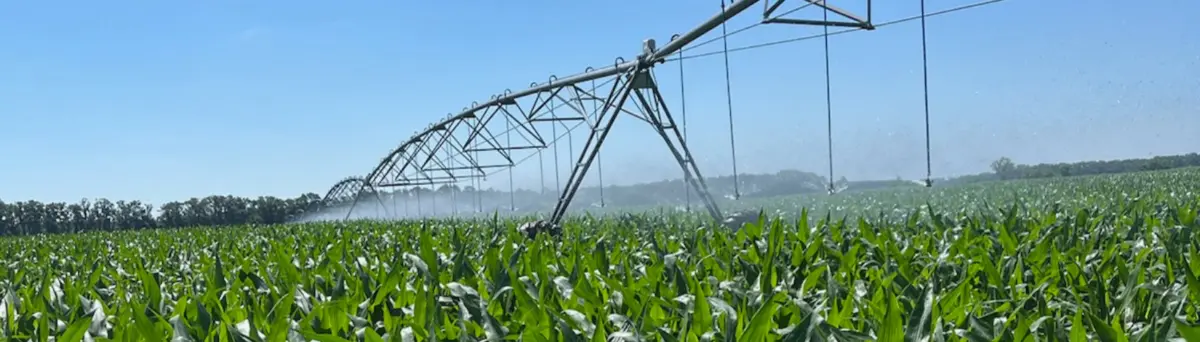
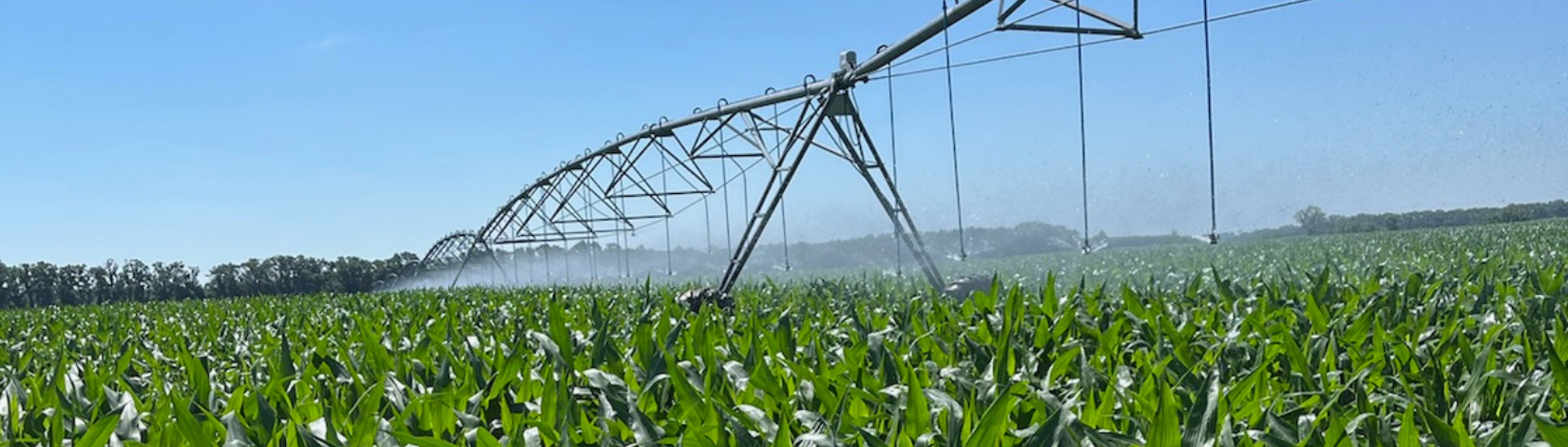
- Low-Pressure Center Pivot or Lateral Move Systems: Must achieve a DU of 75% to 85%.
- Standard Center Pivot Systems with End Guns: Must achieve a DU of 65% to 75%.
- In-Place Overhead Sprinklers: Must achieve a DU of 70% to 75%.
Growers typically rely on Mobile Irrigation Labs (MIL) to conduct free evaluations and estimate system DU. Given the heightened regulatory enforcement, discussions are currently underway to establish an additional Mobile Irrigation Lab specifically dedicated to the Suwannee Valley to assist producers in achieving and documenting compliance.
Transition Plans for Inefficient Systems
For farms utilizing outdated or highly inefficient irrigation methods—such as traditional seepage irrigation—the rule mandates that permittees submit a formal, binding plan to transition to modern, high-efficiency systems before their current permit expires. These transition plans must outline clear timelines, engineering specifications, and capital investments designed to minimize consumptive loss.
Tiered Water Conservation Practices
The rule introduces a tiered framework for farm management practices, requiring permittees to demonstrate the implementation of high-level water conservation measures or propose equally effective alternatives. Key practices prioritized under the framework include:
- Advanced Irrigation Technologies: Deployment of soil moisture sensors, weather stations, and fully automated scheduling systems to eliminate unnecessary irrigation cycles.
- System Conversions: Upgrading from high-pressure overhead or flood methods to low-pressure precision application systems.
- Conservation Tillage: Utilizing minimum-till or no-till practices to enhance soil organic matter, improve moisture retention, and reduce evaporation rates.
- Tailwater Recovery Systems: Engineering catchment basins to capture, store, and recycle agricultural runoff water directly back into the irrigation supply.
- Alternative Water Supply (AWS) Projects: Investing in non-traditional water sources, which receive high regulatory priority due to their massive potential for aquifer relief.
Future Outlook: Preparing for the 2026 Legislative Session
As the regulatory framework transitions from the initial drafting and public comment phases toward legislative finalization, regional stakeholders face a clear imperative: preparation.
The public comment period, which concluded on October 31, 2024, provided a vital window for affected parties to submit technical critiques and economic impact data directly to the FDEP via [email protected]. With those comments now under review, state hydrologists and policy makers are fine-tuning the rule text in anticipation of the 2026 Florida legislative session.
For agricultural producers, commercial enterprises, and local governments across the 14-county North Florida Regional Water Supply Partnership region, the intervening period is an essential window for action. Growers are strongly encouraged to:
- Review their current consumptive use permits and historical water use profiles against the 2014–2018 baseline data.
- Schedule Mobile Irrigation Lab evaluations to verify that their systems meet or exceed mandated Distribution Uniformity standards.
- Consult with UF/IFAS Extension agents and water management district specialists regarding potential cost-share grants for tailwater recovery, soil moisture monitoring, and alternative water supply infrastructure.
Ultimately, the proposed Santa Fe and Ichetucknee Rivers MFL rule underscores a permanent reality for North Florida: the long-term economic prosperity of the region is inextricably linked to the ecological health of its springs and rivers. By embracing rigorous water conservation and proactive compliance today, agricultural and industrial water users can secure both operational longevity and the preservation of Florida’s most precious natural resource.
For further information, technical documentation, and ongoing updates regarding the Lower Santa Fe and Ichetucknee Rivers MFL rule, stakeholders can visit the official FDEP Water Policy Portal.

0 Comments