

By Derrick Conover | Published: March 18, 2026
Executive Overview
Agricultural operations across Columbia County and the broader North Florida region are navigating a precarious intersection of volatile spring weather patterns. As the region experiences what producers desperately hope is the final cold front of the season, the timing could not be more sensitive. Occurring squarely within a critical phase of the annual agricultural production cycle—when perennial fruit trees are breaking dormancy and emerging row crops are in their infancy—even brief dips into freezing temperatures carry outsized implications for crop performance and overall yield potential.
Compounding these temperature swings is an ongoing, persistent drought that grips the region. While late-season frosts and prolonged dry spells are frequently analyzed as isolated weather events, their physiological and microclimatic impacts are deeply intertwined. When sub-freezing air masses collide with dry, moisture-depleted soils, the resulting agricultural stress is magnified exponentially. For local growers of peaches, blueberries, watermelons, and sweet corn, the margins for error are razor-thin. This report examines the physiological mechanisms of cold and drought stress, analyzes the vulnerability of specific cropping systems, and outlines the urgent mitigation strategies required to protect North Florida’s agricultural economy.
Detailed Chronology of a Spring Weather Shock
The trajectory of the current agricultural challenge began to take shape earlier this month as regional weather stations registered sudden, dramatic temperature drops just as local orchards and fields were transitioning out of their winter baseline states.
The Dormancy Break and Vulnerability Windows
During the depths of winter dormancy, woody perennials possess a remarkable natural resilience, able to withstand severe freezing temperatures with little to no cellular injury. However, as lengthening days and warming trends signal spring, trees begin to push buds and enter the bloom phase. This transition is marked by a rapid, systemic decline in cold tolerance.
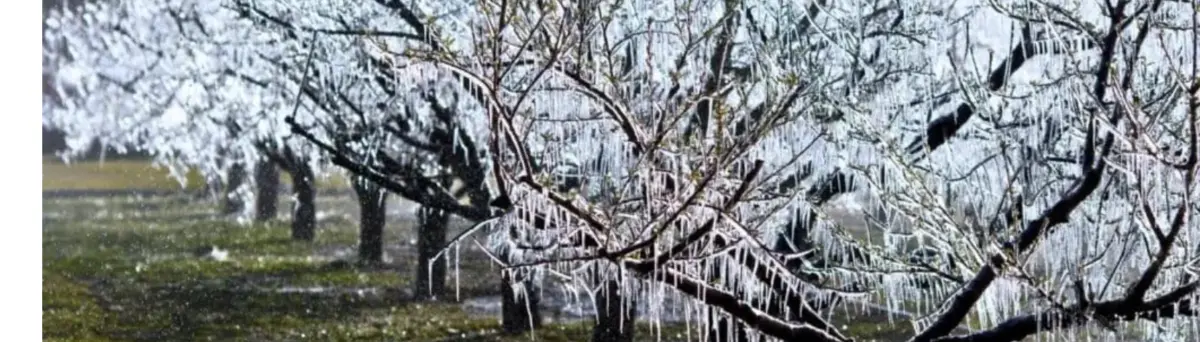
When a late-season cold front sweeps through during this delicate transition window, the consequences are immediate and severe. Crops such as peaches and blueberries—staples of the regional horticultural landscape—are exceptionally susceptible. Once floral tissues open, even a light frost can inflict lethal damage on reproductive organs. In many documented instances, the injury is insidious: blossoms may appear deceptively normal in the immediate aftermath of a frost event, only to wither and fail to set fruit days later.
Furthermore, the meteorological conditions accompanying these cold fronts often introduce secondary compounding pressures. Cool, cloudy, and windy weather severely depresses pollinator activity. Honeybees and native pollinators dramatically reduce their foraging behavior when temperatures drop and winds pick up. Consequently, even flowers that escape direct frost injury frequently miss their narrow window for successful pollination, leading to compromised fruit set and reduced harvest volumes.
Slowed Physiology and Cascading Stress
Beyond acute tissue damage, exposure to cold weather triggers a systemic deceleration of tree physiology. Following a late-season cold event, extension agents routinely observe delayed leaf-out, abnormally prolonged bloom periods, and sluggish fruit development.
While an extended bloom period might superficially appear advantageous, it actually increases cumulative risk by keeping vulnerable flowers exposed to potential secondary frost events over a longer calendar span. Moreover, the metabolic cost of repeatedly mobilizing defenses and attempting to recover from cold shock depletes a tree’s vital carbohydrate reserves. This cumulative physiological drain does not merely threaten the immediate season’s yield; it frequently compromises tree vigor and productivity well into the following agricultural cycle.
Supporting Context & Metrics: The Row Crop Dilemma and Soil Dynamics
While fruit orchards contend with the biological complexities of perennial dormancy and pollination, North Florida’s row crop producers face an entirely distinct yet equally formidable set of challenges.
Germination Bottlenecks and Early-Season Vulnerability
Spring-planted staples across the region—including watermelons, sweet corn, and various tender vegetables—rely heavily on warm soil and air temperatures to drive rapid, uniform germination and early vegetative growth. When unseasonal cold fronts drive soil temperatures down, germination rates plummet and become erratic.
For high-value crops like watermelons, uniform field establishment is the bedrock of efficient commercial production, dictating everything from fertilization schedules to harvest timing. When cold snaps produce uneven stands, overall field performance and market value drop precipitously.
Additionally, the cold, wet soil conditions that frequently accompany these fronts create an ideal breeding ground for soil-borne pathogens. The risk of damping-off and early-season plant mortality increases sharply. For young seedlings and delicate transplants already established in the field, frost poses an existential threat. Low temperatures cause direct leaf burn, stem necrosis, and, in severe cases, complete crop mortality.

Even when plants survive the initial chill, chronic cold stress stunts early vigor, delays canopy closure, and depresses final yield potential. Transplanted crops endure a particularly harsh ordeal; cold soils inhibit root system expansion, thereby prolonging transplant shock. This prolonged developmental lag leaves young plants defenseless against opportunistic pests and diseases that readily colonize weakened plant tissues.
The Drought Multiplier Effect
To fully understand the severity of the current agricultural situation, one must evaluate it through the lens of Florida’s persistent drought conditions. Drought and frost are rarely experienced in a vacuum; rather, they interact dynamically at the plant-soil-atmosphere interface.
From a microclimatic perspective, soil moisture acts as a critical thermal buffer. Moist soils possess a high heat capacity, absorbing solar radiation efficiently throughout the day and releasing that stored thermal energy slowly into the near-ground canopy layer after sunset. This slow release provides a natural blanket against rapid temperature drops.
In stark contrast, dry soils lack this thermal inertia. They absorb heat inefficiently and cool down precipitously the moment the sun sets. This dynamic results in significantly colder near-ground air temperatures over dry fields compared to well-irrigated acreage, vastly increasing the localized frequency and intensity of frost formation.
+-------------------------------------------------------------------------+
|                  THE SOIL MOISTURE THERMAL BUFFER EFFECT                |
+-------------------------------------------------------------------------+
|                                                                         |
|  MOIST SOIL (High Heat Capacity)        DRY SOIL (Low Heat Capacity)    |
|  [Day] Absorbs & stores solar heat.     [Day] Absorbs heat poorly.      |
|  [Night] Slowly releases heat.          [Night] Cools down rapidly.     |
|  RESULT: Buffers near-ground temps.     RESULT: Severe frost risk.      |
|                                                                         |
+-------------------------------------------------------------------------+
Consequently, two neighboring fields experiencing identical ambient air temperatures above the canopy can suffer radically different levels of frost injury based solely on their soil moisture profile. For North Florida growers, agricultural drought must be categorized not merely as a water-deficit issue, but as a primary risk amplifier for cold weather damage.
Official Statements and Expert Guidance
Agricultural extension specialists and industry leaders have emphasized that proactive management is the single most effective tool for mitigating the compounding hazards of late-season cold fronts and drought stress.
Derrick Conover, agricultural extension expert and researcher, underscores the urgency of strategic field management during this high-stakes window:
"These temperature swings come at a particularly sensitive time in the production cycle… The result is a narrow window where even brief periods of cold weather can have negative impacts on crop performance and yield potential. Growers should remain vigilant with planting decisions, monitor forecasts closely, and be prepared to implement protective measures where feasible. Careful management during this critical period can make the difference between a successful crop and a challenging season."
Highlighting the hidden danger of dry soils during frost events, extension advisories stress the importance of pre-irrigation whenever water availability permits. By maintaining adequate soil moisture prior to a forecasted cold snap, producers can leverage the natural thermal buffering capacity of water to elevate near-ground microclimate temperatures and enhance overall plant cellular resilience.
Furthermore, agronomists advise growers to delay non-essential field operations that could induce additional mechanical stress on plants already battling environmental fatigue. Scouting protocols must be heightened, with particular attention paid to monitoring root health in transplants and tracking emergence rates in direct-seeded acreage.
Future Outlook: Resilience in an Era of Weather Volatility
As agricultural producers look toward the remainder of the spring season and plan for future production cycles, the events in Columbia County serve as a stark reminder of the growing challenges posed by climatic unpredictability.
The convergence of late-season cold fronts with prolonged drought conditions highlights the urgent need for long-term adaptation strategies within North Florida agriculture. Key areas of focus for the industry moving forward include:
- Advanced Irrigation Infrastructure: Investing in modern, high-efficiency irrigation systems that allow for rapid, uniform pre-irrigation to maximize thermal buffering during frost events.
- Resilient Cultivar Selection: Partnering with agricultural research institutions to trial and adopt crop varieties exhibiting enhanced tolerance to temperature fluctuations and drought-induced physiological stress.
- Enhanced Microclimate Monitoring: Deploying localized soil and canopy temperature sensors to provide real-time data, enabling growers to deploy frost protection mechanisms with pinpoint accuracy.
- Soil Health Management: Implementing regenerative practices—such as cover cropping and organic matter enrichment—that improve soil structure, enhance water-holding capacity, and stabilize thermal profiles.
While the immediate economic and agronomic impacts of the current cold and dry weather spell will take weeks to fully assess, the resilience of Columbia County’s farming community remains its strongest asset. By combining rigorous meteorological tracking, sophisticated soil and water management, and proactive crop protection strategies, North Florida producers can better insulate their operations against the compounding shocks of an increasingly volatile climate.

0 Comments