

By Derrick Conover
Published: March 18, 2026
Executive Overview
Agricultural producers across Columbia County and the broader North Florida region are grappling with a high-stakes convergence of environmental stressors. Following what local farming communities hope will be the final cold front of the winter-to-spring transition season, agricultural extension specialists are assessing the profound impacts of unseasonably late temperature swings. These dramatic weather shifts have arrived at a singularly delicate juncture in the regional production cycle—a time when perennial fruit trees are breaking dormancy and emerging into bloom, while annual row crops are actively being seeded or pushing their first cotyledons above the soil line.
The confluence of late-season frost events and persistent, multi-season drought conditions has created a precarious operational environment. In this narrow window of vulnerability, even brief, minor dips into freezing temperatures can severely compromise crop performance, delay physiological milestones, and drastically erode overall yield potential. For fruit and vegetable producers, the margin for error is razor-thin. This report provides an in-depth analysis of the physiological impacts of recent cold fronts on local agriculture, examines how concurrent drought conditions exacerbate freeze damage, and outlines critical management strategies for growers navigating this challenging season.
Detailed Chronology: The Anatomy of a Late-Season Cold Event
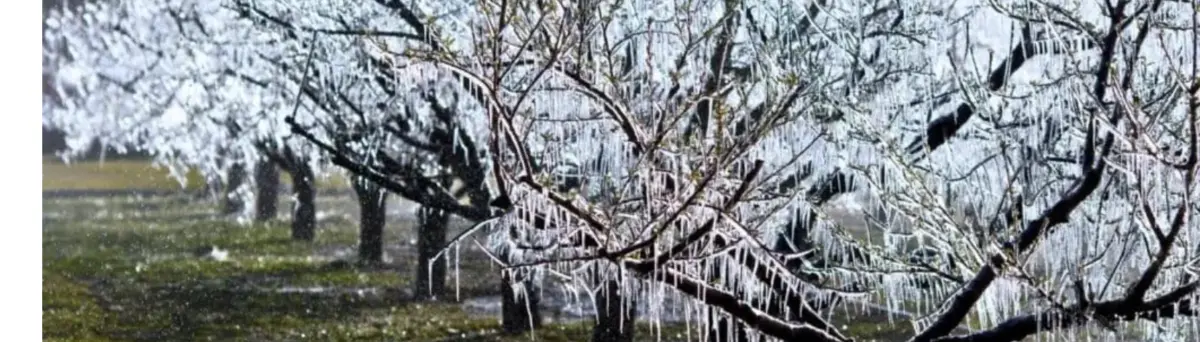
The arrival of the recent cold front underscored the precarious nature of early spring weather in North Florida. As polar air masses pushed southward, temperatures plummeted below freezing across low-lying agricultural areas in Columbia County, catching many early-stage crops unprotected. To understand the gravity of these late-season cold snaps, one must examine the specific chronological vulnerabilities of both perennial fruit systems and annual row crops during this phase of the production cycle.
Perennial Fruit Crops Under Siege
For fruit tree production—most notably peaches and blueberries, which form a cornerstone of North Florida’s specialty crop economy—the timing of a freeze is the single most critical determinant of survival and profitability.
During the depths of winter dormancy, these crops possess a remarkable physiological resilience, tolerating sub-freezing temperatures with little to no internal cellular damage. However, as day lengths increase and ambient temperatures gradually warm during late winter, trees undergo a rapid transition. They begin to push buds, mobilize stored carbohydrates, and enter the blooming phase. As this transition occurs, their natural cold tolerance plummets.
Once flowers are fully open, the reproductive tissues—specifically the pistils, stamens, and developing ovaries—are exceptionally sensitive. Even a light frost can rupture cell walls within these delicate structures. The consequences are often deceptive:
- Delayed Symptom Expression: Injury is rarely immediately visible following a frost. Blossoms may appear completely normal and undamaged for days, tricking growers into a false sense of security, only to fail in setting fruit as the days progress.
- The Pollination Penalty: Beyond direct thermal injury, cooler ambient temperatures during and immediately following a cold event severely suppress pollinator activity. Honeybees and native pollinators become largely inactive when temperatures drop, or when weather conditions turn cloudy and windy. This compounds the crisis, drastically shortening an already brief flowering window.
Furthermore, cold stress initiates a cascading series of physiological slowdowns. Delayed leaf-out, extended and erratic bloom periods, and stunted fruit development are systemic responses to late-season chill. An extended bloom period leaves the crop exposed to a rolling risk of subsequent frost events. Repeated thermal stress drains the tree’s vital carbohydrate reserves, depressing not only the immediate season’s yield but also weakening the structural vigor and productivity of the orchard for the following year.
Annual Row Crops and Early-Season Vulnerability
While orchards face threats to their blossoms and canopy vigor, North Florida’s spring-planted row crops—including commercial watermelon, sweet corn, and an array of warm-season vegetables—encounter an entirely different set of operational hazards.
Many of these crops are planted into soils that have not yet achieved optimal thermal stability. When cold air masses sweep through, they chill both the atmosphere and the upper soil profile. This initiates a destructive chain reaction:

- Erratic Germination and Poor Stand Establishment: Cool soils significantly delay seed germination. Instead of a uniform emergence that allows for synchronized harvesting and chemical applications, growers face staggered, uneven stands. In uniformity-dependent crops like watermelon, this variability compromises packing efficiency and market value.
- Pathogen Activation: Cold, saturated soils create a microclimate ideal for soil-borne fungal pathogens. The risk of damping-off—a fungal disease that kills seeds or seedlings before or after they emerge—skyrockets, leading to significant early plant loss.
- Direct Transplant and Seedling Shock: For crops already established as young seedlings or greenhouse transplants, frost causes direct foliar burn, stem necrosis, and whole-plant mortality. Even when plants survive, the chronic cold stress induces stunted growth, restricted root expansion, and prolonged transplant shock. This physiological lag leaves young plants defenseless against opportunistic pests and secondary infections that readily exploit compromised plant tissues.
Supporting Context & Metrics: How Drought Amplifies Cold Damage
Compounding the immediate thermal threats posed by the cold front is a deeper, persistent environmental stressor: drought. Florida’s ongoing dry conditions have transformed what would otherwise be manageable cold events into high-risk agricultural crises. While drought and frost are frequently analyzed as distinct meteorological phenomena, their physiological and microclimatic impacts are inextricably linked.
The Physics of Soil Moisture and Thermal Buffering
At the field level, the moisture content of the soil plays a monumental role in determining how severely a frost will impact a crop.
- Moist Soils as Thermal Reservoirs: Soils with adequate moisture possess a high heat capacity. During daylight hours, they absorb solar radiation, storing substantial thermal energy. As ambient temperatures drop rapidly after sunset, moist soils slowly release this stored heat into the microclimate immediately surrounding the crop canopy. This natural buffering effect can elevate ambient ground-level temperatures by several crucial degrees, frequently preventing the formation of damaging frost on low-lying vegetation.
- The Danger of Dry Soils: Conversely, dry soils possess a notoriously low heat capacity. They heat up quickly under the sun but cool down precipitously the moment sunlight fades. Without moisture to store and radiate thermal energy, dry fields experience significantly colder near-ground temperatures than adjacent, well-watered lands.
Consequently, two distinct agricultural fields experiencing the exact same macro-level air temperature can sustain radically different levels of freeze injury based solely on their soil moisture status. For North Florida growers operating under current drought advisories, dry soil conditions must be aggressively factored into risk assessments as a primary multiplier of cold damage.
Physiological Stress Multiplication
Beyond the microclimate, internal plant water deficits interact destructively with cold stress:
- Cellular Dehydration: Drought conditions force plants to conserve water, often resulting in lower cellular turgor pressure and reduced concentrations of protective solutes. When freezing temperatures strike a drought-stressed plant, the formation of ice crystals within extracellular spaces causes more severe and irreversible cellular disruption than it would in a fully hydrated, turgor-rich plant.
- Compromised Root Systems: Drought restricts root elongation and vigor. When cold soils are also dry soils, newly transplanted or emerging crops cannot establish the root networks necessary to absorb water and nutrients, locking the plant into a prolonged state of vulnerability.
Official Statements and Extension Guidance
Agricultural extension agents and regional crop specialists have mobilized in response to the recent weather events, issuing critical guidance to help producers mitigate further losses.
Derrick Conover, agricultural specialist and author of the local advisory, emphasizes the necessity of proactive management during transitional weather periods. According to extension directives, growers are urged to maintain rigorous vigilance in monitoring localized weather forecasts, particularly tracking soil temperature thresholds rather than relying solely on broad regional air temperature predictions.
Furthermore, extension entomology and agronomy advisories highlight the management of soil moisture as an active defense mechanism:
- Pre-Irrigation Strategies: Where water availability and irrigation infrastructure permit, applying a targeted irrigation cycle prior to the arrival of a forecasted freeze can significantly moderate field-level temperatures. Pre-wetting dry soils enhances their thermal conductivity and heat-storage capacity, providing vital degrees of frost protection for vulnerable crops.
- Post-Freeze Assessment Protocols: Extension specialists advise growers against immediate pruning or culling of suspected freeze-injured crops. Because damage to fruit blossoms and young vegetative tissues often takes several days to become outwardly apparent, premature corrective actions can result in the removal of viable tissue that might have recovered. Growers should allow a recovery period of 4 to 7 days post-freeze to accurately evaluate the extent of tissue necrosis before making critical replanting or pruning decisions.
Future Outlook: Building Resilience in a Variable Climate
As agricultural producers look toward the remainder of the spring season and prepare for future production cycles, the events of this past week serve as a stark reminder of the growing variability in regional weather patterns. The intersection of late-season cold fronts and chronic drought highlights the urgent need for long-term climate resilience in North Florida agriculture.
Strategic Adaptations for Growers
To safeguard operational viability against increasingly erratic weather, regional producers are increasingly turning to advanced management and technological strategies:
- Microclimate Modification Infrastructure: The integration of automated overhead sprinklers for freeze protection, wind machines, and high-efficiency drip irrigation systems allows growers to actively manage field temperatures and soil moisture profiles during critical freeze-drought events.
- Diversified Planting Schedules and Varietal Selection: Agronomists recommend exploring fruit and vegetable varieties bred for enhanced cold-hardiness during early bud-break, as well as staging planting dates for row crops to minimize the statistical overlap between peak germination and historical frost windows.
- Soil Health and Organic Matter Management: Implementing cover cropping, reduced-tillage practices, and organic amendments can substantially improve soil structure and water-holding capacity. Enhancing soil organic matter directly boosts the thermal buffering capacity of agricultural fields, mitigating the extreme temperature swings associated with dry, cold weather fronts.
Conclusion
The recent cold front and its interaction with ongoing drought conditions in Columbia County underscore the delicate balance required in modern agricultural production. While the full economic impact on fruit yields and row crop establishment will take weeks to quantify, the immediate takeaway for growers is clear. Vigilance in monitoring weather data, strategic management of soil moisture, and a readiness to deploy protective interventions are the primary tools available to mitigate risk. Through careful, science-based management during these high-stakes transitional periods, North Florida farmers can navigate the uncertainties of a shifting climate and protect the foundation of the region’s agricultural economy.

0 Comments