

By Dr. Derrick R. Conover
UF/IFAS Extension, Columbia County
Published: October 22, 2025
Executive Overview
As the scorching days of summer fade and the crisp transition of autumn arrives in North Florida, the region’s agricultural landscape enters a deceptive period of rest. Across Columbia County and the broader North Florida flatwoods and uplands, production fields, market gardens, and pasturelands wind down after a long, grueling growing season. To the untrained eye, these resting fields appear ready to sleep through the cooler months. However, experienced agronomic professionals know that the soil should never truly go dormant.
Leaving agricultural soils bare and exposed during the fall and winter months is an invitation to degradation. Nutrient leaching from winter rains, wind erosion across sandy coastal plain soils, and the aggressive invasion of cool-season weeds threaten to compromise the productive capacity of the land before spring planting even begins. The strategic implementation of cover crops offers a powerful, cost-effective, and ecologically sound countermeasure.
Whether managing a multi-acre commercial vegetable operation, a small-scale market garden, or livestock pastureland, planting cover crops in the fall protects vulnerable acreage from erosion, naturally enhances soil fertility, breaks up hardpan layers, and builds long-term organic matter. By investing in living roots through the winter, producers lay the critical groundwork for robust yields, superior weed suppression, and heightened ecosystem resilience in the upcoming agricultural cycle.
Detailed Chronology and Seasonal Management of Cover Crops
Integrating cover crops successfully requires a clear timeline that aligns with North Florida’s unique subtropical climate. Unlike regions with harsh northern winters, North Florida experiences mild, occasionally volatile cool seasons where timely establishment dictates the ultimate success of a cover cropping program.
Late Summer to Early Fall: Planning and Soil Testing
Preparation begins well before the first cold snap. In late summer, growers should evaluate their fields, determine specific management goals—such as nitrogen fixation, compaction relief, or nematode suppression—and conduct comprehensive soil tests. Soil testing is especially critical if the production plan involves multi-species mixes, such as combining nitrogen-fixing legumes with nutrient-scavenging brassicas, to ensure optimal pH and baseline fertility levels.
Early to Mid-Fall: Planting and Establishment
As daytime temperatures begin to moderate in October, window frames open for planting cool-season cover crops. Moisture availability is paramount during this phase; planting ahead of predicted autumn rain events ensures rapid germination. Fast-growing options like oats and rye establish quickly, creating canopy cover that shades out competitive winter weeds and cushions the soil surface against heavy autumn downpours.
Winter: Growth, Scavenging, and Root Penetration
Through the coldest months of the year, cover crops act as active biological agents. Deep taproots from species like forage radishes drill down into compacted subsoils, while dense networks of fibrous roots stabilize the topsoil. Legumes form symbiotic relationships with native and inoculated rhizobia bacteria, steadily pulling atmospheric nitrogen and locking it into plant biomass rather than allowing it to leach past the root zone into local water tables.
Early Spring: Biomass Management and Termination
The culmination of the cover crop cycle occurs in early spring, typically several weeks before planting cash crops. Timing termination is a delicate balancing act. Growers must terminate cover crops—usually via mowing, rolling-crimping, or incorporation—at the optimal stage, such as early bloom for legumes. Terminating too early sacrifices valuable biomass and nitrogen accumulation; waiting too long can result in woody stalks that tie up soil nitrogen during decomposition and create challenges for spring tillage and planting equipment.
Supporting Context and Metrics: Five High-Performing Cover Crops for North Florida
Selecting the right plant species is paramount to achieving specific agronomic objectives. Environmental conditions in Columbia County—characterized by sandy soils, variable drainage, and subtropical warmth—favor specific cool-season varieties. The following five cover crops have demonstrated exceptional performance throughout North Florida.
1. Crimson Clover (Trifolium incarnatum)
- Primary Benefits: Nitrogen fixation, pollinator support, and abundant spring biomass.
- Agronomic Profile: Crimson clover stands out as one of the most reliable and aesthetically striking cool-season legumes suited for North Florida. It excels at fixing atmospheric nitrogen, significantly reducing or even eliminating the need for synthetic nitrogen fertilizers for subsequent spring vegetable or grain crops. Beyond its soil-building capabilities, its brilliant crimson flowers emerge in early spring, creating a vital, early-season nectar and pollen resource for honeybees, bumblebees, and beneficial native pollinators.
- Management & Termination: To maximize nitrogen contributions, growers should mow or roll crimson clover at the early bloom stage, preventing the plants from setting hard seed and transforming into persistent weeds.
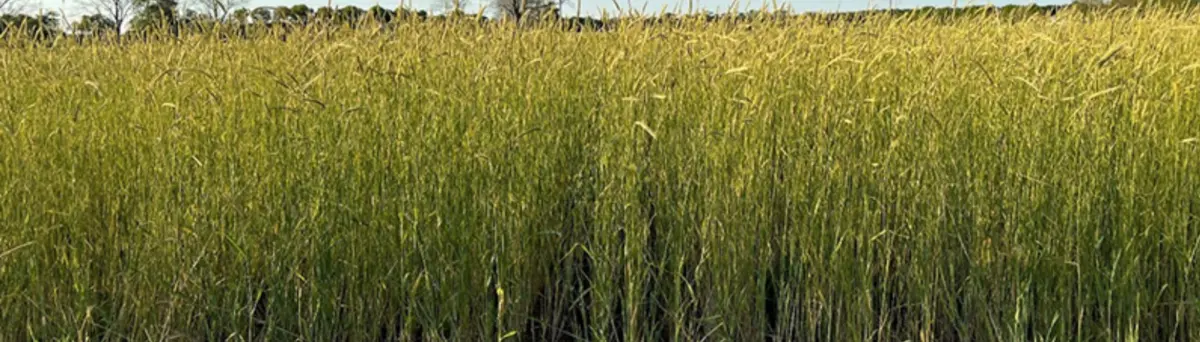
2. Rye (Secale cereale)
- Primary Benefits: Exceptional erosion control and aggressive weed suppression.
- Agronomic Profile: Cereal rye is arguably the hardiest grass available for southern winter management. It thrives remarkably well in sandy, nutrient-deficient soils and tolerates dropping temperatures that stall other plants. Rye produces an immense amount of dense above-ground growth and root mass, effectively shielding fragile topsoil from wind and water erosion while physically shading out winter weed species. Furthermore, its allelopathic properties naturally inhibit the germination of certain weed seeds. Rye is also exceptionally versatile, making it an ideal companion grass to mix with winter legumes like clover or vetch.
- Management & Termination: Because of its rapid spring growth, cereal rye must be managed carefully to prevent it from becoming woody and difficult to incorporate into the soil prior to spring planting.
3. Oats (Avena sativa)
- Primary Benefits: Rapid fall growth, temporary livestock forage, and organic matter accumulation.
- Agronomic Profile: Oats germinate and grow at a blistering pace during the warm weeks of early autumn, making them an ideal choice for quick temporary forage or rapid ground coverage. While oats do not possess the extreme freezing tolerance of cereal rye, they thrive in North Florida’s milder winter climate if planted early enough. They provide a lush, palatable source of grazing material for livestock operations before breaking down rapidly to contribute valuable organic matter to the soil profile.
- Management & Termination: Because they are more susceptible to hard freezes than rye, oat stands often self-terminate or weaken significantly during colder winter spells, simplifying spring seedbed preparation.
4. Austrian Winter Pea (Pisum sativum subsp. arvense)
- Primary Benefits: Heavy nitrogen fixation and high early-spring biomass production.
- Agronomic Profile: Austrian winter peas produce thick, viney growth that blankets the soil surface. When planted in compatible mixes with small grains—which provide physical structural support for the climbing vines—these peas excel at pulling atmospheric nitrogen into the soil system. When properly managed and incorporated in the spring, Austrian winter peas can supply up to 100 pounds of available nitrogen per acre, serving as a powerful biological fertilizer substitute.
- Management & Termination: Their lush, sprawling habit requires careful termination timing to ensure complete breakdown and nutrient release ahead of cash crop establishment.
5. Radish (Raphanus sativus var. longipinnatus)
- Primary Benefits: Remediation of soil compaction and deep nutrient scavenging.
- Agronomic Profile: Frequently referred to in agronomic circles as the “tillage radish” or daikon radish, this robust brassica sends a massive, aggressive taproot deep down into the soil profile. This natural root structure physically shatters hardpan layers caused by years of heavy equipment traffic and tillage. As these deep roots decompose over the late winter and early spring, they leave behind vertical channels that drastically improve soil aeration and water infiltration. These channels serve as ready-made pathways for the delicate roots of the following season’s cash crops. Additionally, brassicas scavenge residual soil nutrients, preventing them from leaching deep into the groundwater table.
- Management & Termination: Radishes break down rapidly after freezing temperatures, releasing scavenged nutrients quickly back into the upper soil profile.
Official Perspectives and Expert Insights
To better understand how these practices scale from large commercial row-crop operations down to urban homesteads and small market farms, agricultural extension professionals emphasize that cover crops are no longer experimental—they are foundational components of modern, sustainable farm management.
According to Dr. Derrick R. Conover of the UF/IFAS Extension Columbia County Office, the misconception that cover crops are exclusively for large-scale commodity farmers must be dismantled.
"Cover crops aren’t just for large operations; they’re one of the most cost-effective tools for improving soil health on any scale," Dr. Conover explains. "Planting this fall can set the stage for better fertility, fewer weeds, and more resilient crops in the upcoming seasons. Getting your soil tested first will help you determine if you need to add any specific nutrients, especially if you are planning a diverse legume or brassica mix."
Agronomists also stress the importance of regional adaptation. Recommendations developed for the Midwest or even South Florida do not always translate seamlessly to the sandy, well-drained soils and fluctuating winter temperatures characteristic of Columbia County and North Florida. Utilizing locally vetted cultivars ensures that planting efforts yield maximum ecological and economic dividends.
Future Outlook: Building Long-Term Agricultural Resilience
Looking toward the future of North Florida agriculture, the adoption of cover cropping is poised to play an increasingly vital role in farm economics and environmental stewardship. With input costs—including synthetic fertilizers, herbicides, and fuel—remaining volatile, biological management systems offer a reliable buffer against market fluctuations.
By harnessing natural processes such as atmospheric nitrogen fixation, biological tillage via taproots, and weed suppression through dense crop canopies, producers can progressively reduce their reliance on off-farm inputs while simultaneously building soil organic matter. Higher organic matter content directly translates to enhanced water-holding capacity, a critical metric for weathering seasonal droughts and unpredictable rainfall events that climate models project for the region.
Furthermore, as regulatory frameworks and public interest increasingly emphasize water quality protection within the Suwannee River basin and surrounding watersheds, the nutrient-scavenging capabilities of cover crops like rye and radishes provide an indispensable defense against nitrate leaching.
Ultimately, transitioning bare winter fields into living, breathing agroecosystems is an investment that pays dividends year after year. By taking action this fall, North Florida growers are not merely resting their land—they are actively engineering a more productive, profitable, and resilient agricultural future.
Resources and Contact Information
For growers seeking tailored technical guidance, seed source recommendations, or assistance with soil sampling protocols, local agricultural extension support is readily available.
-
UF/IFAS Extension Columbia County Office
- Phone: (386) 752-5384
- Online Resources: UF/IFAS Extension Cover Crops Directory
- Office Location: Lake City, Florida
-
Author Contact:
- Dr. Derrick R. Conover
- UF/IFAS Extension, Columbia County

0 Comments