

By Derrick Conover
Published: March 18, 2026
Executive Overview
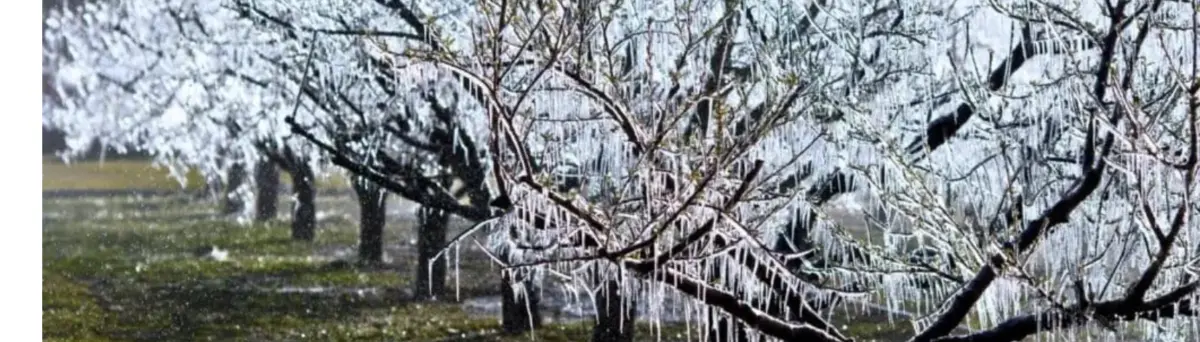
Agricultural producers across Columbia County and the broader North Florida region are navigating a precarious intersection of environmental stressors as the area encounters what local experts hope will be the final cold front of the season. Arriving at a profoundly sensitive juncture in the annual agricultural production cycle, these sudden temperature swings coincide with the precise moment fruit trees break their winter dormancy and delicate row crops undergo active planting and early emergence.
This narrow, highly volatile operational window means that even brief, overnight excursions into freezing temperatures can trigger cascading negative impacts on crop performance, physiological vigor, and ultimate yield potential. Compounding this seasonal transition is an ongoing regional drought, creating a compounding hazard where dry soils amplify frost severity and heighten plant vulnerability. For local farmers cultivating everything from perennial stone fruits to spring-seeded vegetables, meticulous near-term management, rigorous frost monitoring, and strategic risk mitigation are no longer just recommended practices—they are the critical margins between economic viability and severe seasonal loss.
Detailed Chronology: The Anatomy of a Late-Season Weather Hazard
The timeline of agricultural vulnerability in North Florida is dictated by a delicate biological clock. As winter recedes, perennial crops and early spring plantings undergo rapid physiological shifts. When a late-season cold front sweeps through the region under these conditions, the sequence of events can severely disrupt normal farm operations.
Phase 1: The Transition from Dormancy to Bloom
During the heart of winter, fruit trees such as peaches and blueberries rest in a state of deep dormancy. In this physiological shutdown, these crops can easily withstand freezing temperatures with little to no cellular damage. However, rising ambient temperatures act as an environmental trigger, signaling the trees to push new buds and initiate the bloom cycle.
As this transition accelerates, the cold tolerance of the plant declines precipitously. Once flowers fully open, their delicate reproductive tissues become exceptionally vulnerable. A light, transient frost that would have caused zero harm in January can devastate a crop in March. In many instances, the resulting injury is deceptively invisible at first glance: blossoms may maintain a normal outward appearance for days before failing entirely to develop into fruit.
Phase 2: Disruption of Pollination Dynamics
The timing of a late-season cold front introduces secondary environmental barriers to production, most notably the suppression of pollinator activity. Successful fruit set in crops like blueberries relies heavily on active populations of bees and other beneficial insects.
However, these pollinators drastically reduce their foraging activity under the cool, cloudy, and windy conditions that typically accompany late-season cold fronts. This behavioral shift severely narrows an already brief flowering window, drastically reducing the rate of successful cross-pollination and compounding the physiological losses inflicted by the cold itself.
Phase 3: Systemic Physiological Slowdown
Beyond direct tissue necrosis, cold weather exerts a systemic drag on overall tree physiology. Post-freeze observations frequently reveal:
- Delayed leaf-out: A sluggish start to foliar development limits the tree’s photosynthetic capacity.
- Extended bloom periods: Prolonged or staggered flowering stretches the vulnerability window, exposing subsequent waves of blossoms to repeated frost risks.
- Depleted carbohydrate reserves: Repeated stress forces the tree to expend precious stored energy on recovery rather than fruit production, impacting not only the immediate harvest but also diminishing productivity and bud set for the following agricultural year.
Supporting Context & Metrics: Row Crops and the Drought Multiplier
While perennial orchards grapple with bloom-stage vulnerability, North Florida row-crop producers face an entirely different yet equally hazardous set of operational challenges.
The Row-Crop Vulnerability Matrix
Spring-planted staples across the region—including watermelons, sweet corn, and various warm-season vegetables—are heavily dependent on warm soil and air temperatures during germination and early vegetative growth.

- Uneven Germination and Poor Stand Establishment: When soil temperatures drop in response to a cold front, seed germination is significantly delayed and rendered uneven. In uniform-market crops like watermelon, where harvest efficiency relies on synchronized maturity, this variability degrades overall field performance and pack-out percentages.
- Pathogen Proliferation: Cold, wet soil conditions create an ideal microclimate for soil-borne pathogens, sharply elevating the risk of seedling diseases such as damping-off and sudden plant mortality.
- Transplant Shock and Tissue Burn: For young seedlings and freshly set transplants, frost poses an immediate threat of leaf burn, stem girdling, and total plant collapse. Even when plants manage to survive, cold-induced stress stunts root architecture, prolongs transplant shock, and leaves the crop uniquely vulnerable to secondary infestations by opportunistic pests and pathogens that easily colonize weakened plant tissues.
The Drought Multiplier Effect
To fully understand the severity of recent agricultural stress in Columbia County, one must examine it through the lens of ongoing regional drought conditions. While drought and frost are frequently analyzed as distinct weather events, their physiological and microclimatic impacts are inextricably linked.
[Dry Soil Conditions]
       ↓ (Low Thermal Heat Capacity)
[Rapid Heat Loss Post-Sunset]
       ↓ (Near-Ground Microclimate Cooling)
[Enhanced Frost Formation & Severity]
       ↓ (Amplified Crop Damage & Yield Loss)
From a field-level microclimate perspective, soil moisture acts as a natural thermal buffer. Moist soils readily absorb and store solar radiation throughout the day, slowly releasing that stored heat into the lower atmosphere during the night to protect against rapid temperature drops.
Conversely, dry soils possess a drastically lower heat capacity. They heat up quickly under the sun but radiate that warmth away almost immediately after sunset. This thermodynamic deficit results in significantly colder near-ground air temperatures directly over dry fields, dramatically increasing both the frequency and intensity of localized frost formation.
Consequently, two adjacent fields experiencing the exact same ambient air temperature can suffer wildly disparate levels of crop damage simply due to variations in soil moisture content. For growers across North Florida, persistent dry conditions serve as a major multiplier of frost risk. Where water resources and irrigation infrastructure permit, pre-irrigating fields prior to a forecasted freeze event remains an essential tactic for moderating microclimate temperatures and buffering vulnerable crops against catastrophic failure.
Official Statements and Industry Guidance
Agricultural extension agents and regional crop advisors emphasize that vigilance must remain the operational standard as unpredictable weather patterns persist through the spring transition.
“These temperature swings catch production systems at their absolute most vulnerable,” notes regional agricultural advisory literature. “When you combine the physiological vulnerability of bud break and early germination with the severe microclimatic penalty of dry soils, the margin for error disappears.”
Experts strongly urge producers to maintain strict adherence to localized meteorological forecasts rather than relying on generalized regional predictions. Farm managers are advised to keep emergency frost-protection protocols—ranging from overhead sprinkler irrigation systems for freeze protection to row covers for high-value vegetable beds—in a state of immediate readiness.
Furthermore, extension specialists stress the importance of post-event scouting. Because cold injury is not always immediately apparent, growers must look beyond initial visual assessments to evaluate root health, vascular tissue integrity, and early stress symptoms before making critical decisions regarding replanting or chemical applications.
Future Outlook: Adaptation and Long-Term Resilience
As agricultural producers look toward the remainder of the season and prepare for future production cycles, the compounding pressures of late-season freezes and persistent drought underscore the growing need for climate-resilient farming strategies in North Florida.
Strategic Adjustments for Growers
- Enhanced Irrigation Management: Integrating soil moisture monitoring telemetry can help growers optimize pre-freeze irrigation schedules, maximizing the natural thermal buffering capacity of soils while conserving increasingly precious water resources.
- Variety Selection: Breeding programs focused on chilling-hour requirements and frost-tolerant bloom timing offer long-term promise for perennial crop sectors like blueberries and peaches, helping to shift critical developmental stages past the historical window of late-season cold fronts.
- Soil and Residue Management: Adopting conservation tillage practices that preserve surface residue can alter microclimatic heat dynamics, providing incremental protection against rapid nocturnal cooling during transitional weather events.
Ultimately, navigating these high-stakes environmental hazards requires a proactive mindset. As variable weather patterns challenge traditional agricultural calendars, careful, data-driven management during this critical spring window will continue to dictate the boundary line between a successful harvest and a challenging, costly season.
Category: Agriculture, Crops
Tags: Agriculture, Frost Protection, Row Crops, Fruit Production, Drought Management, North Florida

0 Comments