

By Derrick Conover
Published: March 18, 2026
Executive Overview
Agricultural producers across Columbia County and the broader North Florida region are grappling with a precarious convergence of extreme weather events. As what local agricultural authorities hope to be the final cold front of the season sweeps through the area, growers find themselves navigating a notoriously sensitive window within the annual crop production cycle. This latest meteorological shift arrives precisely as perennial fruit trees break their winter dormancy and the region’s vital row crops are actively being planted or emerging from the soil.
The juxtaposition of plunging temperatures and a lingering, severe drought has created a high-stakes environment for local farmers. In agriculture, timing is everything. When unseasonal or late-season cold fronts intersect with fragile developmental stages—such as bud break, early flowering, and seed germination—even a brief window of sub-optimal temperatures can dramatically impair crop performance, compromise uniformity, and severely diminish overall yield potential.
This comprehensive report examines the physiological impacts of this week’s cold front on both fruit orchards and spring row crops, explores the compounding danger of concurrent drought conditions, and outlines essential management strategies for local producers looking to safeguard their harvest in an increasingly volatile climate.
Detailed Chronology: The Anatomy of a Late-Season Cold Event
The arrival of a late-season cold front is never a welcome event for agriculturalists, but the timing of this week’s temperature drop has amplified its potential for agricultural damage. To understand the gravity of the situation, one must examine the physiological milestones crops are currently undergoing and how sudden thermal shifts disrupt these natural processes.
Fruit Crops at the Crossroads of Dormancy and Bloom
During the depths of winter dormancy, most temperate and subtropical fruit crops possess a remarkable natural resilience, capable of tolerating freezing temperatures with little to no structural or physiological damage. However, as lengthening spring days and warming trends signal the transition out of dormancy, trees undergo rapid biological shifts. Buds swell, leaves begin to push, and the trees enter their bloom phase.
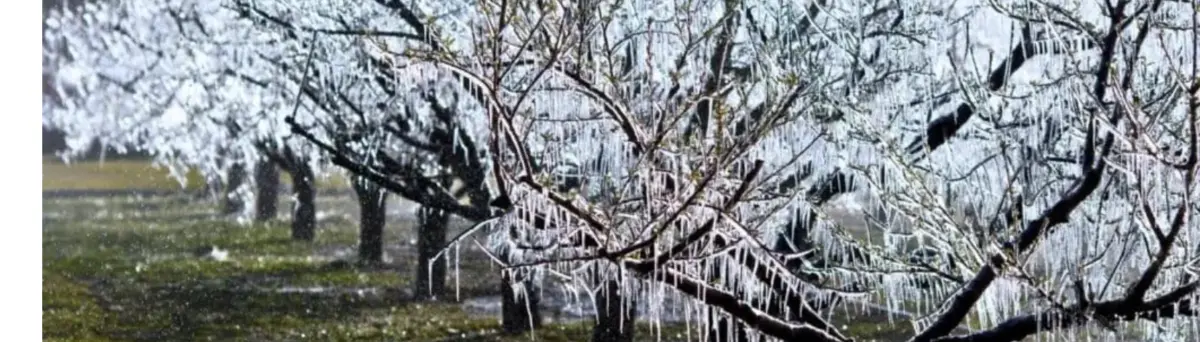
Unfortunately, as this transition occurs, a tree’s cold tolerance declines precipitously. High-value regional crops such as peaches and blueberries are exceptionally vulnerable during this phase. Once floral tissues are fully exposed and open, even a light, fleeting frost can inflict irreversible damage on reproductive organs.
[Winter Dormancy] ---> [Bud Break & Bloom] ---> [Frost Exposure] ---> [Impaired Pollination / Tissue Damage] ---> [Yield Loss]Crucially, the injury caused by a late frost is not always immediately apparent to the naked eye. In many instances, blossoms may appear structurally normal for days following a cold event, masking the internal cellular destruction that has rendered them incapable of fertilization.
Compounding the problem of direct tissue damage is the behavioral response of essential pollinators. Insects such as bees and native pollinators are notoriously sensitive to ambient weather conditions. During cool, cloudy, or windy days—conditions that frequently accompany and follow cold fronts—pollinator activity drops off sharply. Because the flowering window for many fruit crops is already narrow, a combination of frost-damaged blooms and reduced pollinator flights can result in poor fruit set or, in worst-case scenarios, a complete commercial crop failure.
Physiological Setbacks and Long-Term Stress
Beyond the immediate hazards of frost and bloom failure, cold snaps exert a lingering physiological toll on fruit trees. General tree metabolism slows markedly when temperatures dip below optimal thresholds. Growers frequently observe delayed leaf-out, unnaturally extended bloom periods, and sluggish fruit development in the aftermath of a late-season cold event.
While an extended bloom period might sound benign, it actually increases systemic risk by exposing developing flowers to a wider window of potential subsequent frost events. Furthermore, the energetic cost of recovering from cold stress and pushing out secondary blooms draws heavily upon the tree’s carbohydrate reserves. This repeated metabolic stress can compromise tree vigor, impacting not only the immediate season’s harvest but also reducing bud set and overall productivity for the following year.
Row Crops: The Vulnerabilities of Germination and Early Growth
While orchards battle the complexities of bloom and pollination, North Florida’s row crop producers face an entirely different—yet equally formidable—set of challenges. Spring-planted staples such as watermelon, sweet corn, and various warm-season commercial vegetables rely heavily on warm soils and ambient air temperatures for successful germination and early vegetative vigor.

When cold air masses drive soil temperatures downward, seed germination is immediately delayed and becomes highly uneven. In commercial production systems—particularly for crops like watermelon, where field uniformity is paramount for efficient harvesting and market timing—patchy emergence ruins scheduling and reduces overall field performance.
Furthermore, cold and wet soil conditions create an ideal microenvironment for soil-borne pathogens. The risk of seedling diseases, notably damping-off and root rot, spikes dramatically under these conditions, leading to early plant mortality and compromised stand density.
For seedlings that have already emerged or transplants that have just been set in the field, frost represents an acute and direct threat. Young tissue is highly susceptible to leaf burn, stem girdling, and complete plant death depending on the duration and intensity of the freeze. Even when young plants survive, the metabolic shock of cold stress stunts early growth, leaving plants weakened and susceptible to secondary pressures. Transplanted crops bear an even heavier burden, as cold conditions inhibit root system establishment and drastically prolong transplant shock. This physiological lag opens a window of opportunity for opportunistic pests and diseases to colonize weakened tissues.
Supporting Context & Metrics: How Drought Amplifies Cold Damage
To fully contextualize the challenges facing Columbia County growers, one must factor in the ongoing drought conditions persisting across Florida. While drought and frost are frequently analyzed as distinct, isolated agricultural hazards, their physiological and microclimatic impacts are deeply intertwined.
The Soil Moisture Buffer: Science and Field Realities
At the heart of the interaction between drought and cold damage lies the physical property of soil heat capacity. Water has a remarkably high specific heat capacity, meaning it can absorb, store, and slowly release vast amounts of thermal energy compared to dry soil or air.
- Moist Soils: During sunny spring days, wet soils absorb solar radiation and store thermal energy. After sunset, this stored heat is slowly radiated upward into the canopy, providing a crucial thermal buffer that can raise near-surface temperatures by several critical degrees—often the difference between sustaining frost damage and escaping unharmed.
- Dry Soils: Conversely, drought-stricken, dry soils possess a low heat capacity. They heat up quickly under the sun, but they lose that heat just as rapidly after sunset. Without the thermal inertia provided by soil moisture, fields subjected to clear skies and dry conditions experience much more severe, rapid temperature drops directly at the ground level where young crops and low-hanging fruit buds reside.
+-----------------------------------------------------------------+
|                    SOIL MOISTURE COMPARISON                     |
+---------------------------------+-------------------------------+
|          MOIST SOIL             |           DRY SOIL            |
+---------------------------------+-------------------------------+
| • High heat capacity            | • Low heat capacity           |
| • Absorbs & retains daily heat  | • Cools rapidly after sunset  |
| • Radiates warmth upward at night| • Severe near-ground cooling |
| • Provides natural frost buffer | • Heightened frost risk       |
+---------------------------------+-------------------------------+
Practical field observations in North Florida confirm this phenomenon: two neighboring fields experiencing the exact same general air temperature can sustain vastly different levels of frost injury solely based on their underlying soil moisture status. For local growers operating under drought advisories, dry soil is not merely a water-availability issue; it is a primary risk multiplier for cold-weather crop injury.
Mitigation and Risk Management
Recognizing this dynamic allows proactive producers to implement targeted defensive measures. Where water resources and irrigation infrastructure permit, applying irrigation to dry soils prior to a forecasted cold event can significantly enhance field resilience. Pre-event watering elevates soil moisture levels, maximizing the thermal buffering capacity of the ground and protecting delicate root zones and low-growing foliage from extreme temperature plunges.
Official Statements and Extension Guidance
Agricultural extension agencies and local experts emphasize that vigilance is the primary defense for growers during transitional weather months. Derrick Conover and regional agronomic advisors urge producers to maintain continuous oversight of meteorological forecasts, keeping a close watch on both air and soil temperature trends rather than relying solely on calendar dates.
"These temperature swings come at a particularly sensitive time in the production cycle… Careful management during this critical period can make the difference between a successful crop and a challenging season." — Derrick Conover, Columbia County Extension
Extension specialists across the University of Florida’s Institute of Food and Agricultural Sciences (UF/IFAS) network echo the sentiment that proactive farm management is vital. Growers are advised to:
- Monitor Localized Microclimates: Understand that low-lying areas (frost pockets) within fields will experience more severe conditions than elevated terrain, especially when soils are dry.
- Optimize Irrigation Scheduling: Utilize pre-irrigation strategies where feasible to maximize soil heat storage prior to projected freeze events.
- Inspect Post-Event Stands: Avoid premature tillage or replanting decisions immediately following a cold snap; allow several days for plants to reveal their true recovery potential before making capital-intensive intervention choices.
Future Outlook
As global weather patterns exhibit increased volatility, agricultural producers in Columbia County and across the Southeastern United States must adapt to unpredictable seasonal transitions. The intersection of late-season cold snaps and persistent hydrological drought underscores the growing complexity of modern regional farming.
Looking forward, the resilience of North Florida agriculture will increasingly depend on adaptive management strategies, improved irrigation efficiency, and the adoption of climate-smart agronomic practices. While growers cannot control the whims of the atmosphere, understanding the intricate feedback loops between soil moisture, plant physiology, and thermal dynamics empowers producers to make informed, timely decisions. By staying vigilant and prepared, Columbia County farmers can protect their investments, sustain local food systems, and weather the storms—and freezes—of an evolving agricultural landscape.

0 Comments