

Executive Overview
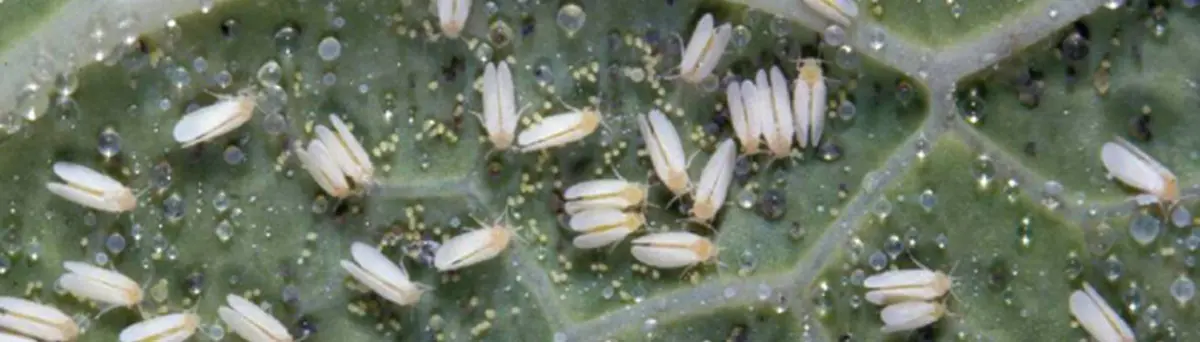
For farmers across the Suwannee Valley and greater North Florida, the late summer and fall seasons bring more than just a welcome break from the sweltering peak of the summer heat. They also usher in an annual crisis that can quietly devastate months of agricultural labor in a matter of weeks. When farmworkers or agronomists brush past rows of ripening tomatoes, peppers, and cucurbits during these months, clouds of tiny, winged insects erupt into the air. At a glance, they might look like harmless dust or mist, but these pests—whiteflies—represent one of the most formidable biological threats to southern regional agriculture.
While whiteflies are diminutive in stature, their impact is monumental. These sap-sucking insects do not merely compromise the physiological health of host plants through direct feeding; they act as living vectors for devastating plant pathogens, most notably the Tomato Yellow Leaf Curl Virus (TYLCV) and various aggressive cucurbit-infecting viruses. In a region where small-to-mid-scale vegetable production is a cornerstone of the local economy and rural livelihood, a severe whitefly outbreak can spell the difference between a profitable harvest and catastrophic financial loss.
To confront this recurring challenge, agricultural experts, including Dr. Derrick R. Conover of UF/IFAS Extension in Columbia County and Dr. Xavier Martini, Assistant Professor of Entomology at the University of Florida, have collaborated to compile comprehensive research and integrated pest management (IPM) strategies. This report examines the underlying ecological factors that make North Florida falls uniquely hazardous, details the mechanics of whitefly damage, evaluates current intervention technologies, and outlines a proactive roadmap for regional growers.
Detailed Chronology: The Seasonal Cycle of Whitefly Pressure
Understanding the threat posed by whiteflies requires tracing their annual population dynamics, which are deeply tied to North Florida’s unique subtropical climate and agricultural landscape.
Spring and Early Summer: The Buildup
The whitefly lifecycle—specifically concerning prolific agricultural pests like Bemisia tabaci—begins early in the year. As temperatures rise out of winter, whitefly populations establish themselves across a diverse array of primary hosts, ranging from wild weeds to broad-acre commercial field crops such as cotton. During this phase, populations remain relatively dispersed. While feeding occurs, the sheer volume of alternative host plants across the expansive North Florida landscape dilutes the concentration of pests on any single farm.
Mid-to-Late Summer: The Thermal Accelerator
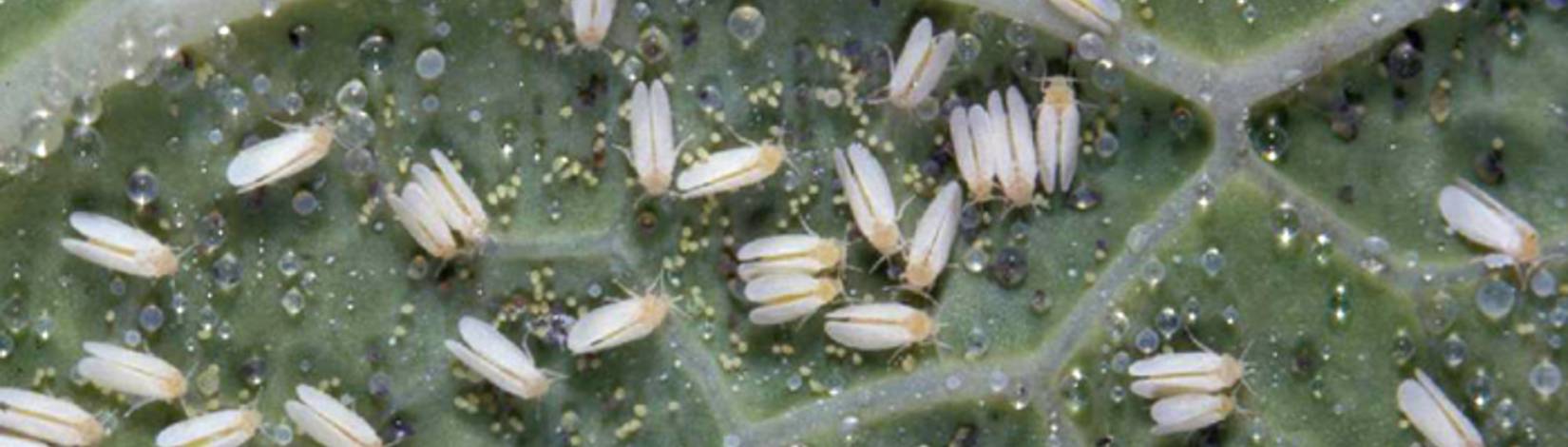
As the calendar turns toward August and September, environmental conditions shift dramatically. North Florida’s sustained warm fall temperatures act as an optimal incubator for Bemisia tabaci. Unlike other agricultural pests whose numbers might be suppressed by heavy late-summer rainfall, whitefly reproduction rates accelerate exponentially under these warm thermal regimes. Humidity and precipitation have a surprisingly minor dampening effect on population growth compared to temperature, meaning that wet late-summers offer little natural relief from the infestation pressure.
Harvest Migrations and the Threat to Small Farms
The most critical inflection point in the seasonal chronology occurs during late summer and early fall harvests on large commercial farming operations. As vast fields of cotton or early-season vegetables are harvested, plowed under, or naturally decline, thousands of acres of host plants disappear virtually overnight.
This triggers a massive, synchronized migration event. Deprived of their primary feeding grounds, billions of displaced adult whiteflies take flight in search of new, living plant tissue. Unfortunately for small-to-mid-scale vegetable producers who stagger their crop cycles for late-fall markets, their green, thriving fields act as an irresistible beacon. These migrating hordes descend upon smaller farm plots, concentrating pest pressures to levels that can overwhelm isolated agricultural operations in a matter of days.
Supporting Context & Metrics: The Mechanics of Destruction
Whiteflies inflict damage on vegetable crops through a twin-pronged assault: direct physiological drain and indirect pathological infection.
Direct Feeding Damage
Adult whiteflies and their immobile, scale-like nymphs possess piercing-sucking mouthparts. They insert these needle-like stylets directly into the phloem of the host plant to feed on nutrient-rich plant sap. When populations reach high densities—as is common during fall migration events—the sheer volume of sap extraction severely drains the plant.
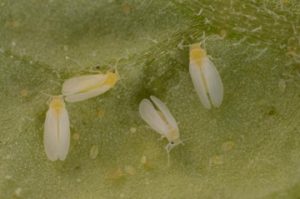
This systemic nutritional deficit stunts growth, causes leaf yellowing and premature dropping, and drastically reduces overall crop yields. Furthermore, as whiteflies feed, they excrete a sticky, sugary substance known as "honeydew." This residue coats the leaves and fruit, encouraging the rapid growth of black sooty mold. Not only does this mold block essential sunlight and inhibit photosynthesis, but it also physically disfigures the harvest, destroying the market quality and aesthetic value of produce right before it reaches packing sheds or consumer markets.
Pathogen Transmission
While stunted and mold-covered plants are economically damaging, the true terror of the whitefly lies in its capacity as a viral vector. Bemisia tabaci is notoriously efficient at acquiring and transmitting plant geminiviruses and criniviruses.
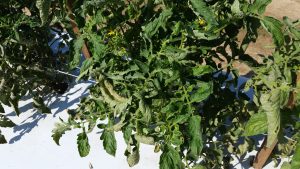
Among the most destructive is Tomato Yellow Leaf Curl Virus (TYLCV). Once a whitefly feeds on an infected plant—even a weed on the field perimeter—it can transmit the virus to healthy tomato plants within minutes. TYLCV halts plant growth, causes extreme curling and yellowing of leaves, and frequently results in total flower drop, rendering infected plants completely barren. Similarly, cucurbit-infecting viruses transmitted by whiteflies can devastate squash, cucumber, and melon fields in record time. Because fall whitefly populations peak precisely when virus incidence is highest, the vector-pathogen intersection creates a high-risk environment for regional growers.
Official Recommendations: Integrated Pest Management (IPM) for Fall Crops
Because single-method control measures—such as relying solely on broad-spectrum insecticides—consistently fail due to rapid resistance development and environmental concerns, UF/IFAS researchers emphasize a multifaceted Integrated Pest Management (IPM) approach. Small farmers can protect their yields by combining cultural tactics, physical barriers, biological controls, and judicious chemical applications.
1. Cultural and Physical Practices
Preventative measures implemented before planting form the first line of defense against migrating whiteflies:
- Reflective Mulches and Row Covers: Utilizing metallized or reflective plastic mulches disorients flying whiteflies by reflecting upward ultraviolet light, making it difficult for them to locate young crops. Fine mesh row covers can physically exclude pests during the vulnerable seedling stage.
- Sanitation and Weed Management: Eliminating alternative weed hosts around field perimeters drastically reduces local reservoirs where whiteflies and plant viruses over-summer.
- Landscape Coordination: Where possible, coordinating planting and destruction dates with neighboring farms minimizes the sharp contrasts that trigger devastating pest migrations.
2. Chemical and Organic Repellents
When physical barriers are insufficient, targeted repellent sprays can deter colonization:
- Limonene-Scented Kaolin Sprays: Research indicates that applications of kaolin clay mixed with limonene extracts are highly effective during dry years. The clay coats leaves in a powdery, non-toxic film that repels feeding insects while reducing virus transmission and boosting overall marketable yields.
- Strategic Synthetic Insecticides: When chemical intervention is necessary, growers must rotate modes of action strictly. Overusing a single class of synthetic insecticides accelerates the development of chemical resistance in whitefly populations, rendering treatments ineffective over time.
3. Biological and Biopesticide Approaches
Preserving and augmenting natural ecosystem predators provides sustainable, long-term suppression:
- Conservation of Beneficials: Beneficial insects—such as lady beetles, lacewings, pirate bugs, and parasitic wasps (like Encarsia formosa)—prey heavily on whitefly eggs and nymphs. Growers should avoid broad-spectrum sprays that wipe out these beneficial populations.
- Biopesticides: Entomopathogenic fungi (such as Beauveria bassiana) and insecticidal soaps can be integrated into the management rotation to suppress pest numbers without leaving harmful chemical residues or harming beneficial insect complexes.
Summary of Fall Whitefly Management Strategies
| Strategy | Effectiveness in Fall | Notes / Best Practices |
|---|---|---|
| Reflective mulch / row covers | High | Reduces whiteflies and virus incidence during early establishment. |
| Limonene-scented kaolin sprays | High (dry years) | Best utilized in low rainfall conditions; reduces virus spread and increases yield. |
| Biological control (predators, fungi) | Moderate-High | Works best as part of an overarching IPM program; preserves beneficial insect populations. |
| Synthetic insecticides | High (short-term) | Rotate chemical classes regularly; avoid overuse to prevent genetic resistance. |
| Area-wide / landscape management | High | Coordinate sanitation and planting schedules with neighbors to reduce reinfestation. |
Future Outlook: Building Resilience in North Florida Agriculture
As shifting climate patterns potentially extend warm-season windows and alter regional agricultural footprints, whitefly pressures in the Suwannee Valley and North Florida are unlikely to subside. Managing this microscopic threat will require continued collaboration between academic researchers, agricultural extension agents, and commercial growers.
The future of regional vegetable production hinges on the widespread adoption of proactive, systems-based crop management. By moving away from reactive spraying and embracing holistic IPM frameworks—such as integrating reflective mulches, deploying biopesticides, and preserving beneficial insect populations—small and medium-scale farmers can insulate their operations against the ravages of Bemisia tabaci.
Whiteflies may remain an inevitable fact of life for North Florida growers, but with cutting-edge research from institutions like UF/IFAS guiding the way, they do not have to spell disaster for the fall harvest. Through diligence, cooperation, and scientific adaptation, the region’s agricultural community can continue to thrive against tiny, yet formidable, adversaries.

0 Comments