In an era where coastal real estate is heavily dominated by private luxury resorts, towering condominiums, and exclusive gated communities, finding accessible, pristine public oceanfront space can be a challenge. Enter Peters Point Park, a vibrant coastal sanctuary situated in Fernandina Beach, Florida. Serving as a vital public portal to the Atlantic coastline, this Nassau County-managed park bridges the gap between urbanized coastal development and the wild, untamed beauty of Amelia Island.
Spanning a modest yet ecologically diverse footprint, Peters Point Park offers a rich mix of amenities. From breezy picnic pavilions overlooking rolling dunes to multi-use trail networks and vehicular beach access points, the park caters to a wide demographic of visitors. Whether you are an endurance cyclist tackling the East Coast Greenway, an equestrian seeking a scenic shoreline ride, a wildlife enthusiast searching for gopher tortoises, or a casual beachgoer looking for a peaceful loop walk, Peters Point Park delivers an authentic slice of Northeast Florida’s barrier island ecosystem.
Managed by Nassau County and open daily from sunrise to sunset with free admission, the park is far more than a simple beach parking lot. It acts as a major recreational anchor, connecting visitors to expansive beach walks, historical neighboring sites, and multi-state trail systems like the renowned Timucuan Trail.
Detailed Chronology & Site Exploration
To truly understand the layout and flow of Peters Point Park, a structured exploration of its grounds reveals a thoughtfully designed landscape that accommodates diverse user groups without compromising the integrity of the fragile dune ecosystem.
The Trailhead and the East Coast Greenway
Your journey at Peters Point Park typically begins at the expansive parking facility, immediately flanked by informative trail kiosks. This area serves as a primary day-use trailhead for cyclists and long-distance path explorers. Prominently featured on site is information regarding the East Coast Greenway, a sprawling cycling and pedestrian route stretching from Maine to Florida.
From this northern terminus, the paved Timucuan Trail parallels State Road A1A southward, threading its way across the picturesque Talbot Islands. The route eventually bridges the St. Joseph/St. Johns River via the historic Mayport Ferry, ultimately concluding its regional journey at Hanna Park in Mayport. For alternative transportation advocates and cycling enthusiasts, Peters Point Park functions as a strategic staging ground.
Picnic Shelters and Coastal Vistas
Directly adjacent to the parking infrastructure, visitors will find a series of covered picnic shelters. Strategically positioned to catch the prevailing ocean breezes, these structures offer panoramic vantages of the rolling sand dunes. Here, the ambient, reverberating crash of Atlantic waves provides a constant, meditative soundtrack for family gatherings, quiet lunches, or simple moments of reflection. Restroom facilities are conveniently located immediately adjoining the picnic shelters, ensuring a comfortable experience for day-trippers.
Dune Boardwalks and Ecological Immersion
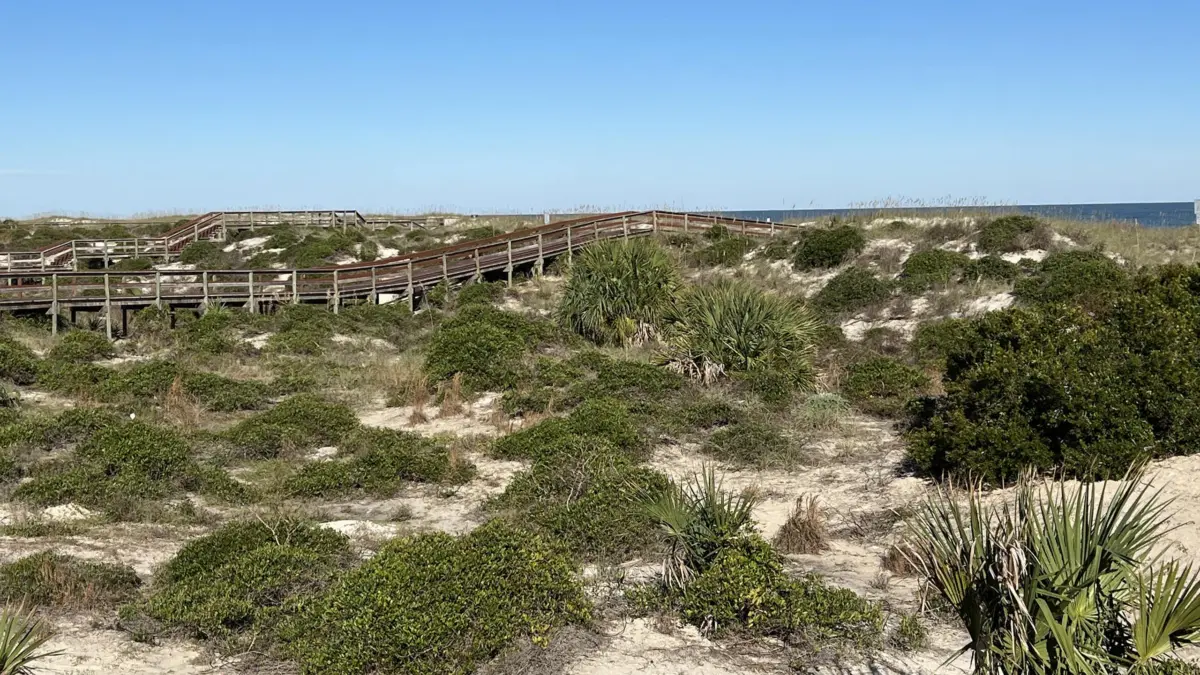
Moving beyond the picnic grounds, visitors encounter a series of elevated, accessible wooden boardwalks designed to protect the delicate coastal vegetation while providing seamless transit to the shore.
Dune Walk 103: This accessible boardwalk features a specialized beach mat at its eastern terminus, facilitating ease of movement across the shifting sands for strollers, wheelchairs, and visitors with mobility considerations.
Dune Walk 101: Providing an alternative return route, this boardwalk features short staircases and rewards hikers with stellar, elevated perspectives of the surrounding swales and crests.
The scrubby dunes flanking these walkways are alive with the sounds of native bird species and serve as a crucial habitat for the federally threatened gopher tortoise. Walking this landscape offers an intimate look at a resilient ecosystem where sea oats, saw palmetto, and salt-tolerant shrubs hold the shifting sands in place.
Combining Dune Walk 103, a stretch of the beachfront, and Dune Walk 101 creates a delightful, compact scenic circuit measuring just over a quarter of a mile. However, for those seeking a more immersive outing, this loop can be expanded infinitely by hiking north or south along the coastline.
Multi-Use Beach Access: Vehicles and Equestrians
One of the unique defining features of Peters Point Park—and a point of operational note for visitors—is its southern beach access ramp. The southern end of the parking area features a packed sand road leading directly onto the dynamic shoreline of Fernandina Beach, allowing licensed motorists to drive onto the sand.
Drivers are strictly mandated to remain within the designated, marked vehicular corridor for safety and environmental protection. This same coastal access corridor is heavily utilized by equestrians who trailer their horses to the park to experience the rare thrill of riding along the Atlantic surf—a hallmark recreational activity of the Amelia Island region.
Pedestrians are advised to mind the vehicular lane and take note of the sand quality. Where the sands take on a tinted, coquina-laden orange hue, they tend to be quite soft. Walkers will find firmer, more comfortable footing by sticking to the pale, quartz-based white sands positioned outside of the vehicle tracks.
Supporting Context & Metrics
Quick Facts & Park Metrics
Location: Fernandina Beach, Nassau County, Florida
Address: 4600 Peters Point Rd, Fernandina Beach, FL 32034
GPS Coordinates: 30.59914, -81.44399
Park Trail Length: 0.3-mile loop (expandable indefinitely via beach walking)
Operating Hours: Open daily from sunrise to sunset
For travelers arriving via major regional arteries, accessing Peters Point Park is straightforward:
From Interstate 95, take the exit for SR 200 / State Road A1A heading east toward Fernandina Beach.
Continue driving east on SR 200 for approximately 11.6 miles until you reach the intersection with Amelia Island Parkway.
Turn right and continue 3.3 miles south on Amelia Island Parkway (passing the Fernandina Beach Municipal Airport en route) until it intersects with Fletcher Avenue.
Make a left onto Fletcher Avenue.
The clearly marked turnoff and entrance to Peters Point Park will appear on your right within one-tenth of a mile.
Official Statements & Management Insights
Nassau County officials and local park management emphasize that Peters Point Park was designed with a dual mandate: providing high-capacity public recreational access while aggressively safeguarding fragile coastal natural resources.
"Our mission at Peters Point is to ensure that the breathtaking Atlantic shoreline of Amelia Island remains democratized and accessible to all citizens, regardless of whether they arrive on foot, on a bicycle, in a car, or on horseback," notes regional park administration literature. "At the same time, the integration of elevated dune boardwalks and strict vehicle corridor enforcement demonstrates our ongoing commitment to preserving the nesting habitats of sea turtles, shorebirds, and native gopher tortoises against the pressures of high-density coastal tourism."
Conservation groups have similarly praised the park’s layout, noting that the physical separation of foot traffic via boardwalks prevents the destabilization of dune systems—a critical line of defense against storm surges and severe weather events impacting Northeast Florida.
Future Outlook & Regional Context
As Amelia Island continues to experience steady growth in both residential populations and tourism, the strategic importance of multi-use public hubs like Peters Point Park cannot be overstated. Plans for regional trail enhancements—particularly the continued maintenance and promotion of the East Coast Greenway and the Timucuan Trail—position Peters Point as an increasingly critical node for eco-tourism.
Furthermore, the park serves as an ideal gateway for exploring a cluster of surrounding historical and natural treasures along the Nassau County coastline:
American Beach: Located just down the coast, this historic destination holds immense cultural significance as a haven for African Americans during the Jim Crow era, and today boasts the largest sand dune system on the Atlantic coast of Florida (NaMo Cha.
Egans Creek Greenway: Spanning over 300 protected acres of marshland and canals in Fernandina Beach, this sanctuary offers extensive unpaved and paved trails for wildlife viewing.
Fort Clinch State Park: Situated at the northern tip of the island, it combines nineteenth-century military history with rugged, wave-tossed beach walking and pristine maritime hammock forests.
Amelia Island State Park: Positioned to the south, this state park shares Peters Point’s equestrian culture, standing out as one of the premier locations in Florida where visitors can legally ride horses directly along the ocean surf.
Ultimately, Peters Point Park stands as a shining example of how coastal communities can successfully balance human recreation with ecological stewardship. Whether you are planning a weekend bike ride along the Greenway, a peaceful family picnic above the dunes, or an extended morning beach hike, Peters Point Park offers an unforgettable encounter with the wild heart of Florida’s Atlantic shoreline.






0 Comments