

By Derrick Conover
Published: March 18, 2026
Executive Overview
Agricultural producers across Columbia County and the broader North Florida region are navigating a treacherous high-stakes balancing act this spring. Following what local growers fervently hope will be the final cold front of the season, the agricultural community is left to assess the cumulative, compounding damages of erratic weather. This latest temperature plunge arrived at a uniquely vulnerable juncture in the regional production calendar—a critical developmental window when perennial fruit trees are breaking dormancy, bursting into bloom, and early-season row crops are either being sown or pushing through the soil.
In agriculture, timing is everything, and the timing of this cold snap could not have been worse. Even fleeting periods of sub-optimal temperatures during these formative growth stages can severely compromise physiological processes, stunt early development, and radically slash ultimate yield potential. Compounding the immediate thermal threat is an invisible yet pervasive adversary: prolonged drought.
While late-season frosts and dry spells are frequently evaluated as isolated meteorological events, plant physiologists and local extension agents understand they are deeply intertwined. Parched, moisture-deficient soils lack the thermal mass required to radiate heat back toward the canopy on clear, cold nights. Consequently, fields hit by both drought and cold endure exponentially more severe microclimate frost conditions than fields with adequate soil moisture. For North Florida farmers cultivating high-value commodities such as blueberries, peaches, watermelons, and sweet corn, this volatile weather combination threatens not just profit margins, but the viability of the entire upcoming harvest.
Detailed Chronology and Physiological Impacts: Fruit Trees and Row Crops
To fully grasp the gravity of the recent weather event, one must examine how plants respond to sudden thermal shocks at microscopic and macroscopic levels. The vulnerabilities of perennial fruit crops and spring-planted row crops differ significantly, yet both face immense risks.
The Perennial Dilemma: Fruit Trees in Transition
During the dead of winter, perennial fruit crops like peaches and blueberries enter a state of dormancy. In this resting phase, they possess remarkable natural defenses against freezing temperatures, capable of enduring harsh winter weather with negligible cellular damage. However, as lengthening spring days and warming trends signal the transition out of dormancy, internal biochemistry shifts dramatically. Trees begin to push buds, mobilize stored carbohydrates, and enter the explosive, energy-intensive phase of flowering.
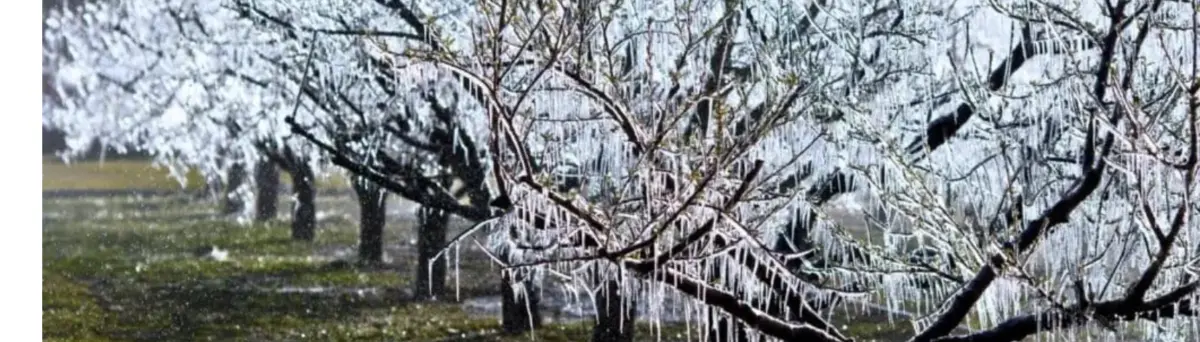
As this happens, their inherent cold tolerance plummets. Once blossoms open, reproductive tissues—pistils, stamens, and developing ovaries—are exposed to the elements. A light, unseasonably late frost that would have bounced harmlessly off a dormant branch in January can devastate open blooms in March.
- The Illusion of Health: One of the most insidious aspects of frost injury in fruit trees is its delayed visibility. Growers often walk their orchards the morning after a freeze and feel a false sense of security upon seeing intact blossoms. However, the delicate internal reproductive tissues may already be necrotized. Days later, these seemingly normal flowers fail to set fruit, resulting in a hollow harvest or total crop failure.
- The Pollinator Factor: Cold weather introduces a secondary, compounding crisis for fruit production: the absence of pollinators. Bees and other beneficial insects are ectothermic; their activity levels are tightly bound to ambient temperatures. Under cool, overcast, or windy conditions accompanying late-season fronts, pollinator activity drops precipitously. Even if blossoms survive the cold structurally, the drastically shortened window for successful insect-mediated pollination severely curtails fruit set.
- Systemic Fatigue and Delayed Physiology: Beyond direct tissue destruction, cold stress sends shockwaves through a tree’s overall physiology. Leaf-out is delayed, bloom periods become unnaturally protracted, and fruit development crawls. An extended bloom period paradoxically increases risk, keeping flowers vulnerable to subsequent, secondary frost events. Furthermore, the metabolic energy required to repeatedly recover from thermal stress drains the tree’s carbohydrate reserves. This chronic fatigue compromises not only the current season’s yield but also long-term tree vigor and productivity heading into the following year.
The Early-Season Vulnerability of Row Crops
While orchards contend with delicate blossoms and systemic fatigue, North Florida’s row-crop producers face an entirely different set of environmental hurdles. Spring-planted staples—including watermelons, sweet corn, and a diverse array of commercial vegetables—rely heavily on warm, stable soil and air temperatures to establish healthy stands during germination and early vegetative growth.
- Uneven Germination and Stand Establishment: When late-season cold fronts drive soil temperatures down, seed germination stalls. Instead of a uniform, synchronized emergence that allows for efficient field management and harvesting, growers experience staggered, erratic germination. In specialty crops like watermelons, where field uniformity directly dictates harvest efficiency and market grading, this variability is economically devastating.
- Disease Pressures and Damping-Off: Cold, wet conditions create a haven for soil-borne pathogens. Slow-growing seedlings lack the vigor to outpace fungal infections, sharply increasing the incidence of damping-off and early plant mortality.
- Transplant Shock and Direct Injury: For crops established via transplants rather than direct seeding, the threat is immediate and severe. Young leaves are prone to scorching and burn, stems can suffer vascular injury, and severe freezes can cause complete plant death. Even when transplants survive, cold stress triggers prolonged transplant shock. Restricted root establishment leaves plants structurally compromised and uniquely vulnerable to opportunistic pests and secondary diseases that easily infiltrate weakened plant tissues.
Supporting Context and Metrics: The Amplifying Danger of Drought
Compounding the biological strains of the recent cold front is the unrelenting drought gripping significant portions of Florida. While meteorologists track precipitation deficits and agronomists monitor soil moisture meters as distinct metrics, in the field, drought and frost act as a destructive tag-team.
The Physics of Soil Moisture and Microclimate Buffering
To understand why drought intensifies frost damage, one must look at the thermal dynamics of soil.
[Moist Soil Microclimate]  --> Absorbs solar heat by day --> Slow nocturnal radiation release --> Natural Thermal Buffer (Lower Frost Risk)
[Dry Soil Microclimate]     --> Poor heat retention     --> Rapid nocturnal heat loss        --> Severe Near-Ground Cooling (High Frost Risk)
Moist soil acts as a natural thermal battery. Throughout the sunlit hours, it absorbs and stores substantial amounts of solar energy. After sunset, moist soil slowly and steadily releases this stored heat upward into the plant canopy, creating a microscopic blanket of warmer air that buffers the crop against sharp temperature drops.

Conversely, dry soil possesses a markedly lower heat capacity. It heats up quickly under the sun but loses its thermal energy just as rapidly once night falls. Without moisture to retain and slowly radiate heat, dry fields experience significantly colder near-ground air temperatures than adjacent, well-watered fields under the exact same regional weather forecast.
Practical Implications for Growers
This physical reality carries profound management implications for agricultural producers across Columbia County:
- The Spatial Variance Myth: Two neighboring farms experiencing identical official air temperatures reported by local weather stations can suffer radically different degrees of frost injury solely due to disparate soil moisture conditions.
- Pre-Frost Irrigation as Defense: Where water resources permit, proactive irrigation prior to an anticipated freeze is a proven mitigation strategy. Pre-wetting dry soil dramatically improves its thermal capacity, moderating near-ground microclimate temperatures and simultaneously enhancing plant hydration and cellular resilience.
- Risk Stratification: Agricultural extension advisors now explicitly classify unmitigated dry soil conditions as a primary risk multiplier when evaluating potential cold damage. Neglecting soil moisture management ahead of a spring freeze exponentially elevates the likelihood of catastrophic crop loss.
Official Statements and Local Extension Insights
Agricultural extension specialists throughout North Florida have been working around the clock to field calls from anxious producers, assess field damage, and disseminate real-time management advice.
In recent advisories issued through the University of Florida Institute of Food and Agricultural Sciences (IFAS) networks, regional agents have underscored the necessity of adaptive management. "We are operating in an environment where weather extremes are becoming the baseline rather than the exception," notes regional agricultural climatology literature. "When you couple a lingering drought with a sudden late-season thermal drop, the margin for error in crop management shrinks to almost zero."
Local farm bureaus have echoed these concerns, emphasizing that independent growers cannot afford to rely on historical climate norms. "Farmers used to be able to circle specific weeks on the calendar and say, ‘We are safe from frost now,’" a regional producer representative noted. "Those historical guardrails have dissolved. Today, growers must manage microclimates field by field, keeping a hyper-vigilant eye on soil moisture meters, hourly forecasts, and rapid-response mitigation protocols."
Extension entomologists and pathologists have also issued warnings regarding the secondary waves of damage following cold-drought events. As plants expend their internal reserves recovering from thermal and moisture stress, their natural defense mechanisms against insect pests—such as aphids, thrips, and various beetle species—are severely compromised. Growers are being urged to integrate pest scouting schedules tightly with post-frost recovery assessments to prevent secondary infestations from finishing off stressed crops.
Future Outlook: Building Resilience for an Unpredictable Climate
As the agricultural sector looks past the immediate aftermath of this week’s cold front, the conversation among producers, researchers, and policymakers inevitably turns toward long-term resilience. The intersection of unseasonable temperature swings and persistent drought highlights the urgent need for structural adaptations in North Florida agriculture.
1. Advanced Irrigation Infrastructure
Given the critical buffering role that soil moisture plays against frost, investing in modernized, highly efficient irrigation systems is no longer optional—it is a core component of risk management. Precision irrigation technologies, including soil moisture sensor arrays and variable-rate drip systems, allow growers to target moisture precisely where and when it is needed to optimize thermal mass without wasting precious water resources during drought periods.
2. Diversification and Varietal Selection
Plant breeders and horticulturalists are placing renewed emphasis on developing and selecting crop varieties with broader thermal tolerances and flexible chill-hour requirements. For orchardists, planting later-blooming peach or blueberry cultivars can successfully shift the vulnerable flowering window past the historical peak period of late-season frost risk. Similarly, selecting vigorous, disease-resistant row crop varieties provides a vital buffer against the combined onslaught of cold stress and opportunistic pathogen pressures.
3. Integrated Microclimate Management
Modern farming in Columbia County increasingly relies on hyper-local data collection. Growers are deploying localized weather stations and microclimate sensors directly within their fields to track ground-level temperatures and soil moisture in real-time. Paired with predictive analytics software, these tools empower producers to make split-second decisions regarding wind machine activation, thermal blanketing, and emergency irrigation.
Conclusion
The recent cold front serves as a sharp reminder of the profound vulnerabilities inherent in agricultural production. For Columbia County farmers, weathering this event required a combination of vigilance, scientific insight, and proactive management. As regional weather patterns continue to test the limits of traditional farming practices, the integration of advanced soil-water management, resilient crop genetics, and real-time monitoring will determine whether local agriculture merely survives the next climate shock—or thrives in spite of it. Careful, calculated stewardship during these narrow windows of vulnerability remains the ultimate dividing line between a bountiful harvest and a challenging season.

0 Comments