Tucked away beneath the dense, primeval canopy of the Bulow Hammock in Flagler Beach, Florida, the towering coquina walls of the Bulow Plantation Ruins Historic State Park stand as a haunting monument to a turbulent past. Established in 1821 by wealthy planter Charles Bulow and later expanded by his son, John, this 2,200-acre agricultural powerhouse once drove the regional economy through the intensive cultivation of sugar cane, cotton, rice, and indigo.
Yet, the imposing remnants of the industrial sugar mill and the subterranean foundations of the surrounding settlement tell only part of the story. Bulow Plantation was a microcosm of the Antebellum South, sustained by the grueling labor of more than 200 enslaved men, women, and children who built the infrastructure, harvested the crops, and operated the complex machinery of "Bulowville."
Today, managed by Florida State Parks, this 1.4-mile trail system and surrounding natural area offer visitors an evocative blend of ecological beauty and heavy historical reckoning. From the waterfront boat slips along Bulow Creek—once bustling thoroughfares for flatboats carrying commodities to the Atlantic Ocean—to the quiet, forest-framed clearings marking the locations of excavated slave quarters, the park serves as both a recreational haven and an outdoor museum. Blending rich biodiversity, deep-rooted indigenous history, and the tragic conflicts of the Second Seminole War, Bulow Plantation remains an essential destination for historians, naturalists, and outdoor enthusiasts alike.
Detailed Chronology
1821–1830s: Rise of an Agricultural Empire
The history of Bulowville began shortly after the United States acquired Florida from Spain through the Adams-Onís Treaty. Recognizing the agricultural potential of the coastal waterways, Charles Bulow acquired thousands of acres fronting Bulow Creek. The property was strategically positioned along a natural aquatic highway, facilitating the easy transport of heavy agricultural yields by boat.
Following Charles’s death, his son John Bulow inherited the sprawling enterprise. Under his management, the plantation reached its economic zenith. More than 200 enslaved Africans and African Americans—forced to clear dense hammock lands, construct infrastructure, and tend to demanding crops of sugar cane, cotton, rice, and indigo—formed the backbone of the community. A small town, Bulowville, naturally blossomed around the central operations, featuring residential quarters, processing plants, and administrative buildings.
Christmas 1831: The Naturalist’s Visit
During the plantation’s prosperous era, it welcomed notable travelers seeking to document Florida’s unique ecosystems. Among them was the celebrated naturalist and painter John James Audubon, who arrived at Bulowville on Christmas Day in 1831.
While exploring the lush environs of Bulow Creek, Audubon painted his famous Greater Yellowlegs. Unintentionally, the background of this ornithological artwork captured a stark historical truth: a distinct row of enslaved workers’ cabins, providing rare visual documentation of the plantation’s human cost and spatial layout.
January 1836: Destruction and the Second Seminole War
The explosive prosperity of Bulowville came to a sudden and violent end during the Second Seminole War. As tensions boiled over between the United States government and the Indigenous Seminole people resisting forced removal, American troops briefly occupied the fortified plantation house, using it as a military post.
Recognizing the strategic threat posed by the fortified estate, a Seminole war party attacked and burned Bulow Plantation to the ground in January 1836. John Bulow and the military garrison evacuated via boat down Bulow Creek toward St. Augustine. The plantation was never rebuilt. Stripped of its wooden framework by fire and time, the stone and coquina architecture slowly surrendered to the encroaching coastal forest, transforming into the ruins seen today.
Supporting Context & Metrics
Park Logistics and Trail Metrics
For travelers planning a visit, understanding the geographic and operational parameters of Bulow Plantation Ruins Historic State Park ensures a smooth and immersive experience.
Location: Flagler Beach, Florida
Address: 3501 Old Kings Rd, Flagler Beach, FL 32136
Land Manager: Florida State Parks
Contact Information: 386-517-2084
Hours of Operation: Open Thursday through Monday, 9:00 AM to 5:00 PM; closed Tuesdays and Wednesdays.
Admission Fees: $4 per vehicle.
Amenities: Restrooms located at the picnic pavilion; boat ramp and paddlesports launch adjacent to the picnic area; canoe rentals available on-site.
Trail Length & Configuration: The primary interpretive hiking experience spans approximately 1.4 miles, broken down into distinct segments:
Sugar Mill Nature Trail / Waterfront Walk: Approx. 0.2 to 0.4 miles, traversing the waterfront, boat slips, and indigo display.
Sugar Mill Loop: A 0.25-mile accessible loop through the coquina ruins of the industrial complex.
Spring House Path & Main Nature Trail: Linear and loop routes totaling 1.1 to 1.4 miles, weaving through pine, oak, and palm hammocks.
Accessibility: The loop around the sugar mill ruins is fully accessible; however, remaining natural-surface footpaths feature uneven terrain, roots, and occasional soggy conditions.
Ecological and Archaeological Features
The park spans multiple distinct ecological zones characteristic of coastal Northeast Florida:
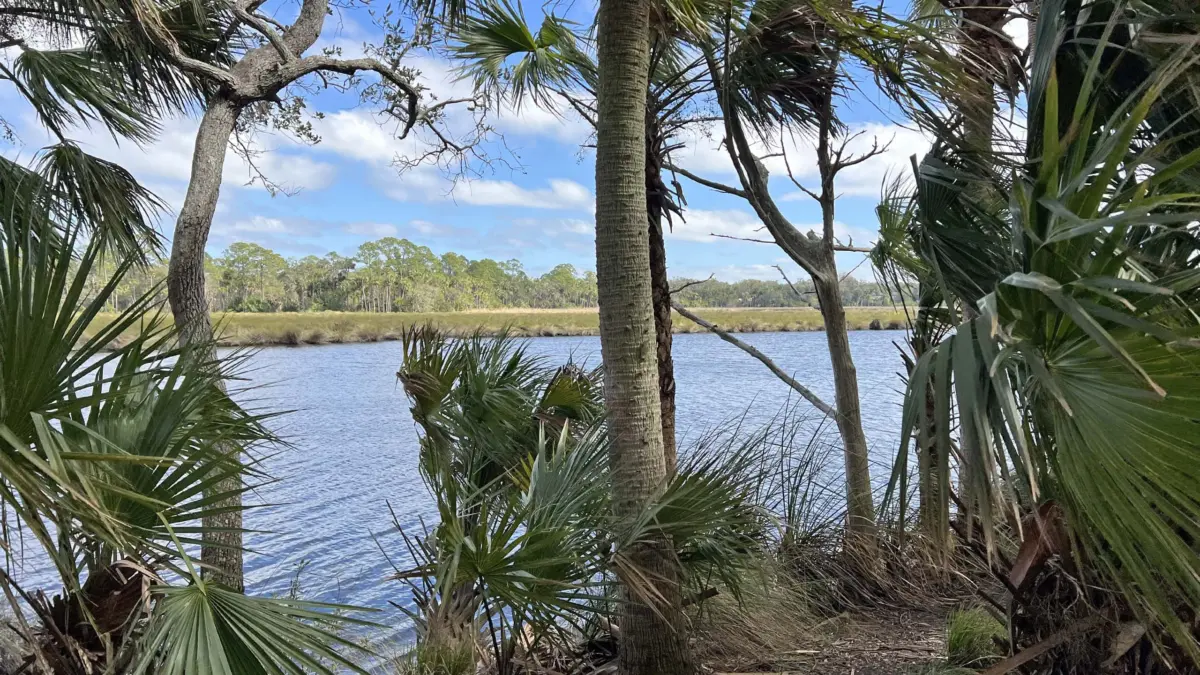
Riverfront Palm Hammock: Dominated by cabbage palms and low bluffs overlooking Bulow Creek, this damp environment hosts archaeological footprints of John Bulow’s home, boat slips, and the excavated remnants of the 40 slave cabins that once housed the plantation’s workforce.
Upland Pine and Oak Forest: Rising a few inches in elevation, the terrain transitions into a heavy canopy of live oaks, southern magnolias, and towering loblolly pines. Visitors can observe historical "catface" scars on older pines, marking where turpentine was tapped in past centuries.
The Sugar Mill Complex: Constructed from locally quarried coquina rock, the towering chimneys and walls of the 1831 industrial hub remain remarkably preserved, serving as the park’s primary architectural anchor.
Official Statements
Park interpretation programs emphasize the dual imperative of preserving natural habitats while honestly confronting difficult local history. State park representatives and historical interpreters note:
"Interpretation of additional structures along Bulow Creek provides a more complete picture of the community once called Bulowville. By exploring both the industrial prowess of the sugar mill and the residential sites of the enslaved individuals who maintained the plantation, visitors gain a holistic, unfiltered understanding of Florida’s antebellum history."
Furthermore, land management and conservation authorities underscore the importance of maintaining the integrity of the surrounding Bulow Hammock:
"The juxtaposition of ancient, primordial ecosystems—such as the massive live oaks and sluggish tidal creeks—with the enduring stone ruins creates an outdoor classroom. It reminds us of the profound resilience of nature and the vital necessity of preserving our shared cultural and environmental heritage."
Future Outlook
As heritage tourism continues to grow across Northeast Florida, Bulow Plantation Ruins Historic State Park remains a vital focal point for regional education, historical preservation, and passive recreation. Future initiatives by Florida State Parks focus on enhancing archaeological interpretation, protecting sensitive coquina structures from weathering, and maintaining sustainable trail systems that connect visitors seamlessly to neighboring public lands.
For hikers seeking extended wilderness adventures, the park serves as a natural gateway to the broader Bulow Woods Loop—a 5.2-mile trek through pristine coastal old-growth forest—as well as nearby natural attractions like Bulow Creek State Park (home to the legendary Fairchild Oak), the Fairchild Oak Trail, Betty Steflik Preserve, and North Peninsula State Park.
By balancing rigorous historical education with outdoor recreation, Bulow Plantation ensures that the complex echoes of its past continue to inform, educate, and inspire future generations.






0 Comments