

Executive Overview
In the fast-evolving landscape of marine apparel and technical gear, few items remain as culturally entrenched and functionally stagnant as the traditional leather deck shoe. For decades, the footwear choices available to anglers and offshore boaters fell into a predictable binary: classic, aesthetically pleasing leather loafers that lacked adequate moisture management and structural support for heavy-duty marine use, or ultra-synthetic athletic water shoes that performed well on deck but looked entirely out of place at the marina or yacht club.
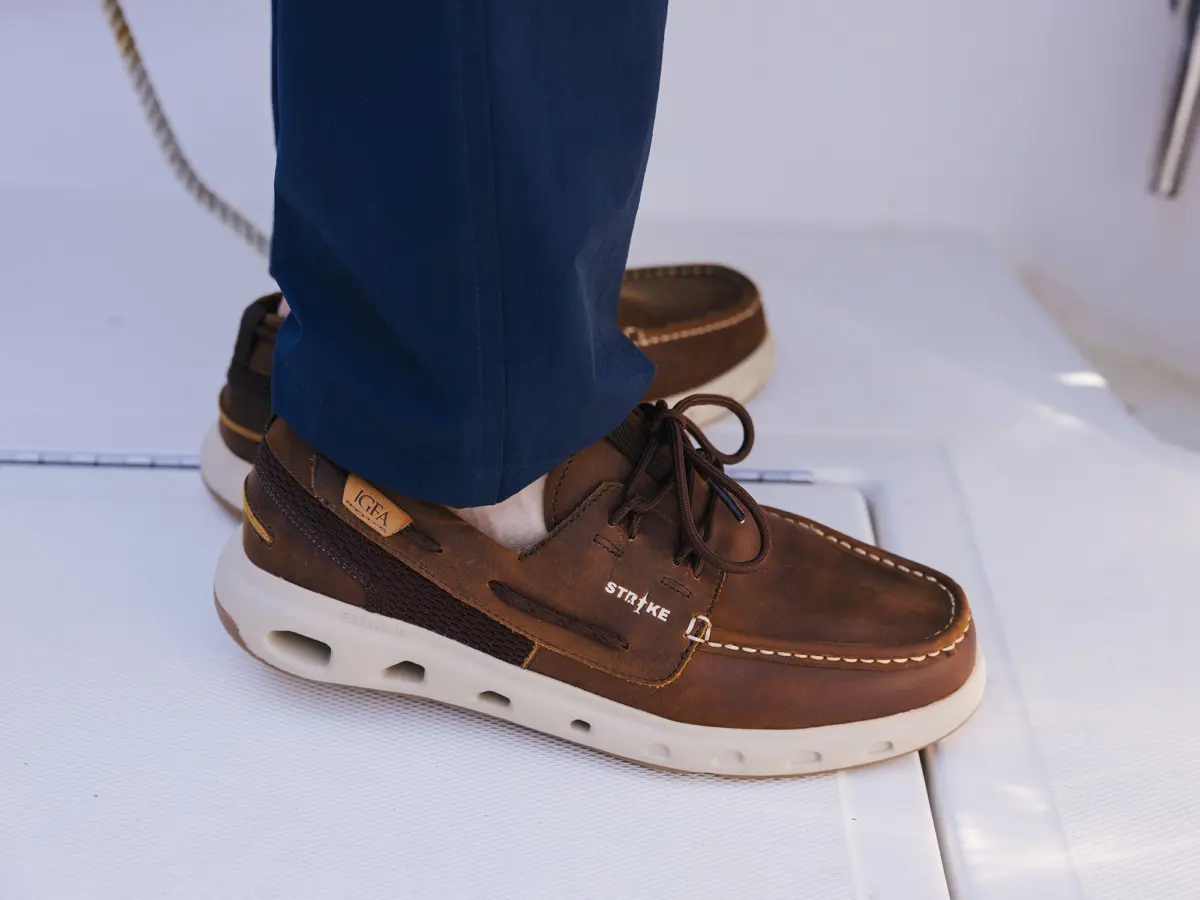
Seeking to bridge this historical divide, Strike Footwear has officially introduced its latest flagship maritime offering: the Silvertip Drift.
Designed from the ground up to cater to the grueling demands of offshore fishing while honoring the timeless silhouette of classic deck footwear, the Silvertip Drift represents a comprehensive reimagining of what a boat shoe can and should be. By fusing high-performance modern drainage engineering with sustainable, eco-conscious materials, Strike Footwear is positioning the Silvertip Drift not merely as an accessory for the weekend warrior, but as an essential piece of technical equipment for serious anglers.
Beyond its mechanical attributes—which include an advanced water-channelling outsole and proprietary drainage systems—the Silvertip Drift arrives at a critical juncture for the outdoor apparel industry. Modern consumers increasingly demand ecological accountability without sacrificing durability or performance. Strike Footwear has answered this call by weaving recycled marine plastics, sustainably certified tanneries, algae-derived biomass, and reclaimed rubber into every pair.
Furthermore, as the official footwear partner of the International Game Fish Association (IGFA), Strike Footwear has integrated a conservation mandate directly into the commercial lifecycle of the product. A designated portion of the proceeds from every sale of the $140 Silvertip Drift goes directly toward funding global fisheries research, habitat restoration projects, fish-tagging initiatives, and youth angling outreach.
This comprehensive review and report examine the technological underpinnings, environmental metrics, and strategic implications of Strike Footwear’s newest maritime release.
Detailed Chronology: From Concept to Coastal Launch
The development of the Silvertip Drift did not happen in a vacuum; it is the culmination of years of iterative design, field testing in punishing offshore environments, and supply chain restructuring. Understanding how Strike Footwear arrived at the Silvertip Drift requires tracing the trajectory of marine footwear evolution and the company’s deliberate steps toward technical excellence.
Phase I: Identifying the Gaps in Traditional Marine Footwear
Historically, the canvas or leather deck shoe was popularized in the mid-20th century for its ability to provide non-slip traction on damp wooden and fiberglass boat decks via razor-siped rubber outsoles. However, as offshore sportfishing evolved—pushing anglers further from the coast into rougher waters, longer battles with pelagic species, and high-impact environments—traditional deck shoes exposed glaring vulnerabilities.
- Leather uppers saturated quickly, becoming heavy, soggy, and prone to salt-water degradation.
- Traditional interiors lacked adequate shock absorption, leading to severe foot fatigue during long days spent standing on hard gelcoat decks.
- Drainage was virtually non-existent; water that entered the shoe remained trapped, creating an uncomfortable, moisture-rich microclimate that invited blisters and chafing.
Strike Footwear’s product development team recognized that while athletic water shoes solved the drainage problem, they failed to provide the aesthetic versatility and lateral stability required when moving dynamically across a shifting vessel. The core directive for the Silvertip Drift project was simple yet daunting: engineer a shoe that looks like a high-end casual loafer while performing like a technical marine boot.
Phase II: Material Sourcing and Environmental Alignment
Once the baseline design parameters were established, the engineering team faced the modern challenge of sustainability. The marine industry relies heavily on healthy aquatic ecosystems, making it hypocritical for brands to produce gear that damages the very environment it celebrates.
In the conceptualization phase, Strike Footwear committed to eliminating virgin plastics and unsustainable leather processing from the supply chain. This led to a multi-year audit of tanneries and textile mills, resulting in partnerships with:
- Leather Working Group (LWG) certified tanneries, ensuring ethical water usage, chemical management, and waste reduction during leather treatment.
- Seaqual Initiative, securing high-grade yarns spun from marine plastic debris recovered from oceans and coastlines.
- Bloom Foam, integrating algae biomass harvested from eutrophic water bodies—a process that cleans natural waterways while displacing petroleum-derived EVA foam in the midsole construction.
Phase III: Prototyping, Stress-Testing, and Field Trials
Before bringing the Silvertip Drift to market, prototypes underwent rigorous testing protocols across diverse marine environments. From the choppy, cold swells of the North Atlantic to the blistering, humid flats and offshore reefs of the Gulf of Mexico, professional charter captains and tournament anglers put the shoes through thousands of hours of field trials.
Feedback from these captains led to crucial design tweaks:
- Outsole siping patterns were adjusted to maximize grip on slick, blood-and-slime-covered deck surfaces.
- The internal cushioning architecture was reinforced to absorb the repetitive concussive shock of pounding through choppy seas at high speeds.
- The collar padding was refined to prevent ankle rub during barefoot wear—a common preference among warm-weather anglers.
Phase IV: Commercial Debut and the IGFA Partnership Integration
The culmination of this rigorous development cycle arrived with the official launch of the Silvertip Drift in Taupe, Navy, and Tan colorways at an MSRP of $140. Capitalizing on their role as the official footwear partner of the IGFA, Strike Footwear synchronized the release to coincide with heightened awareness surrounding marine conservation, ensuring that every pair sold directly bolsters grassroots and international aquatic stewardship programs.
Supporting Context & Metrics: Anatomy of the Silvertip Drift
To fully appreciate the Silvertip Drift, one must examine its individual engineering components. Strike Footwear has packed a surprising density of proprietary and eco-engineered technology into a silhouette that maintains a classic, understated profile.
+-------------------------------------------------------------------------+
                    SILVERTIP DRIFT: ANATOMICAL BREAKDOWN
+-------------------------------------------------------------------------+
| UPPER LAYER    | Water-repellent leather (LWG-certified) + Seaqual Yarn |
|                | (recovered marine plastic).                            |
+-------------------------------------------------------------------------+
| DRAINAGE       | Aqua Sluice System for rapid internal water evacuation.|
+-------------------------------------------------------------------------+
| FOOTBED        | Bloom EVA (algae biomass) + recycled EVA cushioning.   |
+-------------------------------------------------------------------------+
| OUTSOLE        | Non-marking, slip-resistant rubber with advanced       |
|                | siping for wet fiberglass and teak decks.              |
+-------------------------------------------------------------------------+
The Upper: Water-Repellent Leather Meets Marine Plastics
The exterior of the Silvertip Drift strikes a delicate balance between luxury and utility. The primary upper material consists of premium leather sourced strictly from tanneries audited and certified by the Leather Working Group (LWG). This certification guarantees that the leather processing adheres to stringent environmental benchmarks regarding energy consumption, wastewater treatment, and chemical traceability.
To prevent water saturation—the perennial downfall of traditional leather deck shoes—the leather undergoes a specialized water-repellent treatment. This causes moisture to bead and roll off the surface rather than soaking into the hide.
Interspersed with the leather panels are textile inserts crafted from Seaqual® Marine Plastic yarn. Seaqual works hand-in-hand with clean-up programs globally to collect marine litter from beaches, ocean floors, and rivers. This waste is transformed into high-performance, durable polyester yarn that matches the strength and breathability of virgin synthetics while actively cleansing aquatic ecosystems.
Internal Water Management: The Aqua Sluice Drainage System
Water entry is inevitable when operating on open water—whether from breaking waves, washdown hoses, or torrential downpours. Trapped water inside a shoe quickly leads to waterlogged feet, blisters, and foot fatigue.
The Silvertip Drift addresses this via Strike’s proprietary Aqua Sluice drainage system. Engineered into the chassis of the shoe, the Aqua Sluice system creates dedicated pathways that actively channel water away from the foot under the natural pressure of a stride. Combined with fast-drying internal lining materials, the shoe ensures that even after total submersion, foot comfort is rapidly restored as soon as the user returns to drier conditions.
Cushioning and Support: Bloom EVA and Recycled Foams
Standing for 10 to 14 hours on a rocking boat deck exerts immense strain on the lower back, knees, and feet. Strike Footwear engineered the footbed and midsole of the Silvertip Drift to function as a shock-absorption system.
- Bloom EVA Footbed: The footbed incorporates Bloom resin, a material formulated by blending harvested algae biomass with traditional EVA. Algae blooms can suffocate aquatic ecosystems by depleting oxygen levels; harvesting this algae for footwear production actively helps restore natural aquatic balance while reducing reliance on fossil-fuel-derived plastics.
- Recycled Midsole & Outsole: The supportive midsoles and outsoles integrate recycled EVA and reclaimed rubber content, ensuring that scrap material from the manufacturing floor is repurposed rather than discarded into landfills.
Traction Engineering
On a wet, rolling deck, slip-and-fall accidents are a primary safety hazard. The Silvertip Drift features a non-marking, razor-siped rubber outsole. The siping—micro-slits cut into the rubber—acts like a squeegee, channeling water away from the contact patch between the shoe and the deck surface. This maximizes surface area friction on both slick fiberglass and traditional teak wood, ensuring secure footing when fighting a hard-running fish or leaping onto a dock line.
Official Statements & Industry Perspectives
The introduction of the Silvertip Drift has generated significant buzz within both the outdoor apparel and sportfishing sectors. Industry observers note that the shoe represents a maturation of eco-conscious manufacturing in a market segment historically slow to change.
In official releases accompanying the launch, representatives from Strike Footwear emphasized the brand’s dual commitment to performance and environmental stewardship:
"We set out to engineer a boat shoe that doesn’t ask anglers to compromise," noted a Strike Footwear product development spokesperson. "For too long, wearing a comfortable boat shoe meant sacrificing technical drainage and durability, while wearing a technical water shoe meant leaving your style behind at the dock. The Silvertip Drift delivers uncompromised offshore performance wrapped in classic styling. More importantly, by partnering with leaders like the IGFA, Seaqual, and Bloom, we’ve ensured that every pair manufactured contributes directly to the preservation of the waters we love to fish."
The partnership with the International Game Fish Association (IGFA) remains a cornerstone of the product’s identity. As the global governing body of sport fishing, the IGFA relies heavily on corporate partnerships to fund critical scientific research and educational outreach.
IGFA representatives highlighted the tangible impact of the collaboration:
"Sustainable fisheries management and habitat preservation are existential issues for our community," an IGFA spokesperson stated. "When brands like Strike Footwear integrate conservation funding directly into their product lines, it empowers everyday anglers to vote with their wallets. The proceeds generated from the Silvertip Drift directly support our youth education programs, fish-tagging networks, and marine habitat restoration efforts worldwide."
Retail analysts have also weighed in, predicting that the $140 price point positions the Silvertip Drift competitively against legacy deck shoe brands, while offering a vastly superior value proposition due to its technical feature set and sustainability credentials.
Future Outlook: The Evolution of Eco-Technical Marine Gear
The launch of the Silvertip Drift serves as a bellwether for broader shifts within the marine apparel and footwear industries. As environmental regulations tighten and consumer awareness regarding microplastics and ecological degradation grows, brands can no longer rely solely on heritage branding and aesthetic appeal to capture market share.
1. Mainstreaming Circular Materials
The integration of Seaqual yarn, Bloom algae foam, and LWG-certified leather in the Silvertip Drift demonstrates that high-performance technical gear can be manufactured using circular, renewable, and recycled inputs. Moving forward, industry experts anticipate that consumers will increasingly expect these materials to become the baseline standard rather than a premium differentiator. Brands that fail to audit and clean up their supply chains risk alienating an increasingly eco-literate demographic of anglers and boaters.
2. The Convergence of Performance and Lifestyle
The boundary lines separating technical outdoor gear from casual lifestyle apparel are blurring rapidly. Anglers increasingly demand versatile gear that transitions seamlessly from the cockpit of a center console sportfisher to a waterfront restaurant or coastal casual gathering. The Silvertip Drift’s classic taupe, navy, and tan color options cater directly to this lifestyle fluidity. Future iterations across the marine footwear sector are expected to lean heavily into multi-role versatility.
3. Deepened Conservation Partnerships
The model pioneered by Strike Footwear and the IGFA—where commercial retail success directly fuels non-profit environmental stewardship—is poised to become a blueprint for outdoor brands. Consumers are increasingly skeptical of "greenwashing" and demand verifiable proof of environmental commitment. By tying product sales directly to tangible outcomes like fish tagging, habitat restoration, and youth outreach, brands can build profound brand loyalty and community trust.
Conclusion
Strike Footwear’s Silvertip Drift is much more than a new addition to the crowded deck shoe market; it is a masterclass in modern product engineering. By successfully synthesizing the aesthetic charm of traditional maritime footwear with cutting-edge offshore drainage technology, sustainable material science, and a robust conservation mandate, Strike Footwear has set a new benchmark for the industry.
For the modern angler navigating the dual imperatives of high-stakes offshore performance and environmental responsibility, the Silvertip Drift offers a compelling, beautifully executed solution from the deck to the dock.

0 Comments