

Executive Overview
In modern saltwater angling, true isolation has become a vanishing commodity. The prolific fisheries of the northern Bahamas—most notably the historic grounds scattered throughout the Abacos and Bimini—draw flotillas of sportfishers every weekend. However, for those willing to push past conventional boundaries and undertake a serious blue-water crossing, an extraordinary frontier waits on the southwestern tip of Eleuthera Island: Cape Eleuthera.
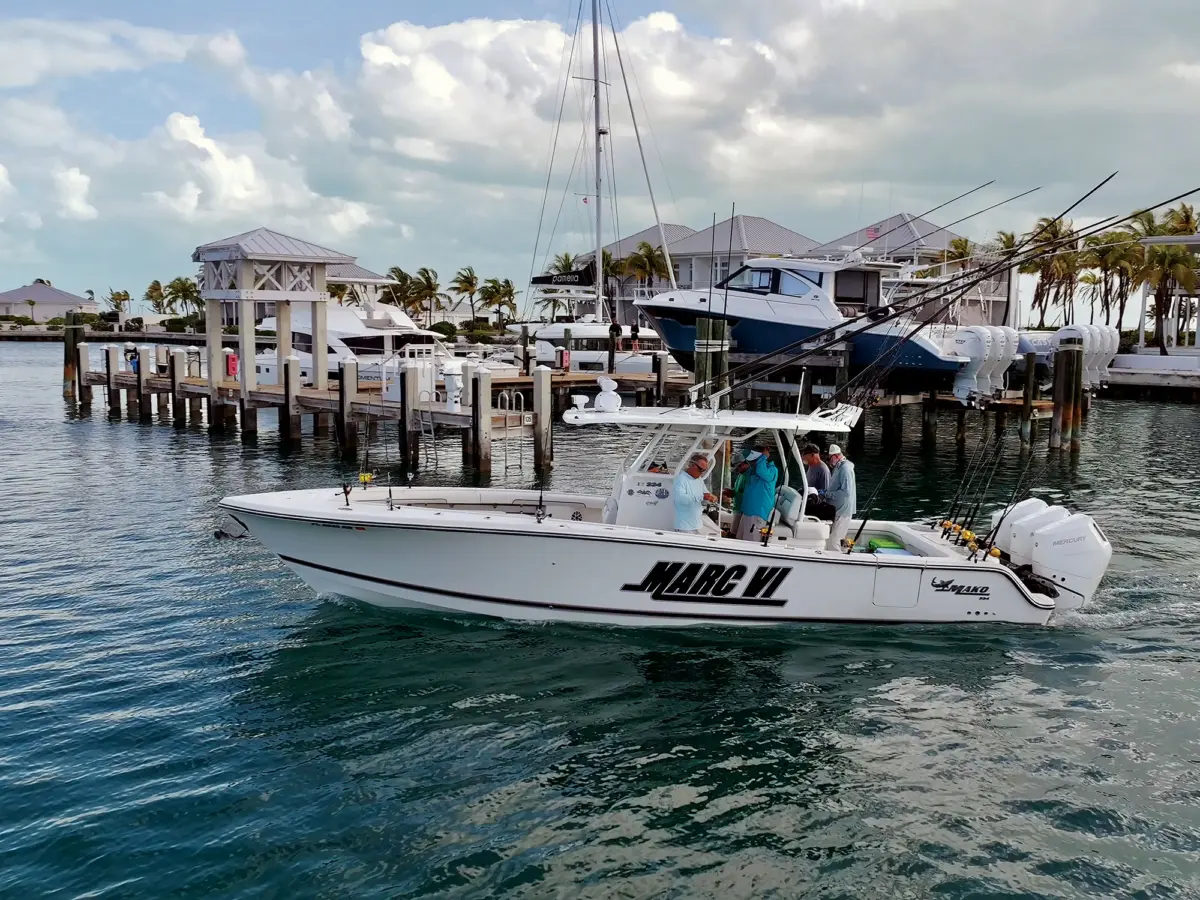
Far removed from the bustling marine traffic of South Florida’s primary ports, Cape Eleuthera operates as a secluded sanctuary for intrepid anglers. Operating on the foundational rule of sportfishing—that venturing farther away from human pressure yields more fish—a crew aboard the center console MARC VI undertook a rigorous 252-mile trans-oceanic voyage from Miami’s Haulover Inlet to the Cape Eleuthera Resort & Marina.
This deep Out Island destination offers an enviable juxtaposition: pristine, lightly pressured reefs and pelagic highways matched with world-class resort infrastructure. Featuring the deepest marina in the Bahamas with accommodations for vessels up to 200 feet, oceanfront bungalows, and miles of private shoreline, the property serves as both a cruiser’s paradise and an elite launchpad for offshore exploration. From explosive encounters with aggressive yellowfin tuna and trophy-sized mahi to chest-pounding deep-drop sessions and epic yellowtail bites over rugged bottom topography, Cape Eleuthera stands out as one of the last truly under-fished frontiers in the region.
Detailed Chronology: The Journey and the Angling Action
The Crossing and Customs Clearance
The journey to Cape Eleuthera demands careful preparation, reliable seamanship, and a favorable weather window. The crew—consisting of skipper George Poveromo, Harry Vernon, Mark Schmidt, Rob “The Swede” Greene, and videographer Charles Gonzalez—rendezvoused at North Miami’s TNT Marine Center at 6:00 a.m. Final checks were conducted on safety gear, including life jackets, throw cushions, and the vessel’s EPIRB, before clearing Haulover Inlet at 7:15 a.m. aboard the Mako 334.
The first leg of the voyage spanned 50 miles across the Gulf Stream to Bimini, serving as the official port of entry to clear Bahamian Customs and Immigration. Using the online portal Click2Clear.com a week prior, the team had already submitted cruising and fishing permit applications, vessel documentation, and crew manifests, paying all necessary fees in advance. Presenting their PCR numbers upon arrival expedited the clearance process, securing stamped, legal cruising and fishing permits within an hour.
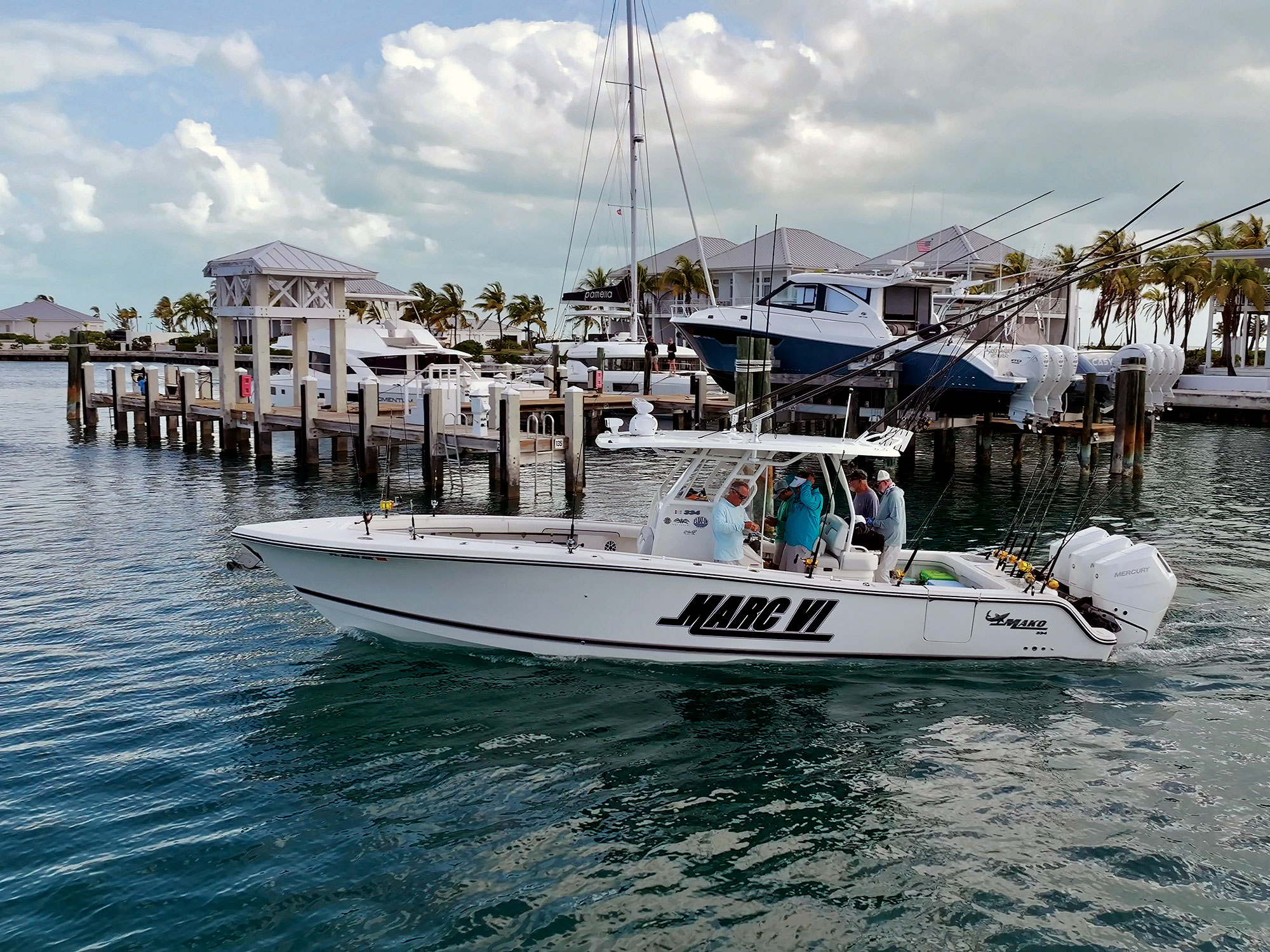
From Bimini, the crew ran the Great Bahama Bank for 68 miles into the deep oceanic trench known as The Pocket. Skirting past Chub Cay—situated 15 miles into The Pocket—they pushed onward toward the Nassau Harbour entrance, a 35-mile stretch. To ensure a safe fuel margin, the vessel took on fuel in Nassau before traversing the shallow Yellow Bank for 40 miles to Ship Channel Point, the strategic gateway into the deep waters of Exuma Sound. From there, a final 44-mile leg brought them directly to Cape Eleuthera Resort & Marina. In total, the grueling 252-mile trek consumed 253 gallons of fuel. After washing down the hull and checking into their accommodations, the team reconvened for dinner to prepare for the days ahead.
Crossing "The Bridge" and Unlocking the Tuna Code
Exuma Sound is historically productive for pelagic species, particularly when prevailing east or southeast winds push blue water and forage tight against the banks around Ship Channel and Highbourne Cay. However, with an unseasonal northeast weather pattern greeting their arrival, the crew opted to cross "The Bridge"—an underwater reef system ranging from 25 to 60 feet deep that connects the southern tip of Eleuthera to Little San Salvador—to troll the wild, aggressive bottom topography of the open Atlantic.
Targeting blue marlin, the initial spread featured five circle-hook ballyhoo and chugger combinations deployed on Penn International 50s, supported by an elaborate teaser configuration. Though the morning hours were quiet, the ocean stirred to life as the afternoon solunar period approached. Flying fish broke the surface, and tunas began blitzing small forage while diving seabirds worked the frenzies.
While small blackfins and yellowfins worked the surface, initial offerings failed to draw a strike. Shifting tactics, the crew deployed light spin tackle equipped with small crankbaits and chuggers to cast directly into the blitzes, resulting in a single pulled hook on a small tuna. Returning to the trolling spread, larger tunas crashed nearby bait pods with complete indifference to standard rigged ballyhoo.
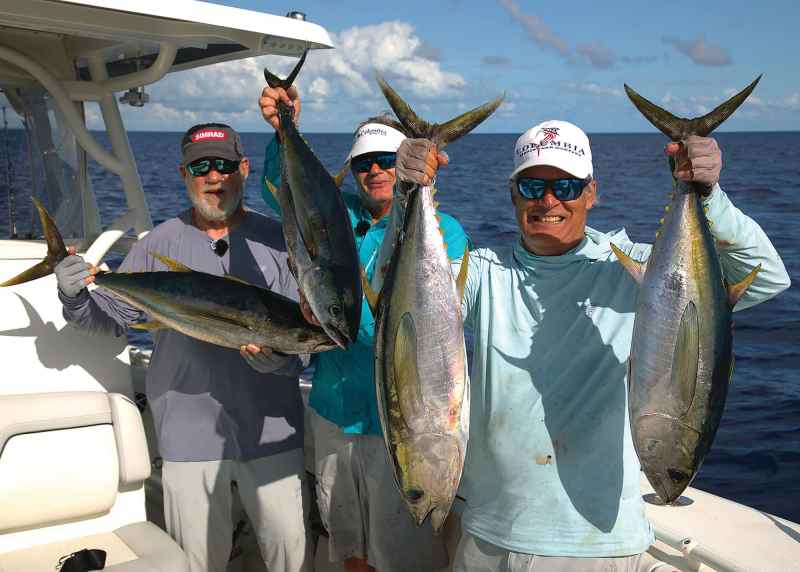
To break the stalemate, the spread was re-engineered: flat lines were swapped for Rapala X-Rap Magnum Xtreme and Rapala Countdown Magnum swimming plugs, while the far center rigger was rigged with a small, pink-skirted circle-hook ballyhoo on an 80-pound test fluorocarbon leader. Almost instantly, the screeching of drag announced a yellowfin hammering a Rapala plug. Minutes later, another fish struck. The adjustments culminated in a dramatic quadruple-header across both Rapalas, the small pink-skirted ballyhoo, and a large ballyhoo chugger, proving that matching the subsurface profile was the key to cracking the code.
Taming the Reefs: Mahi, Grouper, and Trophy Yellowtails
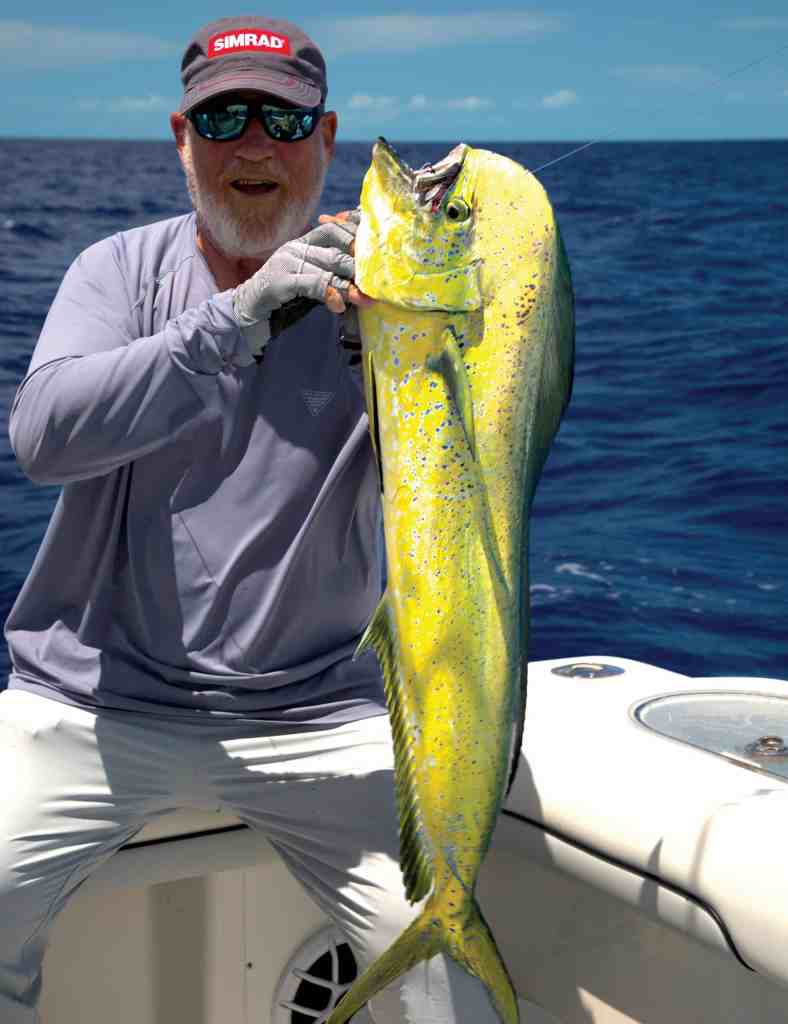
The region’s robust marine ecosystem guarantees action across multiple water columns. While anchored in 70 feet of water for yellowtails, the crew was greeted by a trio of aggressive 15- to 20-pound mahi charging the transom. Even with minimal floating sargassum present, targeting working birds consistently revealed productive fish underneath, while blind trolling proved equally effective.
When a subsequent cold front swept through with northeast-to-east winds gusting up to 25 knots, the leeward positioning of the resort side of Exuma Sound provided safe, fishable water. Trolling small Rapala swimming plugs with 50-pound fluorocarbon leaders over patch reefs in 10 to 20 feet of water produced steady catch-and-release action with groupers, barracudas, and jacks, alongside sharp-toothed cero mackerel slicing through plugs.
Yellowtail fishing over Exuma Sound, The Bridge, and Atlantic-side reefs remains phenomenal. Utilizing a large mesh chum bag suspended from the stern, the team monitored their sonar until schools rose from the 70-foot depths. Because larger yellowtails possess the strength to dive back into jagged coral structures, tackle specifications were adjusted: 20-pound-test fluorocarbon leaders, stout rods, 20-pound-class main lines, and knocker rigs featuring small yellowtail jigs and 1/0 in-line circle hooks baited with silversides, ballyhoo strips, and squid. The resulting bite was relentless, highlighted by Mark Schmidt landing a quality specimen, Poveromo securing the pool-winning trophy at over 27 inches, and videographer Charles Gonzalez landing his personal best yellowtail.
The final day of the expedition featured deep-dropping sessions between 600 and 1,000 feet. Guided by sonar marks hugging the bottom, the crew deployed squid-baited hooks using a pair of Penn Fathom electric reels, successfully hauling up yelloweye, wenchman, and blackfin snappers before returning to port to prep for the journey home.
Supporting Context & Metrics
| Metric / Parameter | Operational Data |
|---|---|
| Total Distance Traveled | 252 miles (One way, Miami Haulover Inlet to Cape Eleuthera) |
| Total Fuel Consumed | 253 gallons |
| Vessel Platform | Mako 334 Center Console |
| Key Waypoints | Haulover Inlet $rightarrow$ Bimini (50 mi) $rightarrow$ Chub Cay (68 mi) $rightarrow$ Nassau Harbour (35 mi) $rightarrow$ Ship Channel Point (40 mi) $rightarrow$ Cape Eleuthera (44 mi) |
| Marina Facilities | Deepest marina in Bahamas; slip capacity up to 200 feet |
| Reef Depths Fished | Patch reefs (10–20 ft); The Bridge (25–60 ft); Deep-drop zones (600–1,000 ft) |
| Primary Tackle Utilized | Penn International 50s; Penn Fathom electric reels; Rapala X-Rap Magnum Xtreme; 20–80 lb fluorocarbon leaders |
Official Statements
Reflecting on the unique appeal of the region, Justin Dubowitz, Manager at Cape Eleuthera Resort & Marina, emphasized the natural advantages that protect the area from over-exploitation:
"We cherish the tranquility and abundance here—the obvious fruits of our secluded location. It’s just far enough of a crossing to deter droves of South Florida anglers. Rest assured, this place is that good."
Discussing the seasonal dynamics and the factors influencing pelagic migrations during their April expedition, George Poveromo noted:
"Cape Eleuthera experienced cooler than normal water temps this past April, which delayed the migration of pelagics; ditto for Cat Island, some 60 miles below us. A Roffs Ocean Fishing Forecasting chart showed a large push of warm water making its way up toward Devil’s Point at Cat Island. As anticipated, its arrival at Cat produced exceptional fishing. For us, it was too late; we were heading home the following morning. Yet, it was still a fish-filled trip with perfect weather on all but two days."
Future Outlook
The angling landscape of the Out Islands is undergoing a quiet evolution. As marine engineering advances and center console technology continues to improve—marked by ever-larger hulls, expanded fuel capacities, and high-horsepower outboard configurations—the physical barrier of distance is steadily shrinking. Journeys that once demanded specialized sportfishing yachts are now safely and efficiently executed by high-performance outboard center consoles.
Consequently, destinations that once enjoyed absolute isolation are beginning to attract a more frequent class of wandering anglers. Cape Eleuthera, with its deep-water access, world-class resort amenities, and remarkably low fishing pressure, represents the pinnacle of modern Bahamas sportfishing. For those with the vessel, the experience, and the adventurous spirit, the prevailing directive remains unchanged: get out to the edge and experience the fishery while the getting is good.

0 Comments